Weekly Neuroscience Update

Earlier research showed that progranulin levels were elevated near plaques in the brains of patients with Alzheimer’s disease, but it was unknown whether this effect counteracted or exacerbated neurodegeneration. This image is for illustrative purposes only. Credit NIH.

Earlier research showed that progranulin levels were elevated near plaques in the brains of patients with Alzheimer’s disease, but it was unknown whether this effect counteracted or exacerbated neurodegeneration. This image is for illustrative purposes only. Credit NIH.

Low levels of the naturally occurring protein progranulin exacerbate cellular and cognitive dysfunction, while raising levels can prevent abnormalities in an Alzheimer model.

Teenagers who said they had a traumatic brain injury in their lifetime, especially girls, also reported significantly higher rates of harmful behavior, according to new research.

A new University of Iowa study further supports an inescapable message: caregivers have a profound influence – good or bad – on the emotional state of individuals with Alzheimer’s disease. Patients may not remember a recent visit by a loved one or having been neglected by staff at a nursing home, but those actions can have a lasting impact on how they feel. The findings of this study are published in the September 2014 issue of the journal Cognitive and Behavioral Neurology.

A new study reveals individual neurons in the human brain are triggered by the subject’s conscious perception, rather than by the visual stimulus.

A chemical in the brain plays a vital role in controlling the involuntary movements and vocal tics associated with Tourette Syndrome (TS), a new study has shown.

Researchers discover how the brain works during meditation.

Finally, this week, teenagers who regularly do not get enough sleep are more likely to struggle academically, the results of a new study show. Swedish researchers looked at over 20,000 teenagers aged between 12 and 19 and found that those who regularly slept for less than seven hours per night were more likely to fail in school. Details of these findings are published in the journal, Sleep Medicine.

.


Weekly Neuroscience Update

The study revealed that EGFR signaling is suppressed in a subset of glioblastomas. This image is for illustrative purposes only and shows an MRI brain scan of a person with glioblastoma brain cancer. Credit The Armed Forces Institute of Pathology.

The study revealed that EGFR signaling is suppressed in a subset of glioblastomas. This image is for illustrative purposes only and shows an MRI brain scan of a person with glioblastoma brain cancer. Credit The Armed Forces Institute of Pathology.

Researchers have found one of the keys to why certain glioblastomas – the primary form of a deadly brain cancer – are resistant to drug therapy. The answer lies not in the DNA sequence of the tumor, but in its epigenetic signature. These findings have been published online as a priority report in the journal Oncotarget.

It has been proposed that green tea extract may have a beneficial impact on cognitive functioning, suggesting promising clinical implications. However, the neural mechanisms underlying this putative cognitive enhancing effect of green tea extract still remain unknown.

According to researchers at the University of Montreal, the regions of the brain below the cortex play an important role as we train our bodies’ movements and, critically, they interact more effectively after a night of sleep.

Researchers find that the risk of future stroke is 39% higher among patients with cognitive impairment than those with normal cognitive function, according to a new study published in the Canadian Medical Association Journal (CMAJ).

A study is shining new light on a sleep disorder called “sleep drunkenness.” The disorder may be as prevalent as affecting one in every seven people. The research is published in Neurology.

A mindfulness-based therapy for depression has the added benefit of reducing health-care visits among patients who often see their family doctors, according to a new study.

In what may be the largest study of sleep problems among individuals with multiple sclerosis (MS), researchers at UC Davis have found that widely undiagnosed sleep disorders may be at the root of the most common and disabling symptom of the disease: fatigue.

Scientists have provided the first evidence that the lack of a naturally occurring protein is linked to early signs of dementia.

Weekly Neuroscience Update

Glioma cells tend to congregate at blood vessel junctions, almost as if camping alongside a stream where it joins a river. The ready supply of nutrients would allow the cell to grow into a larger tumor mass. Credit University of Alabama at Birmingham.

Glioma cells tend to congregate at blood vessel junctions, almost as if camping alongside a stream where it joins a river. The ready supply of nutrients would allow the cell to grow into a larger tumor mass. Credit University of Alabama at Birmingham.

Researchers have shed new light on how cells called gliomas migrate in the brain and cause devastating tumors. The findings, published in Nature Communications, show that gliomas — malignant glial cells — disrupt normal neural connections and hijack control of blood vessels.

New details on the NMDA receptor could aid development of drugs for Alzheimer’s, Parkinson’s, depression, other neurological disorders.

In a new study, scientists took a molecular-level journey into microtubules, the hollow cylinders inside brain cells that act as skeletons and internal highways. They watched how a protein called tubulin acetyltransferase (TAT) labels the inside of microtubules. The results, published in Cell, answer long-standing questions about how TAT tagging works and offer clues as to why it is important for brain health.

Patients with persistent ringing in the ears – a condition known as tinnitus – process emotions differently in the brain from those with normal hearing, researchers report in the journal Brain Research.

Pornography triggers brain activity in people with compulsive sexual behaviour – known commonly as sex addiction – similar to that triggered by drugs in the brains of drug addicts, according to a University of Cambridge study published in the journal PLOS ONE. However, the researchers caution that this does not necessarily mean that pornography itself is addictive.

Around half of the genes that influence how well a child can read also play a role in their mathematics ability, say scientists from UCL, the University of Oxford and King’s College London who led a study into the genetic basis of cognitive traits.

Psychologists at Stony Brook University, NY, suggest that about 20% of the population are genetically predisposed to be more aware and empathic. Now, in a new study, they explore which regions of the brain are implicated in this. They publish their findings in the journal Brain and Behavior.

Learning a second language may help improve brain function regardless of when you start, according to a new study.


Weekly Neuroscience Update

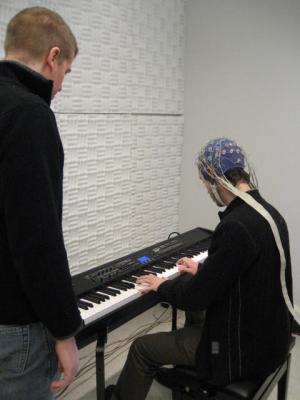
For the study, researchers recruited twenty skilled pianists from Lyon, France. The group was asked to learn simple melodies by either hearing them several times or performing them several times on a piano. Pianists then heard all of the melodies they had learned, some of which contained wrong notes, while their brain electric signals were measured using electroencephalography (EEG). Credit: Caroline Palmer/Brian Mathias

For the study, researchers recruited twenty skilled pianists from Lyon, France. The group was asked to learn simple melodies by either hearing them several times or performing them several times on a piano. Pianists then heard all of the melodies they had learned, some of which contained wrong notes, while their brain electric signals were measured using electroencephalography (EEG). Credit: Caroline Palmer/Brian Mathias

Research from McGill University reveals that the brain’s motor network helps people remember and recognize music that they have performed in the past better than music they have only heard. 

Veterans who have been exposed to nearby explosions, but who lack clear symptoms of traumatic brain injury (TBI) may still have damage to the brain’s white matter similar to veterans with TBI, according to new research at Duke Medicine and the U.S. Department of Veterans Affairs.

University of Adelaide researchers say new insights into how the human brain responds to chronic pain could eventually lead to improved treatments for patients. And also at the University of Adelaide, studies show that a gene linked to intellectual disability is critical to the earliest stages of the development of human brains. Known as USP9X, the gene has been investigated by Adelaide researchers for more than a decade, but in recent years scientists have begun to understand its particular importance to brain development.

In order to function properly, the human brain requires the ability not only to store but also to forget. Through memory loss, unnecessary information is deleted and the nervous system retains its plasticity. A disruption of this process can lead to serious mental disorders. Scientists have now discovered a molecular mechanism that actively regulates the process of forgetting. The journal Cell has published their results.

Brain imaging using radioactive dye can detect early evidence of Alzheimer’s disease that may predict future cognitive decline.

Scientists have identified a new group of compounds that may protect brain cells from inflammation linked to seizures and neurodegenerative diseases.

Your brain’s ability to instantly link what you see with what you do is down to a dedicated information ‘highway’, suggests new research.

There has been a great deal of research on changes among different brain states during sleep, but  new findings, reported in the March 13 issue of Cell, provide a compelling example of a change in state in the awake brain.

Finally, this week, using a new method to determine whether individuals met the criteria for a clinical diagnosis of bipolar disorder, researchers from UCLA tried a new approach by combining results from brain imaging, cognitive tests, and an array of temperament and behavioral measures. In an attempt to better understand the genes that cause the disorder, a collaborative research team identified about 50 brain and behavioral measures that are both under strong genetic control and associated with bipolar disorder, creating the potential to pinpoint the specific genes that contribute to the illness.

Weekly Neuroscience Update

This cross-section of the hippocampus shows island cells (green) projecting to the CA1 region of the hippocampus. (Credit: Takashi Kitamura)

This cross-section of the hippocampus shows island cells (green) projecting to the CA1 region of the hippocampus. (Credit: Takashi Kitamura)

Neuroscientists have discovered how two neural circuits in the brain work together to control the formation of time-linked memories. This is a critical ability that helps the brain to determine when it needs to take action to defend against a potential threat.

Survivors of traumatic brain injuries (TBI) are three times more likely to die prematurely, often from suicide or fatal injuries, according to a study from Oxford University.

An international team of researchers has found that the cause of schizophrenia is even more complex than already believed, with rare gene mutations contributing to the disorder. In two studies published in the journal Nature, they show that schizophrenia arises from the combined effects of many genes.

Scientists have found that, to allow us to concentrate, we synchronize different regions of our brains in a process that the researchers describe as “roughly akin to tuning multiple walkie-talkies to the same frequency.”

Researchers have identified a protein in the brain that plays a critical role in the memory loss seen in Alzheimer’s patients, according to a study to be published in the journal Nature Neuroscience.

Using a simple study of eye movements, scientists report evidence that people who are less patient tend to move their eyes with greater speed. The findings, the researchers say, suggest that the weight people give to the passage of time may be a trait consistently used throughout their brains, affecting the speed with which they make movements, as well as the way they make certain decisions.

Researchers have found that epileptic activity can spread through a part of the brain in a new way, suggesting a possible novel target for seizure-blocking medicines.

Weekly Neuroscience Update

Overly connected: Many pairs of brain regions — including those involved in sensory processing, emotion and motivation — are more tightly synchronized in children with autism (right) than in controls (left).

Overly connected: Many pairs of brain regions — including those involved in sensory processing, emotion and motivation — are more tightly synchronized in children with autism (right) than in controls (left).

Three studies published over the past two months have found significant evidence that children and adolescents with autism have brains that are overly connected compared with the brains of controls. The findings complicate the theory that autism is fundamentally characterized by weakly connected brain regions. Meanwhile new findings suggest the oxytocin receptor, a gene known to influence mother-infant bonding and pair bonding in monogamous species, also plays a special role in the ability to remember faces. This research has important implications for disorders in which social information processing is disrupted, including autism spectrum disorder. In addition, the finding may lead to new strategies for improving social cognition in several psychiatric disorders.

Researchers are gaining a better understanding of the neurochemical basis of addiction with a new technology called optogenetics.

We know that getting even a measly extra hour of sleep a night can have major benefits for us–like more memories, less anxiety, and happier genes. But scientists have tested another hypothesis for why we need to spend so much time horizontal: Sleep cleans our brains.

Scientists have pinpointed a specific part of the brain where Alzheimer’s begins and traced how the disease spreads.

Scientists have zapped an electrical current to people’s brains to erase distressing memories, part of an ambitious quest to better treat ailments such as mental trauma, psychiatric disorders and drug addiction.

Finally this week, many people can recall reading at least one cherished story that they say changed their life. Now researchers at Emory University have detected what may be biological traces related to this feeling: Actual changes in the brain that linger, at least for a few days, after reading a novel.

Weekly Neuroscience Update

Drumming

People who are better able to move to a beat show more consistent brain responses to speech than those with less rhythm, according to a study published in the September 18 issue of The Journal of Neuroscience. The findings suggest that musical training could possibly sharpen the brain’s response to language.

Concussions are connected with substance abuse and suicidal thoughts in adolescents, according to new research presented at a conference on sports-related brain injuries.

The structure of the brain may predict whether a person will suffer chronic low back pain, according to researchers who used brain scans. The results, published in the journal Pain, support the growing idea that the brain plays a critical role in chronic pain, a concept that may lead to changes in the way doctors treat patients.

A drug commonly used for treating diabetes may reverse symptoms of late-stage Alzheimer’s disease and is now in the process of entering a major clinical trial.

Scientists have found a new link between early-onset Parkinson’s disease and a piece of DNA missing from chromosome 22. The findings help shed new light on the molecular changes that lead to Parkinson’s disease.

The pain and itching associated with shingles and herpes may be due to the virus causing a “short circuit” in the nerve cells that reach the skin, researchers have found.

In a new study looking at toddlers and preschoolers with autism, researchers have found that children with better motor skills were more adept at socializing and communicating. This study adds to growing evidence of the important link between autism and motor skill deficits. Motor skills and muscle memory are held in the cerebellum.

Scientists have discovered differences in the brain structure of ballet dancers that may help them avoid feeling dizzy when they perform pirouettes.

New research could offer solutions into slowing down the progression of motor neurone disease (MND).

Playing first person action games can enhance your perception of movement – but only when you’re walking backwards. This is one of the findings of a new paper by University of Leicester psychologists, published in the journal Perception, which examines the effect of playing video games on motion perception.

Two new studies investigate the relationship between self-control and reward processing for chronic dieters and people who would like to control their food intake.

Scientists say they have discovered the specific brain circuitry that causes overeating, according to a study published in the journal Science.

Bad experiences enhance memory formation about places, scientists at The University of Queensland have found.

Finally this week, a new study from MIT reveals a gene that is critical to the process of memory extinction. Enhancing the activity of this gene, known as Tet1, might benefit people with posttraumatic stress disorder (PTSD) by making it easier to replace fearful memories with more positive associations,

Weekly Neuroscience Update

yusi

Yusnier Viera

A new study of the brain of a maths supremo supports Darwin’s belief that intellectual excellence is largely due to “zeal and hard work” rather than inherent ability. University of Sussex neuroscientists took fMRI scans of champion ‘mental calculator’ Yusnier Viera during arithmetical tasks that were either familiar or unfamiliar to him and found that his brain did not behave in an extraordinary or unusual ways.

A fear memory was reduced in people by exposing them to the memory over and over again while they slept. It’s the first time that emotional memory has been manipulated in humans during sleep, report Northwestern Medicine scientists.

Massachusetts General Hospital (MGH) researchers have identified and validated two rare gene mutations that appear to cause the common form of Alzheimer’s disease (AD) that strikes after the age of 60.

Moderate reductions in body temperature can improve outcomes after a person suffers a traumatic brain injury (TBI).

When individuals with psychopathy imagine others in pain, brain areas necessary for feeling empathy and concern for others fail to become active and be connected to other important regions involved in affective processing and decision-making, reports a study published in the open-access journal Frontiers in Human Neuroscience.

Research from Virginia Tech suggests that with advances in neurofeedback techniques, the signal-to-noise ratio of the brain activity underlying our thoughts can be “remastered.”

In a landmark discovery, the final piece in the puzzle of understanding how the brain circuitry vital to normal fertility in humans and other mammals operates has been put together by researchers at New Zealand’s University of Otago.

Brain regions associated with memory shrink as adults age, and this size decrease is more pronounced in those who go on to develop neurodegenerative disease, reports a new study published Sept. 18 in the Journal of Neuroscience . The volume reduction is linked with an overall decline in cognitive ability and with increased genetic risk for Alzheimer’s disease, the authors say.

Scientists say that people who have a certain abnormality in their brain structure are more likely to develop chronic pain following a lower back injury, according to a study published in the journal Pain.

The development of fine motor control – the ability to use your fingertips to manipulate objects – takes longer than previously believed, and isn’t entirely the result of brain development, according to a pair of complementary studies.

Early genetic markers of Alzheimer’s risk identified

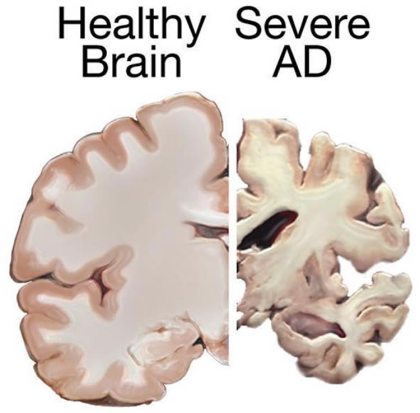
Alzheimer's brain on the left, normal brain on the right

The brains of Alzheimer’s patients – like the one on the left – are more shrunken than normal ones

Genetic markers that could help highlight who is at risk of developing Alzheimer’s disease have been identified by US scientists.

The research in Neuron identifies mutations that affect the build-up of certain proteins in the brain.

Tangles of a kind of tau called phosphorylated tau (ptau) are a hallmark of the disease. High levels of these tau proteins increase the chance of having the disease.

One of the new gene variants identified by the Washington University School of Medicine team was also shown to be linked to a small increased risk of developing Alzheimer’s and a greater risk of cognitive decline.

The team used genetic information from more than 1,200 people, significantly larger than previous studies in this area.


Weekly Neuroscience Update

UCL Medical staff discussing an image of a human brain

Researchers at University College London have made a breakthrough in the way that drugs could be delivered to the brain, tackling the difficult problem of constructing drugs which are able to pass through the blood-brain barrier – a mechanism which prevents many chemicals in the bloodstream from passing into the brain, including synthetic compounds administered as medication as well as harmful environmental toxins.

For older adults looking to sharpen their mental abilities, it might be time to log on to Facebook. Preliminary research findings from the University of Arizona suggest that men and women older than 65 who learn to use Facebook could see a boost in cognitive function.

A single concussion may cause lasting structural damage to the brain, according to a new study published online in the journal Radiology.

In an effort to better evaluate and prevent concussions and head traumas, researchers at Johns Hopkins University have developed a computer model to identify what types of jarring movements to the body can cause injury to the brain

A team of sleep researchers has confirmed the mechanism that enables the brain to consolidate memory and found that a commonly prescribed sleep aid enhances the process. Those discoveries could lead to new sleep therapies that will improve memory for aging adults and those with dementia, Alzheimer’s and schizophrenia.

How do neurons store information about past events? In the Nencki Institute of Experimental Biology of the Polish Academy of Sciences in Warsaw, a previously unknown mechanism of memory trace formation has been discovered. It appears that at least some events are remembered thanks to geometry.

It is possible to tell who a person is thinking about by analyzing images of his or her brain. Our mental models of people produce unique patterns of brain activation, which can be detected using advanced imaging techniques according to a study by Cornell University neuroscientist Nathan Spreng and his colleagues.

Columbia University Medical Center (CUMC) researchers have found the first evidence that selective activation of the dentate gyrus, a portion of the hippocampus, can reduce anxiety without affecting learning.