Weekly Neuroscience Update

tired-brain-cells-mental-lapses-neurosciencenews.jpg

Sleep-deprived brain cells react more slowly and fire more weakly, and their signals are more drawn out. NeuroscienceNews.com image is credited to UCLA.

A Japanese research group has revealed that elderly people with mild cognitive impairment (MCI) have a particularly weakened ability to memorize human faces in the short term when compared to healthy elderly people. MCI patients also had a different gaze behavior when trying to memorize a face. This research may lead to the early detection of dementia.

Researchers provide new insight into human consciousness, reporting we don’t consciously choose our feelings or thoughts; we simply become aware of them.

If a mother’s immune system is activated by infection during pregnancy, it could result in critical cognitive deficits linked to schizophrenia in her offspring, a new study has revealed.

People on the autism spectrum appear to have different reactions to subliminal social odors, researchers report.

Information from brain MRIs can help identify people with attention deficit hyperactivity disorder (ADHD) and distinguish among subtypes of the condition, according to a study appearing online in the journal Radiology.

Migraine triggers can increase oxidative stress, a new study reports. Targeting oxidative stress may help to prevent migraines.

A new study reveals how the mechanism for storing olfactory memories differs slightly from erasing unnecessary memories. Understanding how the brain gets rid of unimportant memories could help unlock new avenues of research to better understand memory loss in aging, researchers say.

Finally this week, researchers report a developmental abnormality more prevalent in premature and male babies, may contribute to SIDS risk, in conjunction to the sleep position.


Weekly Neuroscience Update

dog-2751115_960_720.jpgThe tendency of dogs to seek contact with their owners is associated with genetic variations in sensitivity for the hormone oxytocin, according to a new study from Linköping University, Sweden.

A new study reveals schizophrenia is up to 79% hereditary.

Metacognition of a tactile working memory task has been demonstrated by researchers for the first time. Understanding this brain function might help in the development of new treatments for neuropsychiatric illnesses in the future.

Researchers have shed light on how motor signals help sharpen our ability to decipher complex sound flows.

Increased communication between distant brain regions helps older adults compensate for the negative aspects of ageing, reports a new study published this week in Human Brain Mapping.

Scientists report brain network organization changes can influence executive function in young adults.

A news study has found that brain functions in young men and women are changed by long-term alcohol use, but that these changes are significantly different in men and women.

Mindfulness and meditation can affect brain plasticity, resulting in the ability for adults to acquire new social skills, researchers report.

A new study has found that chronic tinnitus (ringing or buzzing in the ears) is associated with changes in certain networks in the brain, and furthermore, those changes cause the brain to stay more at attention and less at rest.

Finnish researchers have revealed how eating stimulates brain’s endogenous opioid system to signal pleasure and satiety.

Finally this week, sleep deprivation — typically administered in controlled, inpatient settings — rapidly reduces symptoms of depression in roughly half of depression patients, according to the first meta-analysis on the subject in nearly 30 years.


Weekly Neuroscience Update

gettyimages-176426057_wide-c6d79c47986bd46b88ffe656b1ca09afd3b7e7b3-s800-c85.jpg

Getty Images

People who played action video games that involve first-person shooters experienced shrinkage in a brain region called the hippocampus, according to a study published in Molecular Psychiatry. That part of the brain is associated with spatial navigation, stress regulation and memory. Playing Super Mario games, in which the plumber strives to rescue a princess, had the opposite effect on the hippocampus, causing growth in it.

Researchers have revealed a helpful strategy to help those with cognitive problems to improve their memory.

The part of the brain that helps control emotion may be larger in people who develop post-traumatic stress disorder (PTSD) after brain injury compared to those with a brain injury without PTSD, according to a new study.

A new study reports cognitive abilities mutually assist each other during development. This results in improved cognitive skills and general intelligence over time.

A sleeping brain can form fresh memories, according to a team of neuroscientists. The researchers played complex sounds to people while they were sleeping, and afterward the sleepers could recognize those sounds when they were awake.

Researchers report social norms together with increasing oxytocin can counter xenophobia by enhancing altruistic behaviors.

A new Johns Hopkins University study adds further evidence to the link between serotonin and dementia. According to researchers, lower serotonin levels may play a key role in memory decline and drive the progression of Alzheimer’s.

Researchers have devised a new odor identification test that could help doctors predict those at risk of Alzheimer’s and track the progression of the disease.

Finally this week, a new study reveals a neurobiological reason behind why we feel happy when we are being generous. Researchers discovered the connectivity between the temporal parietal junction and ventral striatum, an area of the brain associated with happiness, was enhanced in people who committed to generosity.


Weekly Neuroscience Update

aging-sharpness-neuroscinencew.jpg

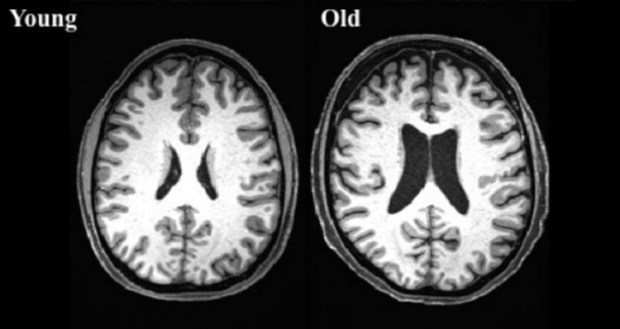
Brain scans from a 38-year-old, left, and a 73-year-old. 

Researchers are embarking on a new study to answer how some people are able to stay sharper than others as they age.

Neurons in the brain that produce the pleasure-signaling neurotransmitter dopamine also directly control the brain’s circadian center, or “body clock” – the area that regulates eating cycles, metabolism and waking/resting cycles – a key link that possibly affects the body’s ability to adapt to jet lag and rotating shift work, a new study has demonstrated.

A molecule produced by insulating glial cells facilitates the functional wiring of brain cells involved in motor coordination.

Using the latest MRI scanning procedures, a team of researchers has shown how certain disorders of the hippocampus can initiate a drug resistant epilepsy. The team has discovered biomarkers that – if used for screening – could massively improve treatment options for epilepsy. The researchers have published their results in the online journal eLife.

A new study reveals the role circular RNA plays in brain function, including synaptic transmission and sensorimotor gating.

Depression has been shown to alter the structure of the brain’s white matter, which contains the circuitry that allows brain cells to communicate with each other, and which underpins brain function.

According to a new Nature study, in order for our taste system to work, the connection between neurons and taste bud cells have to rewire correctly each time.

A new optogenetic method called Optobow is helping researchers to discover specific and individual components of functional neural networks in the living brain. A Nature Communications report states this new method can help provide more detailed insights into both brain function and structure.

A neuroimaging study reveals people who report widespread pain have increased gray matter and functional connectivity in sensory and motor areas of the brain.

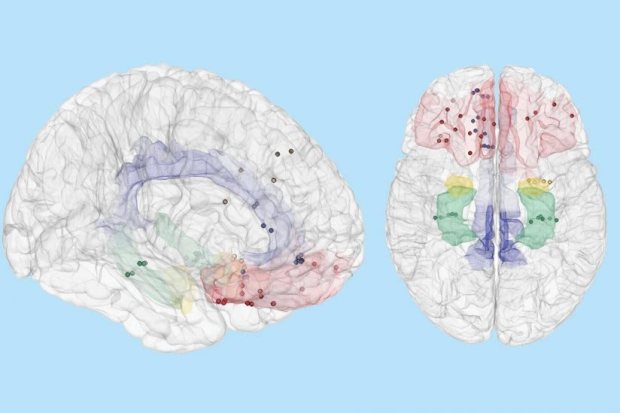
Finally this week, a large scale SPECT imaging study reveals women’s brains are significantly more active in more regions than males, including the prefronal cortex and limbic areas. Visual and areas associated with coordination were more active in males, researchers noted.

Weekly Neuroscience Update

vegas-nerve-parkinsons-neurosciencenews (1).jpgAccording to researchers, Parkinson’s disease may start in the gut and spread to the brain via the vagus nerve.

You probably know that walking does your body good, but it’s not just your heart and muscles that benefit. Researchers found that the foot’s impact during walking sends pressure waves through the arteries that significantly modify and can increase the supply of blood to the brain.

An international collaboration of neuroscientists has shed light on how the brain helps us to predict what is coming next in speech.

A recently published study, which combines four studies of extreme longevity, has identified new rare variants in chromosomes 4 and 7 associated with extreme survival and with reduced risks for cardiovascular and Alzheimer’s disease.

Scientists have discovered that neurons in brain regions that store memory can form networks in the absence of synaptic activity.

A new study reports estrogen fluctuations can alter brain circuit activation in women with a variant of a specific gene.

Your brain may not be the same age as your body, and an “older” brain may be linked to an increased risk of dying at a younger age, a new study finds.

Zapping the brain with just a bit of electricity at the right time may help to improve memory function in some people, according to a new study.

Gentle noise stimulation can enhance sleep quality and improve memory in older people, a new study reports.

Like air-traffic controllers scrambling to reconnect flights when a major hub goes down, the brain has a remarkable ability to rewire itself after suffering an injury. However, maintaining these new connections between brain regions can strain the brain’s resources, which can lead to serious problems later, including Alzheimer’s Disease, according to researchers.

Researchers have discovered a new cellular mechanism that may be a root cause of multiple sclerosis.

Combining brain training programs with transcranial direct current simulation can lead to cognitive improvements and better working memory, a new study reports.

Finally this week, a new video game is helping to speed up neuroscience research by allowing players to reconstruct the architecture of neurons.


Weekly Neuroscience Update

adobe-spark-81

Different people age at different rates and the same goes for their brains, according to scientists who have discovered a link between a common genetic variant and an increased risk for neurodegenerative diseases. The new biomarker becomes active around age 65 and may provide a new means of evaluating, preventing, or treating Alzheimer’s and other age-related brain disorders.

According to a new study, adolescence may be a crucial period for remodeling of the human brain.

The brains of those who are born blind make new connections in the absence of visual information, resulting in enhanced, compensatory abilities such as a heightened sense of hearing, smell and touch, as well as cognitive functions (such as memory and language) according to a new study.

Scientists have developed a new genetic test for Alzheimer’s risk that can be used to predict the age at which a person will develop the disease.

Using a satnav to get to your destination ‘switches off’ parts of the brain that would otherwise be used to simulate different routes, reveals new research.

Researchers trace the Pavlovian response to a small cluster of neurons in the striatum.

Finally this week, a new neuroimaging study reveals how different parts of the brain represent an object’s location in depth compared to its 2D location.

Weekly Neuroscience Update

neuroimaging-early-alzheimers-neurosciencneews.jpg

image credited to Per Uvdal

New technology allows researchers to produce images that predate the formation of amyloid beta in the brain. The findings have prompted researchers to suggest stabilizing the protein, rather than attempting to limit it, in order to reduce Alzheimer’s symptoms.

new study shines light on the process by which head injuries lead to brain disease later in life. 

A new type of long-term potentiation that is controlled by kainate receptors has been reported by scientists. The finding could have major benefits to understanding how the brain works and what goes wrong in neurodegenerative disorders such as epilepsy and dementia.

According to researchers, axons coordinate each other’s destruction, contributing to neurodegeneration.

Dendrites are not just passive conduits, a new study reports. The finding could change scientists’ understanding of how the brain works, and lead to new approaches for treating neurological disorders.

Structural differences have been found in the cerebral cortex of patients with depression, and these differences normalize with appropriate medication,  a new study reports.

Researchers at Karolinska Institutet collaborating in the large-scale Karolinska Schizophrenia Project are taking an integrative approach to unravel the disease mechanisms of schizophrenia. In the very first results now presented in the prestigious scientific journal Molecular Psychiatry, the researchers show that patients with schizophrenia have lower levels of the vital neurotransmitter GABA as well as changes in the brain’s immune cells.

Finally this week, researchers have identified a genetic variant that can accelerate normal brain aging in older people by up to 12 years.


Weekly Neuroscience Update

runner-888016_960_720.jpgAccording to researchers, endurance runners appear to have greater functional connectivity in their brains that those who don’t exercise as much.

New research reveals that children begin using olfactory information to help guide their responses to emotionally-expressive faces at about five years of age. The findings advance understanding of how children integrate different types of sensory information to direct their social behaviour.

A new study explores how neurons adapt their function to respond to stimuli quickly.

A distinctive neural signature found in the brains of people with dyslexia may explain why these individuals have difficulty learning to read, according to a new study from MIT neuroscientists.

Brain connections that play a key role in complex thinking skills show the poorest health with advancing age, new research suggests.

Researchers have identified immune cells in the membranes around the brain that could be a ‘missing link’ in the gut-brain axis. The immune cells also appear to have a positive impact on recovery following spinal cord injury.

Therapeutic hypothermia following a Traumatic Brain Injury (TBI) significantly improves survival rate, a new study reports.

An enzyme found in the fluid around the brain and spine is giving researchers a snapshot of what happens inside the minds of Alzheimer’s patients and how that relates to cognitive decline.

Finally this week,a new study looks at the way in which noise sensitivity is manifested due to changes in the way in which the brain processes auditory information.


Weekly Neuroscience Update

eating-796489_960_720.jpgA new study looks at the role the visual system plays in our food decisions.

Neurons found in the human eye naturally display a form of error correction in the collective visual signals they send to the brain, according to a new study in PLOS Computational Biology.

Researchers have created a new optical illusion which helps reveal how our brains determine the material properties of objects – such as whether they are transparent, shiny, matte or translucent – just from looking at them.

Genetic circuits can be isolated within individual synthetic cells, researchers report.

A new study identifies a sub region of the brain that works to form a particular kind of memory: fear-associated with a specific environmental cue or “contextual fear memory.”

Researchers have revealed multiple functions of visual attention, the process of selecting important information from retinal images.

As you age, you may find it more difficult to focus on certain tasks. But while distractions can be frustrating, they may not be as bad as we think. In a review published November 15 in Trends in Cognitive Sciences researchers  suggest that there may be some benefits to reduced focus, especially in people over 50.

Consuming a high fat diet during adolescence could contribute to cognitive impairment as an adult, a new study reports.

An interdisciplinary team of researchers at the University of Georgia has developed a new technology that may help scientists better understand how an individual cell synchronizes its biological clock with other cells.

A new study could be the first step to developing drugs that targets carbonic anhydrase in mitochondria to help protect against aging and neurodegeneration.

Researchers report altering synaptic plasticity leads to a computational switch in a hippocampal synapse which turns the presynaptic neuron turns into “detonator” mode, causing it to fire more readily.

Finally this week, a new study has revealed how three important brain signaling chemicals affect the way that we handle uncertainty.


Weekly Neuroscience Update

man-798989_960_720.jpg

A new study sheds light on how some older people retain youthful thinking abilities and the brain circuits that support those abilities.

Relying on clinical symptoms of memory loss to diagnose Alzheimer’s disease may miss other forms of dementia caused by Alzheimer’s that don’t initially affect memory, reports a new Northwestern Medicine study.

Bilingual people may have a cognitive advantage when it comes to maintaining attention and focus, a new study reports.

An EU-funded project is getting close to building combined brain and neuromuscular computer models to predict the progression of Parkinson’s and ensure the prescription of the correct medication.

A new study investigates what happens when we multitask and why it’s not such a good idea to drive and use a phone at the same time.

Researchers have found a switch that redirects helper cells in the peripheral nervous system into “repair” mode, a form that restores damaged axons.

A new study offers insight into the neurological processes involved in fear and anxiety.

According to researchers, a simple MRI brain scan could help diagnose people with a common cognitive disorder.

A new mathematical model could improve understanding of memory consolidation during deep sleep.

High stress between the ages of  5 and 8 is biologically embedded, posing mental health risks decades later into adult life, suggests US brain scans study.

Finally this week, a new paper reports on how understanding brain function has become more than a brain science.