Weekly Neuroscience Update

boy-3360415_960_720.jpg

Researchers have found “different patterns” in brain scans among children who record heavy smart device and video game use, according to initial data from a major ongoing US study.

A new study reports the combination of a toxic herbicide and lectins may trigger Parkinsonism after the toxins travel from the stomach to the brain.

Later-born siblings of children with autism spectrum disorder (ASD) or attention-deficit/hyperactivity disorder (ADHD) are at elevated risk for both disorders, a new study has concluded. The study suggests that families who already have a child diagnosed with ASD or ADHD may wish to monitor younger siblings for symptoms of both conditions.

Researchers have shed light on the dual nature of dopamine, as a neurotransmitter that makes us seek pleasure and also reinforces avoidance of pain.

A new neuroimaging study reveals imagination may help people with fear or anxiety disorders overcome them. The study reports imagining a threat can alter the way it is represented in the brain.

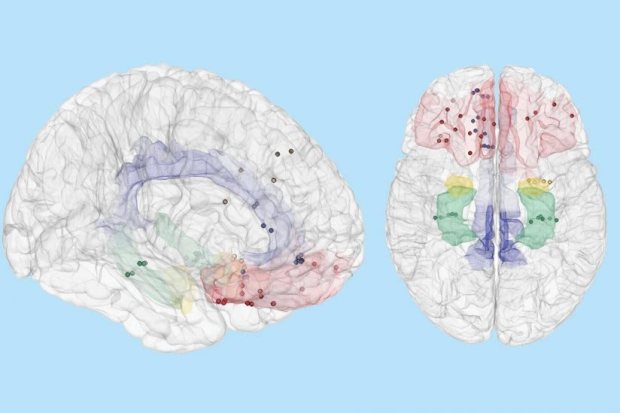
Stimulating the lateral orbitofrontal cortex improves mood in those suffering from depression, a new study reveals.

Scientists report low levels of GABA producing bacteria is associated with brain signatures of depression. They believe it may be possible to treat clinical depression by increasing GABA producing bacteria.

Finally, this week, using machine learning to analyze fMRI brain scans of grieving people, researchers shed light on how unconscious suppression occurs.

Weekly Neuroscience Update

kindle-1867751_960_720.jpg

Researchers have uncovered how specific retinal cells respond to the artificial light generated by cell phone and tablets. The study reveals how retinal ganglion cells process ambient light and reset our circadian clocks, leading to sleep disruptions.

Stimulating the lateral orbitofrontal cortex improves mood in those suffering from depression, a new study reveals.

New research has discovered that a type of adult stem cell found in a variety of tissues can be manipulated to enhance tissue regeneration and potentially treat inflammatory diseases.

A new study reports obesity can significantly increase the risk of depression, even in the absence of other health problems.

Researchers have made a breakthrough in understanding the development of attention deficit hyperactivity disorder. In a new study, the researchers reveal they have identified specific gene variants which increase the risk of ADHD.

A new study combines hundreds of brain scans of patients with OCD and pinpoints problems with error processing in the brain that leads to repetitive behaviors.

Researchers say a new discovery about the pathways associated with consciousness contradicts conventional belief. The study reports the thalamus is not a critical part of the brain’s pathway involved in wakefulness and consciousness, a finding that could help develop better methods for treating comas.

A new study reveals how the brain processes sound and how quickly neurons transition from processing the sound of speech to the language based words.

With a finding that will “rewrite neuroanatomy textbooks,” scientists have shown that the thalamus is not a critical part of the brain pathway involved in keeping humans awake and conscious.

Finally this week, older adults who take up drawing could enhance their memory, according to a new study.


Weekly Neuroscience Update

mood-brain-signals-neurosciencenews.jpg

Mood is represented across multiple sites in the brain rather than localized regions, which makes decoding them a computational challenge, according to a USC expert. NeuroscienceNews.com image is credited to Sani et. al., Nature Biotechnology.

Researchers have built a decoder which is able to translate neural signals into mood variations.

How and why human-unique characteristics such as highly social behavior, languages and complex culture have evolved is a long-standing question. A research team led by Tohoku University in Japan has revealed the evolution of a gene related to such human-unique psychiatric traits.

A new study reports mast cells play a key role in determining sex differences in the developing brain.

An inhaled form of a high blood pressure medication has potential to treat certain types of anxiety as well as pain, according to a new study by the Centre for Addiction and Mental Health (CAMH).

Functional connectivity within a specific neural network helps dampen a newborn’s brain activity in response to pain, researchers report.

A new blood test can help identify your body’s precise internal time clock in relation to external time. Researchers say the test could help examine the impact of misaligned circadian clocks in a wide range of diseases.

Researchers report a neural network called the isthmic system helps us to select visual objects that catch our attention.

According to researchers, drumming for an hour a week helps improve learning at school for children on the autism spectrum. The study reports drumming not only improves dexterity, rhythm and timing for those with ASD, it also helps improve concentration and enhances communication with peers.

A new study reports those with ADHD are at an increased risk of developing Parkinson’s disease.

In one of the biggest breakthroughs in schizophrenia research in recent times, Professor Cynthia Shannon Weickert from Neuroscience Research Australia (NeuRA) and UNSW Sydney has identified immune cells in greater amounts in the brains of some people with schizophrenia.

Finally this week, esearchers are looking at what happens in the brain when we make snap decisions under stress.


Weekly Neuroscience Update

confirmation-bias-dots-neurosciencneews (1).jpg

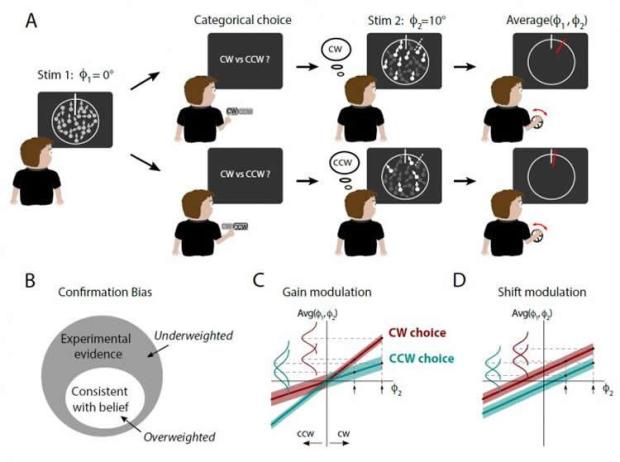
This visual abstract depicts findings that people show confirmation bias even about which way dots are moving. Image is credited to Prat-Ortega & de la Rocha, Current Biology.

A new study reports people use confirmation bias, even when a decision they make has little to no consequence.

Analysis of data captured during a long-term study of aging adults shows that those who report being very sleepy during the day were nearly three times more likely than those who didn’t to have brain deposits of beta amyloid, a protein that’s a hallmark for Alzheimer’s disease, years later.

Researchers have created a computational model that helps explain how mental images drawn from memory can be explained by the firing of specific neurons.

According to a new study, probiotics may not be as effective as most believe. Researchers report many people’s digestive tracts prevent standard probiotics from successfully colonizing them.

A team of researchers has analysed what happens in the brain when humans want to voluntarily forget something.

Whether an individual develops a neurodevelopmental disorder like autism or ADHD and the severity of that disorder depends on genetic changes beyond a single supposedly disease-causing mutation. A new study led by researchers at Penn State reveals that the total amount of rare mutations — deletions, duplications, or other changes to the DNA sequence — in a person’s genome can explain why individuals with a disease-associated mutation can have vastly different symptoms. A paper describing the study appeared today in the journal Genetics in Medicine.

New research has shed new light on genetic processes that may one day lead to the development of therapies that can slow, or even reverse, how our cells age.

Researchers have identified a new neural mechanism that contributes to long term stress and PTSD. The study reports the mechanism is mediated by brain fluid in areas associated with stress response.

Finally this week, is the popular claim that the brain feels no pain substantiated? A new paper looks at the accuracy of the belief.

Weekly Neuroscience Update

internal-experience-neurosciencenews.jpg

Simultaneous activity of three cognitive systems found in the study NeuroscienceNews.com image is credited to Vadim Axelrod, Bar-Ilan University.

Internal experiences, such as recalling personal memories, are associated with the simultaneous activity of at least three different cognitive systems, a new study reports.

Neuroscientists have shown how the human brain can predict what our eyes will see next, using functional magnetic resonance imaging (fMRI).

A new study sheds light on ADHD, reporting teens with the disorder fit into one of three specific subgroups with distinct brain impairments and no common abnormalities between them.

Musical training may enhance the ability to process speech in noisy settings, a new study reveals.

Scientists are examining the feasibility of treating autistic children with neuromodulation after a new study showed social impairments can be corrected by brain stimulation.

The fear of losing control over thoughts and actions can impact OCD behaviors and other anxiety disorders, researchers report.

Recent functional studies suggest that noise sensitivity, a trait describing attitudes towards noise and predicting noise annoyance, is associated with altered processing in the central auditory system.

Finally this week, a new study reveals the frontal regions of the brain play a vital role in assessing and interpreting emotions communicated orally.

Weekly Neuroscience Update

tired-brain-cells-mental-lapses-neurosciencenews.jpg

Sleep-deprived brain cells react more slowly and fire more weakly, and their signals are more drawn out. NeuroscienceNews.com image is credited to UCLA.

A Japanese research group has revealed that elderly people with mild cognitive impairment (MCI) have a particularly weakened ability to memorize human faces in the short term when compared to healthy elderly people. MCI patients also had a different gaze behavior when trying to memorize a face. This research may lead to the early detection of dementia.

Researchers provide new insight into human consciousness, reporting we don’t consciously choose our feelings or thoughts; we simply become aware of them.

If a mother’s immune system is activated by infection during pregnancy, it could result in critical cognitive deficits linked to schizophrenia in her offspring, a new study has revealed.

People on the autism spectrum appear to have different reactions to subliminal social odors, researchers report.

Information from brain MRIs can help identify people with attention deficit hyperactivity disorder (ADHD) and distinguish among subtypes of the condition, according to a study appearing online in the journal Radiology.

Migraine triggers can increase oxidative stress, a new study reports. Targeting oxidative stress may help to prevent migraines.

A new study reveals how the mechanism for storing olfactory memories differs slightly from erasing unnecessary memories. Understanding how the brain gets rid of unimportant memories could help unlock new avenues of research to better understand memory loss in aging, researchers say.

Finally this week, researchers report a developmental abnormality more prevalent in premature and male babies, may contribute to SIDS risk, in conjunction to the sleep position.


Weekly Neuroscience Update


smellsensiti.jpg

Credit: Herz et. al./Brown University

new study provides the first direct evidence that within each person, smell sensitivity varies over the course of each day. The pattern, according to the data, tracks with the body’s internal day-night cycle, or circadian rhythm.

Researchers have revealed the neural signatures for explicit and implicit learning.

Neuroscientists have discovered precisely where and how to electrically stimulate the human brain to enhance people’s recollection of distinct memories. People with epilepsy who received low-current electrical pulses showed a significant improvement in their ability to recognize specific faces and ignore similar ones.

Adults likely do not develop ADHD, according to new research.

Researchers propose a new theory of memory formation, reporting memory storage does not rely on the strengthening of connection between memory cells, but on the pattern of connections that form within the first few minutes of an event.

A new Finnish study shows that individual circadian preference is associated with brain activity patterns during the night.

According to researchers, the size, shape and number of dendritic spines in the brain may determine whether a person develops Alzheimer’s disease.

Finally this week, migraine triggers can increase oxidative stress, a new study reports. Targeting oxidative stress may help to prevent migraines.


Weekly Neuroscience Update

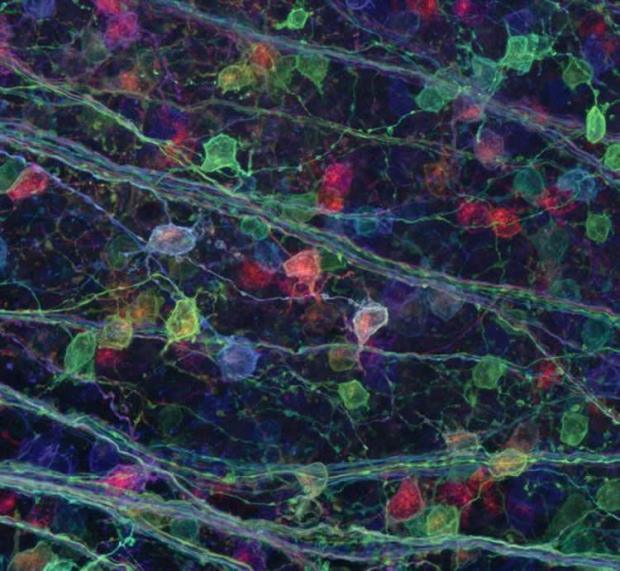
Using a technique dubbed “brainbow,” the Virginia Tech Carilion Research Institute scientists tagged synaptic terminals with proteins that fluoresce different colors. The researchers thought one color, representing the single source of the many terminals, would dominate in the clusters. Instead, several different colors appeared together, intertwined but distinct. Credit: Virginia Tech.

Using a technique dubbed “brainbow,” the Virginia Tech Carilion Research Institute scientists tagged synaptic terminals with proteins that fluoresce different colors. The researchers thought one color, representing the single source of the many terminals, would dominate in the clusters. Instead, several different colors appeared together, intertwined but distinct. Image Credit: Virginia Tech.

Neuroscientists know that some connections in the brain are pruned through neural development. Function gives rise to structure, according to the textbooks. But scientists have discovered that the textbooks might be wrong. Their results were published this week in Cell Reports.

In 2011, MIT neuroscientist Rebecca Saxe and colleagues reported that in blind adults, brain regions normally dedicated to vision processing instead participate in language tasks such as speech and comprehension. Now, in a study of blind children, Saxe’s lab has found that this transformation occurs very early in life, before the age of 4. The study, appearing in the Journal of Neuroscience, suggests that the brains of young children are highly plastic, meaning that regions usually specialized for one task can adapt to new and very different roles. The findings also help to define the extent to which this type of remodeling is possible.

New research suggests individuals with autistic traits may have more advanced creativity skills than those without such traits.

Physically fit people tend to have larger brain volumes and more intact white matter than their less-fit peers. Now a new study reveals that older adults who regularly engage in moderate to vigorous physical activity have more variable brain activity at rest than those who don’t. This variability is associated with better cognitive performance, researchers say.

Young adults diagnosed with attention deficit/hyperactivity disorder (ADHD) in adolescence show differences in brain structure and perform poorly in memory tests compared to their peers, according to new research from the University of Cambridge, UK, and the University of Oulu, Finland.

People who will develop dementia may begin to lose awareness of their memory problems two to three years before the actual onset of the disease, according to a new study published in the online issue of Neurology. The study also found that several dementia-related brain changes, or pathologies, are associated with the decline in memory awareness.

People with Alzheimer’s disease have fat deposits in the brain. For the first time researchers have discovered accumulations of fat droplets in the brain of patients who died from the disease and have identified the nature of the fat.

Finally this week, a computer analyzing speech has correctly identified five individuals who would later experience a psychotic episode against 29 who would not among a group of high-risk patients in a proof-of-principle study. The findings raise the prospect of a clinical tool to aid the diagnosis and prognosis of severe mental disorders such as schizophrenia.


Weekly Neuroscience Update

Current treatment methods used are transcranial direct current simulation (tDCS) – which is application of a low intensity direct (constant) current between two electrodes on the head, and transcranial alternating current simulation (tACS) – which sees a constant electrical current flow back and forth. Image credit: Monash University.

Current treatment methods used are transcranial direct current simulation (tDCS) – which is application of a low intensity direct (constant) current between two electrodes on the head, and transcranial alternating current simulation (tACS) – which sees a constant electrical current flow back and forth. Image credit: Monash University.

Researchers have discovered a new technique to enhance brain excitability that could improve physical performance in healthy individuals such as athletes and musicians.

The constant movement of children with attention-deficit/hyperactivity disorder (ADHD) may be distracting — but the fidgeting also may improve their cognitive performance, a study has found.

It is known that sleep facilitates the formation of long-term memory in humans. In a new study, researchers show that sleep does not only help form long-term memory but also ensures access to it during times of cognitive stress.

An international team of neuroscientists has proved the uniqueness of screams for the first time. In a study, they discovered that screams possess very special acoustic properties: This makes them a specific type of vocal expression which is only used in stressful and dangerous situations.

A new study published in the journal Cerebral Cortex suggests people who speak two languages have more gray matter in the executive control region of the brain.

Structural brain abnormalities in patients with schizophrenia, providing insight into how the condition may develop and respond to treatment, have been identified in an internationally collaborative study

Memories that have been “lost” as a result of amnesia can be recalled by activating brain cells with light.

High blood levels of a growth factor known to enable new blood vessel development and brain cell protection correlate with a smaller size of brain areas key to complex thought, emotion and behavior in patients with schizophrenia, researchers report in the journal Molecular Psychiatry.

Scientists have discovered a link between autism and genetic changes in some segments of DNA that are responsible for switching on genes in the brain.

Finally this week, new research has found that types of empathy can be predicted by looking at physical differences in the brain. This raises the fascinating possibility that some kinds of empathy might be able to be increased by training or that it might be possible for people to lose their empathy over time.

Weekly Neuroscience Update


Brain-scan-images-by-Hospital-Sant-Pau-702x336

A new study published in the American journal with the highest impact factor in worldwide,Molecular Psychiatry, reveals that consumers of cannabis are more prone to experiencing false memories.

Excessive movement common among children with attention-deficit/hyperactivity disorder is actually vital to how they remember information and work out complex cognitive tasks, a new study shows. The findings show the longtime prevailing methods for helping children with ADHD may be misguided.

Brain scans of students from contrasting backgrounds have made visible the legacy of a challenging childhood. Important brain regions are more developed among children raised in a comfortable home environment.

New research published in the journal Nature Communications represents a potentially fundamental shift in our understanding of how nerve cells in the brain generate the energy needed to function. The study shows neurons are more independent than previously believed and this research has implications for a range of neurological disorders.

Every time you make a memory, somewhere in your brain a tiny filament reaches out from one neuron and forms an electrochemical connection to a neighbouring neuron. A team of biologists at Vanderbilt University is studying how these connections are formed at the molecular and cellular level.

Finally this week, among the advice new parents receive is to read to their babies early and often. The hope is that sharing books together will help children’s language development and eventually, turn them into successful readers. Now there is evidence that reading to young children is in fact associated with differences in brain activity supporting early reading skills.