Psychiatrist Nora Volkow, chemist Kim Janda, and neuroscientists Eric Nestler and Amir Levine explain the latest thinking in the science of addiction.
Category: Addiction
Weekly Neuroscience Update

The team used diffusion tensor imaging (DTI, also called diffusion MRI) to look at five white-matter tracts in the brains of the 24 participants. This method analyzes water diffusion into tissues. For white matter, less water diffusion means the tissue is more fibrous and compact, both desirable traits. This image shows an MRI of white matter in the human brain. The image is for illustrative purposes only, and is not connected to the research. Credit Kubicki et al.
A new study of 9 and 10-year-olds finds that those who are more aerobically fit have more fibrous and compact white-matter tracts in the brain than their peers who are less fit. “White matter” describes the bundles of axons that carry nerve signals from one brain region to another. More compact white matter is associated with faster and more efficient nerve activity. The team reports its findings in the open-access journal Frontiers in Human Neuroscience.
In a new study published in The Journal of Neuroscience, researchers report that the amygdala — a part of the brain associated with decision making, memory and emotion — plays a part in telling us who to trust almost instantly.
The latest research on sports concussions in teens has been the focus of recent study.
Depression is known to be a common symptom of Parkinson’s disease, but remains untreated for many patients, according to a new study.
Following another person’s gaze can reveal a wealth of information critical to social interactions and also to safety. Gaze following typically emerges in infancy, and new research looking at preterm infants suggests that its visual experience, not maturational age, that underlies this critical ability.
fMRI scans reveal brain differences in risk-taking teens
Children and adolescents with autism have a surplus of synapses in the brain, and this excess is due to a slowdown in a normal brain “pruning” process during development, according to a study by neuroscientists at Columbia University Medical Center (CUMC).
While much attention has focused on the link between violent video game playing and aggression among youths, a new study finds significantly increased signs of depression among preteens with high daily exposure to violent video games.
An imaging study of chronic users of codeine-containing cough syrups (CCS) has found deficits in specific regions of brain white matter and associates these changes with increased impulsivity in CCS users.
New treatments for multiple sclerosis (MS) using common anti-psychotic agents have been discovered by Victoria University of Wellington researchers.
People with schizophrenia struggle to turn goals into actions because brain structures governing desire and emotion are less active and fail to pass goal-directed messages to cortical regions affecting human decision-making, new research reveals.
Inside The Decision-Making Brain

The anterior insula was sensitive to escalating alcohol costs especially when the costs of drinking outweighed the benefits, indicating this could be the region of the brain at the intersection of how our rational and irrational systems work with one another.
Although choosing to do something because the perceived benefit outweighs the financial cost is something people do daily, little is known about what happens in the brain when a person makes these kinds of decisions. Studying how these cost-benefit decisions are made when choosing to consume alcohol, University of Georgia associate professor of psychology James MacKillop identified distinct profiles of brain activity that are present when making these decisions.*
The study combined functional magnetic resonance imaging and a bar laboratory alcohol procedure to see how the cost of alcohol affected people’s preferences. The study group included 24 men, age 21-31, who were heavy drinkers. Participants were given a $15 bar tab and then were asked to make decisions in the fMRI scanner about how many drinks they would choose at varying prices, from very low to very high. Their choices translated into real drinks, at most eight that they received in the bar immediately after the scan. Any money not spent on drinks was theirs to keep.
The study applied a neuroeconomic approach, which integrates concepts and methods from psychology, economics and cognitive neuroscience to understand how the brain makes decisions. In this study, participants’ cost-benefit decisions were categorized into those in which drinking was perceived to have all benefit and no cost, to have both benefits and costs, and to have all costs and no benefits. In doing so, MacKillop could dissect the neural mechanisms responsible for different types of cost-benefit decision-making.
When participants decided to drink in general, activation was seen in several areas of the cerebral cortex, such as the prefrontal and parietal cortices. However, when the decision to drink was affected by the cost of alcohol, activation involved frontostriatal regions, which are important for the interplay between deliberation and reward value, suggesting suppression resulting from greater cognitive load. This is the first study of its kind to examine cost-benefit decision-making for alcohol and was the first to apply a framework from economics, called demand curve analysis, to understanding cost-benefit decision making.
The brain activity was most differentially active during the suppressed consumption choices, suggesting that participants were experiencing the most conflict. We had speculated during the design of the study that the choices not to drink at all might require the most cognitive effort, but that didn’t seem to be the case. Once people decided that the cost of drinking was too high, they didn’t appear to experience a great deal of conflict in terms of the associated brain activity. McKillop
These conflicted decisions appeared to be represented by activity in the anterior insula, which has been linked in previous addiction studies to the motivational circuitry of the brain. Not only encoding how much people crave or value drugs, this portion of the brain is believed to be responsible for processing interceptive experiences, a person’s visceral physiological responses.
It was interesting that the insula was sensitive to escalating alcohol costs especially when the costs of drinking outweighed the benefits. That means this could be the region of the brain at the intersection of how our rational and irrational systems work with one another. In general, we saw the choices associated with differential brain activity were those choices in the middle, where people were making choices that reflect the ambivalence between cost and benefits. Where we saw that tension, we saw the most brain activity. McKillop
While MacKillop acknowledges the impact this research could have on neuromarketing–or understanding how the brain makes decisions about what to buy–he is more interested in how this research can help people with alcohol addictions.
“These findings reveal the distinct neural signatures associated with different kinds of consumption preferences. Now that we have established a way of studying these choices, we can apply this approach to better understanding substance use disorders and improving treatment,” he said, adding that comparing fMRI scans from alcoholics with those of people with normal drinking habits could potentially tease out brain patterns that show what is different between healthy and unhealthy drinkers. “In the past, we have found that behavioral indices of alcohol value predict poor treatment prognosis, but this would permit us to understand the neural basis for negative outcomes.”
*The research was published in the journal Neuropsychopharmacology March 3.
Weekly Neuroscience Update
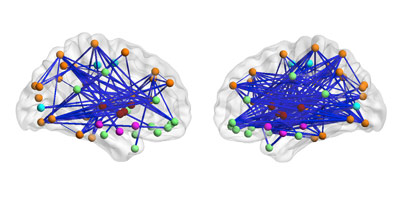
Overly connected: Many pairs of brain regions — including those involved in sensory processing, emotion and motivation — are more tightly synchronized in children with autism (right) than in controls (left).
Three studies published over the past two months have found significant evidence that children and adolescents with autism have brains that are overly connected compared with the brains of controls. The findings complicate the theory that autism is fundamentally characterized by weakly connected brain regions. Meanwhile new findings suggest the oxytocin receptor, a gene known to influence mother-infant bonding and pair bonding in monogamous species, also plays a special role in the ability to remember faces. This research has important implications for disorders in which social information processing is disrupted, including autism spectrum disorder. In addition, the finding may lead to new strategies for improving social cognition in several psychiatric disorders.
Researchers are gaining a better understanding of the neurochemical basis of addiction with a new technology called optogenetics.
We know that getting even a measly extra hour of sleep a night can have major benefits for us–like more memories, less anxiety, and happier genes. But scientists have tested another hypothesis for why we need to spend so much time horizontal: Sleep cleans our brains.
Scientists have pinpointed a specific part of the brain where Alzheimer’s begins and traced how the disease spreads.
Scientists have zapped an electrical current to people’s brains to erase distressing memories, part of an ambitious quest to better treat ailments such as mental trauma, psychiatric disorders and drug addiction.
Finally this week, many people can recall reading at least one cherished story that they say changed their life. Now researchers at Emory University have detected what may be biological traces related to this feeling: Actual changes in the brain that linger, at least for a few days, after reading a novel.
Does Addiction Exist?
 American actor and addiction-awareness activist Matthew Perry and journalist Peter Hitchens traded blows in a televised interview last week, with the latter questioning the reality of drug addiction. Hitchens questions how Perry has suffered in his ‘battle with addiction’ and for his motives in supporting special courts for people who buy and use illegal drugs. Hitchens has gone further to question if in fact ‘addiction’ actually exists at all. Not surprisingly this has resulted in one hell of a row.
Over the past two decades I have visited high schools and colleges to talk on how addictive drugs affect the brain and to explain the many theories about why certain people become addicted.
What is an addictive drug?
All addictive drugs release the neurotransmitter dopamine in the brain and this is thought to contribute to their addictive properties. Dopamine is carried in a nerve pathway called the reward pathway which controls the brain’s reward and pleasure centers. The reward pathway does this by regulating emotional responses that enable us not only to see rewards but also to take action to move toward them. Addictive drugs hijack the reward pathway by causing it to release dopamine and this leads to the compulsive behavior including the loss of control in limiting intake found in addiction.
Are some drugs more addictive than others?
Yes. The type of drug taken is important as some drugs are more addictive than others. This is because drugs differ in their ability to release dopamine in the reward pathway. How a drug is taken is also very important. Nicotine is very addictive because it is smoked. Smoking is the quickest way to get a substance into the brain and this makes it more addictive.
Don’t forget the buzz
The initial use of addictive drugs such as cocaine, heroin, alcohol and marijuana is often driven by the immediate euphoria – the buzz – that accompanies it and because their brains are so rich in dopamine this is of great importance to adolescents and young adults. In this way drug addiction is predominantly a disease of the young.
Why do people take addictive drugs?
People dabble in addictive drugs for all sorts of reasons – availability, affluence, to rebel, to seek attention, for a sense of adventure, naivety, the pressure to conform or just plain boredom.
Who becomes an addict?
Addiction is complex and there are as many reasons why someone becomes addicted as there are addicts. This situation is not helped by the fact that we cannot yet predict who will become addicted, or how to cure it.
Addiction is a three-legged stool
The problem is that not everyone who takes addictive drugs becomes addicted. In fact, most drug users can with a little effort, drop their habit. In order to explain who becomes addicted it is best to think of addiction as a three-legged stool and just as a stool needs all three legs in place- all three legs must also be in place for addiction to take hold. The three legs of addiction are
- Biological. For instance, children of alcoholics are four times more likely to become addicted to drink, even if they’re brought up away from their natural parents.
- Psychological. For instance, chronic, inescapable stress including the stress of boredom contributes to addictive behavior.
- Social. For instance, the availability of a drug is important – it’s harder to become an alcoholic in Saudi Arabia where the sale of alcohol is forbidden.
Hitchens is right – addiction doesn’t exist – that is, until you become an addict.
So, in one way Hitchens is right- addiction doesn’t exist – that is, until you become an addict. Then it controls your every waking and sleeping moment, it can destroy your life and those of your loved ones, shatter talent and ambition, wreck communities and economies.
Drug taking as a way of coping
The row between Perry and Hitchens over the nature of addiction might not be in vain if it opens up a debate on how we as a society deal with stress. We all know of, or have heard of someone suffering from chronic addiction and we are led to surmise that alcohol and drug taking is their way of coping. In this we are not alone. As the world economy continues on its downward slide, and unemployment and financial worries beset us, are we going to turn more and more to these quick fixes to handle our dis-stress?
Probably the most important lesson to be taken from this row is the realization that the stresses of life and how we manage them IS the difference between life and death. I look forward to developing this theme in greater detail including drug-free tips on how to avoid worry and stress in future posts, but in the meantime, I salute both Perry and Hitchens for bringing addiction back into the spotlight.
Weekly Neuroscience Update
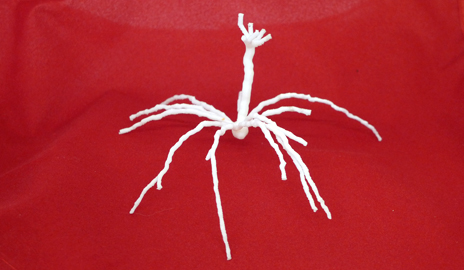
3D-printed model of a neuron (credit: Yale University)
A Yale neuroscientist has created the first 3D-printed neuron.
Studies released today suggest promising new treatments for nicotine and heroin addiction, and further our understanding of pathological gambling and heroin abuse in those suffering chronic pain. This new knowledge, released at Neuroscience 2013, the annual meeting of the Society for Neuroscience (SFN) and the world’s largest source of emerging news about brain science and health, may one day lead to non-pharmaceutical interventions and therapies to treat addiction. Also presented at SFN, new studies revealing links between social status and specific brain structures and activity, particularly in the context of social stress.
A new study has found that people experiencing a depressive episode process information about themselves differently than people who are not depressed.
To flexibly deal with our ever-changing world, we need to learn from both the negative and positive consequences of our behaviour. In other words, from punishment and reward. Hanneke den Ouden from the Donders Institute in Nijmegen demonstrated that serotonin and dopamine related genes influence how we base our choices on past punishments or rewards. This influence depends on which gene variant you inherited from your parents. These results were published in Neuron on November 20.
Brain scans reveal that people with fibromyalgia are not as able to prepare for pain as healthy people, and they are less likely to respond to the promise of pain relief.
Scientists have used RNA interference (RNAi) technology to reveal dozens of genes which may represent new therapeutic targets for treating Parkinson’s disease. The findings also may be relevant to several diseases caused by damage to mitochondria, the biological power plants found in cells throughout the body.
Playing a fast-paced strategy video games can help the brain to become more agile and improve strategic thinking, according to new research.
While young children sleep, connections between the left and the right hemispheres of their brain strengthen, which may help brain functions mature, according to a new study by the University of Colorado Boulder. And in another sleep study, a team of sleep researchers has confirmed the mechanism that enables the brain to consolidate memory and found that a commonly prescribed sleep aid enhances the process. Those discoveries could lead to new sleep therapies that will improve memory for aging adults and those with dementia, Alzheimer’s and schizophrenia.
Weekly Neuroscience Update
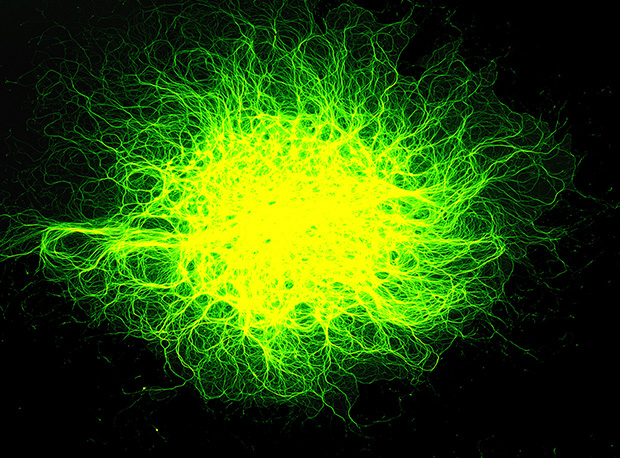
To study how nerve cells respond to injuries in their branches, Washington University researcher Valeria Cavalli grows them in “spots” like the one shown above. Cavalli recently identified a chain reaction that enables repair of these branches when they are cut. Credit Yongcheol Cho/Washington University at St. Louis.
Researchers have identified a chain reaction that triggers the regrowth of some damaged nerve cell branches, a discovery that one day may help improve treatments for nerve injuries that can cause loss of sensation or paralysis.
Groundbreaking research nearly two decades ago linking a mother’s educational background to her children’s literacy and cognitive abilities stands out among decades of social science studies demonstrating the adverse effects of poverty. Now new research has taken that finding in a neuroscientific direction: linking poor processing of auditory information in the adolescent brain to a lower maternal educational background.
A review of new research says there is growing evidence to support the idea that the brain plays a key role in normal glucose regulation and the development of type 2 diabetes.
University of Queensland (UQ) scientists have made a fundamental breakthrough into how the brain decodes the visual world.
Cocaine addicts may become trapped in drug binges not because they are always seeking euphoric highs but rather to avoid emotional lows, says a study in Psychopharmacology.
Researchers have developed a therapeutic at-home gaming program for stroke patients who experience motor weakness affecting 80 percent of survivors.
Learning a musical instrument as a child gives the brain a boost that lasts long into adult life, say scientists.
The birth of new neurons depend upon activation of an important molecular pathway in stem cells, a new Yale School of Medicine study shows.
Researchers have taken a major step towards understanding the causes of Alzheimer’s disease with the largest study yet into the genetics of the disorder.
Light enhances brain activity during a cognitive task even in some people who are totally blind, according to a new study.
Scientists have discovered biological mechanisms that may link Parkinson’s disease to Alzheimer’s disease, according to a study published in the journal Acta Neuropathologica.
Weekly Neuroscience Update

People who are better able to move to a beat show more consistent brain responses to speech than those with less rhythm, according to a study published in the September 18 issue of The Journal of Neuroscience. The findings suggest that musical training could possibly sharpen the brain’s response to language.
Concussions are connected with substance abuse and suicidal thoughts in adolescents, according to new research presented at a conference on sports-related brain injuries.
The structure of the brain may predict whether a person will suffer chronic low back pain, according to researchers who used brain scans. The results, published in the journal Pain, support the growing idea that the brain plays a critical role in chronic pain, a concept that may lead to changes in the way doctors treat patients.
A drug commonly used for treating diabetes may reverse symptoms of late-stage Alzheimer’s disease and is now in the process of entering a major clinical trial.
Scientists have found a new link between early-onset Parkinson’s disease and a piece of DNA missing from chromosome 22. The findings help shed new light on the molecular changes that lead to Parkinson’s disease.
The pain and itching associated with shingles and herpes may be due to the virus causing a “short circuit” in the nerve cells that reach the skin, researchers have found.
In a new study looking at toddlers and preschoolers with autism, researchers have found that children with better motor skills were more adept at socializing and communicating. This study adds to growing evidence of the important link between autism and motor skill deficits. Motor skills and muscle memory are held in the cerebellum.
Scientists have discovered differences in the brain structure of ballet dancers that may help them avoid feeling dizzy when they perform pirouettes.
New research could offer solutions into slowing down the progression of motor neurone disease (MND).
Playing first person action games can enhance your perception of movement – but only when you’re walking backwards. This is one of the findings of a new paper by University of Leicester psychologists, published in the journal Perception, which examines the effect of playing video games on motion perception.
Two new studies investigate the relationship between self-control and reward processing for chronic dieters and people who would like to control their food intake.
Scientists say they have discovered the specific brain circuitry that causes overeating, according to a study published in the journal Science.
Bad experiences enhance memory formation about places, scientists at The University of Queensland have found.
Finally this week, a new study from MIT reveals a gene that is critical to the process of memory extinction. Enhancing the activity of this gene, known as Tet1, might benefit people with posttraumatic stress disorder (PTSD) by making it easier to replace fearful memories with more positive associations,
How Did Tolerance Kill Cory Monteith?

I was saddened this week to read of the coroner’s verdict on the death of Cory Monteith. The 31-year-old talented actor and performer had been plagued by substance abuse problems long before his Hollywood days and had voluntarily checked himself into rehab in March where he completed a 30-day program.
Heroin and alcohol – a potentially lethal mix
Over the past two decades I have visited high schools and colleges to talk on how addictive drugs including heroin and alcohol affect the brain and it still amazes me how little the general public understand how these potentially lethal drugs work.
The post mortem showed the Cory’s death was due to a combination of heroin and alcohol intake. Both heroin and alcohol have similar effects on the brain. They both elevate mood, lower heart rate and put your brain into a sleepy inattentive state. Heroin and alcohol are what’s called narcotics (i.e. sleep inducers) and sometimes called nervous system depressants – not to be confused with a depressed mood but relating as to how these drugs act to silence (i.e. depress) activity in the nervous system. It is no coincidence then that a street name for heroin is dope. Once in the brain, heroin is converted to morphine by enzymes and the morphine binds to opiate receptors in certain areas of the brain. Alcohol in contrast, acts in a less specific way by making neurons ‘leaky’. Both drugs are highly addictive and to make matters worse, at high enough doses they both can act as anaesthetics – drugs that switch off important nervous functions in the brain stem – like for instance, respiration (breathing) and it was the combined effect of both of these drugs in slowing and eventually stopping breathing which was why Cory died.
Many addiction experts were not surprised
It is clear from reading newspaper reports that although Cory Monteith’s friends and loved ones are deeply shocked by the revelations of the inquest many addiction experts were not surprised. Corey struggled with drugs since he was 13 – so long in fact that his chronic addiction was hardwired into his brain. Thus, 30 days in rehab was not enough time to get to the root cause of the addiction especially if there were any underlying psychiatric issues. Brain rewiring for chronic addiction usually takes between 90 and 120 days to be effective. Alarm bells should also have rung after he was released from rehab when he went on vacation to Mexico. A vacation was a huge post-rehab mistake as a structured, supportive environment is so important to grow, maintain and strengthen the new brain connections.
What is tolerance and how did it kill Cory?
Not everyone who takes heroin and alcohol together dies; so what is so special about Cory’s situation? Cory died because of a brain phenomenon called tolerance. When drugs such as heroin are used repeatedly over time, tolerance may develop. Tolerance occurs when the person no longer responds to the drug in the way that person initially responded. Stated another way, it takes a higher dose of the drug to achieve the same level of response achieved initially. So for example, in the case of heroin, morphine and alcohol tolerance develops rapidly to the effects of the drug. The development of tolerance is not addiction, although many drugs that produce tolerance also have addictive potential. Tolerance to drugs can be produced by several different mechanisms, but in the case of heroin, morphine and alcohol tolerance develops at the level of biochemical reactions mainly within the liver whereby enzymes adapt so that the drug can no longer cause changes in brain cell firing. Thus, the effect of a given dose of heroin, morphine and/or alcohol is diminished.
A decrease in tolerance after rehab put Cory’s brain at risk
During the 30 days in rehab Cory’s body gradually rid itself of drugs and tolerance also gradually faded. The reasons why Cory’s death occurred shortly after his release from rehab was because of a large decrease in tolerance that his body experienced after that period of abstinence. Thus, when Cory returned to using, he ran the risk of experiencing a far more extreme reaction to the same drug doses that he was once accustomed to using.
It is particularly sad that our memories of this genuinely loved and popular person may be tarnished by the revelation. I would urge people not to let this be the case, and to remember Corey for his talent and not the sordid nature of his death.
Drug taking as a way of coping
I do think however that Cory’s death might not be in vain if it opens up a debate on how we as a society deal with stress. We have heard that Cory had a history of chronic addiction and we are led to surmise that alcohol and drug taking was his way of coping. In this he is not alone. As the world economy continues on its downward slide, and unemployment and financial worries beset us, are we going to turn more and more to these quick fixes to handle our dis-stress?
Probably the most important lesson to be taken from Cory’s death is the realization that the stresses of life and how we manage them IS the difference between life and death. I look forward to developing this theme in greater detail including drug-free tips on how the avoid worry and stress in future posts, but in the meantime, my deepest sympathy goes to Cory’s loved ones at this difficult time.
Weekly Neuroscience Update
Getting a grip—literally— by clenching your right fist before remembering information and your left when you want to remember it can boost your recall, according to the latest study. This strange trick may work because clenching your hands activates the side of the brain that handles the function— in right-handed people, for instance, the left side of the brain is primarily responsible for encoding information and the right for recalling memory. (If you are left-handed, the opposite applies).
Mathematicians from Queen Mary, University of London will bring researchers one-step closer to understanding how the structure of the brain relates to its function in two recently published studies.
Greater adherence to a Mediterranean diet (MeD) is associated with a lower likelihood of incident cognitive impairment (ICI), especially among those without diabetes, according to a study published in the April 30 issue of Neurology.
The widespread belief that dopamine regulates pleasure could go down in history with the latest research results on the role of this neurotransmitter. Researchers have proved that it regulates motivation, causing individuals to initiate and persevere to obtain something either positive or negative.
Supposedly ‘primitive’ reflexes may involve more sophisticated brain function than previously thought, according to researchers at Imperial College London.
The production of a certain kind of brain cell that had been considered an impediment to healing may actually be needed to staunch bleeding and promote repair after a stroke or head trauma, researchers at Duke Medicine report.
For any addiction, external cues and stress can trigger cravings that are hard to resist, and the latest research points to an area of the brain that might be responsible for sabotaging recovery.

