
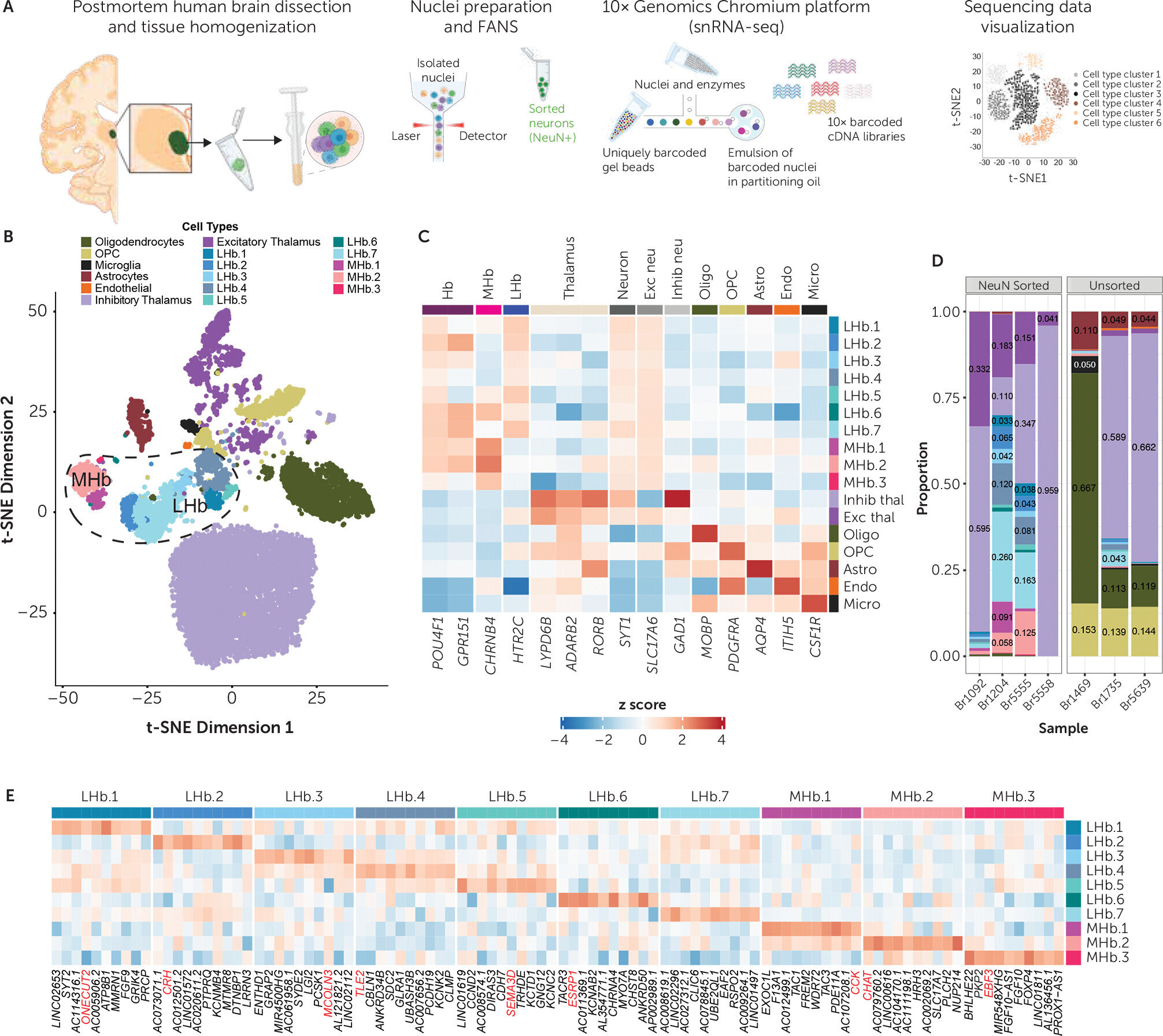
New research published in the American Journal of Psychiatry provides new molecular insights into the role of the habenula, a pea-sized brain region that helps regulate motivation and mood, in contributing to the risk of schizophrenia.
In an article published in Brain Medicine, a European research team presents a focused review of emerging neuromodulation techniques for treatment-resistant obsessive-compulsive disorder (OCD).
A study using wearable scanning technology has revealed how brain function differs in people with multiple sclerosis (MS). This is the first study to utilise this newly developed technology in MS, demonstrating its potential for investigating neurological diseases.
A new large-scale, open data resource helps researchers link brain development with mental health disorders.
Scientists have created one of the most comprehensive single-cell maps of the developing human brain. The atlas captures nearly every cell type, their genetic fingerprints, and how they grow and interact. It also benchmarks best-in-class laboratory methods for producing high-quality neurons, marking a significant step toward new therapies for Parkinson’s disease and other brain disorders.
Creative experience might enhance brain health, potentially slowing the brain’s ageing.
For the first time, scientists have mapped the genetic architecture of the brain’s communication bridge—the corpus callosum—using AI and MRI data from over 50,000 people. The study uncovered dozens of genes that shape the size and thickness of this vital structure, many of which are active during prenatal development when the brain’s wiring is established.
Researchers have discovered that the gut’s rhythmic muscle movements may help explain how blood vessels in the brain expand and contract in coordination.
Researchers have uncovered a previously overlooked role of the hippocampus in shaping memory, revealing how social interactions can enhance the brain’s ability to convert fleeting experiences into lasting memories.
An analysis of brain scans from 572 people reveals that activity in brain regions linked to reward and social processing can predict how effective messages will be. The work is published in PNAS Nexus.
Differences between men and women in intelligence and behaviour have been proposed and disputed for decades. Now, a growing body of scientific evidence shows hundreds of genes act differently in the brains of biologically male or female humans. What this means isn’t yet clear, though some of the genes may be linked to sex-biased brain disorders such as Alzheimer’s and Parkinson’s diseases.
A new study reveals that humans possess a form of “remote touch,” enabling them to detect hidden objects in sand without making direct contact.
A week-long retreat combining meditation and mind-body healing produced significant changes in brain activity and blood biology, demonstrating how consciousness-based practices can transform physical health. Participants showed reduced default-mode activity, enhanced neural connectivity, elevated natural opioids, immune activation, and metabolic shifts—effects that extended beyond the brain into the entire body.
Scientists have created an advanced visual neuroprosthesis that communicates bidirectionally with the brain, marking one of the most significant steps yet toward restoring functional vision
A new study has found that consuming unsalted, skin-roasted peanuts can significantly improve brain vascular function and memory. The findings were published online in the international, peer-reviewed journal Clinical Nutrition.
A new imagery-focused therapy called iMAPS may help people with psychosis gain control over disturbing mental images that fuel paranoia, fear, and hallucinations.
Finally, this week, a new brain decoding method called mind captioning can generate accurate text descriptions of what a person is seeing or recalling—without relying on the brain’s language system. Instead, it uses semantic features from vision-related brain activity and deep learning models to translate nonverbal thoughts into structured sentences.
 inside-the-brain.com