
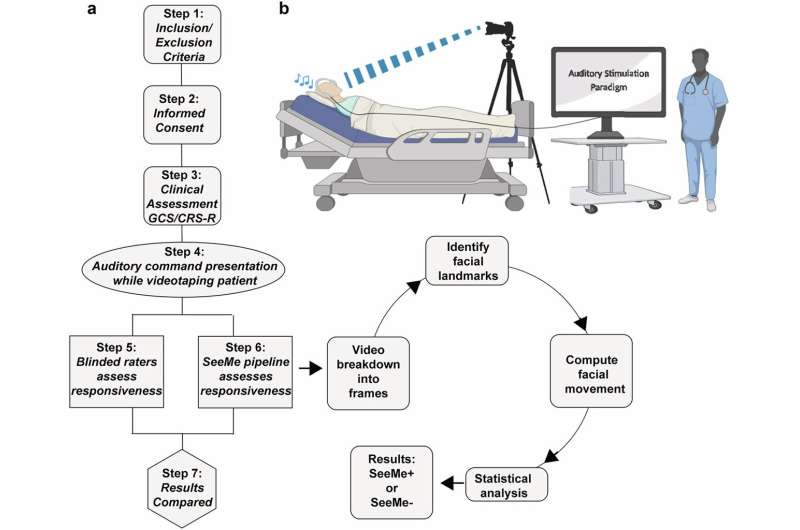
SeeMe, a computer vision tool, was able to detect low-amplitude, voluntary facial movements in comatose patients with acute brain injury days before clinicians could identify overt responses.
A new neuroimaging study reveals that child neglect alone, without other forms of abuse, can alter critical brain pathways. Researchers found abnormalities in white matter regions tied to movement, attention, language, and emotional regulation.
Scientists have identified a distinct neurochemical signature that distinguishes Parkinson’s disease from essential tremor.
A team of researchers has developed a simple, three-minute brainwave test called Fastball EEG that can detect early signs of memory impairment associated with Alzheimer’s disease. Unlike traditional memory tests, it is passive and requires no active participation, making it more objective and accessible.
A large-scale study with 600 participants shows that music can genuinely evoke feelings of companionship by sparking social imagination.
A toxic protein forms dynamic pores in the membranes of brain cells—and that may be the key to understanding how Parkinson’s disease develops. This is the conclusion of a new study from Aarhus University, where researchers have developed an advanced method to track molecular attacks in real time.
A hormone produced by the brain, orexin, may play a central role in the functioning of the brain’s glymphatic system, which clears waste, according to a new study.
Researchers at Johns Hopkins Medicine say they have revealed a possible molecular connection between air pollution and an increased risk of developing Lewy body dementia. The findings contribute to a growing body of evidence suggesting that environmental factors may trigger harmful protein changes in the brain, leading to neurodegeneration.
A new treatment offers hope to end the pain of neuropathy.
Two new papers from Clinical Gastroenterology and Hepatology and Gastroenterology shed light on how gut-brain interactions, influenced by both biology and life circumstances, shape eating behaviors. Together, they highlight the importance of multidisciplinary, personalized approaches to digestive health and nutrition.
Neuroscientsts have shown for the first time the precise timing of nerve signals determines how the brain processes information.
A new large-scale study shows that Alzheimer’s disease is marked by the erosion of epigenomic control, where brain cells lose the ability to maintain stable gene expression. Using a multi-region atlas of 3.5 million cells, researchers found that vulnerable cells in key memory regions such as the hippocampus suffer breakdowns in nuclear compartmentalization and lose their “epigenomic information.”
Individuals with an increased risk of dementia due to Alzheimer’s disease may have impaired spatial orientation skills.
UCLA engineers have developed a wearable, noninvasive brain-computer interface system that utilizes artificial intelligence as a co-pilot to help infer user intent and complete tasks by moving a robotic arm or a computer cursor.
Macquarie University hearing researchers have discovered how our brains learn to listen, and how this can help us understand speech in noisy, echo-filled spaces.
Some sugar substitutes may come with unexpected consequences for long-term brain health, according to a study published in Neurology. The study examined seven low- and no-calorie sweeteners and found that individuals who consumed the highest amounts experienced faster declines in cognitive function, specifically thinking and memory skills, compared to those who consumed the lowest amounts.
Finally this week, scientists studying ways of improving motion sickness have found that playing different types of music may help people recover more effectively.
 inside-the-brain.com