Weekly Neuroscience Update

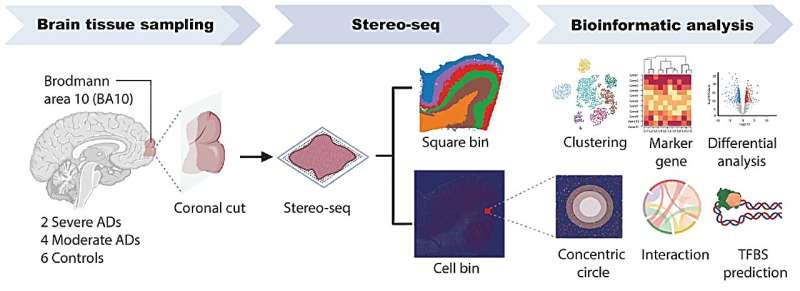
The analysis pipeline of the study, with select figures created using BioRender. Credit: Nature Communications (2025)

Scientists have developed a novel, detailed map at the subcellular level of a brain region frequently impacted by Alzheimer’s disease. This groundbreaking achievement represents a significant advancement in understanding the mechanisms underlying the development of this neurodegenerative condition.

New research shows that AI can identify complex regional pain syndrome (CRPS) with over 90% accuracy by analyzing gut microbiome patterns. 

Mindfulness exercises paired with music were found to engage both neural and cardiac systems, potentially reducing symptoms of anxiety and depression. A recent study showed that live and virtual music mindfulness sessions lowered stress and altered states of consciousness, though only live sessions fostered social connection.

A long-term study shows that teenagers who maintain or increase physical activity levels are less likely to develop symptoms of depression.

Researchers have developed a brain-computer interface (BCI) that enables computer cursor control and clicking, using neural signals from the speech motor cortex. One participant with amyotrophic lateral sclerosis (ALS) used the interface for daily life activities, including independent control of a personal desktop computer and text entry.

New research shows that targeting emotional processing is key to treating and managing chronic pain.

In a first-of-its-kind clinical study, researchers have shown that patients with treatment-resistant PTSD were symptom-free up to six months after completing traditional therapy paired with vagus nerve stimulation (VNS).

Scientists using living human brain tissue have shown for the first time how a toxic form of a protein linked to Alzheimer’s can stick to and damage the connections between brain cells.

People whose biological age is higher than their chronological age may be more likely to develop dementia than people whose biological age matches or is lower than their chronological age, according to a study published online in Neurology. Biological age is based on biomarkers of aging such as lung function, blood pressure and cholesterol.

A recent study reveals that oxygen tension elevation during weeks four to six promotes neurogenesis in brain organoids, regulated by neuroglobin. The research is published in Science Advances.

Obstructive sleep apnea, a condition that causes lower oxygen levels during sleep, is linked to degeneration of brain regions associated with memory through damage to the brain’s small blood vessels, according to a study published in Neurology.

A new theory suggests that psychedelics promote empathy, insight, and psychological flexibility by making the brain’s right hemisphere temporarily dominant over the left. 

A revolutionary microscopy method called LICONN enables scientists to reconstruct brain tissue and map synaptic connections using standard light microscopes. By embedding brain tissue in hydrogel, expanding it, and imaging at nanoscale resolution, researchers achieve a detailed view of neuronal architecture previously only possible with electron microscopy.

A new music therapy-based tool called MuSICCA may transform how healthcare teams assess consciousness in children with severe brain injuries. 

Research from Emory University has identified a biological connection between inflammation and deficits in motivation in individuals with schizophrenia, offering new hope for treating symptoms that have long been resistant to existing therapies.

A Yale-led study shows that the senses stimulate a region of the brain that controls consciousness—a finding that might inform treatment for disorders related to attention, arousal, and more.

Finally this week, a new study has debunked the common myth that autistic people are less effective communicators than non-autistic individuals. Researchers found no difference in how well information was shared between autistic-only, non-autistic-only, or mixed groups.

Weekly Neuroscience Update

Credit: Nature Mental Health (2023)

Researchers have identified important new methods for accurately identifying possible biomarkers in adolescent brains that can reliably predict cognitive developments and psychiatric issues.

A new study has examined the neural processes underlying odor processing in the human olfactory system and how the brain handles odor information from different nostrils and details the finding that each nostril has its own sense of smell, recording a distinct representation of the odor information it encounters.

A groundbreaking discovery suggests that dendrites could be pivotal in learning processes and may even influence our understanding of brain states and degenerative diseases.

A new study reveals the brain’s swift response to human errors compared to unintended outcomes. The study found that the brain recognizes an error within one second and then engages in a longer process to prevent future errors. This process was absent when the outcome wasn’t a direct result of an action, indicating a specialized error-awareness mechanism in the brain.

Researchers have identified new therapeutic targets for progressive supranuclear palsy (PSP), an incurable brain disorder with symptoms mimicking Parkinson’s and dementia.

A speech prosthetic developed by a collaborative team of neuroscientists, neurosurgeons, and engineers can translate a person’s brain signals into what they’re trying to say. The new technology might one day help people unable to talk due to neurological disorders regain the ability to communicate through a brain-computer interface.

It’s been debated for decades, but now researchers have suggested that left-handedness is not linked to better spatial skills.

A new study sheds light on when adolescents start thinking like adults. Researchers found that executive function, critical for task-switching and focus, typically matures around 18 years old. Drawing from over 10,000 participants and multiple datasets, this large-scale study offers a developmental chart for teen cognitive growth. These findings are invaluable for education, psychiatry, and the judicial system.

Emerging research underscores the profound connection between mental health and heart disease, with depression and anxiety hastening the onset of cardiovascular risk factors.

Researchers have discovered a potential link between the microbe C. perfringens and the progression of multiple sclerosis (MS). The study hints at the prospect of developing a vaccine or alternative treatments in the near future.

In a new study, researchers use a very large dataset to identify predictive brain imaging-based biomarkers of mental illness in adolescents.

Using advanced brain scanning technology, a research team has revealed insights into what happens in the brain during an advanced form of meditation called jhana. By uncovering distinct patterns of activity in different regions of the brain during jhana, the research suggests exciting possibilities for innovative therapies merging ancient meditation practices with modern neuroscience to improve well-being.

Finally this week, new research suggests your biological age, more than the years you’ve lived, may predict your risk of dementia and stroke in the future.

Weekly Neuroscience Update

A new study unveils the existence of traveling waves of the neurochemical acetylcholine in the striatum, a region of the brain responsible for motivating actions and habitual behaviors.

Researchers have conducted a study aimed at better understanding the patterns in neural network communication associated with ‘bad’ decisions made while gambling. Their paper, published in Frontiers in Neuroscience, shows that different types of ‘bad’ decisions made while gambling, namely avoidant and approach decisions, are associated with distinct neural communication patterns.

What determines how a teenager’s brain is structured and how it evolves? Researchers have established a close link between brain activity and a maturation process called cortical thinning.

Researchers have found COVID-19 does not appear to cause direct brain damage or viral invasion. In blood or cerebrospinal fluid samples, no abnormal biomarkers were found. The findings thus suggest that post-COVID condition is not the result of ongoing infection, immune activation, or brain damage.

A recent study finds differences in functional brain connectivity in people with and without psychosis and schizophrenia that could help researchers understand the neural underpinnings of this disease.

Brain health in people over age 50 deteriorated more rapidly during the pandemic, even if they didn’t have COVID-19, according to major new research linking the pandemic to sustained cognitive decline. The cognitive decline seems to have been exacerbated by several factors during the pandemic, including an increase in loneliness and depression, a decrease in exercise, and higher alcohol consumption.

Prenatal lead exposure is associated with an increased risk for cognitive developmental delay in children, according to a new study.

Children who are too short for their age can suffer reduced cognitive ability arising from differences in brain function as early as six months of age, according to new research. Stunted growth had previously been linked with poor cognitive outcomes later in life, but this is the first time that this association has been found in infancy. It is also the first time stunted growth has been linked to functional differences in how the brain works in early development.

Finally this week, researchers have developed a new method for mapping how the parts of the brain “speak” to each other, critical to understanding behavior changes in patients with neurological disease.

Weekly Neuroscience Update

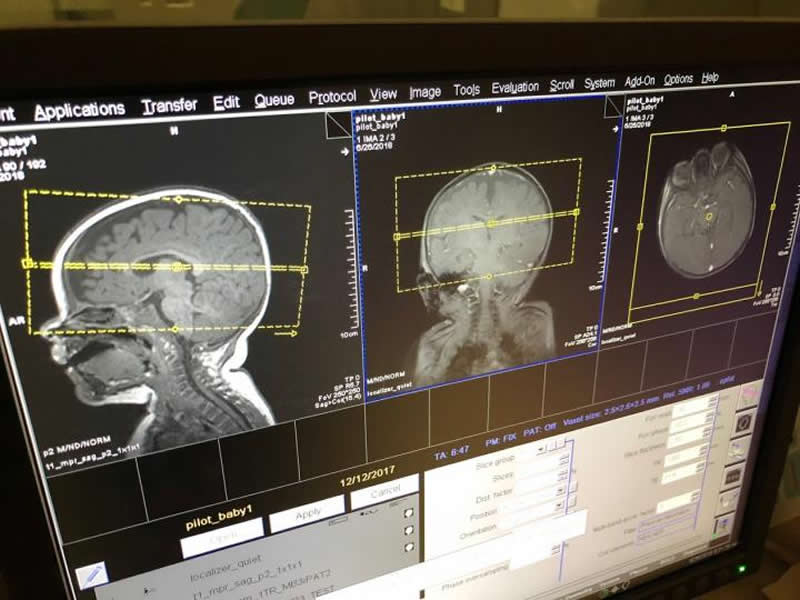
A baby next to fMRI scanning images of its brain. Understanding how an infant’s brain is typically organized may help answer questions when something goes awry. The image is credited to Cory Inman.

A newborn’s brain is more adult-like than previously assumed. Neuroimaging revealed much of the visual cortex scaffolding is in place, along with patterns of brain activity at 27 days of age, although it is not quite as strong as seen in adult brains.

New research uses the mating songs of birds to show how intrinsic properties of cells are closely tied to the complex processes of learning.

People with a life-long history of antisocial behavior had decreased mean surface area of the brain and lower mean cortical thickness than those with no history of antisocial behavior. Much of the cortical thinning was in areas associated with emotional regulation, motivation, and goal-directed behavior.

Two separate studies display the fascinating relations between AI and neuroscience.

Low-intensity exercise triggers brain networks associated with cognitive control and attention processing, while high-intensity exercise activates networks involved in emotional processing.

Following a stroke, dysfunction in the glymphatic system causes cerebrospinal fluid to flood the brain, drowning neurons, and triggering cerebral edema.

An unexpected research finding is providing new information that could lead to new treatments of certain neurological diseases and disorders, including multiple sclerosis, Alzheimer’s disease and spinal cord injury.

Male patients on the autism spectrum who were given oxytocin for four weeks experienced improvements in social attachment behaviors for up to 12 months.

Finally this week, new brain networks come ‘online’ during adolescence, allowing teenagers to develop more complex adult social skills, but potentially putting them at increased risk of mental illness, according to new research.

Weekly Neuroscience Update

synesthesia-enhanced-learning-neuroscienews.jpg

The image is adapted from the University of Toronto news release.

An experiment led by University of Toronto psychologists has shown for the first time that grapheme-colour synesthesia  –   a condition in which individuals sense colours associated with letters and numbers – provides a clear advantage in statistical learning – an ability to discern patterns – which is a critical aspect of learning a language. The result provides insight into how we learn, and how children and adults may learn differently.

Scientists might have found an early detection method for some forms of dementia.

Neuroimaging helps researchers observe what happens in the brain as a person is rotated. The study, which gives insight into how the brain moves after the head stops moving, also provides critical information for advancing studies of TBI.

Esketamine combined with antidepressants acts rapidly to help alleviate symptoms in those with treatment-resistant depression.

Inflammation appears to reduce reward response in females. Reduced activity in the brain’s reward system is a key component of anhedonia, the loss of enjoyment in activities, a core feature of depression. The findings may explain why depression is more prevalent in women than in men.

A new study has found that a new nerve stimulation therapy to increase blood flow could help patients with the most common type of stroke up to 24 hours after onset.

The results of a new study suggest that virtual reality could make life easier for people with dementia. The authors conclude that virtual reality helped the participants recall memories and contributed to an improvement in patients’ relationships with caregivers.

Researchers have identified average levels of biological and anatomical brain changes with Alzheimer’s disease over 30 years before symptoms appear.

Magnetic stimulation of the brain improves working memory, offering a new potential avenue of therapy for individuals living with Alzheimer’s disease and other forms of dementia, according to new research.

Sleep in teenagers can be improved by just one week of limiting their evening exposure to light-emitting screens on phones, tablets and computers,

Finally this week, using Magnetic Resonance Imaging (MRI), scientists have captured 3D images that show how infants’ brains and skulls change shape as they move through the birth canal just before delivery.


Weekly Neuroscience Update

autism-body-clock-neurosciencnews.jpg

Image Source: RIKEN

Researchers report the hierarchy of intrinsic neural timescales appears to be disrupted in adults on the autism spectrum. 

A new study reveals teenage binge drinking can result in lasting epigenetic changes that alter the expression of BDNF-AS, a protein vital for the formation of neural connection in the amygdala.

Researchers shed light on the neural networks that appear to govern human consciousness.

Scientists report the popular bodybuilding protein supplement, L-norvaline, can have a negative impact on brain health. Researchers found that in low concentrations, the supplement causes damage to neurons which eventually leads to cell death.

A new study finds cannabis use in teens is associated with a higher risk of developing depression and anxiety as adults.

According to researchers, there is an optimum amount of dopamine that should be present within the brain. This optimum amount can help improve cognitive performance on tasks, researchers report.

A new study reveals the somatosensory cortex plays a complex role in memory and reward learning.

Scientists report EEG technology can help to predict the onset of epileptic seizures up to four minutes in advance. Additionally, acetate, an edible acid, may help to prevent seizures if they are detected with enough notice.

Teenagers suffering with depression may struggle with recalling specific memories, according to new research from the University of Reading.

A new study reveals women’s brains tend to appear three years younger than males of the same age. Researchers report this could be a reason why women tend to remain mentally sharp longer than men.

A new prosthetic hand enables amputees to regain a subtle, close to natural, sense of touch.

Finally this week, new research reports that older adults who exercise by using electric bicycles experience comparable cognitive and mental health benefits to those who use a standard, pedal-powered bike.

Weekly Neuroscience Update

sleep-infection-neuroscinenews (1)

This diagram shows how the effects of Gαs-coupled agonists on T cells can be influenced by sleep or disease. NeuroscienceNews.com image is credited to Dimitrov et al., 2019.

A new study reports sleep can help immune cells attach to targets and help fight infection. The study reveals how sleep assists the body in fighting infections, whereas conditions like chronic stress can make the body more susceptible to illness.

Researchers have demonstrated that physical coordination is more beneficial in larger groups.

Scientists have identified a small set of molecules that can convert glial cells into new neurons. The finding could help develop new treatments for Alzheimer’s disease and brain injuries.

New therapeutic molecules show promise in reversing the memory loss linked to depression and aging.

The first population-level study on the link between gut bacteria and mental health identifies specific gut bacteria linked to depression and provides evidence that a wide range of gut bacteria can produce neuroactive compounds. Jeroen Raes (VIB-KU Leuven) and his team published these results today in the scientific journal Nature Microbiology.

A new study reports unexpected changes in music activates the nucleus accumbens, providing reward and helping us to learn about the music as we listen. 

Researchers reveal the different cognitive styles of creative and analytical thinkers are a result of fundamental differences in neural activity that can be observed when people are not working on a problem.

Finally this week, a new study reports fluvoxamine, an antidepressant used to treat OCD appears to be effective in stopping sepsis.

Weekly Neuroscience Update

dog-2751115_960_720.jpgThe tendency of dogs to seek contact with their owners is associated with genetic variations in sensitivity for the hormone oxytocin, according to a new study from Linköping University, Sweden.

A new study reveals schizophrenia is up to 79% hereditary.

Metacognition of a tactile working memory task has been demonstrated by researchers for the first time. Understanding this brain function might help in the development of new treatments for neuropsychiatric illnesses in the future.

Researchers have shed light on how motor signals help sharpen our ability to decipher complex sound flows.

Increased communication between distant brain regions helps older adults compensate for the negative aspects of ageing, reports a new study published this week in Human Brain Mapping.

Scientists report brain network organization changes can influence executive function in young adults.

A news study has found that brain functions in young men and women are changed by long-term alcohol use, but that these changes are significantly different in men and women.

Mindfulness and meditation can affect brain plasticity, resulting in the ability for adults to acquire new social skills, researchers report.

A new study has found that chronic tinnitus (ringing or buzzing in the ears) is associated with changes in certain networks in the brain, and furthermore, those changes cause the brain to stay more at attention and less at rest.

Finnish researchers have revealed how eating stimulates brain’s endogenous opioid system to signal pleasure and satiety.

Finally this week, sleep deprivation — typically administered in controlled, inpatient settings — rapidly reduces symptoms of depression in roughly half of depression patients, according to the first meta-analysis on the subject in nearly 30 years.