Weekly Neuroscience Update

feet-619399_960_720.jpg

A new study reveals children who are habitually barefoot show significantly different motor skills between the ages of 6-10 than those who are habitually shod. Researchers report those who habitually barefoot have better balance and jumping skills.

New research has found the natural vibrations of cars make people sleepier, affecting concentration and alertness levels just 15 minutes after drivers get behind the wheel.

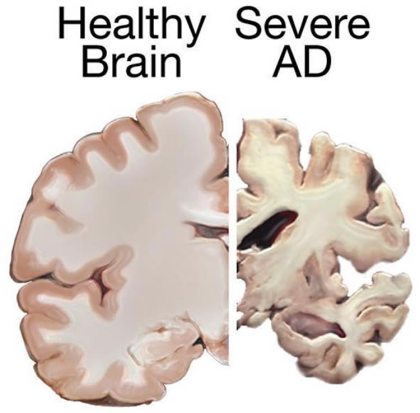
Scientists have discovered a “Big Bang” of Alzheimer’s disease – the precise point at which a healthy protein becomes toxic but has not yet formed deadly tangles in the brain.

A new study reports people living in areas with more sunlight have lower rates of OCD.

Neuroscientists at the University of California-Berkeley are developing a technique that could give us the ability to fool our brain into thinking that we’d experienced something that never happened by manipulating electrical activity in the brain.

Researchers report boys on the autism spectrum tend to have lower fractal dimension in the right side of the cerebellum than those without autism.

Distinct molecular mechanisms can generate the same features in different neurons, a team of scientists has discovered. Its findings, which appear in the journal Cell, enhance our understanding of brain cell development.

Finally this week, a new study reports a short burst of exercise can dramatically improve long-term retention of new motor skills.



Weekly Neuroscience Update

guitar-869217_960_720.jpgResearchers say those who can improvise are better musicians than those who have limited improvisational experience.

Melatonin is a hormone known to promote sleep, but its underlying mechanisms are unknown. Now, researchers have discovered how melatonin suppresses neurons in the brain that keeps you awake and alert. These findings could lead to new therapies for those who suffer from insomnia.

A new study shows how specific neurons can process sensory information about temperature and facilitate a change in behavior to adapt to the climate.

Researchers have identified electrical activity in the brain that is specific to the start of migraines. The new study reports spreading depolarization can be seen as a migraine begins, and an electrical current can be used to stop it in its tracks.

Adolescent drinking is associated with changes in the metabolite profile, a new study shows. 

Scientists are using big data and artificial intelligence to map neural networks in the brain. The new technology could help to better understand the progression of neurodegenerative diseases.

Sound and object motion can be used to change perceptions about body size, according to a new study.

Researchers report impairments in the neuroprotective communication between neural blood vessels, astrocytes and neurons may be an early factor in how high blood pressure may impair cognitive function.

A new study confirms a link between a number of autoimmune diseases and an increased risk of developing psychosis.

Autonomous Sensory Meridian Response (ASMR) – the relaxing ‘brain tingles’ experienced by some people in response to specific triggers, such as whispering, tapping and slow hand movements – may have benefits for both mental and physical health, according to new research.

Researchers have developed new neural implants that enable targeted delivery of drugs deep into brain structures.

A new study reports specific alterations in signaling circuits associated with memory can induce an abnormal response in neurons, which is linked to the aging process and cognitive decline.

Researchers say the combination of low muscle mass and strength in the context of high-fat mass, could be a predictor of cognitive function in older adults. 

Obstructive sleep apnoea (OSA) is associated with changes to the structure of the brain that are also seen in the early stages of dementia, according to a study published in the European Respiratory Journal.

Finally, this week, a new study reports a mother’s diet during pregnancy may have an effect on the composition of her child’s gut bacteria. 


Weekly Neuroscience Update

brain-waves-sleep-memory-neurosciencenews.jpg

As we age, slow brain waves during non-REM sleep fail to time contact with sleep spindles efficiently, leading to a lessened ability to form new memories correctly, a new study reports.

Researchers report children are more attentive and have improved memory when they exercise at their own pace, rather than embark on exhaustive exercise.

Inflammation in the blood plays a key role in “chemo-brain,” according to a published pilot study that provides evidence for what scientists have long believed.

A new study sheds light on the neurons tasks glial cells perform to insure brain activity is optimized.

According to researchers, children who eat fish at least once a week score four points higher on IQ tests and sleep better than those who consume fish less frequently, or not at all.

A new study looks how it may be possible to help reduce trauma associated with bad memories while we sleep.

Researchers reveal even after one short, ten minute, burst of exercise, cognitive processing and attention improve temporarily.

Finally this week, a new study supports the hypothesis that people with focal epilepsy are more susceptible to mood disorders, such as depression and anxiety.

Weekly Neuroscience Update

auditory-memory-magnets-neurosciencenews.jpg

image is credited to McGill University. Philippe Albouy

A new study reveals people showed improvements in auditory memory when transcranial magnetic stimulation was applied.

The part of the brain that creates mental maps of one’s environment plays a much broader role in memory and learning than was previously thought, according to new research published this week in the journal Nature by researchers at Princeton University.

Researchers have developed new tests to help quantify automatic moral and empathetic judgement.

Neurons in the prefrontal cortex “teach” neurons in the hippocampus to “learn” rules that distinguish memory-based predictions in otherwise identical situations, suggesting that learning in the present helps guide learning in the future, according to research conducted at the Icahn School of Medicine at Mount Sinai and published April 5 in the journal Neuron.

Neuroimaging technology can help determine the success of failure possibilities of cochlear implants for those who lose their hearing during adulthood.

Scientists have known that a lack of sleep can interfere with the ability to learn and make memories. Now, a group of researchers have found how sleep deprivation affects memory-making in the brain.

Reducing stress in those with epilepsy may be a beneficial, low risk preventative treatment for seizures, researchers report.

Using PET scans of the brain, researchers have shown that dopamine falls and fluctuates at different times during a migraine headache.

MRIs show a brain anomaly in nearly 70 percent of babies at high risk of developing the condition who go on to be diagnosed, laying the groundwork for a predictive aid for pediatricians and the search for a potential treatment.

A new study reports the anterior cingulate cortex, an area of the brain associated with empathy, activates very weakly in people with autism.

Scientists at Max Planck Florida Institute for Neuroscience developed a light-sensitive technique to visualize and manipulate neuromodulation with unprecedented spatial and temporal precision.

Finally this weekk, new research indicates that some autobiographical memories are more vulnerable to Alzheimer’s disease and dementia than others.


Weekly Neuroscience Update

Percentage of known neuron-, astrocyte- and oligodendrocyte-enriched genes in 32 modules, ordered by proportion of neuron-enriched gene membership. (credit: Michael Hawrylycz et al./Nature Neuroscience)

Percentage of known neuron-, astrocyte- and oligodendrocyte-enriched genes in 32 modules, ordered by proportion of neuron-enriched gene membership. (credit: Michael Hawrylycz et al./Nature Neuroscience)

Allen Institute researchers have identified a surprisingly small set of just 32 gene-expression patterns for all 20,000 genes across 132 functionally distinct human brain regions, and these patterns appear to be common to all individuals.

Evidence is mounting that gratitude makes a powerful impact on our bodies, including our immune and cardiovascular health. But how does gratitude work in the brain? A team at the University of Southern California has shed light on the neural nuts and bolts of gratitude in a new study, offering insights into the complexity of this social emotion and how it relates to other cognitive processes.

Subjective memory complaints (SMCs) are associated with cognitive impairment nearly two decades later among older women, a prospective study of aging has demonstrated.

Older adults that improved their fitness through a moderate intensity exercise program increased the thickness of their brain’s cortex, the outer layer of the brain that typically atrophies with Alzheimer’s disease, according to a new study. These effects were found in both healthy older adults and those diagnosed with mild cognitive impairment (MCI), an early stage of Alzheimer’s disease.

When it comes to the brain, “more is better” seems like an obvious assumption. But in the case of synapses, which are the connections between brain cells, too many or too few can both disrupt brain function. Research, recently published in the Journal of Neuroscience, reports  that an immune-system protein called MHCI, or major histocompatibility complex class I, moonlights in the nervous system to help regulate the number of synapses, which transmit chemical and electrical signals between neurons. MHCI could play an unexpected role in conditions such as Alzheimer’s disease, type II diabetes and autism.

Researchers have developed a simple technique to measure an individual’s visual processing speed–the speed at which an individual can comprehend visual information–in order to identify whether or not they may have cognitive issues.

Sleep is usually considered an all-or-nothing state: The brain is either entirely awake or entirely asleep. However, MIT neuroscientists have discovered a brain circuit that can trigger small regions of the brain to fall asleep or become less alert, while the rest of the brain remains awake.

Inside The Sleeping Brain


Why do we sleep? We spend a third of our lives in slumber, but science has yet to determine exactly why we have do it. Here’s a look at how sleep works, why we’re not getting enough sleep, what happens if you DON’T sleep, and an idea about where sleep came from in the first place

Weekly Neuroscience Update

Current treatment methods used are transcranial direct current simulation (tDCS) – which is application of a low intensity direct (constant) current between two electrodes on the head, and transcranial alternating current simulation (tACS) – which sees a constant electrical current flow back and forth. Image credit: Monash University.

Current treatment methods used are transcranial direct current simulation (tDCS) – which is application of a low intensity direct (constant) current between two electrodes on the head, and transcranial alternating current simulation (tACS) – which sees a constant electrical current flow back and forth. Image credit: Monash University.

Researchers have discovered a new technique to enhance brain excitability that could improve physical performance in healthy individuals such as athletes and musicians.

The constant movement of children with attention-deficit/hyperactivity disorder (ADHD) may be distracting — but the fidgeting also may improve their cognitive performance, a study has found.

It is known that sleep facilitates the formation of long-term memory in humans. In a new study, researchers show that sleep does not only help form long-term memory but also ensures access to it during times of cognitive stress.

An international team of neuroscientists has proved the uniqueness of screams for the first time. In a study, they discovered that screams possess very special acoustic properties: This makes them a specific type of vocal expression which is only used in stressful and dangerous situations.

A new study published in the journal Cerebral Cortex suggests people who speak two languages have more gray matter in the executive control region of the brain.

Structural brain abnormalities in patients with schizophrenia, providing insight into how the condition may develop and respond to treatment, have been identified in an internationally collaborative study

Memories that have been “lost” as a result of amnesia can be recalled by activating brain cells with light.

High blood levels of a growth factor known to enable new blood vessel development and brain cell protection correlate with a smaller size of brain areas key to complex thought, emotion and behavior in patients with schizophrenia, researchers report in the journal Molecular Psychiatry.

Scientists have discovered a link between autism and genetic changes in some segments of DNA that are responsible for switching on genes in the brain.

Finally this week, new research has found that types of empathy can be predicted by looking at physical differences in the brain. This raises the fascinating possibility that some kinds of empathy might be able to be increased by training or that it might be possible for people to lose their empathy over time.

Weekly Neuroscience Update

Earlier research showed that progranulin levels were elevated near plaques in the brains of patients with Alzheimer’s disease, but it was unknown whether this effect counteracted or exacerbated neurodegeneration. This image is for illustrative purposes only. Credit NIH.

Earlier research showed that progranulin levels were elevated near plaques in the brains of patients with Alzheimer’s disease, but it was unknown whether this effect counteracted or exacerbated neurodegeneration. This image is for illustrative purposes only. Credit NIH.

Low levels of the naturally occurring protein progranulin exacerbate cellular and cognitive dysfunction, while raising levels can prevent abnormalities in an Alzheimer model.

Teenagers who said they had a traumatic brain injury in their lifetime, especially girls, also reported significantly higher rates of harmful behavior, according to new research.

A new University of Iowa study further supports an inescapable message: caregivers have a profound influence – good or bad – on the emotional state of individuals with Alzheimer’s disease. Patients may not remember a recent visit by a loved one or having been neglected by staff at a nursing home, but those actions can have a lasting impact on how they feel. The findings of this study are published in the September 2014 issue of the journal Cognitive and Behavioral Neurology.

A new study reveals individual neurons in the human brain are triggered by the subject’s conscious perception, rather than by the visual stimulus.

A chemical in the brain plays a vital role in controlling the involuntary movements and vocal tics associated with Tourette Syndrome (TS), a new study has shown.

Researchers discover how the brain works during meditation.

Finally, this week, teenagers who regularly do not get enough sleep are more likely to struggle academically, the results of a new study show. Swedish researchers looked at over 20,000 teenagers aged between 12 and 19 and found that those who regularly slept for less than seven hours per night were more likely to fail in school. Details of these findings are published in the journal, Sleep Medicine.

.


Inside The Sleeping Brain

Russell Foster, Professor of Circadian Neuroscience, studies sleep and its role in our lives, examining how our perception of light influences our sleep-wake rhythms. The research on light perception hits home as we age — faced with fading vision, we also risk disrupted sleep cycles, which have very serious consequences, including lack of concentration, depression and cognitive decline. The more we learn about how our eyes and bodies create our sleep cycles, the more seriously we can begin to take sleep as a therapy.

Weekly Neuroscience Update

3D-printed model of a neuron (credit: Yale University)

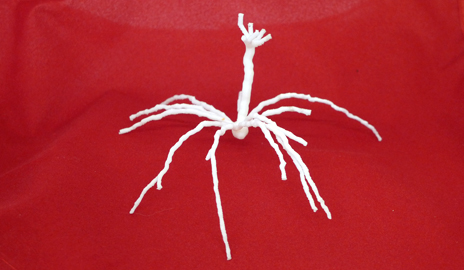
3D-printed model of a neuron (credit: Yale University)

A Yale neuroscientist  has created the first 3D-printed neuron.

Studies released today suggest promising new treatments for nicotine and heroin addiction, and further our understanding of pathological gambling and heroin abuse in those suffering chronic pain. This new knowledge, released at Neuroscience 2013, the annual meeting of the Society for Neuroscience (SFN) and the world’s largest source of emerging news about brain science and health, may one day lead to non-pharmaceutical interventions and therapies to treat addiction. Also presented at SFN, new studies revealing links between social status and specific brain structures and activity, particularly in the context of social stress.

A new study has found that people experiencing a depressive episode process information about themselves differently than people who are not depressed.

To flexibly deal with our ever-changing world, we need to learn from both the negative and positive consequences of our behaviour. In other words, from punishment and reward. Hanneke den Ouden from the Donders Institute in Nijmegen demonstrated that serotonin and dopamine related genes influence how we base our choices on past punishments or rewards. This influence depends on which gene variant you inherited from your parents. These results were published in Neuron on November 20.

Brain scans reveal that people with fibromyalgia are not as able to prepare for pain as healthy people, and they are less likely to respond to the promise of pain relief.

Scientists have used RNA interference (RNAi) technology to reveal dozens of genes which may represent new therapeutic targets for treating Parkinson’s disease. The findings also may be relevant to several diseases caused by damage to mitochondria, the biological power plants found in cells throughout the body.

Playing a fast-paced strategy video games can help the brain to become more agile and improve strategic thinking, according to new research.

While young children sleep, connections between the left and the right hemispheres of their brain strengthen, which may help brain functions mature, according to a new study by the University of Colorado Boulder.  And in another sleep study, a team of sleep researchers  has confirmed the mechanism that enables the brain to consolidate memory and found that a commonly prescribed sleep aid enhances the process. Those discoveries could lead to new sleep therapies that will improve memory for aging adults and those with dementia, Alzheimer’s and schizophrenia.