Weekly Neuroscience Update

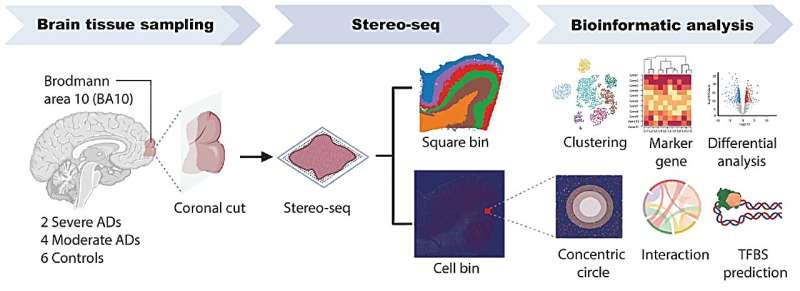
The analysis pipeline of the study, with select figures created using BioRender. Credit: Nature Communications (2025)

Scientists have developed a novel, detailed map at the subcellular level of a brain region frequently impacted by Alzheimer’s disease. This groundbreaking achievement represents a significant advancement in understanding the mechanisms underlying the development of this neurodegenerative condition.

New research shows that AI can identify complex regional pain syndrome (CRPS) with over 90% accuracy by analyzing gut microbiome patterns. 

Mindfulness exercises paired with music were found to engage both neural and cardiac systems, potentially reducing symptoms of anxiety and depression. A recent study showed that live and virtual music mindfulness sessions lowered stress and altered states of consciousness, though only live sessions fostered social connection.

A long-term study shows that teenagers who maintain or increase physical activity levels are less likely to develop symptoms of depression.

Researchers have developed a brain-computer interface (BCI) that enables computer cursor control and clicking, using neural signals from the speech motor cortex. One participant with amyotrophic lateral sclerosis (ALS) used the interface for daily life activities, including independent control of a personal desktop computer and text entry.

New research shows that targeting emotional processing is key to treating and managing chronic pain.

In a first-of-its-kind clinical study, researchers have shown that patients with treatment-resistant PTSD were symptom-free up to six months after completing traditional therapy paired with vagus nerve stimulation (VNS).

Scientists using living human brain tissue have shown for the first time how a toxic form of a protein linked to Alzheimer’s can stick to and damage the connections between brain cells.

People whose biological age is higher than their chronological age may be more likely to develop dementia than people whose biological age matches or is lower than their chronological age, according to a study published online in Neurology. Biological age is based on biomarkers of aging such as lung function, blood pressure and cholesterol.

A recent study reveals that oxygen tension elevation during weeks four to six promotes neurogenesis in brain organoids, regulated by neuroglobin. The research is published in Science Advances.

Obstructive sleep apnea, a condition that causes lower oxygen levels during sleep, is linked to degeneration of brain regions associated with memory through damage to the brain’s small blood vessels, according to a study published in Neurology.

A new theory suggests that psychedelics promote empathy, insight, and psychological flexibility by making the brain’s right hemisphere temporarily dominant over the left. 

A revolutionary microscopy method called LICONN enables scientists to reconstruct brain tissue and map synaptic connections using standard light microscopes. By embedding brain tissue in hydrogel, expanding it, and imaging at nanoscale resolution, researchers achieve a detailed view of neuronal architecture previously only possible with electron microscopy.

A new music therapy-based tool called MuSICCA may transform how healthcare teams assess consciousness in children with severe brain injuries. 

Research from Emory University has identified a biological connection between inflammation and deficits in motivation in individuals with schizophrenia, offering new hope for treating symptoms that have long been resistant to existing therapies.

A Yale-led study shows that the senses stimulate a region of the brain that controls consciousness—a finding that might inform treatment for disorders related to attention, arousal, and more.

Finally this week, a new study has debunked the common myth that autistic people are less effective communicators than non-autistic individuals. Researchers found no difference in how well information was shared between autistic-only, non-autistic-only, or mixed groups.
Weekly Neuroscience Update

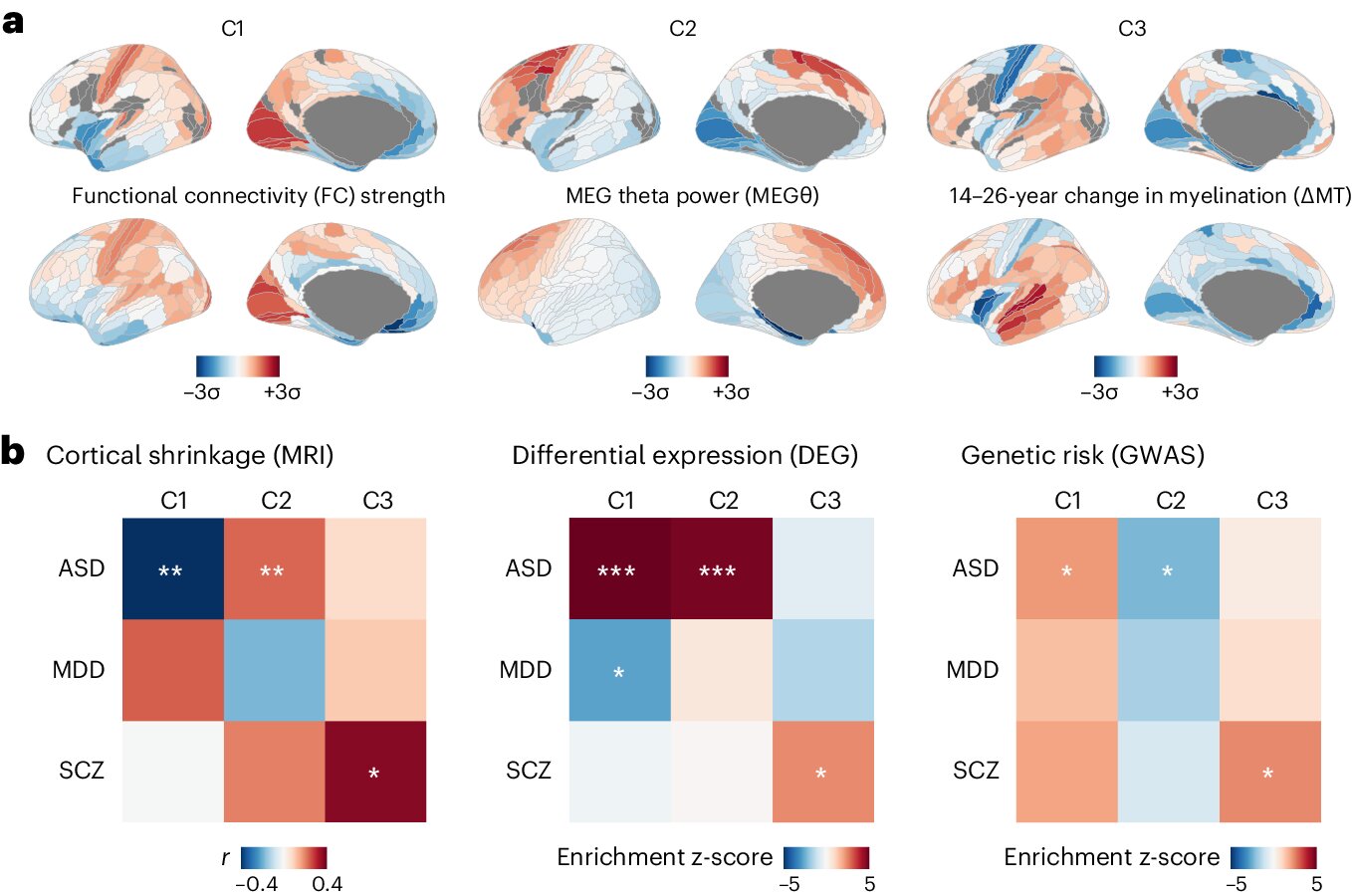
Credit: Nature Neuroscience(2024).

Researchers at University of Cambridge and other institutes worldwide recently carried out a study that linked gene expression in healthy brains to the imaging, transcriptomics and genetics of autism spectrum disorder and schizophrenia. Their paper, published in Nature Neuroscience, unveiled three distinct spatial patterns of cortical gene expression each with specific associations to autism and schizophrenia

A study published in the Journal of the American College of Cardiology suggests that physical activity may reduce cardiovascular disease risk by lowering stress-related brain activity.

A team of researchers at Baylor College of Medicine and Yale University incorporated generative artificial intelligence (AI) to create a foundational model for brain activity. The Brain Language Model (BrainLM) was developed to model the brain in silico and to determine how brain activities are related to human behavior and brain diseases.

Using MRI, engineers have found a way to detect light deep in the brain.

Stressful life events, such as the death of a loved one or divorce, put a person at greater risk of developing dementia in later life, a recent study has found. But only if the stressful event happened in childhood or midlife.

Our brains process odours differently depending on the names assigned to them, according to new research. 

People with neurological disease have a greater chance of death after contracting COVID-19, according to a new study. The research also confirms a higher risk of developing new neurological disorders after COVID infection.

Children who experience chronic lack of sleep from infancy may be at increased risk of developing psychosis in early adulthood, new research shows. 

A team of brain specialists at the California Institute of Technology has developed a brain–computer interface approach to decode words “spoken” entirely in the brain by recording signals from individual neurons in real time.

A new study shows that the cerebellum is involved in processing emotions, with implications for ataxia care.

A research team has revealed the link between the frequency of sleep apnea events during the rapid-eye-movement stage and the severity of verbal memory impairment in older adults at risk for Alzheimer’s disease. Verbal memory refers to the cognitive ability to retain and recall information presented through spoken words or written text and is particularly vulnerable to Alzheimer’s.

Results from a recent neuroplasticity study show how singing rehabilitates speech production in post-stroke aphasia.

For the first time, researchers have succeeded in explaining the propagation of traveling waves of activity in the human brain using a computer simulation. Previous studies indicate that these waves are important for various cognitive functions such as memory.

A new publication in Scientific Reports unveils a promising non-opioid pain treatment.

Repeated blows to the heads of football players can damage the small blood vessels of the brain, according to research by scientists who believe this damage may contribute to brain dysfunction in some athletes years after play has ended.

New research has shed light in the complex interplay between cell proteins, and how they impact on neurons in neurodevelopmental disorders and Alzheimer’s disease.

Artificial intelligence (AI) computer programs that process MRI results show differences in how the brains of men and women are organized at a cellular level, a new study shows. These variations were spotted in white matter, tissue primarily located in the human brain’s innermost layer, which fosters communication between regions.

Finally, this week, climate change, and its effects on weather patterns and adverse weather events is likely to negatively affect the health of people with brain conditions.

Weekly Neuroscience Update

brain-20424_960_720.jpg

A new study reveals taking a short daytime nap can help to consolidate learning and memory of new foreign words.

Astrocytes, ‘caretaker’ cells that surround and support neurons in the brain, may lead the tempo of the body’s internal clock and control patterns of daily behavior, a new study reports.

Pre-teens who use a mobile phone or watch TV in the dark an hour before bed are at risk of not getting enough sleep, a new study reveals.

In a scientific first, neuroengineers have created a system that translates thought into intelligible, recognizable speech. This breakthrough, which harnesses the power of speech synthesizers and artificial intelligence, could lead to new ways for computers to communicate directly with the brain.

Scientists report brain connectivity appears to be dictated by the spatial architecture of neurons, rather than the cell type-specific cues.

A new study reports sleep deprivation increases the levels of tau, and accelerates the spread of the protein, in the brain. The findings reveal a lack of sleep alone may help drive the development of Alzheimer’s disease.

Researchers report alterations in RNA editing play a vital role in autism spectrum disorder.

According to a new study, the consequence of daily stress is linked to an increase in REM sleep. Researchers report the increase is associated with genes involved in apoptosis and cell survival. The findings shed light on how stress leads to mood disorders, and how changes in sleep contribute to this.

You can hack your brain to form good habits – like going to the gym and eating healthily – simply by repeating actions until they stick, according to new research.

Machine learning technology is helping researchers to detect the early signs of Alzheimer’s, by identifying potential blood based biomarkers of the disease. Researchers say the technology has found hidden factors associated with Alzheimer’s through medical data, and could help improve disease prediction.

A new study reveals the molecular switch that helps control the function of satiety neurons and body weight.

When we’re in pain, we have a hard time sleeping. But how does poor sleep affect pain? For the first time, scientists have answered that question by identifying neural glitches in the sleep-deprived brain that can intensify and prolong the agony of sickness and injury.

People with sleep apnea struggle to remember details of memories from their own lives, potentially making them vulnerable to depression, new research has shown.

Finally this week, using CRISPR gene editing, researchers mapped important genes for helping T helper cells. The findings could help generate new treatments to activate the immune system against infection and to attack tumor cells.


Weekly Neuroscience Update

dog-2751115_960_720.jpgThe tendency of dogs to seek contact with their owners is associated with genetic variations in sensitivity for the hormone oxytocin, according to a new study from Linköping University, Sweden.

A new study reveals schizophrenia is up to 79% hereditary.

Metacognition of a tactile working memory task has been demonstrated by researchers for the first time. Understanding this brain function might help in the development of new treatments for neuropsychiatric illnesses in the future.

Researchers have shed light on how motor signals help sharpen our ability to decipher complex sound flows.

Increased communication between distant brain regions helps older adults compensate for the negative aspects of ageing, reports a new study published this week in Human Brain Mapping.

Scientists report brain network organization changes can influence executive function in young adults.

A news study has found that brain functions in young men and women are changed by long-term alcohol use, but that these changes are significantly different in men and women.

Mindfulness and meditation can affect brain plasticity, resulting in the ability for adults to acquire new social skills, researchers report.

A new study has found that chronic tinnitus (ringing or buzzing in the ears) is associated with changes in certain networks in the brain, and furthermore, those changes cause the brain to stay more at attention and less at rest.

Finnish researchers have revealed how eating stimulates brain’s endogenous opioid system to signal pleasure and satiety.

Finally this week, sleep deprivation — typically administered in controlled, inpatient settings — rapidly reduces symptoms of depression in roughly half of depression patients, according to the first meta-analysis on the subject in nearly 30 years.


Weekly Neuroscience Update

Childhood poverty impacted how much the two regions of the prefrontal cortex (as shown in orange circles) were engaged during emotion regulation. (Credit: University of Illinois at Chicago College of Medicine)

Childhood poverty impacted how much the two regions of the prefrontal cortex (as shown in orange circles) were engaged during emotion regulation. (Credit: University of Illinois at Chicago College of Medicine)

Childhood poverty and chronic stress may lead to problems regulating emotions as an adult, according to research published online in the Proceedings of the National Academy of Sciences.

New research shows that one of the brain’s fundamental self-protection mechanisms depends on coordinated, finely calibrated teamwork among neurons and non-neural cells knows as glial cells, which until fairly recently were thought to be mere support cells for neurons. The study, which has implications for understanding neurodegenerative diseases, stroke, and other nervous system disorders, adds to a growing body of evidence that glial cells are integral to brain function.

Researchers at higher education institutions have identified six proteins in spinal fluid that can be used as markers for Alzheimer’s disease. And another study suggests that older adults who don’t sleep well have more of the brain plaques that are hallmarks of Alzheimer’s.

Researchers from the Centre for Functional Resonance Imaging of the Brain (FMRIB) at the University of Oxford in the UK, say through monitoring patients’ brain waves while under anesthetic, they were able to pinpoint degrees of consciousness dependent on the doses of anesthetic administered.

Finally, this week, a new study from the UCLA School of Nursing shows that the body’s autonomic responses — the controls that impact such functions as blood pressure, heart rate and sweating — are weaker in people with obstructive sleep apnea but are even more diminished in women.

Weekly Neuroscience Update

UC Santa Barbara scientists turned to the simple sponge to find clues about the evolution of the complex nervous system and found that, but for a mechanism that coordinates the expression of genes that lead to the formation of neural synapses, sponges and the rest of the animal world may not be so distant after all.

Scientists have discovered a mechanism which stops the process of forgetting anxiety after a stress event. In experiments they showed that feelings of anxiety don’t subside if too little dynorphin is released into the brain. The results can help open up new paths in the treatment of trauma patients. The study has been published in the current edition of the Journal of Neuroscience.

The biological role of a gene variant implicated in multiple sclerosis (MS) has been determined by researchers at Oxford University. The finding explains why MS patients do badly on a set of drugs used successfully in other autoimmune diseases, such as rheumatoid arthritis and inflammatory bowel disease – something that has been a puzzle for over 10 years.

A clinical trial of an Alzheimer’s disease treatment developed at MIT has found that the nutrient cocktail can improve memory in patients with early Alzheimer’s. The results confirm and expand the findings of an earlier trial of the nutritional supplement, which is designed to promote new connections between brain cells.

An international consortium, has taken cells from Huntington’s Disease patients and generated human brain cells that develop aspects of the disease in the laboratory. The cells and the new technology will speed up research into understanding the disease and also accelerate drug discovery programs aimed at treating this terminal, genetic disorder. 

Stem cells that come from a specific part of the developing brain help fuel the growth of brain tumors caused by an inherited condition, researchers at Washington University School of Medicine in St. Louis report.

Findings from the first study directly examining gamma-aminobutyric acid (GABA) concentrations in the brains of children with ADHD were published last week in the Archives of General Psychiatry. In this new article researchers report finding significantly lower concentrations of GABA in the cerebral cortexes of children diagnosed with ADHD, compared with typically developing children. GABA is the brain’s main inhibitory neurotransmitter. The differences were detected in the region of the brain that controls voluntary movement.

People who are born deaf process the sense of touch differently than people who are born with normal hearing, according to research funded by the National Institutes of Health. The finding reveals how the early loss of a sense— in this case hearing—affects brain development. It adds to a growing list of discoveries that confirm the impact of experiences and outside influences in molding the developing brain. The study is published in the July 11 online issue of The Journal of Neuroscience.

Neuronal abnormalities in the brains of children with obstructive sleep apnea are reversible with treatment, a prospective study has shown.

Although many areas of the human brain are devoted to social tasks like detecting another person nearby, a new study has found that one small region carries information only for decisions during social interactions. Specifically, the area is active when we encounter a worthy opponent and decide whether to deceive them. A brain imaging study conducted by researchers at the Duke Center for Interdisciplinary Decision Science (D-CIDES) put human subjects through a functional MRI brain scan while playing a simplified game of poker against a computer and human opponents. Using computer algorithms to sort out what amount of information each area of the brain was processing, the team found only one brain region — the temporal-parietal junction, or TPJ — carried information that was unique to decisions against the human opponent.


Weekly Neuroscience Update

A new study shows that sleeping after processing new information is most effective. Titled “Memory for Semantically Related and Unrelated Declarative Information: The Benefit of Sleep, the Cost of Wake,” the study was published March 22 in PLOSOne.

Snorting, gasping, or short interruptions in breathing during sleep (sleep apnea) may be linked to depression symptoms, new research shows.

Like the mute button on the TV remote control, our brains filter out unwanted noise so we can focus on what we’re listening to. But when it comes to following our own speech, a new brain study from the University of California, Berkeley, shows that instead of one homogenous mute button, we have a network of volume settings that can selectively silence and amplify the sounds we make and hear.

Just as the familiar sugar in food can be bad for the teeth and waistline, another sugar has been implicated as a health menace and blocking its action may have benefits that include improving long-term memory in older people and treating cancer. Progress toward finding such a blocker for the sugar — with the appropriately malicious-sounding name “oh-glick-nack” — was the topic of a report at the 243rd National Meeting & Exposition of the American Chemical Society (ACS), the world’s largest scientific society.

A hidden and never before recognized layer of information in the genetic code has been uncovered by a team of scientists at the University of California, San Francisco (UCSF) thanks to a technique developed at UCSF called ribosome profiling, which enables the measurement of gene activity inside living cells — including the speed with which proteins are made.