Weekly Neuroscience Update

Findings suggest that physiological reactivity to sad stimuli, assessed using pupillometry, serves as one potential biomarker of depression risk among children of depressed mothers. Image credit: Jonathan Cohen, Binghamton University Photographer.

Findings suggest that physiological reactivity to sad stimuli, assessed using pupillometry, serves as one potential biomarker of depression risk among children of depressed mothers. Image credit: Jonathan Cohen, Binghamton University Photographer.

How much a child’s pupil dilates in response to seeing an emotional image can predict his or her risk of depression over the next two years, according to new research from Binghamton University.

Unwanted, intrusive visual memories are a core feature of stress- and trauma-related clinical disorders such as posttraumatic stress disorder (PTSD), but they can also crop up in everyday life. New research shows that even once intrusive memories have been laid down, playing a visually-demanding computer game after reactivating the memories may reduce their occurrence over time.

Rapid eye movement or REM sleep actively converts waking experiences into lasting memories and abilities in young brains reports a new study.

People who have diabetes and experience high rates of complications are more likely to develop dementia as they age than people who have fewer diabetic complications, according to a new study published in the Endocrine Society’s Journal of Clinical Endocrinology & Metabolism.

New research suggests that when deciding which of several possible actions to perform, the human brain plans multiple actions simultaneously prior to selecting one of them to execute.

In the first study of its kind researchers found that neurons in a specific brain region play a key role in rapidly forming memories about every day events, a finding that may result in a better understanding of memory loss and new methods to fight it in Alzheimer’s and other neurological diseases.

A major epidemiological registry-based study indicates that Parkinson’s disease begins in the gastrointestinal tract; the study is the largest in the field so far.

The activity of the emotion centres in the brain, the amygdala, is influenced by motivation rather than by the emotions themselves. This can be concluded from research carried out at Radboud University into the hormone testosterone. Testosterone increases amygdala activity in a person who is approaching a socially threatening situation and decreases the activity when such a situation is avoided.

An imaging study by Stanford University School of Medicine investigators has found distinct differences between the brains of patients with chronic fatigue syndrome and those of healthy people.

According to a new study, women experiencing difficulty with time management, attention, organization, memory, and problem solving – often referred to as executive functions – related to menopause may find improvement with a drug already being used to treat attention deficit hyperactivity disorder (ADHD

A new staining method could help map the entire brain.

Finally this week, Yale researchers have determined how a key component of the nervous system develops at the embryonic stage. Their work may ultimately offer new approaches to combat major diseases such as diabetes and peripheral artery disease.


Weekly Neuroscience Update

A new study has found that while stereotypic shapes exist for this structure, individuals with a broader hippocampus tend to perform better on various tests that assess memory. The image is for illustrative purposes only. Image credit: Camillo Golgi.

A new study has found that while stereotypic shapes exist for this structure, individuals with a broader hippocampus tend to perform better on various tests that assess memory. The image is for illustrative purposes only. Image credit: Camillo Golgi.

New research challenges the long-held belief that a larger hippocampus is directly linked to improved memory function.

Premature birth can alter the connectivity between key areas of the brain, according to a new study led by King’s College London. The findings should help researchers to better understand why premature birth is linked to a greater risk of neurodevelopmental problems, including autistic spectrum disorders and attention deficit disorders.

Scientists have uncovered mathematical equations behind the way the brain forms – and even loses – memories.

New scanning methods which map the wiring of the brain could provide a valuable new tool to predict people at risk of schizophrenia, according to a new study.

People with depression may be more likely to develop Parkinson’s disease, according to a large study published in Neurology.

Medical researchers have known for several years that there is some sort of link between long-term depression and an increased risk of stroke. But now scientists are finding that even after such depression eases, the risk of stroke can remain high.

A new study from the University of Cambridge has identified one of the oldest fossil brains ever discovered – more than 500 million years old – and used it to help determine how heads first evolved in early animals.

Researchers have succeeded in reconstructing the neuronal networks that interconnect the elementary units of sensory cortex — cortical columns. The scientists say that this study marks a major step forward to advance the understanding of the organizational principles of the neocortex and sets the stage for future studies that will provide extraordinary insight into how sensory information is represented, processed and encoded within the cortical circuitry.

Smokers who are able to quit might actually be hard-wired for success, according to a study from Duke Medicine.

Scientists are attempting to mimic the memory and learning functions of neurons found in the human brain. To do so, they investigated the electronic equivalent of the synapse, the bridge, making it possible for neurons to communicate with each other.

Finally this week, in a study using functional magnetic resonance imaging, scientists found that our inherent risk-taking preferences affect how we view and act on information from other people.

Weekly Neuroscience Update

researchers have developed a method to map the circuitry of the brain with a “Neuronal Positioning System” (NPS) similar to how a Global Positioning System (GPS) triangulates our location on the planet. Image credit: Dr. Shlomo Tsuriel and Dr. Alex Binshtok, Hebrew University of Jerusalem.

researchers have developed a method to map the circuitry of the brain with a “Neuronal Positioning System” (NPS) similar to how a Global Positioning System (GPS) triangulates our location on the planet. Image credit: Dr. Shlomo Tsuriel and Dr. Alex Binshtok, Hebrew University of Jerusalem.

In new research scientists have announced a “Neuronal Positioning System” (NPS) that maps the circuitry of the brain, similar to how a Global Positioning System (GPS) receiver triangulates one’s location on the planet.

EPFL scientists have developed a new method that can accurately simulate the chemical modification of the protein behind Parkinson’s disease. The technique, has opened a new way of understanding Parkinson’s, and can be expanded to other proteins and diseases as well.

Neuroscientists have found a way to activate opioid receptors with light.

New research shows that chemotherapy can lead to excessive mind wandering and an inability to concentrate. Dubbed ‘chemo-brain,’ the negative cognitive effects of the cancer treatment have long been suspected, but the study is the first to explain why patients have difficulty paying attention.

A study provides new evidence that book sharing in early childhood may promote brain development supporting reading readiness.

An international team of scientists has discovered what amounts to a molecular reset button for our internal body clock. Their findings reveal a potential target to treat a range of disorders, from sleep disturbances to other behavioral, cognitive, and metabolic abnormalities, commonly associated with jet lag, shift work and exposure to light at night, as well as with neuropsychiatric conditions such as depression and autism.

New findings provide potential explanations for the very high percentage of post-traumatic disorders in combat.

Scientists have discovered that neurons are risk takers: They use minor “DNA surgeries” to toggle their activity levels all day, every day. Since these activity levels are important in learning, memory and brain disorders, the researchers think their finding will shed light on a range of important questions.

Women may have a more difficult time than men in recovering from concussion, according to a new study published online in the journal Radiology.

Finally this week, researchers report a previously unappreciated phenomenon in which the location of injury to a neuron’s communication wire in the spinal cord — the axon — determines whether the neuron simply stabilizes or attempts to regenerate. The study, published by Neuron, demonstrates how advances in live-imaging techniques are revealing new insights into the body’s ability to respond to spinal cord injuries.


Weekly Neuroscience Update

Parkin-expressing cells (red) are undergoing programmed cell death. Credit Dr. Emilie Hollville and Professor Seamus Martin, Trinity College Dublin.

Parkin-expressing cells (red) are undergoing programmed cell death. Credit Dr. Emilie Hollville and Professor Seamus Martin, Trinity College Dublin.

Scientists at Trinity College Dublin have made an important breakthrough in our understanding of Parkin – a protein that regulates the repair and replacement of nerve cells within the brain. This breakthrough generates a new perspective on how nerve cells die in Parkinson’s disease.

A new study, which may have implications for approaches to education, finds that brain mechanisms engaged when people allow their minds to rest and reflect on things they’ve learned before may boost later learning.

A study in which more than 43,000 children were evaluated for head trauma offers an unprecedented picture of how children most frequently suffer head injuries. For teens, top causes are assaults, sports, car crashes; for younger children, falls lead the list.The findings also indicate how often such incidents result in significant brain injuries, computerized tomography (CT) scans to assess head injuries, and neurosurgery to treat them.

Neighborhoods that motivate walking can stave off cognitive decline in older adults.

People who are depressed often complain that they find it difficult to make decisions. A new study provides an explanation. Researchers tested 29 patients diagnosed with major depression and 27 healthy controls and they found that the people with depression had an impaired ability to go with their gut instincts, or what we might call intuition.

Learning a new language changes your brain network both structurally and functionally, according to Penn State researchers.

Finally this week, being shown pictures of others being loved and cared for reduces the brain’s response to threat, new research from the University of Exeter has found.


Weekly Neuroscience Update

Reviewing MRI data, researchers found the brain anatomy of people with autism above the age of six was mostly indistinguishable from that of typically developing individuals. This image is for illustrative purposes only. Credit McZusatz.

Reviewing MRI data, researchers found the brain anatomy of people with autism above the age of six was mostly indistinguishable from that of typically developing individuals. This image is for illustrative purposes only. Credit McZusatz.

Brain anatomy in MRI scans of people with autism above age six is mostly indistinguishable from that of typically developing individuals and, therefore, of little clinical or scientific value.

Some types of dementia are actually a result of many tiny, unnoticed strokes damaging the brain over time, researchers at the Krembil Neuroscience Centre in Toronto, Canada, have found. This suggests that this type of dementia could be treatable — probably through lifestyle changes.

Therapists could pick up signs of depression just be listening to how their patients talk, after a study found that unhappy people speak in a different tone.

Why do we remember some things and not others? In a unique imaging study researchers have discovered how neurons in the brain might allow some experiences to be remembered while others are forgotten. It turns out, if you want to remember something about your environment, you better involve your dendrites.

Looking at the brain as a highly interactive network of nodes, rather than a collection of individual areas of activity, could offer a new way to diagnose the memory disorders that tend to affect older people.

An international study has identified genetic markers that may help in identifying individuals who could benefit from the alcoholism treatment drug acamprosate. The findings, published in the journal Translational Psychiatry, show that patients carrying these genetic variants have longer periods of abstinence during the first three months of acamprosate treatment.

New research on how the brain leads us to believe we have sharp vision.

Disturbances in the early stages of brain growth, such as preterm birth – when many of the brain’s structures have not yet fully developed – appears to affect the brain’s neuro-circuitry, which may explain premature babies’ higher risk of neurodevelopmental disorders including ADHD and autism spectrum disorder.

Data from 50 laboratories around the world has found that rare mutations in dozens of genes may be responsible for 30% or more cases of autism.

Researchers have been tracking the traces of implicit and explicit memories of fear in human. The study was published in the journal Neurobiology of Learning and Memory; it describes how, in a context of fear, our brain differently encodes contextual memory of a negative event and the emotional response associated.

A major breakthrough in the development of stem cell-derived brain cells has put researchers on a firm path towards the first ever stem cell transplantations in people with Parkinson’s disease. A new study presents the next generation of transplantable dopamine neurons produced from stem cells. These cells carry the same properties as the dopamine neurons found in the human brain.

The brain’s plasticity and its adaptability to new situations do not function the way researchers previously thought, according to a new study published in the journal Cell.

Finally this week, researchers have shown how a single neuron can perform multiple functions in a model organism, illuminating for the first time this fundamental biological mechanism and shedding light on the human brain.


Weekly Neuroscience Update

The patterns of brain activity recorded in this fMRI scanner revealed how mental rest and reflection on past learning activities can boost future learning. Credit Jeff Luci.

The patterns of brain activity recorded in this fMRI scanner revealed how mental rest and reflection on past learning activities can boost future learning. Credit Jeff Luci.

A new study, which may have implications for approaches to education, finds that brain mechanisms engaged when people allow their minds to rest and reflect on things they’ve learned before may boost later learning.

Sixty-nine scientists at Stanford University and other institutions issued a statement that the scientific track record does not support the claims that so-called “brain games” actually help older adults boost their mental powers.

A new study examines link between brain cortex and food buying habits.

New research shows for the first time that engaging brain areas linked to so-called “off-task” mental activities (such as mind-wandering and reminiscing) can actually boost performance on some challenging mental tasks. The results advance our understanding of how externally and internally focused neural networks interact to facilitate complex thought.

We are more likely to be receptive to good news than bad, and researchers have gone some way to explaining why we prefer to look on the bright side.

Researchers have found a definitive link between gait – the way someone walks – and early changes in cognitive function in people with Parkinson’s diseaseAnd the findings, published in the journal Frontiers in Aging Neuroscience could mean that gait may be used as an early warning sign to help predict the development of cognitive impairment and dementia in Parkinson’s.

Exercise is one of the best ways to protect against dementia in later life and the earlier you start, the greater the effect, research suggests.

Finally this week, a previously unknown mechanism through which the brain produces new nerve cells after a stroke has been discovered at Lund University and Karolinska Institutet in Sweden. The findings have been published in the journal Science.

Weekly Neuroscience Update

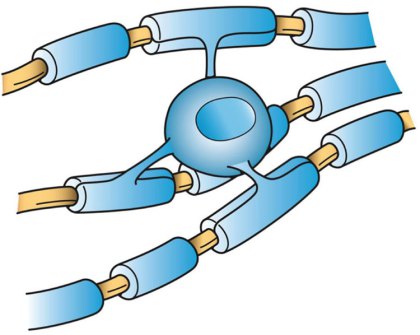
Oligodendrocytes are formed by a type of stem cell in the brain called oligodendrocyte progenitor cells (OPCs), and are responsible for re-wrapping, or remyelinating, the bare axons with myelin in response to injuries or diseases. This image is for illustrative purposes only and shows and artist’s representation of an oligodendrocyte. Credit Holly Fischer.

Oligodendrocytes are formed by a type of stem cell in the brain called oligodendrocyte progenitor cells (OPCs), and are responsible for re-wrapping, or remyelinating, the bare axons with myelin in response to injuries or diseases. This image is for illustrative purposes only and shows and artist’s representation of an oligodendrocyte. Credit Holly Fischer.

Like conducting an errant orchestra to play together, researchers are guiding processes that go awry in multiple sclerosis to repair themselves.

For the first time, scientists have discovered the exact mechanism rabies uses to efficiently enter the central nervous system, where it erupts in a toxic explosion of symptoms.

Neurons in human skin perform advanced calculations, previously believed that only the brain could perform.

Brain scans of college students have shed light on why people learn more effectively when their curiosity is piqued than when they are bored stiff. Researchers in the US found evidence that curiosity ramped up the activity of a brain chemical called dopamine, which in turn seemed to strengthen people’s memories.Students who took part in the study were better at remembering answers to trivia questions when they were curious, but their memories also improved for unrelated information they were shown at the same time.The findings suggest that while grades may have their place in motivating students, stimulating their natural curiosity could help them even more.

Researchers have discovered that T-cells – a type of white blood cell that learns to recognize and attack microbial pathogens – are activated by a pain receptor.

Quantitative tools dissect how two genes mutated in early-onset Parkinson’s disease collaborate in flagging damaged mitochondria.

A new study suggests a neural link between curiosity, motivation, and memory.

In a recent study published in the journal PLOS One, scientists uncovered a new pathway by which the brain uses an unusual steroid to control blood pressure. The study also suggests new approaches for treating high blood pressure and heart failure

Research using state-of-the-art eye-tracking technology has found that people suffering from chronic pain pay more frequent and longer attention to pain-related words than individuals who are pain-free.

The traditional view is that learning is based on the strengthening or weakening of the contacts between the nerve cells in the brain. However, this has been challenged by new research findings from Lund University in Sweden. These indicate that there is also a third mechanism – a kind of clock function that gives individual nerve cells the ability to time their reactions.

And finally this week, how your brain decides who to make friends with when you start university.

Weekly Neuroscience Update


brain-white-matter-child-fitness (1)

The team used diffusion tensor imaging (DTI, also called diffusion MRI) to look at five white-matter tracts in the brains of the 24 participants. This method analyzes water diffusion into tissues. For white matter, less water diffusion means the tissue is more fibrous and compact, both desirable traits. This image shows an MRI of white matter in the human brain. The image is for illustrative purposes only, and is not connected to the research. Credit Kubicki et al.

A new study of 9 and 10-year-olds finds that those who are more aerobically fit have more fibrous and compact white-matter tracts in the brain than their peers who are less fit. “White matter” describes the bundles of axons that carry nerve signals from one brain region to another. More compact white matter is associated with faster and more efficient nerve activity. The team reports its findings in the open-access journal Frontiers in Human Neuroscience.

In a new study published in The Journal of Neuroscience, researchers report that the amygdala — a part of the brain associated with decision making, memory and emotion — plays a part in telling us who to trust almost instantly.

The latest research on sports concussions in teens has been the focus of recent study.

Depression is known to be a common symptom of Parkinson’s disease, but remains untreated for many patients, according to a new study.

Following another person’s gaze can reveal a wealth of information critical to social interactions and also to safety. Gaze following typically emerges in infancy, and new research looking at preterm infants suggests that its visual experience, not maturational age, that underlies this critical ability.

fMRI scans reveal brain differences in risk-taking teens

Children and adolescents with autism have a surplus of synapses in the brain, and this excess is due to a slowdown in a normal brain “pruning” process during development, according to a study by neuroscientists at Columbia University Medical Center (CUMC).

While much attention has focused on the link between violent video game playing and aggression among youths, a new study finds significantly increased signs of depression among preteens with high daily exposure to violent video games.

An imaging study of chronic users of codeine-containing cough syrups (CCS) has found deficits in specific regions of brain white matter and associates these changes with increased impulsivity in CCS users.

New treatments for multiple sclerosis (MS) using common anti-psychotic agents have been discovered by Victoria University of Wellington researchers.

People with schizophrenia struggle to turn goals into actions because brain structures governing desire and emotion are less active and fail to pass goal-directed messages to cortical regions affecting human decision-making, new research reveals.

What can we learn from Robin Williams’ death?

robin

I was saddened this week to read of the tragic death of Robin Williams.  The 63-year-old talented actor and performer struggled with substance abuse since the 1980s. He previously admitted to cocaine and alcohol addiction and entered rehab in 2006 for alcoholism after 20 years of sobriety and had again voluntarily checked himself into rehab in June.

Anxiety and depression – a potentially lethal mix

Over the past two decades I have visited high schools and colleges to talk on mental health and how stress can affect the brain and it still amazes me how little the general public understand just how damaging the effects of stress are on the brain can be and how important it is to manage stress in a positive way. While we cannot know Robin’s motivation to take his own life we know that he complained of anxiety and depression and was also suffering the early effects of Parkinson’s disease in the weeks preceding his tragic death.

The amygdala – the brain’s house alarm

Anxiety is brain state associated with the over-activation of two tiny brain regions – no bigger than a thumb nail – called the amygdala (Latin; the almond). These two regions located deep in the brain behind the nose – one on the left side and one on the right side – contain nerves that help to convert alarm into action. Once activated, the amygdala triggers the brain into a state of high alert usually associated with imminent danger.  Under normal conditions the amygdala is there to save your life for instance by avoiding oncoming traffic when crossing a busy road.  However, you only have to endure one sleepless night as a result of the noise from a neighbour’s house/car alarm to understand the exhausting effect of an overactive amygdala. It is no coincidence then that anxiety which may also include unpredictable panic attacks can lead to the emotional exhaustion found in depression which is a profound lowering of the mood and an inability to appreciate anything positive.

Anxiety is a prelude to depression

If anxiety is not nipped in the bud then emotional burnout sets-in and a spiral of depression starts to take hold.  Depression is not to be confused with sadness which is a natural response to the normal ups and downs of life. It is through sadness that we learn and become wise. In contrast, depression is suffocating and blocks us off from the world by making us focus only on the negative aspects of everyday life including for example a loss of self-worth. This phenomenon is also known as situational bias. This type of negative thinking backed-up by a low mood can lead to a dangerous fatalism where the sufferer feels that life is not worth living. In Robin’s case his depression was probably not helped by a recent diagnosis of Parkinson’s disease – for which it is unclear if he was receiving medication.

What is Parkinson’s disease?

Over 4 million people worldwide suffer from Parkinson’s disease – a so-called hypokinetic disorder (Greek; hypo = lack of; kinetic = movement). Parkinson’s disease can be genetic but it can also be triggered by prolonged exposure to some drugs. It is a progressive disease the symptoms start out small and get progressively worse but it is rarely fatal. With Parkinson’s disease one minute you are working away in the garden and the next you are literally stuck to the spot – totally unable to move. In these situations daily life can become a challenge that can be difficult to endure.

The core defect

The ‘core defect’ in Parkinson’s disease is a loss of a chemical called dopamine. Dopamine acts like hydraulic oil which lubricates those nerve networks involved in executing a movement. In Parkinson’s disease he supply of dopamine dries-up and like a car out of oil the engine seizes-up and movement grinds to a halt.

Trapped and disconnected

We need dopamine to survive. Dopamine allows us to talk, sing, socialize, improvise and take risks. When dopamine flows we don’t see things as being limited by circumstance. We have boundless energy and literally anything is possible! One only needed to watch Robin Williams perform at the height of his career to see dopamine in action as his brain effortlessly converted his thoughts and moods into the mesmerizing performances that made him so loved by a generation. Without dopamine we feel trapped and disconnected.  It is not surprising therefore that mood can become low and anxiety and depression are often associated with this illness.

What can we learn from Robin’s death?

Since Robin’s death some media have reported that it is a pity that something like this has to overshadow what he achieved during his life and  that a tragedy like this in not of any benefit to anyone.

While I agree with this to an extent, I do think that Robin’s death might be of some benefit if it opens up a debate on how we as a society deal with stress. We have heard that Robin was under a great deal of stress in the days and weeks leading up to his death.  In this he is not alone. As the world economy continues on its downward slide, and unemployment and financial worries beset us, are we going to turn more and more to quick fixes to handle our dis-stress?

Probably the most important lesson to be taken from Robin’s death is the realization that the stresses of life and how we manage them IS the difference between life and death. I look forward to developing this theme in greater detail including drug-free tips on how the avoid worry and stress in future posts, but in the meantime, my deepest sympathy go to Robin’s loved ones at this difficult time.

Further Reading

Emotions are habits so pick a good one

World Mental Health Day

Why Parkinson’s Disease Has Robbed Linda Ronstadt Of Her Voice


Weekly Neuroscience Update

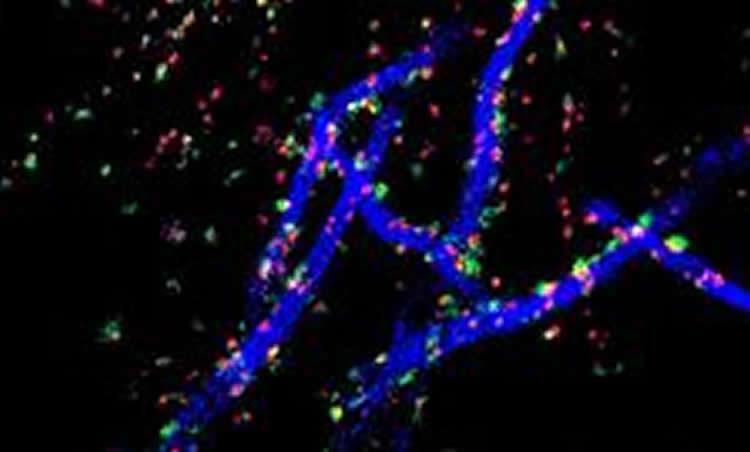
Scientists used gene chips to help discover new genes that may be involved with Parkinson’s disease. Credit National Human Genome Research Institute.

cientists used gene chips to help discover new genes that may be involved with Parkinson’s disease. Credit National Human Genome Research Institute.

Using data from over 18,000 patients, scientists have identified more than two dozen genetic risk factors involved in Parkinson’s disease, including six that had not been previously reported.

Latest research says depression is a risk factor for dementia.

The happiness of over 18,000 people worldwide has been predicted by a mathematical equation, with results showing that moment-to-moment happiness reflects not just how well things are going, but whether things are going better than expected. And in another study, research suggests the right kind of happiness can change the code that defines our very being: our genes.

New research has mapped out the complex set of genes which interact with the environment to crystalise  reading and math abilities.

Children who have been abused or neglected early in life are at risk for developing both emotional and physical health problems. In a new study, scientists have found that maltreatment affects the way genes are activated, which has implications for children’s long-term development.

Scientists have discovered which brain networks are responsible when frustration leads to rage.

Adolescents who behave aggressively are more likely to drink alcohol and in larger quantities than their peers, according to a recent study completed in Finland. Depression and anxiety, on the other hand, were not linked to increased alcohol use. The study investigated the association between psychosocial problems and alcohol use among 4074 Finnish 13- to 18-year-old adolescents. The results were published in Journal of Adolescence.

New findings suggests that mild concussion may cause cognitive and memory problems.

Finally this week research conducted at the University of Adelaide, suggests that at least one part of the human brain may be able to process information the same way in older age as it does in the prime of life.