Tag: neuroscience
What Stephen Covey taught us about the neuroscience of focus

I was saddened to hear of the death of Stephen Covey yesterday. He was a truly inspirational figure who studied human behaviour and drew up a set of simple instructions for human happiness – The 7 Habits of Highly Effective People.
One of these habits was –‘The main thing is to keep the main thing the main thing.’
Covey proposed that happiness in life depends not only in having a focus or goal (i.e. the main thing) but in having the discipline to stay focused on that goal (i.e. keeping the main thing the main thing). He contended that one reason why people fail to achieve their full potential was in not staying focused on that goal.
Where in the brain do we create focus and how can we strengthen it?
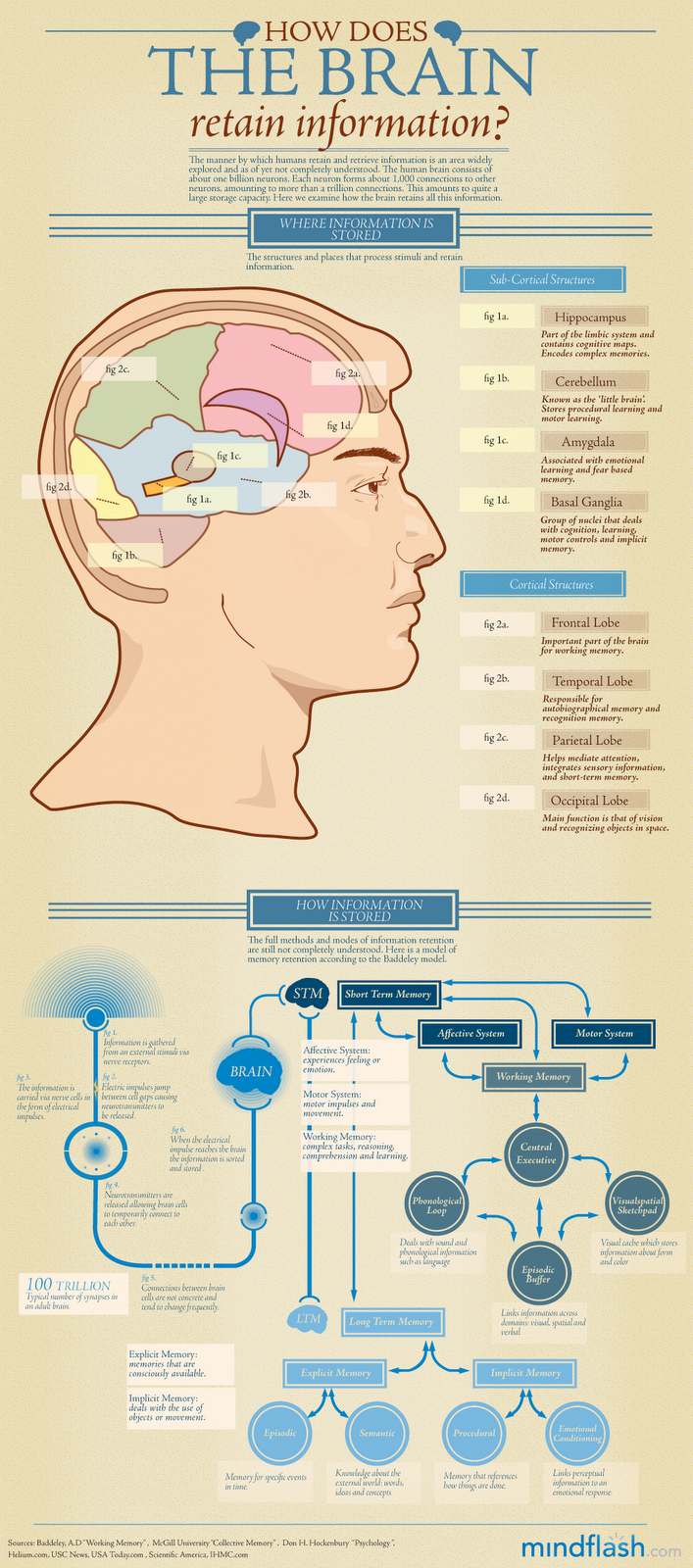
There are two types of focused attention in two separate regions of the brain. The prefrontal lobes are in charge of goal setting and willful concentration; if you are studying for a test or writing a novel, the impetus and the orders come from there. But if there is a sudden, riveting event – the attack of a tiger or the scream of a child – it is the parietal lobes behind each ear that are activated. Neuroscientists have learned that these two brain regions sustain concentration when neurons emit pulses of electricity at specific rates – faster frequencies for the automatic processing of the parietal cortex, slower frequencies for the deliberate, intentional work of the prefrontal.
Furthermore, studies of seasoned meditators – Tibetan Buddhist monks show that regular meditation – i.e. paying attention on purpose – generates brain wave patterns which synchronise neuronal firing in both the frontal and parietal lobes – a phenomenon which is thought to underlie the sustained concentration involved in focused attention i.e. in keeping the main thing the main thing. In fact, the ability of mediation to strengthen the connection between these two key brain regions involved in sustained concentration explains the ability of seasoned meditators to stay calm and focused.
These finding on attention in the brain may also radically alter our understanding of attention disorders and provide new opportunities to learn how brains pay attention in real world settings and acquire healthy habits to stay focused and prevent distraction.
Weekly Neuroscience Update

Scientists have discovered that older honey bees effectively reverse brain aging when they take on nest responsibilities typically handled by much younger bees. While current research on human age-related dementia focuses on potential new drug treatments, researchers say these findings suggest that social interventions may be used to slow or treat age-related dementia.
Although many areas of the human brain are devoted to social tasks like detecting another person nearby, a new study has found that one small region carries information only for decisions during social interactions. Specifically, the area is active when we encounter a worthy opponent and decide whether to deceive them.
Scientists tracked brain activity in 40 people with new back injuries and found a pattern of activity that could predict — with 85% accuracy — which patients were destined to develop chronic pain and which weren’t.
Scientists have discovered a mechanism which stops the process of forgetting anxiety after a stress event. In experiments they showed that feelings of anxiety don’t subside if too little dynorphin is released into the brain. The results can help open up new paths in the treatment of trauma patients.
Research published in Neuron reveals that underdevelopment of an impulse control center in the brain is, at least in part, the reason children who fully understand the concept of fairness fail to act accordingly.
Researchers are developing a robotic system with ability to predict the specific action or movement that they should perform when handling an object.
The widely used diabetes drug metformin comes with a rather unexpected and side effect: it encourages the growth of new neurons in the brain.
Researchers have long been interested in discovering the ways that human brains represent thoughts through a complex interplay of electrical signals. Recent improvements in brain recording and statistical methods have given researchers unprecedented insight into the physical processes under-lying thoughts. For example, researchers have begun to show that it is possible to use brain recordings to reconstruct aspects of an image or movie clip someone is viewing, a sound someone is hearing or even the text someone is reading.
A new brain scanner has been developed to help people who are completely paralysed speak by enabling them to spell words using their thoughts.
This is Your Brain on Comedy
Comedian Chris Bliss explores the inherent challenge of communication, and how comedy opens paths to new perspectives.
Weekly Neuroscience Update

New research shows that sleep loss markedly exaggerates the degree to which we anticipate impending emotional events, particularly among highly anxious people, who are especially vulnerable.
Music training has a lifelong good impact on the aging process, says a new study out of Northwestern University.
New research by scientists at the University of University of North Carolina School of Medicine may have pinpointed an underlying cause of the seizures that affect 90 percent of people with Angelman syndrome (AS), a neurodevelopmental disorder.
Scientists have shown that brain levels of serotonin, the ‘happy hormone’ are regulated by the amount of bacteria in the gut during early life.
Two U.S. scientists have updated findings that link a form of Chinese meditation to positive changes in brain structure, suggesting that just 11 hours of practising the technique over a month could help prevent mental illness. In a paper to be released this week in the online version of the Proceedings of the National Academy of Sciences, researchers Yi-Yuan Tang and Michael Posner report that the practice known as integrative body-mind training (IBMT) can have a positive physical affect on the brain, boosting connectivity and efficiency.
Researchers at the University of Missouri have demonstrated the effectiveness of a potential new therapy for stroke patients in an article published in the journal Molecular Neurodegeneration. Created to target a specific enzyme known to affect important brain functions, the new compound being studied at MU is designed to stop the spread of brain bleeds and protect brain cells from further damage in the crucial hours after a stroke.
A receptor recently discovered to control the movement of immune cells across the blood-brain barrier may hold the key to treating multiple sclerosis (MS), a neuroinflammatory disease of the central nervous system.
In a pair of related studies, scientists from the Florida campus of The Scripps Research Institute have identified several proteins that help regulate cells’ response to light—and the development of night blindness, a rare disease that abolishes the ability to see in dim light.
A recent breakthrough in the development of an artificial synapse suggests that assistive devices and other prostheses won’t be limited to just missing joints and failing organs. Researchers in Japan have shown that it’s possible to mimic synaptic function with nanotechnology, a breakthrough that could result in not just artificial neural networks, but fixes for the human brain as well.
Patients vary widely in their response to concussion, but scientists haven’t understood why. Now, using a new technique for analyzing data from brain imaging studies, researchers at Albert Einstein College of Medicine of Yeshiva University and Montefiore Medical Center have found that concussion victims have unique spatial patterns of brain abnormalities that change over time.
Using a new and powerful approach to understand the origins of neurodegenerative disorders such as Alzheimer’s disease, researchers at Mayo Clinic in Florida are building the case that these diseases are primarily caused by genes that are too active or not active enough, rather than by harmful gene mutations.
How does the brain multitask?

Dr Adam Gazzaly, director of the Neuroscience Imaging Center at the University of California, San Francisco, answers the question of how the brain multitasks on the brainfacts.org website:
Multitasking is an attempt to engage in more than one goal at the same time. When two tasks demand competing attention, there is generally a switching that occurs between the neural processes involved, rather than concurrent processing as may be expected with true multitasking. Of note, recent research suggests that it may be possible for the brain to split two demanding tasks.
The prefrontal cortex has been frequently implicated as a brain region that mediates multitasking and the switching processes. Multitasking is commonly shown to impair cognitive performance, as each switch results in a reduction in performance compared to doing one task at a time. However, there is growing evidence that the ability to multitask can be trained with repetitive and adaptive practice. Multitasking abilities have been observed to decline as we age.
Why my ultimate exam tip is an exam sip!

As the Junior and Leaving Certificate exams kick off today, I want to wish you all good luck and to remind you not to forget to bring a bottle of water with you into your exams!
It’s that time of the year again when the two big state exams – junior and leaving certificates kick off for a generation of Irish youths. The leaving cert is the hardest exam I’ve ever had to sit – throughout my years as a student in University, and afterwards working in a laboratory as a neuroscientist, nothing really compared to the intensity of that exam.
Drink water to improve your grade!
Scientists from the University of East London report that bringing a bottle of water with you into your exam boosts your grade. Students who brought water with them did better in the exam than those without water. The researchers accounted for the 447 undergraduate students’ prior grades, so it’s not just a matter of smarter students being more likely to bring a bottle of water into the exam.
Drinking water makes you smarter
Controlling for ability from previous coursework results, scientists found those who drank water during the exam scored an average of 5% higher than those who did without.
The ultimate exam tip – is an exam sip!
Scientists explain that there may be a few reasons for this link between bringing water (and presumably drinking it) and better grades:
- Previous studies have shown that a dehydration level of just 1% of your body weight reduces your thinking functions, so it makes sense that drinking water improves mental performance.
- The desire to drink water (thirst) is driven by a small protein (a peptide) called vasopressin in the brain. Vasopressin has also been implicated in making new memories and with the positive feelings associated with social behaviour thereby leading to a better performance by reducing anxiety in an exam situation,
- By offering a momentary distraction – taking a sip of water – drinking water may also break a chain of thoughts and free the mind to focus on the task at hand, leading to better performance – thereby reducing anxiety during the exam.
- Drinking water might also just activate a placebo affect – if you believe water boosts your brain power, that belief alone could improve your performance.
The research continues – either way, don’t forget that bottle of water on your next exam.
References
Lim MM, Young LJ (2004). “Vasopressin-dependent neural circuits underlying pair bond formation in the monogamous prairie vole”. Neuroscience 125 (1): 35–45.
Know Your Neurons

Different Types of Neurons A. Purkinje cell B. Granule cell C. Motor neuron D. Tripolar neuron E. Pyramidal Cell F. Chandelier cell G. Spindle neuron H. Stellate cell (Credit: Ferris Jabr; based on reconstructions and drawings by Cajal)
The Know Your Neurons series on the Scientific American website features some great information on the discovery and naming of neurons, alongside some terrific historical images.

Human hippocampus stained with Golgi’s method (Credit: Wikimedia Commons)

Cajal’s drawing of Purkinje cells and granule cells in a pigeon’s brain (Credit: Wikimedia Commons)
Weekly Neuroscience Research Update
 Several specific regions of our brains are activated in a two-part process when we are exposed to deceptive advertising, according to new research conducted by a North Carolina State University professor. The work opens the door to further research that could help us understand how brain injury and aging may affect our susceptibility to fraud or misleading marketing.
We make our eye movements earlier or later in order to coordinate with movements of our arms, New York University neuroscientists have found. Their study, which appears in the journal Neuron, points to a mechanism in the brain that allows for this coordination and may have implications for rehabilitation and prosthetics.
The brain has a remarkable ability to learn new cognitive tasks while maintaining previously acquired knowledge about various functions necessary for everyday life. But exactly how new information is incorporated into brain systems that control cognitive functions has remained a mystery. A study by researchers at Wake Forest Baptist Medical Center and the McGovern Institute of the Massachusetts Institute of Technology shows how new information is encoded in neurons of the prefrontal cortex, the area of the brain involved in planning, decision making, working memory and learning.
A team of academic researchers has identified the intracellular mechanisms regulated by vitamin D3 that may help the body clear the brain of amyloid beta, the main component of plaques associated with Alzheimer’s disease.
Opening the door to the development of thought-controlled prosthetic devices to help people with spinal cord injuries, amputations and other impairments, neuroscientists at the University of California, Berkeley, and the Champalimaud Center for the Unknown in Portugal have demonstrated that the brain is more flexible and trainable than previously thought.
Emotion-sensing computer software that models and responds to students’ cognitive and emotional states – including frustration and boredom – has been developed by University of Notre Dame Assistant Professor of Psychology Sidney D’Mello and colleagues from the University of Memphis and Massachusetts Institute of Technology.
Weekly Neuroscience Update
 A new study reveals for the first time that activating the brain’s visual cortex with a small amount of electrical stimulation actually improves our sense of smell. The finding revises our understanding of the complex biology of the senses in the brain.
By training birds to ‘get rhythm’, scientists uncover evidence that our capacity to move in time with music may be connected with our ability to learn speech.
Daily doses of a drug used to treat Parkinson’s disease significantly improved function in severely brain-injured people thought to be beyond the reach of treatment. Scientists have reported on the first rigorous evidence to date that any therapy reliably helps such patients.
Remembering where we left our keys requires at least three different regions of the brain to work together, a study published in the Journal of Neuroscience says.
If you’re a left brain thinker, chances are you use your right hand to hold your cell phone up to your right ear, according to a new study from Henry Ford Hospital in Detroit.
People who experience a traumatic brain injury show a marked decline in the ability to make appropriate financial decisions in the immediate aftermath and a continued impairment on complex financial skills six months later, according to new research from the University of Alabama at Birmingham.
For the first time, a team led by Carnegie Mellon University neuroscientists has identified how different neural regions communicate to determine what to visually pay attention to and what to ignore. This finding is a major discovery for visual cognition and will guide future research into visual and attention deficit disorders.
Finally this week, Ireland’s neurological charities have come together to launch a new patient information and services website in time for National Brain Awareness Week which takes place next week (05 – 11 March).
 inside-the-brain.com