Weekly Neuroscience Update

Variant definition, splitting and classification as border or ectopic. Credit: Nature Neuroscience (2024)

A new study has revealed brain differences that may explain why humans demonstrate a variety of cognitive abilities and behaviors. The research shows that two forms of individual differences may predict cognitive abilities, explain behavioral differences and even pinpoint biomarkers of brain disease.

A team of neuroscientists has found that so-called superagers maintain memory as they grow older because they do not experience a decline in the integrity of their white brain matter.

Researchers have developed an artificial intelligence technique that can effectively estimate an individual’s brain age based on electroencephalogram (EEG) brain scans. The technology could help to make early, regular screening for degenerative brain diseases more accessible.

A simple blood test could allow doctors to determine whether a person may be at higher risk for stroke or cognitive decline during their lifetime, according to a new study.

A brief episode of anger triggered by remembering past experiences may negatively impact the blood vessels’ ability to relax, which is essential for proper blood flow, according to new research published in the Journal of the American Heart Association.

Using neuroimaging, researchers have identified a brain network crucial to human consciousness. 

An individual’s experience of pain from medical treatment can be heightened by witnessing other people’s responses to the same treatment, with this negative experience subsequently spreading to others, scientists have discovered.

Listening to music benefits older adults’ cognitive health, even if it’s music they haven’t heard before or don’t enjoy very much, according to a new study.

Researchers have found a way to better control the preclinical generation of key neurons depleted in Parkinson’s disease, pointing toward a new approach for a disease with no cure and few effective treatments.

An international research team led by Karolinska Institutet has mapped the early genetic development of the brain and can now present an atlas of embryonic development between weeks 6 and 13.

Researchers have identified a key mechanism in brain stem cells that prevents identity conflicts during gene expression. This mechanism allows the cells to retain stemness while being primed for neuronal differentiation. The discovery includes finding that keeping neuronal gene messengers within the nucleus, while allowing stem cell gene messengers to be translated, avoids premature differentiation.

A new study demonstrates the potential of virtual reality in treating major depressive disorder.

Exercise prompts muscles to release molecular cargo that boosts brain cell function and connection, but the process is not well understood. Now new research has found that the nerves that tell muscles to move also prompt them to release more of the brain-boosting factors.

A pattern of brain activity that helps prevent us from getting lost has been identified in a new study, published in Nature Human Behaviour.

A new study highlights a novel mechanism of brain plasticity involving chondroitin sulfate clusters outside nerve cells. Researchers identified these cartilage-like structures as crucial for the brain’s ability to adapt and store information.

Finally this week, a new computer model may have cracked the code on helpful memory cues.

Weekly Neuroscience Update

Credit: eLife (2024)

Exposure to higher levels of light can help people feel more awake and increase cognitive performance, probably by influencing the activity of parts of a brain region called the hypothalamus, according to new research.

Researchers have developed a new tool to better understand how chemicals like dopamine and epinephrine interact with neurons.

Bursts of brain rhythms with “beta” frequencies control where and when neurons in the cortex process sensory information and plan responses. Studying these bursts would improve understanding of cognition and clinical disorders, researchers argue in a new review.

Why do we move slower the older we get? A new study delivers answers.

People with a history of cognitively stimulating occupations during their 30s, 40s, 50s, and 60s had a lower risk of mild cognitive impairment (MCI) and dementia after age 70, according to a new study. The findings highlight the importance of cognitive stimulation during midlife for maintaining cognitive function in old age.

An inpatient, epilepsy-related rehabilitation program shows lasting effects on several aspects of adaptation to epilepsy and quality of life, according to a study published in the journal Epilepsia.

A recent study reveals that high body mass index (BMI) is associated with changes in physiological brain pulsations. These pulsations play a crucial role in maintaining brain fluid circulation and the clearance of metabolic waste from the brain.

Researchers have discovered that a high single dose of dietary supplement creatine can temporarily improve cognitive performance that is reduced by sleep deprivation.

Engaging in conversation with others can activate various brain functions in socially isolated older adults, even if the interactions occur via the internet. This finding comes from a recent clinical trial conducted by Massachusetts General Hospital, with the results published in The Gerontologist.

A new study suggests a common brain network exists between heart rate deceleration and depression.

Neuroscientists have revealed that recency bias in working memory naturally leads to central tendency bias, the phenomenon where people’s (and animals’) judgements are biased towards the average of previous observations. Their findings may hint at why the phenomenon is so ubiquitous.

A new study has found that a brain network condition called “explosive synchronization” could be the cause of extreme pain crises in people with sickle cell disease.

Researchers have developed tiny, flexible devices that can wrap around individual nerve fibers without damaging them. These devices could be used for the diagnosis and treatment of a range of disorders, including epilepsy and chronic pain, or the control of prosthetic limbs.

Scientists have discovered the mechanism that allows adult brain stem cells to express genes that maintain their identity and those for neuronal differentiation without conflicts in cellular activity.

A new study aims to examine the role of napping in brain development among infants and preschoolers. By tracking changes in the hippocampus, the research aims to prove how critical naps are for memory retention and brain growth in young children.

Finally this week, neuroscientists have confirmed that different strategies are employed when choosing between primary and secondary rewards, with impulsivity being a key factor.

Decoding Social Behaviour: The Neurotransmitter Perspective

This video examines the vital role of dopamine and serotonin in influencing our social behavior, featuring a groundbreaking study with Parkinson’s disease patients undergoing awake brain surgery.

Directed by computational neuroscientist Read Montague and a global team, the study reveals the complex interplay of neurotransmitters that shape our decision-making in social situations. By studying the role of dopamine and serotonin, we can gain a deeper understanding of the biochemical processes that influence our social behavior.

The insights gained from this study could lead to advancements in the treatment of neurological conditions like Parkinson’s disease. For instance, understanding how these neurotransmitters affect decision-making could help in developing more targeted therapies.

The research could also have significant implications for psychiatric conditions. Many psychiatric disorders, such as depression and anxiety, are linked to imbalances in neurotransmitters like dopamine and serotonin. A better understanding of these processes could lead to improved treatments.

Weekly Neuroscience Update

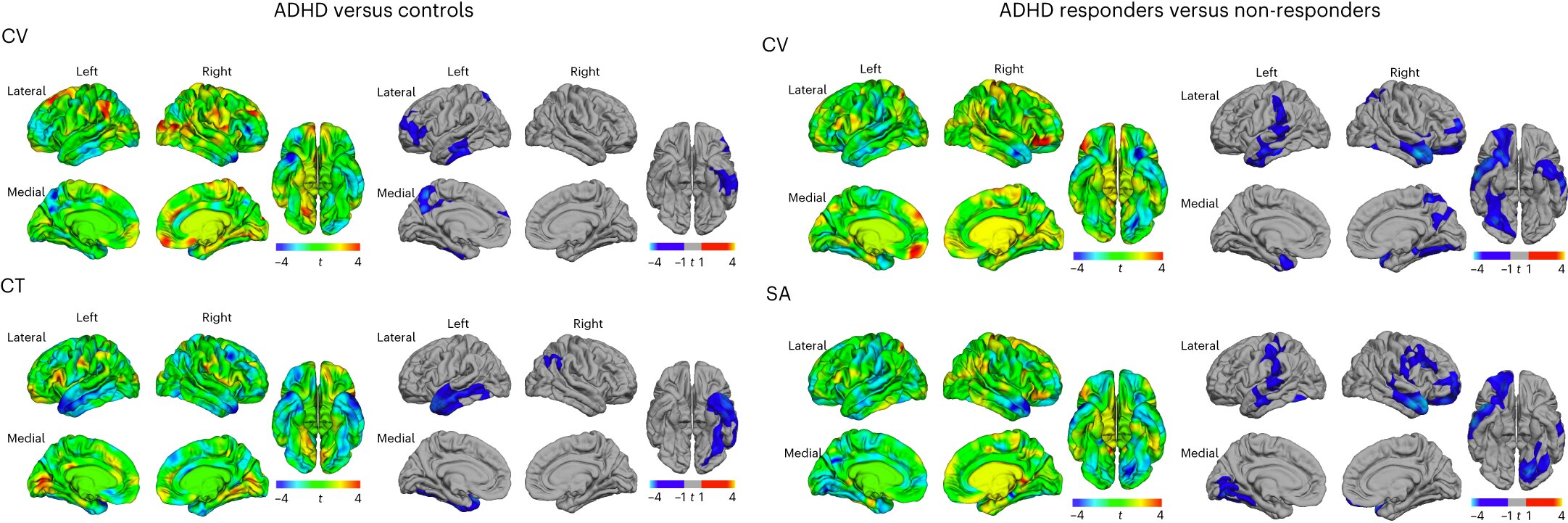
Vertex-wise comparisons between ADHD (N = 60) and controls (N = 23), and between ADHD responders (N = 42) and non-responders (N = 18). Credit: Nature Mental Health (2024).

New research has found that the effectiveness of ADHD medication may be associated with an individual’s neuroanatomy.

Although there are still some aspects pending confirmation for its use in the clinical setting, and its resolution needs to be improved slightly, a new study has shown that a method routinely used to carry out ophthalmological tests can also be used to monitor the neurodegeneration that occurs in Parkinson’s patients.

Scientists have uncovered a mechanism in the brain that allows cocaine and morphine to take over natural reward processing systems.

New research has identified a specific pattern of autoantibodies in the blood that precedes the clinical onset of multiple sclerosis (MS), potentially paving the way for early diagnosis and treatment. Their study found that 10% of MS patients displayed a unique set of autoantibodies against both human proteins and common pathogens like the Epstein-Barr Virus years before showing symptoms.

Researchers have identified a promising new approach to treating persistent neurological symptoms associated with Lyme disease.

A new study investigates why everyday actions like locking a door are often forgotten. The study revealed that while emotionally charged or unique events are initially memorable, even these can fade within 24 hours, particularly positive experiences. This research provides insight into the selective nature of memory and suggests that our brains prioritize and even forget information to manage cognitive load.

Managing a stroke patient’s blood sugar levels after they receive powerful clot-busting drugs might help them survive their health crisis, a new trial finds.

Researchers have created a thin film that combines an electrode grid and LEDs that can both track and produce a visual representation of the brain’s activity in real time during surgery. The device is designed to provide neurosurgeons with visual information about a patient’s brain to monitor brain states during surgical interventions to remove brain lesions including tumors and epileptic tissue.

A new study identifies a new metric for diagnosing autism.

New research has found a significant association between participating in low to moderate intensity exercise and reduced rates of depression.  However, this was not strongly observed for high-intensity exercise. Physical activity was also significantly associated with reduced risk of severe mental health conditions, including a reduction in psychosis/schizophrenia by 27%.

An international collaborative research team has discovered a novel mechanism underlying memory involving rapid changes in a specific DNA structure.

People who take acid-reducing drugs may have a higher risk of migraine and other severe headache than people who do not take these medications, according to a study published in the online issue of Neurology Clinical Practice. 

Finally this week, new research has highlighted the profound link between dietary choices and brain health.

Inside The Meditative Brain

This video delves into a groundbreaking study revealing how experienced meditators can voluntarily enter states of deep unconsciousness and reawaken with heightened mental clarity.

These states are sometimes called “cessations” or “nirvana with remainder” in Buddhist terminology. Cessation refers to the temporary suspension of the ordinary flow of consciousness. It is considered a deep state of tranquility where the usual mental activities come to a temporary halt. This is often described as a profound stillness or emptiness.

After experiencing cessation, practitioners often report a profound sense of clarity, heightened awareness, and a deep understanding of the nature of the mind and reality. This clarity is said to result from the temporary suspension of normal cognitive processes, allowing for a direct, unmediated perception of reality.

Weekly Neuroscience Update

seeing-hand-prosthetic-neurosciencenews.jpg

A new generation of prosthetic limbs which will allow the wearer to reach for objects automatically, without thinking – just like a real hand – are to be trialled for the first time.

Researchers have discovered both the structure of specific brain areas and memory are linked to genetic activity that also play important roles in immune system function.

Understanding the structure of our brain is as important as understanding its size when it comes to evolution, a new report suggests.

Scientists have published ground-breaking scans of newborn babies’ brains which researchers from all over the world can download and use to study how the human brain develops.

A new study reports that contrary behaviour of blood vessels in the retrotrapezoid nucleus help keep us breathing.

Researchers have developed a non-invasive means to measure whether infants are in pain, which could prevent babies from undergoing excessive discomfort during medical treatments.

A landmark study has identified the first genetic locus for anorexia nervosa and has revealed that there may also be metabolic underpinnings to this potentially deadly illness.

Finally this week, researchers have identified how two distinct areas of the developing brain communicate and report REM sleep is key to this communication.


Weekly Neuroscience Update

vegas-nerve-parkinsons-neurosciencenews (1).jpgAccording to researchers, Parkinson’s disease may start in the gut and spread to the brain via the vagus nerve.

You probably know that walking does your body good, but it’s not just your heart and muscles that benefit. Researchers found that the foot’s impact during walking sends pressure waves through the arteries that significantly modify and can increase the supply of blood to the brain.

An international collaboration of neuroscientists has shed light on how the brain helps us to predict what is coming next in speech.

A recently published study, which combines four studies of extreme longevity, has identified new rare variants in chromosomes 4 and 7 associated with extreme survival and with reduced risks for cardiovascular and Alzheimer’s disease.

Scientists have discovered that neurons in brain regions that store memory can form networks in the absence of synaptic activity.

A new study reports estrogen fluctuations can alter brain circuit activation in women with a variant of a specific gene.

Your brain may not be the same age as your body, and an “older” brain may be linked to an increased risk of dying at a younger age, a new study finds.

Zapping the brain with just a bit of electricity at the right time may help to improve memory function in some people, according to a new study.

Gentle noise stimulation can enhance sleep quality and improve memory in older people, a new study reports.

Like air-traffic controllers scrambling to reconnect flights when a major hub goes down, the brain has a remarkable ability to rewire itself after suffering an injury. However, maintaining these new connections between brain regions can strain the brain’s resources, which can lead to serious problems later, including Alzheimer’s Disease, according to researchers.

Researchers have discovered a new cellular mechanism that may be a root cause of multiple sclerosis.

Combining brain training programs with transcranial direct current simulation can lead to cognitive improvements and better working memory, a new study reports.

Finally this week, a new video game is helping to speed up neuroscience research by allowing players to reconstruct the architecture of neurons.


Weekly Neuroscience Update

EPNorth

A virtual reality world called EVA Park can improve the communication of those who have impaired speech and language following a stroke, according to research by academics at City University London. The study, which is published in PLOS ONE, is the first exploration of multi-user virtual reality in aphasia therapy and shows the potential for technology to play an important role in improving the everyday lives of people with the condition.

A new study will look at how brain connections mature and develop from childhood to adulthood.

Neurons communicate by sending chemical signals called neurotransmitters across synapses, specialized connections between two individual cells. This communication requires a delicate and intricate molecular architecture. A recent paper published in Nature has now shown that the structure of this intercellular space is more complicated than previously thought, and it probably helps boost the efficiency of the signaling.

A new long term study of young marijuana users tracks the brain’s response to reward over time. The findings indicate a lower response to reward in marijuana users.

Neuroscientists at the University of Pittsburgh have identified the neural networks that connect the cerebral cortex to the adrenal medulla, which is responsible for the body’s rapid response in stressful situations. These findings, reported in the online Early Edition of the journal Proceedings of the National Academy of Sciences (PNAS), provide evidence for the neural basis of a mind-body connection.

A new study provides insight into how overconfidence can lead to poor decision making.

Scientists have identified part of our brain that helps us learn to be good to other people. The discovery could help understanding of conditions like psychopathy where people’s behaviour is extremely antisocial.

Finally this week, researchers have developed a neurodevelopmental model of a rare genetic disorder that could help shed light on the workings of the human social brain.


Weekly Neuroscience Update

iphone-1283665_960_720

Sending text messages on a smartphone can change the rhythm of brain waves, according to a new study published in Epilepsy & Behavior.

An international research team has found that our perception is highly sensitised for absorbing social information. The brain is thus trained to pay a great degree of attention to everyday actions. The results are reported in the journal Consciousness and Cognition.

A new study unravels the mechanisms driving excess brain growth that affects as many as 30 percent of people with autism.

Researchers have developed a new technology that could lead to new therapeutics for traumatic brain injuries. The discovery, published in Nature Communications, provides a means of homing drugs or nanoparticles to injured areas of the brain.

Researchers have coupled machine learning with neuroimaging to detect early forms of dementia.

Neuroscientists have come up with a way to observe brain activity during natural reading. It’s the first time researchers have been able to study the brain while reading actual texts, instead of individual words. The research has potential implications for understanding dyslexia and other reading deficits.

A new study links hippocampal inflammation in multiple sclerosis with an increased risk of developing depression.

In a partnership melding neuroscience and electrical engineering, researchers have developed a new technology that will allow neuroscientists to capture images of the brain almost 10 times larger than previously possible – helping them better understand the behavior of neurons in the brain.

Researchers report acquiring new memories can interfere with old ones, making them more likely to be forgotten.

A European study has shown that the dopamine D2 receptor is linked to the long-term episodic memory, which function often reduces with age and due to dementia. This new insight can contribute to the understanding of why some but not others are affected by memory impairment. The results have been published in the journal PNAS.

Finally this week, a new study shows how new linguistic information is integrated into the same brain areas used for your native language.