World Teacher’s Day: What Can Neuroscience Teach Us About Teaching?

What if we could unlock the secrets of the human brain to revolutionize how we teach and learn?

A new science of learning is emerging, fueled by converging insights from fields like developmental psychology, machine learning, and neuroscience. This field is uncovering the biological, cognitive, and social factors that influence how we learn, paving the way for more effective teaching practices and improved learning outcomes. For instance, we now understand the importance of active learning, where students are engaged and challenged to construct their own knowledge rather than passively absorbing information. We also recognize the powerful role emotions play in learning. Positive emotions enhance learning while negative emotions like stress can hinder it, highlighting the need for supportive and engaging learning environments. Furthermore, this new science emphasizes the importance of personalized learning, recognizing that each student learns in their own unique way.

Optimizing Learning by Targeting Different Memory Systems

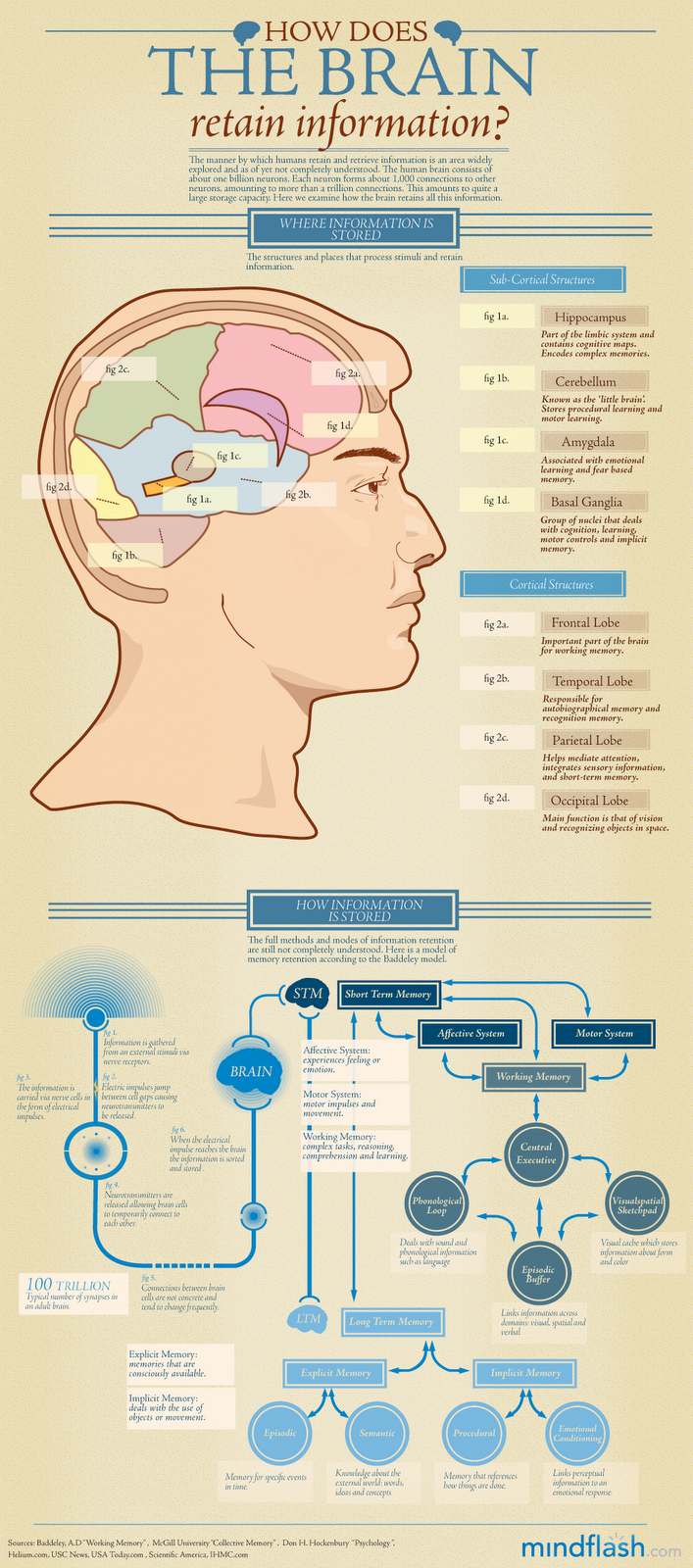
Neuroscience has shown us that memory is more complex than we once thought. It’s not just one thing, but a system of different types, each with its own job and connected to different parts of the brain.

Episodic memory is like a mental scrapbook. It helps us remember past experiences, like a fun school trip or a birthday party. Teachers can tap into this by using techniques that emphasize narrative construction, real-world applications, and the establishment of personal connections with the subject matter.

Semantic memory is our storehouse of facts and concepts. It’s how we remember things like state capitals or the rules of gravity. Teachers can help students build this type of memory by using visuals, diagrams, and clear explanations.

Procedural memory is all about skills. It’s how we learn to ride a bike or play an instrument. To get better at these things, we need practice, feedback, and to learn skills step-by-step.

Understanding these different memory systems can really change how we teach. When teachers know which type of memory is involved in a lesson, they can plan activities that make it easier for students to learn, remember, and use information.

The Adolescent Brain: A Period of Continued Development

Contrary to earlier assumptions, brain development is not confined to childhood. The prefrontal cortex, the brain’s executive control center responsible for planning, decision-making, and impulse inhibition, continues to mature well into early adulthood, typically around 20-25 years of age. This protracted developmental trajectory explains why adolescents often grapple with impulse control, risk assessment, and delaying gratification. They may engage in actions without fully considering the consequences, undertake risks without a complete understanding of potential dangers, or encounter difficulties prioritizing long-term goals over immediate rewards.

This understanding holds significant implications for educators. It underscores the necessity for patience and support as adolescents navigate the complexities of this developmental period. By providing structured environments, clear expectations, and opportunities to cultivate self-regulation techniques such as mindfulness or organizational strategies, educators can facilitate the strengthening of the prefrontal cortex and the development of essential life skills.

Neuroeducation: Bridging Neuroscience and Education

For much of recent history, the fields of neuroscience and education operated in distinct domains, with limited interaction between researchers. However, this began to shift in the 1990s with the growing recognition of the brain’s remarkable plasticity—its capacity to reorganize and adapt throughout the lifespan in response to experiences. This discovery, coupled with advancements in neuroimaging techniques, fueled increasing interest in how insights from neuroscience could inform and enhance educational practices, ultimately leading to the emergence of neuroeducation.

Neuroeducation is an interdisciplinary field that strives to bridge the gap between neuroscience and education. It investigates how the brain learns, remembers, and processes information, and applies these findings to develop more effective pedagogical approaches. By understanding the neural mechanisms underlying learning and cognition, educators can create learning environments that optimize brain function and promote deeper understanding. For instance, incorporating movement breaks into lessons can capitalize on the benefits of physical activity for cognitive function, while integrating mindfulness practices can assist students in managing stress and enhancing focus.  

Neuroeducation emphasizes that learning is not a passive process of absorption but rather an active process that induces physical changes in the brain. Every new experience, every acquired skill, every learned fact—all leave their imprint on the brain’s intricate neural networks. This knowledge empowers educators to design learning experiences that leverage the brain’s inherent learning processes. Examples include incorporating spaced repetition into lesson plans to enhance memory consolidation or utilizing storytelling to engage the emotional dimensions of learning.  

The goals of neuroeducation are far-reaching. It aims to improve educational outcomes for all learners, address learning challenges and disabilities such as dyslexia or ADHD, promote creativity and innovation in educational settings, and foster a lifelong love of learning. While a relatively nascent field, neuroeducation holds immense potential to transform educational practices and positively impact learners of all ages.  

Neuroeducation: Integrating Neuroscience and Artificial Intelligence in Educational Practice

Augmenting the progress of neuroeducation is the advent of artificial intelligence (AI), which presents transformative potential for educational practices. Imagine AI systems functioning as personalized learning guides, identifying each student’s unique learning style, strengths, and areas for improvement. With this insight, AI can create custom-tailored learning plans, perfectly suited to each student’s needs. AI tutors can then step in, providing real-time support, feedback, and challenges that adapt to the student’s progress—keeping them both engaged and motivated. AI-powered games and simulations also turn learning into an immersive experience, designed to match each student’s pace and interests.

AI is also changing how we assess learning. By analyzing work products like essays or problem-solving exercises, AI can pinpoint areas that need further attention and deliver targeted, constructive feedback. It can even assess a learner’s emotional state and engagement during lessons, enabling teachers to adjust their instructional methods for optimal impact.

Looking ahead, brain-computer interfaces (BCIs) could allow our brains to interact directly with computers. This technology could be life-changing for students with disabilities, giving them new ways to control devices and communicate. BCIs could also provide real-time feedback on brain activity during learning, helping students improve their focus and self-regulation.

Despite these exciting possibilities, the integration of AI in neuroeducation comes with significant ethical and practical challenges. Protecting student data must be a top priority, necessitating AI systems that are built with privacy at their core. Equitable access to AI tools is also crucial to prevent exacerbating existing achievement gaps. Furthermore, teachers will need comprehensive training to effectively incorporate AI technologies into their classrooms. Striking a balance between technological innovation and human interaction is essential to maintaining the critical role of educators in fostering well-rounded student development.

Curiosity, interest, joy, and motivation—these are the cornerstones of effective learning. Neuroeducation, with its focus on understanding the brain’s role in learning, combined with AI’s innovative potential, offers a path toward a more personalized, engaging, and inclusive educational future.

Further Reading: What can neuroscience teach us about teaching?

Weekly Neuroscience Update

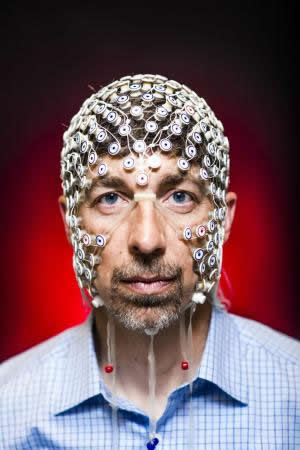
Electrical and computer engineering professor Barry Van Veen wears an electrode net used to monitor brain activity via EEG signals. His research with psychiatry professor and neuroscientist Giulio Tononi could help untangle what happens in the brain during sleep and dreaming. Credit Nick Berard.

Electrical and computer engineering professor Barry Van Veen wears an electrode net used to monitor brain activity via EEG signals. His research with psychiatry professor and neuroscientist Giulio Tononi could help untangle what happens in the brain during sleep and dreaming. Credit Nick Berard.

As real as that daydream may seem, its path through your brain runs opposite reality. Aiming to discern discrete neural circuits, researchers at the University of Wisconsin-Madison have tracked electrical activity in the brains of people who alternately imagined scenes or watched videos.

People with mentally taxing jobs, including lawyers and graphic designers, may end up having better memory in old age, research suggests.

Researchers at the RIKEN Brain Science Institute in Japan have identified a key neuronal pathway that makes learning to avoid unpleasant situations possible. Published online in the November 20 issue of Neuron, the work shows that avoidance learning requires neural activity in the habenula representing changes in future expectations.

Combining behavioral and physiologic measures depicts gradual process, may help diagnose sleep disorders. 

Neurophysicists have found that space-mapping neurons in the brain react differently to virtual reality than they do to real-world environments. Their findings could be significant for people who use virtual reality for gaming, military, commercial, scientific or other purposes.

New brain imaging technology is helping researchers to bridge the gap between art and science by mapping the different ways in which the brain responds to poetry and prose.

As methods of imaging the brain improve, neuroscientists and educators can now identify changes in children’s brains as they learn, and start to develop ways of personalizing instruction for kids who are falling behind.

Scientists have identified a weak spot in the human brain for Alzheimer’s disease and schizophrenia, revealing a connection between the two diseases.

A team of scientists has found a simple method to convert human skin cells into the specialized neurons that detect pain, itch, touch and other bodily sensations. These neurons are also affected by spinal cord injury and involved in Friedreich’s ataxia, a devastating and currently incurable neurodegenerative disease that largely strikes children.

Berkeley lab reports proper copper levels are essential to spontaneous neural activity.

Researchers are using an enhanced MRI approach to visualize brain injury in the blood brain barrier in order to identify significant changes to the blood-brain barrier in professional football players following a concussion.

A new study reports that older learners retained the mental flexibility needed to learn a visual perception task but were not as good as younger people at filtering out irrelevant information.

Finally this week, in the largest study of the genetics of memory ever undertaken, an international researcher team have discovered two common genetic variants that are believed to be associated with memory performance. The findings, which appear in the journal Biological Psychiatry, are a significant step towards better understanding how memory loss is inherited.


Weekly Neuroscience Update

Neuronal activity during exposure to various images reveals distinct spatial groupings. The red region, for example, responds well to face stimuli. Credit by Takayuki Sato/RIKEN Brain Science Institute.

Neuronal activity during exposure to various images reveals distinct spatial groupings. The red region, for example, responds well to face stimuli. Credit by Takayuki Sato/RIKEN Brain Science Institute.

A brain region that responds to a particular category of objects is found to consist of small clusters of neurons encoding visual features of these objects.

Scientists have discovered that by deactivating a major switch in the brain that is linked to learning and memory, memories become jumbled, like “hitting random notes on a keyboard,” and lose their sense of association.

Newcastle University scientists have discovered that as the brain re-organizes connections throughout our life, the process begins earlier in girls which may explain why they mature faster during the teenage years.

Learning requires constant reconfiguration of the connections between nerve cells. Two new studies now yield new insights into the molecular mechanisms that underlie the learning process.

In the first study of its kind, two researchers have used popular music to help severely brain-injured patients recall personal memories. Amee Baird and Séverine Samson outline the results and conclusions of their pioneering research in the recent issue of the journal Neuropsychological Rehabilitation.

Neuroscientists have successfully demonstrated a technique to enhance a form of self-control through a novel form of brain stimulation.

Finally this week, scientists have discovered that as the brain re-organizes connections throughout our life, the process begins earlier in girls which may explain why they mature faster during the teenage years.

Weekly Neuroscience Update

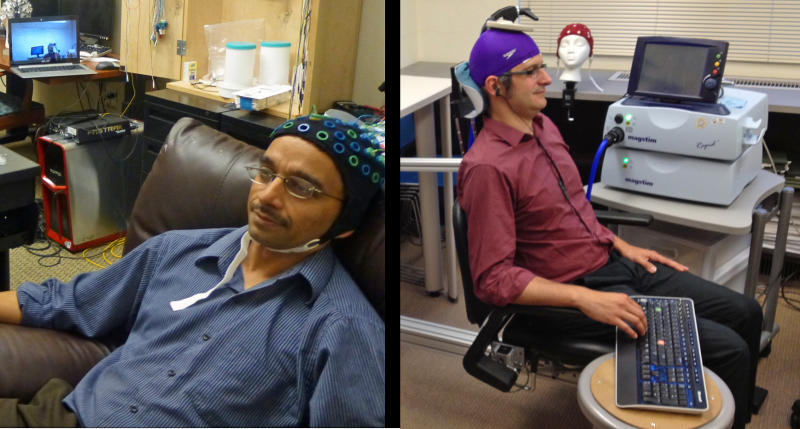
University of Washington University of Washington researcher Rajesh Rao, left, plays a computer game with his mind. Across campus, researcher Andrea Stocco, right, wears a magnetic stimulation coil over the left motor cortex region of his brain. Stocco’s right index finger moved involuntarily to hit the “fire” button as part of the first human brain-to-brain interface demonstration. (Credit: Image courtesy of University of Washington)

University of Washington University of Washington researcher Rajesh Rao, left, plays a computer game with his mind. Across campus, researcher Andrea Stocco, right, wears a magnetic stimulation coil over the left motor cortex region of his brain. Stocco’s right index finger moved involuntarily to hit the “fire” button as part of the first human brain-to-brain interface demonstration. (Credit: Image courtesy of University of Washington)

University of Washington researchers have performed what they believe is the first noninvasive human-to-human brain interface, with one researcher able to send a brain signal via the Internet to control the hand motions of a fellow researcher.

A new study strengthens the link between amyotrophic lateral sclerosis (ALS) and problems in protein production machinery of cells and identifies a possible treatment strategy.

A team of neuroscientists has found a key to the reduction of forgetting. Their findings, which appear in the journal Neuron, show that the better the coordination between two regions of the brain, the less likely we are to forget newly obtained information.

Sleep is well-known to help us better understand what we have learned. But now, researchers believe they have discovered exactly how sleep helps our brains to better learn specific motor tasks, such as typing or playing the piano.

With Magnetic Resonance Imaging (MRI), researchers have identified specific markers in the brain which could help predict whether people with psychosis will respond to antipsychotic medications.

New findings published in the journal Nature show how one component of the brain’s circuitry – inhibitory neurons – behave during critical periods of learning.

Researchers report the first biomarker results reported from the Parkinson’s Progression Markers Initiative (PPMI), showing that a comprehensive test of protein biomarkers in spinal fluid have prognostic and diagnostic value in early stages of Parkinson’s disease. The study is reported in JAMA Neurology.

Weekly Neuroscience Update

FASD impacts brain development throughout childhood and adolescence not just at birth

Highlighted areas are some of the white matter tracts the research group studied. Credit: U of A

Medical researchers at the University of Alberta recently published findings showing that brain development is delayed throughout childhood and adolescence for people born with Fetal Alcohol Spectrum Disorder (FASD).

Whenever we have to acquire new knowledge under stress, the brain deploys unconscious rather than conscious learning processes. Neuroscientists at the Ruhr-Universität Bochum have discovered that this switch from conscious to unconscious learning systems is triggered by the intact function of mineralocorticoid receptors.

Researchers have reverse-engineered the outlines of a disrupted prenatal gene network in schizophrenia, by tracing spontaneous mutations to where and when they likely cause damage in the brain. Some people with the brain disorder may suffer from impaired birth of new neurons, or neurogenesis, in the front of their brain during prenatal development, suggests the study.

Autism is marked by several core features — impairments in social functioning, difficulty communicating, and a restriction of interests. Though researchers have attempted to pinpoint factors that might account for all three of these characteristics, the underlying causes are still unclear. Now, a new study suggests that two key attentional abilities — moving attention fluidly and orienting to social information — can be checked off the list, as neither seems to account for the diversity of symptoms we find in people with autism.

Anemia, or low levels of red blood cells, may increase the risk of dementia, according to a study published in the July 31, 2013, online issue of Neurology, the medical journal of the American Academy of Neurology

Physicists and neuroscientists from The University of Nottingham and University of Birmingham have unlocked one of the mysteries of the human brain, thanks to new research using Functional Magnetic Resonance Imaging (fMRI) and electroencephalography (EEG). The work will enable neuroscientists to map a kind of brain function that up to now could not be studied, allowing a more accurate exploration of how both healthy and diseased brains work.

The Brain Science Of Learning (Podcast)

orbitEarlier this year I was interviewed by Radio Adelaide’s Ewart Shaw, host of the weekly ORBIT – the ideas in education radio show on what we already know about the learning process in the brain.

During the course of the interview I discussed recent scientific findings linking education with neuroscience around the emerging field of neuroeducation, including the educational relevance of factors such as exercise, motivation and stress and how they are informing the teaching/learning process in the classroom.

You can download a podcast of the interview from this link.

Weekly Neuroscience Update

Antwwaun Molden, Keith Toston, Julian Standord, Antwon Blake, John ChickIn a small study of former NFL players, about one quarter were found to have “mild cognitive impairment,” or problems with thinking and memory, a rate slightly higher than expected in the general population.

Research at the University of Edinburgh tracked electrical signals in the part of the brain linked to spatial awareness. The study could help us understand how, if we know a room, we can go into it with our eyes shut and find our way around. This is closely related to the way we map out how to get from one place to another.

Scientists have long wondered how nerve cell activity in the brain’s hippocampus, the epicenter for learning and memory, is controlled — too much synaptic communication between neurons can trigger a seizure, and too little impairs information processing, promoting neurodegeneration. Researchers at Georgetown University Medical Center say they now have an answer. In the January 10 issue of Neuron, they report that synapses that link two different groups of nerve cells in the hippocampus serve as a kind of “volume control,” keeping neuronal activity throughout that region at a steady, optimal level.

Seniors who have spoken two languages since childhood are faster than single-language speakers at switching from one task to another, according to a study published in the January 9 issue of The Journal of Neuroscience. Compared to their monolingual peers, lifelong bilinguals also show different patterns of brain activity when making the switch, the study found.

Repression of a single protein in ordinary fibroblasts is sufficient to directly convert the cells – abundantly found in connective tissues – into functional neurons. The findings, which could have far-reaching implications for the development of new treatments for neurodegenerative diseases like Huntington’s, Parkinson’s and Alzheimer’s, will be published online in advance of the January 17 issue of the journal Cell.

Was it right to ban this boy’s assistance dog from school?

Luke Kelly-Melia with his assistance dog Aidan

I was reading over the weekend of the case of the parents of a young boy with cerebral palsy, who have opted to educate their child at home after they were told his assistance dog was not welcome at his primary school. Luke Kelly-Melia who is in sixth class at Knocktemple National School in Virginia, Co Cavan, has been told his golden retriever, Aidan, is not allowed on the school grounds until further notice.

I am not up-to-speed on the full details of this case, but I do know that research in neuroeducation -the brain science of learning shows that the value of a trained child-friendly dog in the classroom  may far outweigh the concerns raised by the School Board of Management.

A 2002 study [“Behavioural effects of the presence of a dog in a classroom,” Anthrozoös 16 (2), 2003], conducted by Kurt Kotrschal and Brita Ortbauer, took place in Vienna.

The research found that having a dog in the classroom actually decreased behavioural extremes, making the diverse group more homogenous. Children were less engaged in loud, conspicuous, or troublesome behaviour. They paid more attention to their teacher, cooperated better, and communicated more intensely with one another. Improvements in social behaviour were more pronounced in boys than in girls, perhaps because girls showed less boisterous, “rough-and-tumble” activity to begin with. The researchers also speculate that the teacher’s authority increased, particularly with respect to certain male students, in the presence of her compliant, obedient dog.

A spokesperson for The Department of Education said it is a “matter for the board of management of each school to develop a policy on whether guide dogs or assistance dogs were allowed in the school, taking account of the needs of all the children in the school”. I do hope the School Board of Management will revisit their decision in respect of Luke and Aidan, as the newspaper article appears to indicate they may do.

How social and emotional learning can affect the brain

Neuroscientist Richard Davidson‘s research is focused on cortical and subcortical substrates of emotion and affective disorders, including depression and anxiety.

Using quantitative electrophysiology, positron emission tomography and functional magnetic resonance imaging to make inferences about patterns of regional brain function, his lab studies normal adults and young children, and those with, or at risk for, affective and anxiety disorders.

A major focus of his current work is on interactions between prefrontal cortex and the amygdala in the regulation of emotion in both normal subjects and patients with affective and anxiety disorders.

In this video Professor Davidson presents his research on how social and emotional learning can affect the brain.