Weekly Neuroscience Update

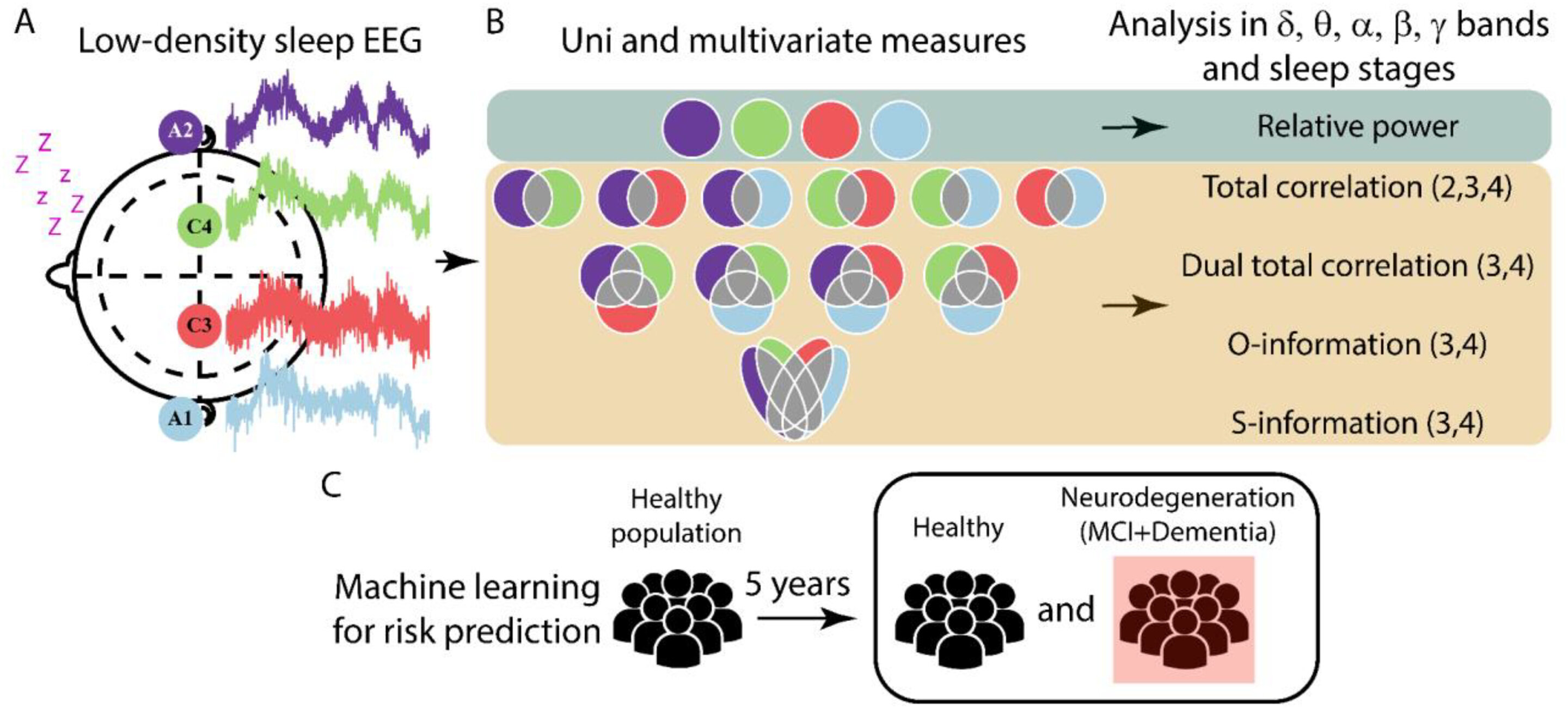
Credit: Journal of Alzheimer’s Disease (2025). DOI: 10.1177/13872877251319742

Researchers have developed an AI tool that analyzes brain wave activity recorded during sleep using electroencephalography (EEG), a non-invasive technique that measures electrical activity in the brain through sensors placed on the scalp.

An encoding study reveals how the brain uses past experiences to predict the unfolding of similar events over time.

A new brain-computer interface (BCI) has enabled a paralyzed man to control a robotic arm by simply imagining movements. Unlike previous BCIs, which lasted only a few days, this AI-enhanced device worked reliably for seven months. The AI model adapts to natural shifts in brain activity, maintaining accuracy over time.

Learning to think more about specific events in the future appears to reduce impulsivity, improve decision-making, and shows potential as a therapy for alcohol use disorder, a recent study has found.

Repeated sessions of electrical stimulation to brain networks associated with memory improved verbal learning in some Alzheimer’s disease patients for up to eight weeks in a preliminary trial led by UT Southwestern Medical Center researchers. The findings, published in The Journal of Prevention of Alzheimer’s Disease, indicate that while future trials are needed, neurostimulation shows early promise as a treatment for Alzheimer’s and other neurodegenerative disorders, such as Lewy body dementia.

Alcohol use leads to earlier brain aging and impaired behavioral flexibility, with those effects detectable even among adults in their 20s and 30s, according to an innovative study.

Researchers at Karolinska Institutet have identified a new mechanism that may improve the treatment of ischemic stroke. The study, published in the Journal of Clinical Investigation, shows that the growth factor PDGF-CC and its receptor PDGFRα play a crucial role in scar formation in the brain after an ischemic stroke.

An abnormal form of the tau protein found to accumulate in the brains of Alzheimer’s disease patients also accumulates in the eyes of patients with the condition, according to a recent study.

Scientists have observed for the first time how neurons in the human brain store memories independent of the context in which they are acquired. Published in Cell Reports, the study confirms that neurons can distinguish objects or people regardless of their context, enabling the formation of higher and more abstract relationships, which constitute the basis of human intelligence.

Higher fish consumption is associated with slower disability progression in multiple sclerosis (MS), according to research published in the Journal of Neurology, Neurosurgery & Psychiatry.

Using sophisticated neuroimaging techniques, researchers have mapped the brain’s activity during natural conversations, revealing how we seamlessly process speech and sound. These insights not only deepen our understanding of human connection but also pave the way for transformative advancements in speech technology and communication tools.

Finally this week, a recent study in Computers in Human Behavior, researchers observed that staying away from smartphones can even change one’s brain chemistry.

Weekly Neuroscience Update

Brain structural (MRI) scans from a selection of individuals from the Lothian Birth Cohort 1936 taken during Wave 2 (when all participants were about 73 years old). Credit: Ian J. Deary

A 25-year research program has unveiled key insights into how our brains age and what factors influence cognitive performance throughout life. The findings, published on 7 November 2024 in Genomic Psychiatry, draw from the Lothian Birth Cohorts (LBC) studies, which uniquely tracked participants’ cognitive abilities from childhood through their eighth decade of life.

A team of researchers has uncovered a mechanism in the formation of harmful protein aggregates that lead to neurodegenerative diseases such as Parkinson’s disease.

People with stronger autistic traits exhibit distinct and highly effective exploration patterns, according to a new study. These individuals tend to persist longer in curiosity-driven tasks, leading to better overall performance. In the study, participants with higher autistic traits explored consistently, even when faced with challenging learning environments, while those with lower traits engaged more briefly.

A new study shows how gut bacteria play a key role in regulating stress by interacting with circadian rhythms, opening possibilities for microbiome-based therapies for mental health.

Research led by the University of Michigan has provided compelling evidence that could solve a fundamental mystery in the makeup of fibrils that play a role in Alzheimer’s, Parkinson’s and other neurodegenerative diseases.

Researchers have developed tiny, wireless devices capable of wrapping around individual neurons, potentially aiding in the treatment of neurological disorders like multiple sclerosis.

A new international study has brought to light how blood sugar control can significantly impact brain health. The study suggests that improved blood sugar control could be one of the most important factors in slowing down age-related brain changes.

People with schizophrenia show distinct brain activity when faced with conflicting information, new research finds.

Finally this week, poor sleep quality may be associated with incidental, but not prevalent, motoric cognitive risk syndrome (MCR), a predementia syndrome characterized by slow gait speed and cognitive complaints, according to a study published in Neurology.

Weekly Neuroscience Update

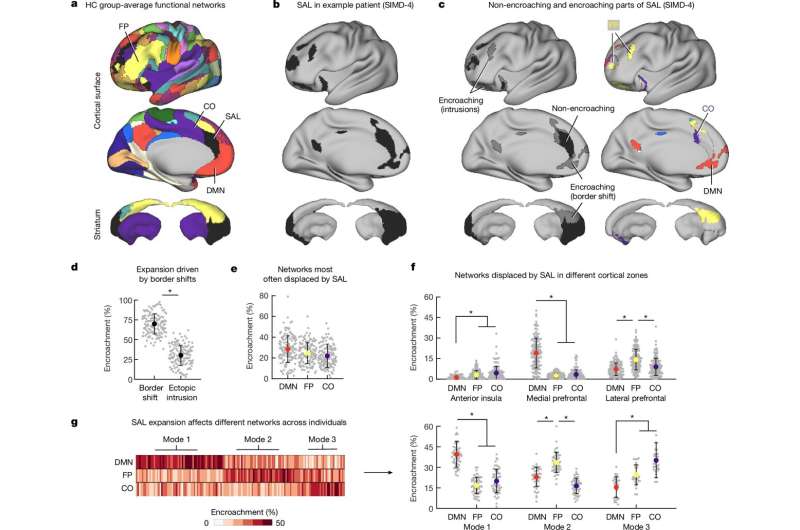
Three modes of salience network expansion in depression. Credit: Nature (2024)

By repeatedly scanning the brains of a small group of patients for a year and a half, researchers have identified a distinct pattern of neuronal interactions that appears to predispose some people to developing depression.

A new study reveals that higher levels of inequality—whether economic, environmental, or health-related—are associated with faster brain aging, particularly in countries with greater disparities

Researchers have published a new clinical protocol examining the combination of aerobic exercise and cognitive rehabilitation to improve learning and memory in individuals with multiple sclerosis (MS) who have mobility disability.

A new study reveals that the protein Tau – a key player implicated in several neurodegenerative conditions including Alzheimer’s disease – also plays a positive role in the brain.

Scientists have revealed new insights into the mechanisms behind cerebral small vessel disease, a condition that affects the smaller blood vessels in the brain and causes approximately half of all dementia cases.

Sports-related concussions may not be associated with long-term cognitive risks for non-professional athletes, a new study suggests.

Researchers have discovered that the Tau protein, often linked to neurodegenerative diseases like Alzheimer’s, also has a protective role in the brain. Tau helps combat oxidative stress by aiding in the formation of lipid droplets in glial cells, which sequester toxic lipids and protect neurons.

Scientists have developed an integrated optical sensor capable of detecting dopamine directly from an unprocessed blood sample.

A recent study has mapped genes linked to schizophrenia and uncovered a mechanism that disrupts synaptic plasticity in affected individuals. The researchers showed the role of three proteins in mediating the impairments of plasticity in schizophrenia. The findings may hold promise for the development of new treatments.

Finally this week, researchers have identified a protein called OSER1 that plays a key role in regulating longevity, offering new insights into why some people live longer than others. 

Weekly Neuroscience Update

Credit: Frontiers in Human Neuroscience (2024)

Scientists have determined that more than 60% of people who contracted COVID-19 have neurological symptoms that impact their cognitive function and quality of life, even two and three years after COVID-19.

Lip-read words can be decoded from the brain’s auditory regions similarly to heard speech, according to a new report that looked at how vision supports verbal perception.

Exercising is healthy, but not always appealing. Now research may have found a “switch” that activates the desire to get moving, as it shows that during exercise the muscle activates proteins which encourage further activity. The paper is published in Science Advances.

Researchers have demonstrated that a simple blood test that reflects brain health can predict which people are most at risk of suffering a stroke.

Our brain interprets visual information by combining what we see with what we already know. A study published in the journal Neuron, reveals a mechanism for learning and storing this existing knowledge about the world.

A newly developed brain-computer interface translates brain signals into speech with up to 97% accuracy, making it the most precise system of its kind.

Researchers have discovered that spontaneous brain activity during early development drives neural wiring before sensory experiences shape the brain. This spontaneous activity in neurons strengthens connections, following Hebb’s rule, where “cells that fire together wire together.”

According to new research, cognitive impairments in psychotic disorders, such as schizophrenia and bipolar disorder, are linked to brain network organization. 

A recently published study has unveiled significant findings that could enhance brain-computer interface (BCI) technologies, marking a crucial step towards more intuitive neuroprosthetic control and advanced rehabilitation therapies.

Researchers have discovered that the hippocampus stores multiple copies of a single memory, each within different neuron groups that develop at different stages.

Scientists have developed a promising preventative therapeutic approach against Alzheimer’s disease, targeting the amyloid beta biomolecule that typically triggers nerve cell hyperactivity in the early stages of the brain disease.

A new study finds that COVID-19 proteins left in the brain may lower cortisol levels, leading to heightened inflammation and an exaggerated response to stressors.

Through a large-scale brain imaging study, an international research team has identified five patterns of age-related degeneration in older people experiencing mental decline. In their study, the team conducted the multi-year study of thousands of MRI scans using machine learning applications to find patterns in brain degeneration as people age.

A new machine learning model, AutMedAI, can predict autism in children under two with nearly 80% accuracy, offering a promising tool for early detection and intervention.

Researchers have discovered the neurons responsible for “item memory,” deepening our understanding of how the brain stores and retrieves the details of “what” happened and offering a new target for treating Alzheimer’s disease.

Contrary to previous research, a new study of female participants finds no link between migraine and the risk of developing Parkinson’s disease.

Children who have persistently raised inflammation are at a higher risk of experiencing serious mental health disorders including psychosis and depression in early adulthood, according to a study published today in JAMA Psychiatry.

Researchers have identified a link between brain overgrowth and the severity of social and communication symptoms in children with autism spectrum disorder. 

People with multiple sclerosis (MS) are far less likely than those without the condition to have the molecular hallmarks of Alzheimer’s disease, according to new research. The discovery suggests a new avenue of research through which to seek Alzheimer’s treatment.

Scientists have discovered a new method to regulate the receptors responsible for the sense of touch, potentially leading to more effective treatments for chronic pain.

Researchers have found that nondeceptive placebos—placebos given with the full knowledge that they are placebos—can effectively manage stress, even when administered remotely. In a two-week randomized controlled trial, participants experiencing prolonged stress were divided into two groups: one group received nondeceptive placebos, while the other served as a control.

Return to work two years after a breast cancer diagnosis is associated with higher cognitive speed performance before and after treatment, according to a study published in JAMA Network Open.

Researchers have discovered a mutation in the SARS-CoV-2 spike protein that enhances its ability to infect the central nervous system, potentially explaining neurological symptoms and long COVID. The mutation was found to allow the virus to better infiltrate the brain, with implications for future treatments targeting COVID-19’s effects on the brain. 

Finally, this week, while everyone knows that a good night’s sleep restores energy, a new study finds it resets another vital function: memory.

Weekly Neuroscience Update

speech-pitch-neurosceincneews.jpg

Chang Lab’s research reveals what area of the human brain controls the pitch of our speech.

Researchers have revealed the area of the brain that controls our voice box, allowing us to alter the pitch of our speech. The insight could pave the way for advancing neuroprosthetics to allow people who can’t speak, to express themselves in a naturalistic way.

A new study reports the brain mechanisms responsible for triggering memory are identical, whether a person is awake or asleep.

While the effects of sleep deprivation are well known, researchers discover sleeping too much could have a detrimental effect on your brain. A new study reports sleeping more than eight hours per night can reduce cognitive ability and reasoning skills.

Researchers have discovered the thalamus plays a crucial role in the development of normal sleep and waking states.

A new study reports T cells are activated in the intestines and migrate to the brain, causing an inflammatory cascade that may lead to multiple sclerosis. Researchers say the gut microbiome may play a more significant role in the development and progression of MS than previously believed.

A new study reports an afternoon nap can help us to process unconscious information and enhance cognition.

Utilizing lesion network mapping, a recently developed technique for analyzing how the brain works, researchers have studied free will perception related to movement decisions.

A new study reports a protein made by astrocytes plays a critical role in brain plasticity by assisting with neural maturation and flexibility.

Only a small proportion of cases of dementia are thought to be inherited – the cause of the vast majority is unknown. Now, in a study published today in the journal Nature Communications, a team of scientists led by researchers at the University of Cambridge believe they may have found an explanation: spontaneous errors in our DNA that arise as cells divide and reproduces.

An international team of researchers has demonstrated, with electrophysiological evidence, the existence of grid-like activity in the human brain.

Finally, this week, a new study reports people may be able to avoid depression, even if they have a genetic predisposition to SAD, by maintaining or boosting serotonin levels throughout the year.


Weekly Neuroscience Update

Brain cell density remains constant with age among cognitively normal adults. (Courtesy of Dr. Keith Thulborn)

Brain cell density remains constant with age among cognitively normal adults. (Courtesy of Dr. Keith Thulborn)

New, ultra-high-field magnetic resonance images (MRI) of the brain provide the most detailed images to date to show that while the brain shrinks with age, brain cell density remains constant.

In a stunning discovery that overturns decades of textbook teaching, researchers have determined that the brain is directly connected to the immune system by vessels previously thought not to exist. That such vessels could have escaped detection when the lymphatic system has been so thoroughly mapped throughout the body is surprising on its own, but the true significance of the discovery lies in the effects it could have on the study and treatment of neurological diseases ranging from autism to Alzheimer’s disease to multiple sclerosis.

A new MRI study has found distinct injury patterns in the brains of people with concussion-related depression and anxiety, according to a new study published online in the journal Radiology.

Children and adolescents who received deep brain stimulation for generalized dystonia maintained significant symptom relief for up to eight years, according to a study presented at the 12th World Congress of the International Neuromodulation Society.

An international team of researchers is using data mapping methods created to track the spread of information on social networks to trace its dissemination across a surprisingly different system: the human brain.

A previously unknown link between the immune system and the death of motor neurons in Amyotrophic lateral sclerosis (ALS), also known as Lou Gehrig’s disease, has been discovered. The finding paves the way to a whole new approach for finding a drug that can cure or at least slow the progression of such neurodegenerative diseases as ALS, Alzheimer’s, Parkinson’s and Huntington’s diseases.

Spoken sentences can be reconstructed from activity patterns of human brain surface. “Brain to Text” combines knowledge from neuroscience, medicine and informatics.

Finally this week, scientists have figured out how newly learned concepts form in the human brain by visualizing how new information gets filed. They say this is the first time science visually witnessed how and where specific objects are coded in the brain.


Weekly Neuroscience Update

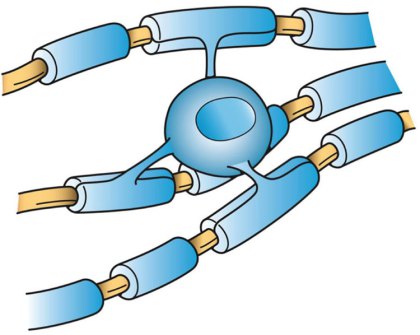
Oligodendrocytes are formed by a type of stem cell in the brain called oligodendrocyte progenitor cells (OPCs), and are responsible for re-wrapping, or remyelinating, the bare axons with myelin in response to injuries or diseases. This image is for illustrative purposes only and shows and artist’s representation of an oligodendrocyte. Credit Holly Fischer.

Oligodendrocytes are formed by a type of stem cell in the brain called oligodendrocyte progenitor cells (OPCs), and are responsible for re-wrapping, or remyelinating, the bare axons with myelin in response to injuries or diseases. This image is for illustrative purposes only and shows and artist’s representation of an oligodendrocyte. Credit Holly Fischer.

Like conducting an errant orchestra to play together, researchers are guiding processes that go awry in multiple sclerosis to repair themselves.

For the first time, scientists have discovered the exact mechanism rabies uses to efficiently enter the central nervous system, where it erupts in a toxic explosion of symptoms.

Neurons in human skin perform advanced calculations, previously believed that only the brain could perform.

Brain scans of college students have shed light on why people learn more effectively when their curiosity is piqued than when they are bored stiff. Researchers in the US found evidence that curiosity ramped up the activity of a brain chemical called dopamine, which in turn seemed to strengthen people’s memories.Students who took part in the study were better at remembering answers to trivia questions when they were curious, but their memories also improved for unrelated information they were shown at the same time.The findings suggest that while grades may have their place in motivating students, stimulating their natural curiosity could help them even more.

Researchers have discovered that T-cells – a type of white blood cell that learns to recognize and attack microbial pathogens – are activated by a pain receptor.

Quantitative tools dissect how two genes mutated in early-onset Parkinson’s disease collaborate in flagging damaged mitochondria.

A new study suggests a neural link between curiosity, motivation, and memory.

In a recent study published in the journal PLOS One, scientists uncovered a new pathway by which the brain uses an unusual steroid to control blood pressure. The study also suggests new approaches for treating high blood pressure and heart failure

Research using state-of-the-art eye-tracking technology has found that people suffering from chronic pain pay more frequent and longer attention to pain-related words than individuals who are pain-free.

The traditional view is that learning is based on the strengthening or weakening of the contacts between the nerve cells in the brain. However, this has been challenged by new research findings from Lund University in Sweden. These indicate that there is also a third mechanism – a kind of clock function that gives individual nerve cells the ability to time their reactions.

And finally this week, how your brain decides who to make friends with when you start university.

Weekly Neuroscience Update

The study revealed that EGFR signaling is suppressed in a subset of glioblastomas. This image is for illustrative purposes only and shows an MRI brain scan of a person with glioblastoma brain cancer. Credit The Armed Forces Institute of Pathology.

The study revealed that EGFR signaling is suppressed in a subset of glioblastomas. This image is for illustrative purposes only and shows an MRI brain scan of a person with glioblastoma brain cancer. Credit The Armed Forces Institute of Pathology.

Researchers have found one of the keys to why certain glioblastomas – the primary form of a deadly brain cancer – are resistant to drug therapy. The answer lies not in the DNA sequence of the tumor, but in its epigenetic signature. These findings have been published online as a priority report in the journal Oncotarget.

It has been proposed that green tea extract may have a beneficial impact on cognitive functioning, suggesting promising clinical implications. However, the neural mechanisms underlying this putative cognitive enhancing effect of green tea extract still remain unknown.

According to researchers at the University of Montreal, the regions of the brain below the cortex play an important role as we train our bodies’ movements and, critically, they interact more effectively after a night of sleep.

Researchers find that the risk of future stroke is 39% higher among patients with cognitive impairment than those with normal cognitive function, according to a new study published in the Canadian Medical Association Journal (CMAJ).

A study is shining new light on a sleep disorder called “sleep drunkenness.” The disorder may be as prevalent as affecting one in every seven people. The research is published in Neurology.

A mindfulness-based therapy for depression has the added benefit of reducing health-care visits among patients who often see their family doctors, according to a new study.

In what may be the largest study of sleep problems among individuals with multiple sclerosis (MS), researchers at UC Davis have found that widely undiagnosed sleep disorders may be at the root of the most common and disabling symptom of the disease: fatigue.

Scientists have provided the first evidence that the lack of a naturally occurring protein is linked to early signs of dementia.

Weekly Neuroscience Update


brain-white-matter-child-fitness (1)

The team used diffusion tensor imaging (DTI, also called diffusion MRI) to look at five white-matter tracts in the brains of the 24 participants. This method analyzes water diffusion into tissues. For white matter, less water diffusion means the tissue is more fibrous and compact, both desirable traits. This image shows an MRI of white matter in the human brain. The image is for illustrative purposes only, and is not connected to the research. Credit Kubicki et al.

A new study of 9 and 10-year-olds finds that those who are more aerobically fit have more fibrous and compact white-matter tracts in the brain than their peers who are less fit. “White matter” describes the bundles of axons that carry nerve signals from one brain region to another. More compact white matter is associated with faster and more efficient nerve activity. The team reports its findings in the open-access journal Frontiers in Human Neuroscience.

In a new study published in The Journal of Neuroscience, researchers report that the amygdala — a part of the brain associated with decision making, memory and emotion — plays a part in telling us who to trust almost instantly.

The latest research on sports concussions in teens has been the focus of recent study.

Depression is known to be a common symptom of Parkinson’s disease, but remains untreated for many patients, according to a new study.

Following another person’s gaze can reveal a wealth of information critical to social interactions and also to safety. Gaze following typically emerges in infancy, and new research looking at preterm infants suggests that its visual experience, not maturational age, that underlies this critical ability.

fMRI scans reveal brain differences in risk-taking teens

Children and adolescents with autism have a surplus of synapses in the brain, and this excess is due to a slowdown in a normal brain “pruning” process during development, according to a study by neuroscientists at Columbia University Medical Center (CUMC).

While much attention has focused on the link between violent video game playing and aggression among youths, a new study finds significantly increased signs of depression among preteens with high daily exposure to violent video games.

An imaging study of chronic users of codeine-containing cough syrups (CCS) has found deficits in specific regions of brain white matter and associates these changes with increased impulsivity in CCS users.

New treatments for multiple sclerosis (MS) using common anti-psychotic agents have been discovered by Victoria University of Wellington researchers.

People with schizophrenia struggle to turn goals into actions because brain structures governing desire and emotion are less active and fail to pass goal-directed messages to cortical regions affecting human decision-making, new research reveals.

Weekly Neuroscience Update

Lesion overlap map illustrating common and distinctive brain regions for Val/Val (blue) and Val/Met (yellow) genotype patients. Overlap between Val/Val and Val/Met genotype patients is illustrated in green. In each axial slice, the right hemisphere is on the reader’s left. Credit Barbey et al./PLOS ONE.

Lesion overlap map illustrating common and distinctive brain regions for Val/Val (blue) and Val/Met (yellow) genotype patients. Overlap between Val/Val and Val/Met genotype patients is illustrated in green. In each axial slice, the right hemisphere is on the reader’s left – this is because the view is from the bottom i.e. as if one were in the neck looking up at the brain. Credit Barbey et al./PLOS ONE.

Researchers report that one tiny variation in the sequence of a gene may cause some people to be more impaired by traumatic brain injury (TBI) than others with comparable wounds.

A recent study conducted by a multicenter-research team led by Cedars-Sinai Medical Center used a new, automated imaging system to identify shrinkage of a mood-regulating brain structure in a large sample of women with multiple sclerosis (MS), who also have a certain type of depression. The research supports earlier studies suggesting that the hippocampus may contribute to the high frequency of depression seen in those who suffer from MS.

Max Ortiz Catalan, researcher at Chalmers University of Technology, has developed a new method for the treatment of phantom limb pain (PLP) after an amputation. 

University of Sydney study is looking into the effectiveness of omega-3 supplements and the antidepressant, sertraline, in reducing depressive symptoms and cognitive decline in older people, in a bid to prevent the onset of depression and dementia in later life.

Certain neurons in the human striatum—a brain region involved in movement and cognition—are renewed throughout life, according to a study published in Cell.

Researchers at the University of Oxford have discovered the molecular switch in the brain that sends us to sleep.