Weekly Neuroscience Update

Credit: Psychological Bulletin (2023)

A new study has provided the first clear picture of where language processes are located in the brain. The findings may be useful in clinical trials involving language recovery after brain injury.

Researchers have developed a model for studying one type of familial epilepsy, opening the door to understanding—and eventually targeting—the mechanisms that lead to the disorder and its associated fatalities.

A new study published in Nature Medicine sheds light on how biological sex influences brain function and its impact on the risk of various brain-related diseases.

A breakthrough technique developed by University of Oxford researchers could one day provide tailored repairs for those who suffer brain injuries. The researchers have demonstrated for the first time that neural cells can be 3D-printed to mimic the architecture of the cerebral cortex.

A research team has identified new potential treatments for children with rare genetic conditions of blood vessels, which cause severe, symptoms like seizures and impaired development.

Scientists have discovered new insights into how our brain stores episodic memories—a type of long-term, conscious memory of a previous experience—that could be critical to the development of new neuroprosthetic devices to help patients with memory problems, like Alzheimer’s disease and dementia.

A global blood test for concussion could be a step closer after a new study discovered specific proteins or biomarkers that can help diagnose concussions relatively quickly and accurately.

The brain circuitry that is disrupted in Alzheimer’s disease appears to influence memory through a type of brain wave known as theta oscillation, a team led by UT Southwestern Medical Center researchers report. The findings, published in Nature Communications, could help researchers design and evaluate new treatments for Alzheimer’s, a condition that affects millions of people around the globe and has no cure.

Finally this week, a new study reveals the role of vascular system cells—pericytes—in the formation of long-term memories of life events—memories that are lost in diseases such as Alzheimer’s disease. 
Weekly Neuroscience Update

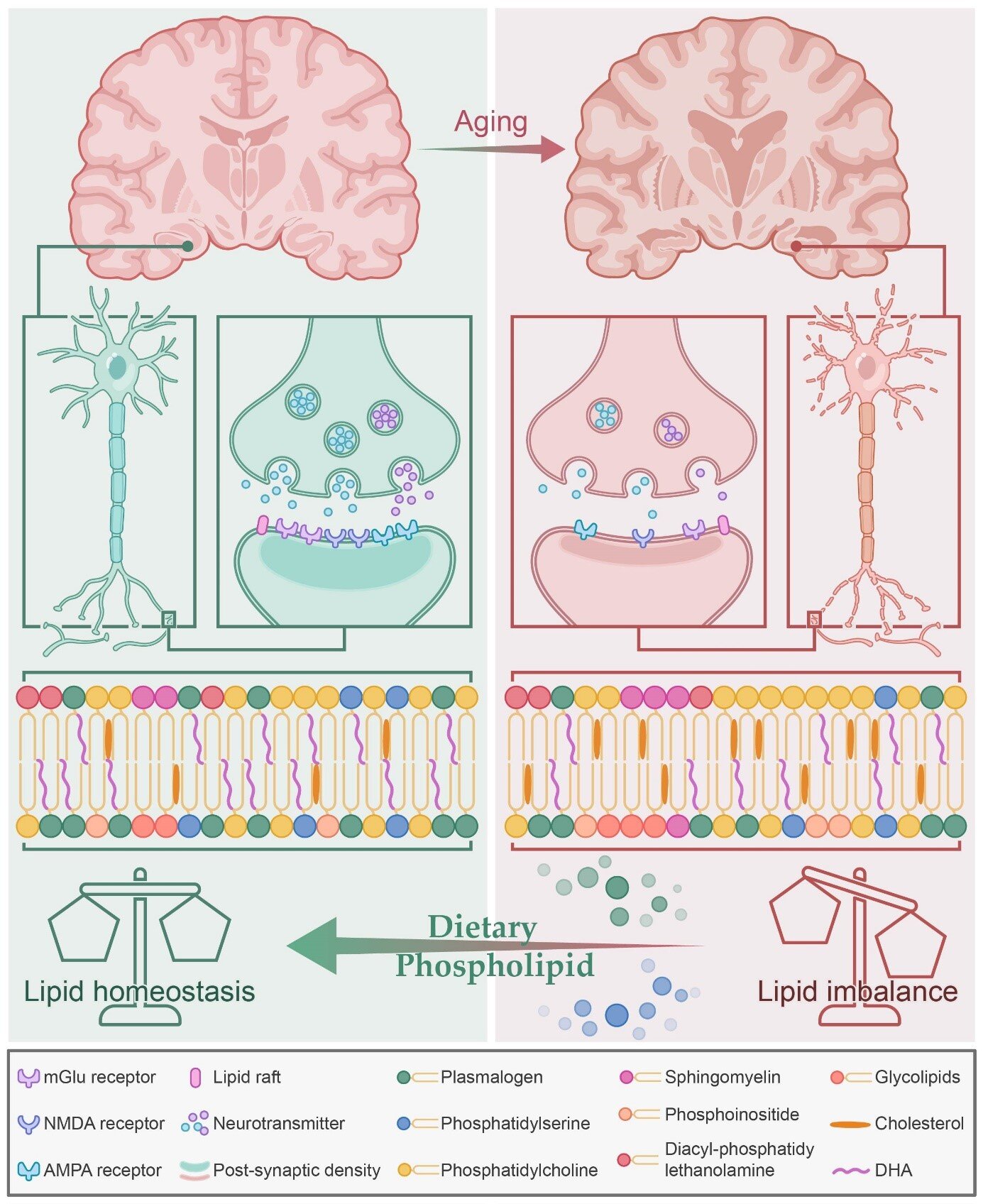
Dietary phospholipid intervention could prevent brain aging by maintaining lipid homeostasis and enhancing synaptic plasticity. Credit: Wei Xiong et al.

A new review highlights the significant role of dietary lipids in preventing brain aging and cognitive decline. As the global burden of aging-related brain diseases, particularly dementia, continues to rise, this research offers promising insights into potential nutritional interventions that could improve brain function during aging.

Cerebrospinal fluid (CSF) leaks may be one of the mechanisms that link traumatic brain injury (TBI) with dementia, according to a new hypothesis.

Short-term exposure to air pollution may be linked to an increased risk of stroke, according to a meta-analysis published in Neurology. Short-term exposure was defined as occurring within five days of the stroke.

People with a higher cumulative estrogen exposure throughout their life may have a lower risk of cerebral small vessel disease, according to a new study.

New research is painting a clearer picture of the early signs of multiple sclerosis (MS), showing that people are nearly twice as likely to experience mental illness in the years leading up to the onset of the disease.

Increased TV/DVD screen time at 1 and 2 years of age negatively affects developmental performance at 2 and 3 years of age, according to a study published in JAMA Pediatrics.

Whether you are an early bird or a night owl, your internal clock plays a critical role in maximizing your mental performance, according to a recent study. This effect is so strong that it can significantly impact academic performance for adolescent students and the results of brain health assessments for older adults.

Researchers are using ultra-high field 7 Tesla MRI to provide a better understanding of how sleep is regulated.

A new study suggests a common brain network exists among people with substance use disorder. By evaluating data from across more than 144 studies of addiction, the team found abnormalities across substance use disorders mapped to a common brain network across substances and lesion locations, suggesting a potential brain circuit to target with neurostimulation therapies.

Finally this week, people differ significantly in their memory performance and researchers have now discovered that certain brain signals are related to these differences.

Weekly Neuroscience Update

Bacterial curli promotes the aggregation of α-synuclein through cross-seeding, which leads to mitochondrial stress and neurodegeneration. Credit: The University of Hong Kong

Growing evidence indicates that gut microbiota plays a critical role in regulating the progression of neurodegenerative diseases such as Parkinson’s disease (PD) and Alzheimer’s disease (AD), but the molecular mechanism underlying such microbe-host interaction is still unclear. Now a research team at the University of Hong Kong (HKU) has discovered that bacteria-derived curli amyloid fibril promotes neurodegeneration in the host. This new study provides direct evidence to suggest that bacteria can secrete proteins that form an amyloid fibril, which enters the host neurons and promotes protein aggregation and neurodegeneration. Inhibiting the ability of the bacteria to secrete such proteins may be a preventative treatment for neurodegenerative diseases. 

Unusual visual inspection of objects by infants 9 months of age and older is predictive of a later diagnosis of autism spectrum disorder (ASD), new research has found.

A team of scientists recently published intriguing research on a tiny, splinter-like brain implant that doctors can slide deep into the folds of the brain and use to restore both muscular control over and sensation from a paralysis patient’s limbs.

A new study has found a new way to look at brain networks using the mathematical notion of fractals, to convey communication patterns between different brain regions as people listened to a short story. 

An experimental gene therapy that involves injecting CRISPR therapy directly into visually impaired patients’ eyeballs has vastly improved most volunteers’ vision — even allowing some to see color more vividly than ever before.

Preliminary new findings are raising concerns about the long-term effect of mild COVID-19 infection on neurological health and cognition.

Use of menopausal hormone therapy (MHT, also known as hormone replacement therapy, HRT) is not associated with an increased risk of developing dementia, regardless of hormone type, dose, or duration, concludes a large UK study.

Recent research provides empirical evidence to show the brain’s predictive ability forms the basis for musical phrasing.

Memories of past events and experiences are what define us as who we are, and yet the ability to form these episodic memories declines with age, certain dementias, and brain injury. However, a new study shows that low frequency repetitive transcranial magnetic stimulation—or rTMS—delivered over the left prefrontal cortex of the brain can improve memory performance by reducing the power of low frequency brain waves as memories form.

Finally this week, a new brain imaging study shows that the hippocampus is the brain’s storyteller, connecting separate, distant events into a single narrative.


Weekly Neuroscience Update

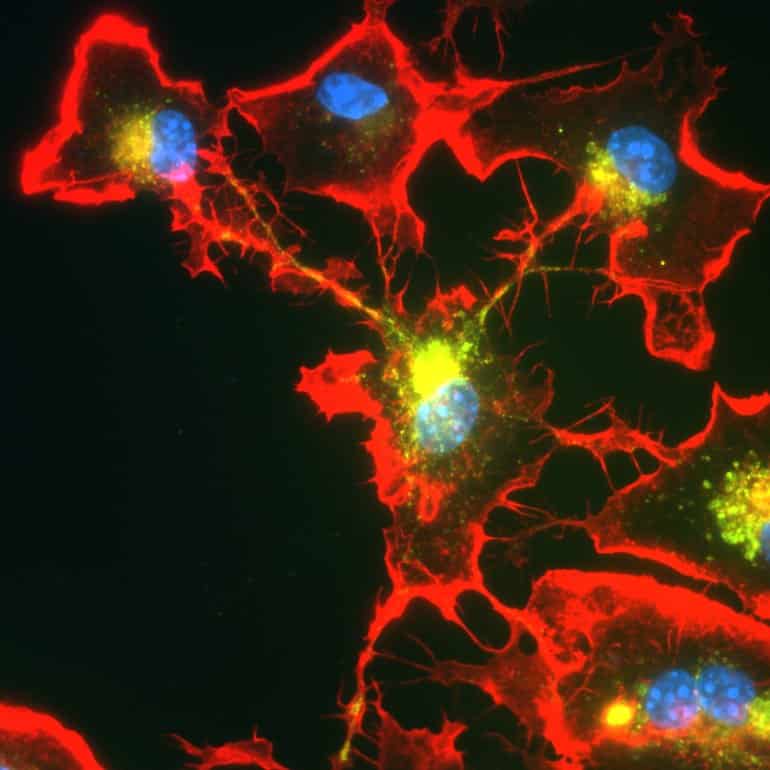
Microglial cells – (blue: the cell nuclei) can join together using tubular projections (red) to degrade dangerous proteins in a division of labor. Credit: AG Heneka/University of Bonn

To break down toxic proteins more quickly, immune cells in the brain can join together to form networks when needed. However, certain mutations associated with Parkinson’s disease can impair this process.

New work shows that neurons and other brain cells use DNA double-strand breaks, often associated with cancer, neurodegeneration and aging, to quickly express genes related to learning and memory.

New research has identified specific drug targets within the neural circuits that encode memories, paving the way for significant advances in the treatment of a broad spectrum of brain disorders.

Pioneering research shows that dopamine levels increase in response to stressful stimuli, and not just pleasurable ones, potentially rewriting facts about the “feel-good” hormone—a critical mediator of many psychiatric diseases. This discovery is cause to rethink treatment for psychiatric disease and addiction.

A new study links viral infections including mononucleosis and pneumonia experienced during adolescence with an increased risk of developing multiple sclerosis.

Researchers have discovered a new gene therapy pathway that has uncovered an important regulatory mechanism to keep our genome healthy. This pathway has the potential to protect us against serious life-limiting diseases such as cancer and dementia.

Neuroscientists have discovered specific types of neurons within the memory center of the brain that are responsible for acquiring new associative memories.

Amyloid protein made in the liver can cause neurodegeneration in the brain, according to a new study in the open-access journal PLOS Biology. Since the protein is thought to be a key contributor to development of Alzheimer’s disease (AD), the results suggest that the liver may play an important role in the onset or progression of the disease.

Higher glucose levels detected by a two-hour glucose test were an accurate predictor of poorer performance in tests of episodic memory ten years later, according to new research

A worsening cardiovascular profile after menopause may contribute to the fact that women are disproportionately affected by dementia. A new study identified a link between cardiovascular fat volume and radiodensity and cognitive function, as well as racial differences in this association.

Finally this week, a new study finds dopamine increases responses to stressful stimuli, not just pleasurable ones. The findings could have implications for the treatment of mental health disorders and addiction.


Weekly Neuroscience Update

associated-memory-learning-neurosciencenews.jpg

Oxford University researchers have discovered that learned knowledge is stored in different brain circuits depending on how we acquire it.

Neuroscientists say they have identified how people can have a “crash in visual processing” — a bottleneck of feedforward and feedback signals that can cause us not to be consciously aware of stimuli that our brain recognized.

A new study shows that an innovative strategy for treating Parkinson’s disease has proven successful in neurons that derive from people living with the condition.

A new study reveals the gut has a much more direct connection to the brain through a neural circuit that allows it to transmit signals in mere seconds. The findings could lead to new treatments for obesity, eating disorders, and even depression and autism—all of which have been linked to a malfunctioning gut.

New research shows musical improvisation improves cognitive flexibility and increases inhibitory control.

A UCLA-led study has found that MRI scans can help doctors distinguish whether a person’s memory loss is being caused by Alzheimer’s disease or by traumatic brain injury.

A new study suggests a longer duration of estrogen exposure hormone therapy was associated with better cognition in older adult women.

Weekly Neuroscience Update

artificial-membrane-brain-tisuse-neurosciencenews

A newly developed microfluidic device microfluidic device allowed researchers to keep tissue from the suprachiasmatic nucleus alive for over 25 days.

Neuroscientists have proved how different parts of the human brain work together to create and retrieve episodic memory.  Models suggested that, during formation of a memory, information is routed from cortex to hippocampus whilst retrieving a memory should see this information flow in reverse.

A collaborative study published today in the journal Cell Reports provides evidence for a new molecular cause for neurodegeneration in Alzheimer’s disease.

Researchers have identified brain circuitry differences that might be associated with suicidal behavior in individuals with mood disorders. The study, published in Psychological Medicine, provides a promising lead toward tools that can predict which individuals are at the highest risk for suicide.

A period of wakeful rest can help reduce memory intrusions associated with PTSD.

Does dementia spread gradually and evenly in all directions across the brain, or can it “jump” from one brain area to another? New research helps to settle the question by examining the progression of frontotemporal dementia.

Examining postmortem brains of autism spectrum disorder patients, researchers discover an accumulation of immune cells surrounding blood vessels in the brain.

Your personality type may influence addiction to certain drugs, a new study reveals. Those whose personalities rank higher for impulsivity are more likely to use ecstasy, while those who score higher for neurotic traits are more likely to use opioid like heroin, researchers report.

Finally this week, researchers have mapped out some of the mechanisms that may affect women’s fertility from the teenage years to menopause.


Weekly Neuroscience Update

man-3337573_960_720.jpg

A new study reports people who sit down too much during middle to older age show signs of thinning in the medial temporal cortex, an area of the brain associated with the formation of new memories.

Researchers explore the neuroscience behind binge eating and the triggers that might make us reach for comfort foods.

According to a new study, children with executive function deficits were more likely to show physical and reactive aggression later in life. Researchers suggest helping children to improve executive function could help to reduce aggression levels.

Olfactory system neurons appear to play a role in the connection between rhythmic breathing and emotional regulation, researchers report.

Researchers report newly identified risk factors differ from currently known genetic causes of autism. The variants identified do not alter the genes directly, but disrupt the neighboring DNA control elements that turn genes on or off. Additionally, the variants do not occur as new mutations in autistic children, but are inherited from parents.

A new study reveals we quickly process opinions we agree with as facts, even if the opinion is non-factual.

New research implicates the hippocampus in conceptual memory formation. The study reveals activity within the hippocampus and ventromedial prefrontal cortex is consistent with the retrieval of new concepts.

Researchers report the later a women enters into natural menopause, the better, on average, her verbal memory is later in life.

A new study adds to growing evidence that early exposure to pollution can increase both suicide risks in younger people and Alzheimer’s disease as people age.

Finally this week, new research reveals specific parts of the hippocampus may play a key role in emotional regulation.