Why my ultimate exam tip is an exam sip!

As the Junior and Leaving Certificate exams kick off today, I want to wish you all good luck and to remind you not to forget to bring a bottle of water with you into your exams!

It’s that time of the year again when the two big state exams – junior and leaving certificates kick off for a generation of Irish youths.  The leaving cert is the hardest exam I’ve ever had to sit  – throughout my years as a student in University, and afterwards working in a laboratory as a neuroscientist, nothing really compared to the intensity of that exam.  

Drink water to improve your grade!

Scientists from the University of East London report that bringing a bottle of water with you into your exam boosts your grade. Students who brought water with them did better in the exam than those without water.  The researchers accounted for the 447 undergraduate students’ prior grades, so it’s not just a matter of smarter students being more likely to bring a bottle of water into the exam.

Drinking water makes you smarter

Controlling for ability from previous coursework results, scientists found those who drank water during the exam scored an average of 5% higher than those who did without.

The ultimate exam tip – is an exam sip!

Scientists explain that there may be a few reasons for this link between bringing water (and presumably drinking it) and better grades:

  1. Previous studies have shown that a dehydration level of just 1% of your body weight reduces your thinking functions, so it makes sense that drinking water improves mental performance.
  2. The desire to drink water (thirst) is driven by a small protein (a peptide) called vasopressin in the brain. Vasopressin has also been implicated in making new memories and with the positive feelings associated with social behaviour thereby leading to a better performance by reducing anxiety in an exam situation,
  3. By offering a momentary distraction – taking a sip of water – drinking water may also break a chain of thoughts and free the mind to focus on the task at hand, leading to better performance – thereby reducing anxiety during the exam.
  4. Drinking water might also just activate a placebo affect – if you believe water boosts your brain power, that belief alone could improve your performance.

The research continues – either way, don’t forget that bottle of water on your next exam.

References 

Lim MM, Young LJ (2004). “Vasopressin-dependent neural circuits underlying pair bond formation in the monogamous prairie vole”. Neuroscience 125 (1): 35–45.

Weekly Neuroscience Research Update

Several specific regions of our brains are activated in a two-part process when we are exposed to deceptive advertising, according to new research conducted by a North Carolina State University professor. The work opens the door to further research that could help us understand how brain injury and aging may affect our susceptibility to fraud or misleading marketing.

We make our eye movements earlier or later in order to coordinate with movements of our arms, New York University neuroscientists have found. Their study, which appears in the journal Neuron, points to a mechanism in the brain that allows for this coordination and may have implications for rehabilitation and prosthetics.

The brain has a remarkable ability to learn new cognitive tasks while maintaining previously acquired knowledge about various functions necessary for everyday life. But exactly how new information is incorporated into brain systems that control cognitive functions has remained a mystery. A study by researchers at Wake Forest Baptist Medical Center and the McGovern Institute of the Massachusetts Institute of Technology shows how new information is encoded in neurons of the prefrontal cortex, the area of the brain involved in planning, decision making, working memory and learning.

A team of academic researchers has identified the intracellular mechanisms regulated by vitamin D3 that may help the body clear the brain of amyloid beta, the main component of plaques associated with Alzheimer’s disease.

Opening the door to the development of thought-controlled prosthetic devices to help people with spinal cord injuries, amputations and other impairments, neuroscientists at the University of California, Berkeley, and the Champalimaud Center for the Unknown in Portugal have demonstrated that the brain is more flexible and trainable than previously thought.

Emotion-sensing computer software that models and responds to students’ cognitive and emotional states – including frustration and boredom – has been developed by University of Notre Dame Assistant Professor of Psychology Sidney D’Mello and colleagues from the University of Memphis and Massachusetts Institute of Technology.

Weekly Neuroscience Update

A new study reveals for the first time that activating the brain’s visual cortex with a small amount of electrical stimulation actually improves our sense of smell. The finding revises our understanding of the complex biology of the senses in the brain.

By training birds to ‘get rhythm’, scientists uncover evidence that our capacity to move in time with music may be connected with our ability to learn speech.

Daily doses of a drug used to treat Parkinson’s disease significantly improved function in severely brain-injured people thought to be beyond the reach of treatment. Scientists have reported on the first rigorous evidence to date that any therapy reliably helps such patients.

Remembering where we left our keys requires at least three different regions of the brain to work together, a study published in the Journal of Neuroscience says.

If you’re a left brain thinker, chances are you use your right hand to hold your cell phone up to your right ear, according to a new study from Henry Ford Hospital in Detroit.

People who experience a traumatic brain injury show a marked decline in the ability to make appropriate financial decisions in the immediate aftermath and a continued impairment on complex financial skills six months later, according to new research from the University of Alabama at Birmingham.

For the first time, a team led by Carnegie Mellon University neuroscientists has identified how different neural regions communicate to determine what to visually pay attention to and what to ignore. This finding is a major discovery for visual cognition and will guide future research into visual and attention deficit disorders.

Finally this week, Ireland’s neurological charities have come together to launch a new patient information and services website in time for National Brain Awareness Week which takes place next week (05 – 11 March).

Neuroscience News

Bilingualism is good for the brain

The human brain has room for an uncounted number of languages as well as a sort of executive control system to keep them active but separate. This ability, a form of mental exercise, seems to be beneficial for the brain.

Researchers from the University of Wisconsin, Madison have presented innovative magnetic resonance imaging (MRI) techniques that can measure changes in the microstructure of the white matter likely to affect brain function and the ability of different regions of the brain to communicate.

Memory strengthened by stimulating key site in brain.

Researchers have created a living 3-D model of a brain tumor and its surrounding blood vessels. In experiments, the scientists report that iron-oxide nanoparticles carrying the agent tumstatin were taken by blood vessels, meaning they should block blood vessel growth. The living-tissue model could be used to test the effectiveness of nanoparticles in fighting other diseases. Results appear in Theranostics.

New model of neuro-electric activity could help scientists better understand coma states.

Scientists at Emory University School of Medicine have identified a new group of compounds that may protect brain cells from inflammation linked to seizures and neurodegenerative diseases.

Researchers at the University of Warwick and Indiana University have identified parallels between animals looking for food in the wild and humans searching for items within their memory – suggesting that people with the best ‘memory foraging’ strategies are better at recalling items.

Researchers at the Salk Institute have discovered a startling feature of early brain development that helps to explain how complex neuron wiring patterns are programmed using just a handful of critical genes. The findings, published in Cell, may help scientists develop new therapies for neurological disorders, such as amyotrophic lateral sclerosis (ALS), and provide insight into certain cancers.

Weekly Round Up: Brain Research

Scientists now have a better understanding of the way that stress impacts the brain. New research, published by Cell Press in the January 26 issue of the journal Neuron, reveals pioneering evidence for a new mechanism of stress adaptation and may eventually lead to a better understanding of why prolonged and repeated exposure to stress can lead to anxiety disorders and depression.

Men may be at higher risk of experiencing mild cognitive impairment (MCI), or the stage of mild memory loss that occurs between normal aging and dementia, than women, according to a study published in the January 25, 2012, online issue of Neurology®, the medical journal of the American Academy of Neurology.

Scientists have estimated for the first time the extent to which genes determine changes in intelligence across the human life course.

Researchers at the University of California, San Diego School of Medicine have created a new generation of fast-acting fluorescent dyes that optically highlight electrical activity in neuronal membranes. The work is published in this week’s online Early Edition of theProceedings of the National Academy of Science.

A new study led by researchers at the University of California, Berkeley, provides even more reason for people to read a book or do a puzzle, and to make such activities a lifetime habit. Brain scans revealed that people with no symptoms of Alzheimer’s who engaged in cognitively stimulating activities throughout their lives had fewer deposits of beta-amyloid, a destructive protein that is the hallmark of the disease.

Weekly Round Up

Welcome to the last weekly round-up of 2011. I have enjoyed putting this together each week and look forward to updating you with lots more new and exciting research in the field of neuroscience in the coming year.

New research has shown, for the first time, that the cortex, which is the largest zone of the brain and which is generally associated with high cognitive functions, is also a key zone for emotional learning.

When you experience a new event, your brain encodes a memory of it by altering the connections between neurons. This requires turning on many genes in those neurons. Now, MIT neuroscientists have identified what may be a master gene that controls this complex process.

A new technique for color-coding nerves involved in touch gives neuroscientists a much-needed tool for studying that mysterious sense.

When accidents that involve traumatic brain injuries occur, a speedy diagnosis followed by the proper treatment can mean the difference between life and death. A research team, led by Jason D. Riley in the Section on Analytical and Functional Biophotonics at the U.S. National Institutes of Health, has created a handheld device capable of quickly detecting brain injuries such as hematomas, which occur when blood vessels become damaged and blood seeps out into surrounding tissues where it can cause significant and dangerous swelling.

Shrinkage in certain parts of the brain may herald Alzheimer’s disease long before symptoms arise, according to new research.

At UCLA’s Laboratory of Integrative Neuroimaging Technology, researchers use functional MRI brain scans to observe brain signal changes that take place during mental activity. They then employ computerized machine learning (ML) methods to study these patterns and identify the cognitive state — or sometimes the thought process — of human subjects. The technique is called “brain reading” or “brain decoding.”

Compared to our other senses, scientists don’t know much about how our skin is wired for the sensation of touch. Now, research reported in the December 23rd issue of the journal Cell, a Cell Press publication, provides the first picture of how specialized neurons feel light touches.

Both children and the elderly have slower response times when they have to make quick decisions in some settings. But recent research suggests that much of that slower response is a conscious choice to emphasize accuracy over speed. In fact, healthy older people can be trained to respond faster in some decision-making tasks without hurting their accuracy – meaning their cognitive skills in this area aren’t so different from younger adults.

Scientists at the University of Cambridge have made a significant step in the development of a novel therapy that could one day help to slow down, or even halt, the damage caused by Parkinson’s disease, one of the most common neurodegenerative disorders.

Weekly Update

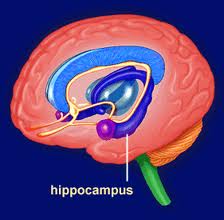
The formation of new memories and the retrieval of older memories are both evidenced in the hippocampus region of the brain

The hippocampus is a brain structure that plays a major role in the process of memory formation. It is not entirely clear how the hippocampus manages to string together events that are part of the same experience but are separated by “empty” periods of time. Now, new research published in the latest issue of the journal Neuron finds that there are neurons in the hippocampus that encode every sequential moment in a series of events that compose a discrete experience.

Sad people are apparently better than happy people at face recognition, an upside to being down in the dumps that is yielding insights into how mood can affect the brain. The findings, based on experiments involving college students, could help lead to better treatments for depression, psychologists say.

Our memories work better when our brains are prepared to absorb new information, according to a new study by MIT researchers.

A fundamental new discovery about how nerve cells in the brain store and release tiny sacs filled with chemicals may radically alter the way scientists think about neurotransmission – the electrical signaling in the brain that enables everything from the way we move, to how we remember and sense the world.

Weekly Round Up

Latest study shows buddhist meditation promotes rational thinking

Studies looking at the brains of people playing a fairness game found very different responses between Buddhist meditators and other participants.

It’s possible that depression could be cured by reducing mild swelling in your brain.

New York University neuroscientists have identified the parts of the brain we use to remember the timing of events within an episode. The study, which appears in the latest issue of the journal Science, enhances our understanding of how memories are processed and provides a potential roadmap for addressing memory-related afflictions.

A leading University of Chicago researcher on empathy is launching a project to understand psychopathy by studying criminals in prisons.

A new study at the University of California at Davis has made progress in determining the factors that affect brain degeneration and why our brains shrink with age and a new drug to prevent the development of Alzheimer’s disease could be tested on patients within six years according to researchers at Lancaster University.

Weekly Round Up

Researchers Aim for Direct Brain Control of Prosthetic Arms Credit J. Contreras-Vidal/University of Maryland.

Engineering researchers at four U.S. universities are embarking on a four-year project to design a prosthetic arm that amputees can control directly with their brains and that will allow them to feel what they touch. The researchers have developed a prototype of a device that provides feedback to the wearer’s arm while objects are moved with a prosthetic ‘hand,’ a gripper. The prototype, which incorporates noninvasive monitoring of electrical activity and blood-oxygen levels in the brain, may be incorporated into next-generation prosthetic arms.

Millions of people with severe, treatment-resistant depression could improve their condition by adding an anti-inflammatory drug to their antidepressant medication, a leading consortium of UK researchers in biological psychiatry has reported.

A new study of the brain’s master circadian clock — known as the suprachiasmatic nucleus, or SCN — reveals that a key pattern of rhythmic neural activity begins to decline by middle age.

Vanderbilt University psychologists have found that our visual perception can be contaminated by memories of what we have recently seen, impairing our ability to properly understand and act on what we are currently seeing.

And finally, a new study provides clues about the cellular mechanisms of traumatic brain injury, a signature injury of the wars in Iraq and Afghanistan.

Weekly Round Up

Pathways within the brain can be strengthened by reading and language exposure

 Recent research shows that reading  boosts brain pathways and can actually affect understanding in nearly all school subjects – a great reason to encourage the reading habit in your children.

Scientists at the University of Michigan Health System have demonstrated how memory circuits in the brain refine themselves in a living organism through two distinct types of competition between cells. Their results, published  in Neuron, mark a step forward in the search for the causes of neurological disorders associated with abnormal brain circuits, such as Alzheimer’s disease, autism and schizophrenia.

The left and right halves of the brain have separate stores for working memory, the information we actively keep in mind, suggests a study published online yesterday by the Proceedings of the National Academy of Sciences.

Over time, and with enough Internet usage, the structure of our brains can actually physically change, according to a new study.

Bringing the real world into the brain scanner, researchers at The University of Western Ontario from The Centre for Brain and Mind can now determine the action a person was planning, mere moments before that action is actually executed.

And finally good news at last for coffee addicts.For years we’ve been told that caffeinated coffee was bad for us. It’s unhealthy and addictive, doctors warned. But as vindication for all who stuck by their energizing elixir, a new study published early online in the Journal of Alzheimer’s Disease,  shows that guzzling caffeinated coffee may actually be good for our brains. In fact, it may help keep Alzheimer’s at bay.  So enjoy that cuppa joe!