Weekly Update

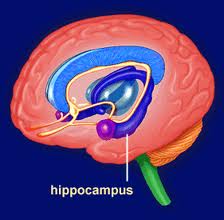
The formation of new memories and the retrieval of older memories are both evidenced in the hippocampus region of the brain

The hippocampus is a brain structure that plays a major role in the process of memory formation. It is not entirely clear how the hippocampus manages to string together events that are part of the same experience but are separated by “empty” periods of time. Now, new research published in the latest issue of the journal Neuron finds that there are neurons in the hippocampus that encode every sequential moment in a series of events that compose a discrete experience.

Sad people are apparently better than happy people at face recognition, an upside to being down in the dumps that is yielding insights into how mood can affect the brain. The findings, based on experiments involving college students, could help lead to better treatments for depression, psychologists say.

Our memories work better when our brains are prepared to absorb new information, according to a new study by MIT researchers.

A fundamental new discovery about how nerve cells in the brain store and release tiny sacs filled with chemicals may radically alter the way scientists think about neurotransmission – the electrical signaling in the brain that enables everything from the way we move, to how we remember and sense the world.

Weekly Round Up

Latest study shows buddhist meditation promotes rational thinking

Studies looking at the brains of people playing a fairness game found very different responses between Buddhist meditators and other participants.

It’s possible that depression could be cured by reducing mild swelling in your brain.

New York University neuroscientists have identified the parts of the brain we use to remember the timing of events within an episode. The study, which appears in the latest issue of the journal Science, enhances our understanding of how memories are processed and provides a potential roadmap for addressing memory-related afflictions.

A leading University of Chicago researcher on empathy is launching a project to understand psychopathy by studying criminals in prisons.

A new study at the University of California at Davis has made progress in determining the factors that affect brain degeneration and why our brains shrink with age and a new drug to prevent the development of Alzheimer’s disease could be tested on patients within six years according to researchers at Lancaster University.

Weekly Round Up

Researchers Aim for Direct Brain Control of Prosthetic Arms Credit J. Contreras-Vidal/University of Maryland.

Engineering researchers at four U.S. universities are embarking on a four-year project to design a prosthetic arm that amputees can control directly with their brains and that will allow them to feel what they touch. The researchers have developed a prototype of a device that provides feedback to the wearer’s arm while objects are moved with a prosthetic ‘hand,’ a gripper. The prototype, which incorporates noninvasive monitoring of electrical activity and blood-oxygen levels in the brain, may be incorporated into next-generation prosthetic arms.

Millions of people with severe, treatment-resistant depression could improve their condition by adding an anti-inflammatory drug to their antidepressant medication, a leading consortium of UK researchers in biological psychiatry has reported.

A new study of the brain’s master circadian clock — known as the suprachiasmatic nucleus, or SCN — reveals that a key pattern of rhythmic neural activity begins to decline by middle age.

Vanderbilt University psychologists have found that our visual perception can be contaminated by memories of what we have recently seen, impairing our ability to properly understand and act on what we are currently seeing.

And finally, a new study provides clues about the cellular mechanisms of traumatic brain injury, a signature injury of the wars in Iraq and Afghanistan.

Weekly Round Up

Pathways within the brain can be strengthened by reading and language exposure

 Recent research shows that reading  boosts brain pathways and can actually affect understanding in nearly all school subjects – a great reason to encourage the reading habit in your children.

Scientists at the University of Michigan Health System have demonstrated how memory circuits in the brain refine themselves in a living organism through two distinct types of competition between cells. Their results, published  in Neuron, mark a step forward in the search for the causes of neurological disorders associated with abnormal brain circuits, such as Alzheimer’s disease, autism and schizophrenia.

The left and right halves of the brain have separate stores for working memory, the information we actively keep in mind, suggests a study published online yesterday by the Proceedings of the National Academy of Sciences.

Over time, and with enough Internet usage, the structure of our brains can actually physically change, according to a new study.

Bringing the real world into the brain scanner, researchers at The University of Western Ontario from The Centre for Brain and Mind can now determine the action a person was planning, mere moments before that action is actually executed.

And finally good news at last for coffee addicts.For years we’ve been told that caffeinated coffee was bad for us. It’s unhealthy and addictive, doctors warned. But as vindication for all who stuck by their energizing elixir, a new study published early online in the Journal of Alzheimer’s Disease,  shows that guzzling caffeinated coffee may actually be good for our brains. In fact, it may help keep Alzheimer’s at bay.  So enjoy that cuppa joe!

Weekly Round Up

Are teenage brains wired to predict the next big music hit?

The brain is constantly changing as it perceives the outside world, processing and learning about everything it encounters. In a new study, which will be published in an upcoming issue of Psychological Science, scientists find a surprising connection between two types of perception: If you’re looking at a group of objects and getting a general sense of them, it’s difficult for your brain to learn relationships between the objects.

Recent research published in the Journal of Consumer Psychology.suggests that the activity in teen brains may have some Nostradamus-like qualities when it comes to predicting the hits or misses of popular music.

Fear burns memories into our brain, and new research by University of California, Berkeley neuroscientists explains how in findings that have implications for the treatment of PTSD.

Ands speaking of memory…have you forgotten where you put your keys recently? Your brain might be in a better state to recall where you put them at some times than at others, according to new research from UC Davis.

Where is your brain taking you?

Let me take you on a little trip..a trip to the future.

As we enter the 21st Century we need a compelling vision for the human race including our spiritual and mental evolution as understood by the evolution of our brains.  The following insights may strike you as free ranging, radical or even abstract but I believe that the question of human evolution connects perfectly with what many of us are beginning to ask of ourselves and how we might fit into a ‘bigger picture’.

Self-refection IS evolution 

Modern evolutionary theory needs to switch focus to the human mind – not just the physical brain. It is not enough to work out that we evolved from the apes – we now need to focus on how the human psyche is evolving and where it is taking us. Evidence from a branch of science called evolutionary biology shows that the size and shape of the human brain has not changed radically in thousands of years despite huge technological advances. Why is this so? Evidence is mounting that once humans learned to think in a different way by living in a state of reflectiveness our progress was inevitable. By discovering how to harness the full power of the brain – human beings did not just survive but started to enjoy an ‘ultra’ life.

The past is the key to the future

Until recently, the task of applying evolutionary science to the bigger question of human destiny has been avoided by scientists  too wary of speculation. However the emergence of the new discipline of neuroscience – the scientific study of the nervous system – is helping us to bridge this gap by providing new ways to answer old questions.  Neuroscientists have recently discovered that the same brain regions are involved in the processing of memory and in creative thought suggesting that the more we learn and remember the better we can predict the future. 

Science and true science

The great paradox of science is that while its strength is the deep analysis it uses to solve a problem – it can only really come of age when it goes beyond seeing man only in terms of the physical body. True science will see man in his wholeness and as part of a coherent picture of the world. The fact is that neither the sciences nor the humanities have yet to properly explain what it is to be human. True science will probably need to take into account all the challenges, achievements and events of human history as if they were all part of one continuum. This will require a new type of analysis – the origins of which may be seen in the new disciplines called informatics and systems analysis.

Ticket to where?

Humankind is a very young concept – only coined in the last 100 years. It is based on the recognition of unity within the human race – despite all the wars, division of wealth and racism. Contrary to what some people like to think – humankind is not the centre of the world but rather a very actively growing branch of the evolutionary tree. We are not destined to ‘lift ourselves above nature’- but rather to dramatically raise the intelligence and complexity of this thing we call ‘life’ through our intellectual and spiritual evolution. In fact, the more complex and intelligent we become the more we will free ourselves from our physical surroundings (the physical universe).

Personality equals evolution – neurolution

Just as our physical universe – space, the stars and galaxies – is expanding outwards, the same universe can – under the right conditions – also just as naturally ‘focus inwards’ from the simple to the increasingly complex and it is according to this ‘law’ that the human mind also develops.  Is there an end point to us becoming more human or the fulfilment of its potential? The evidence suggests that for us humans – personality equals evolution. 

The neuroscience of US

Every single human being on the planet is unique because they posses a uniquely complex brain. In fact, the brain is so complex that in all of human history no two brains were the same.  Furthermore this unique combination of about 100 trillion tiny connections grows and changes through life – a work in progress from conception to death. In this way we each evolve as we journey through life.

All hands on deck for human evolution

The evolution of the human race is not going to proceed by trying to transcend it – rather we will move forward as a race by making room for everyone to express their personalities to the full.  In this way the evolution of the human race has everything to do with our own personal development. Yet evolution does not happen at an even speed so don’t be alarmed when your subconscious asks you to take that leap; change job, pick a partner or just follow your dream. These great leaps of faith are part of your evolution in your journey through life and following a period of self refection just assure yourself it’s all happening for your own good (and the good of your species!) and go to the next level.

In a series of future blogs I will explore these ideas further including how mental and spiritual evolution is nourished by the network society.


In search of memory

Neuroscientist Eric Kandel was a recipient of the 2000 Nobel Prize for his research on the physiological basis of memory storage in neurons. He shared the prize with Arvid Carlsson and Paul Greengard.

Kandel believes that memory is everything and without it we are nothing. Memory is the glue that binds our mental life together and provides a sense of continuity in our lives.

Kandel’s book on the brain for the general public, In Search of Memory: The Emergence of a New Science of Mind, won both the Los Angeles Times and U.S. National Academy of Science Awards for best book in Science and Technology in 2008. A documentary film based on the book, also entitled In Search of Memory, was released in 2010 to critical acclaim.

Weekly Round-Up

Do you gesture while you talk? These gestures seem to be important to how we think. They provide a visual clue to our thoughts and, a new theory suggests, may even change our thoughts by grounding them in action.

In  how the brain shops, we have an exploration of the neurons associated with valuing objects, and on a related theme,  A.K. Pradeep’s  Marketing to Women examines how women shop using their instinct.

An interesting study from Dehaene et al. on how reading rewires the brain 

Latest research shows that emotional stress can change brain function. A single exposure to acute stress affected information processing in the cerebellum — the area of the brain responsible for motor control and movement coordination and also involved in learning and memory formation.

Neuroscientists at MIT’s Picower Institute of Learning and Memory have uncovered why relatively minor details of an episode are sometimes inexplicably linked to long-term memories.

Finally, are you feeling a little bored? Well new research suggests that it is not just in your head. Individual differences in sensitivity to reward, for example, are another important factor.