Weekly Neuroscience Update

mindfulness-pain-neurosciencenews.jpg

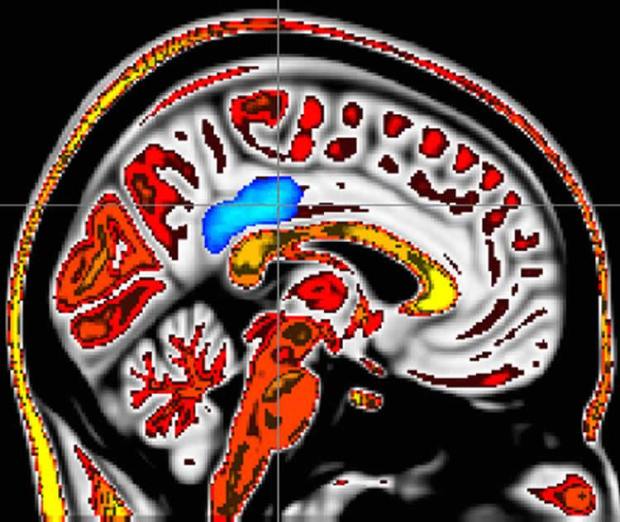
Whole brain analyses revealed that higher dispositional mindfulness during painful heat was associated with greater deactivation of a brain region called the posterior cingulate cortex, a central neural node of the default mode network. Further, in those that reported higher pain, there was greater activation of this critically important brain region. image is credited to Zeidan et al.

Ever wonder why some people seem to feel less pain than others? A  new study may have found one of the answers – mindfulness.

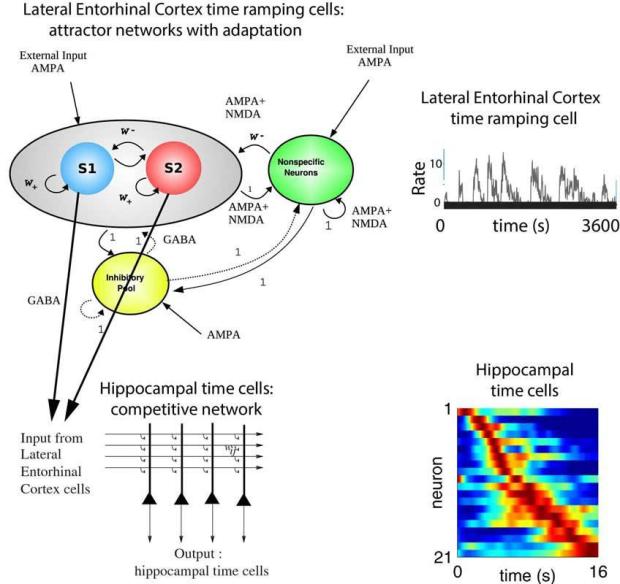
Researchers at the Kavli Institute for Systems Neuroscience in Norway in have discovered a network of brain cells that express our sense of time within experiences and memories.

A new study reveals elevated glial activation in the brains of those with fibromyalgia.

Brains of baby boys born prematurely are affected differently and more severely than premature infant girls’ brains. This is according to a study published in the Springer Nature-branded journal Pediatric Research.

According to researchers, the speed at which a person speaks influences the way we hear and understand upcoming words. 

A new study reports under conditions of stress, KCNB1 builds up in the brain, before becoming toxic and promoting the production of amyloid beta. In Alzheimer’s patients, the KCNB1 levels are higher than in those without the condition.

Researchers report pyramidal neurons in the basolateral amygdala help us to recognize and categorize foods.

A new study sheds additional light on how the brain consolidates memory during sleep. Researchers report rapid fluctuations in gamma band activity in the hippocampus during nREM sleep helps facilitate memory reactivation.

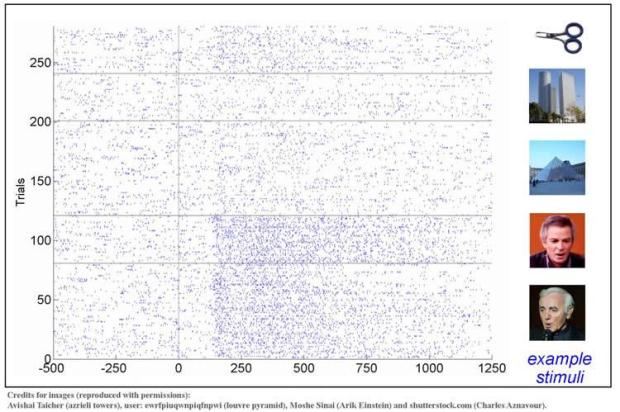
Finally this week, researchers report on how the brain learns to recognize an individual face, regardless of where it appears in different visual locations.


Weekly Neuroscience Update

acting-memory-neurosciencenews.jpg

University of Chichester psychologists have studied prospective memory to accurately diagnose diseases of cognitive impairment. Image: University of Chichester.

Researchers say acting out scenarios may help to improve prospective memory. Poor prospective memory, researchers report, may be an early indicator of Alzheimer’s disease.

A new study using machine learning has identified brain-based dimensions of mental health disorders, an advance towards much-needed biomarkers to more accurately diagnose and treat patients.

A new report examines the effect stress can have on our bodies and general health.

Structural differences in the cerebellum may be linked to some aspects of autism spectrum disorder, according to a neuroimaging study from Columbia University Irving Medical Center (CUIMC).

A new study reports your body fat could be a predictor of cognitive decline. 

Researchers report blind people need additional timing cues to accurately judge relative locations of sounds, but those without visual impairments who were blindfolded could judge the relative location of sounds independently from timing cues.

 Finally this week, researchers report transcranial alternating current stimulation applied during sleep can help accelerate learning, memory and skill acquisition.

Weekly Neuroscience Update

infant-brain-lips-neurosciencenews.jpg

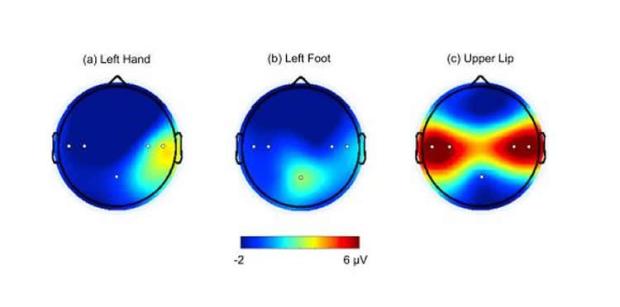
This colored “scalp map” (viewed from the top of a baby’s head with the nose forward), shows the average amount of brain activity measured by EEG sensors in response to touch to the baby’s body. The image shows that hand touch evokes activity on one side, foot touch evokes activity at the middle, and lip touch evokes very strong activity on both sides.  Image Source: UW Institute for Learning & Brain Sciences.

At 60 days old, the infant brain shows greater neurological activity associated with the lips than any other part of the body, a new study reveals.

Researchers report people with higher empathy process music with greater involvement in the brain’s reward system and areas of the brain associated with social information processing.

A new study reveals noradrenaline plays a vital role in early stages of perception. Researchers report later processing of visual information occurs in the cerebral cortex and is affected by noradrenaline to determine if an image will enter our stream of consciousness.

A new study reports a link between higher than average late life systolic blood pressure and higher number of tangles in Alzheimer’s disease.

Scientists have revealed the area of the brain that controls our voice box, allowing us to alter the pitch of our speech. The insight could pave the way for advancing neuroprosthetics to allow people who can’t speak, to express themselves in a naturalistic way

Researchers report brain areas involved in the articulation of language are also implicated in the perception of language.

A new neuroimaging study reveals every person has unique brain anatomy. The uniqueness is a result of a combination of genetic factors and life experiences.

A group of Japanese researchers has discovered that neural inflammation caused by our innate immune system plays an unexpectedly important role in stress-induced depression. This insight could potentially lead to the development of new antidepressants targeting innate immune molecules. The findings were published in the online edition of Neuron.

Contrary to popular belief, Adderall and other ADHD drugs do not improve cognition in healthy college students. Instead, they may impair cognitive function.

Finally this week, a new study reports when certain brain areas react more strongly to food rewards than financial rewards, children are more likely to overeat, even if they are not hungry or overweight.


Weekly Neuroscience Update

feet-619399_960_720.jpg

A new study reveals children who are habitually barefoot show significantly different motor skills between the ages of 6-10 than those who are habitually shod. Researchers report those who habitually barefoot have better balance and jumping skills.

New research has found the natural vibrations of cars make people sleepier, affecting concentration and alertness levels just 15 minutes after drivers get behind the wheel.

Scientists have discovered a “Big Bang” of Alzheimer’s disease – the precise point at which a healthy protein becomes toxic but has not yet formed deadly tangles in the brain.

A new study reports people living in areas with more sunlight have lower rates of OCD.

Neuroscientists at the University of California-Berkeley are developing a technique that could give us the ability to fool our brain into thinking that we’d experienced something that never happened by manipulating electrical activity in the brain.

Researchers report boys on the autism spectrum tend to have lower fractal dimension in the right side of the cerebellum than those without autism.

Distinct molecular mechanisms can generate the same features in different neurons, a team of scientists has discovered. Its findings, which appear in the journal Cell, enhance our understanding of brain cell development.

Finally this week, a new study reports a short burst of exercise can dramatically improve long-term retention of new motor skills.


Weekly Neuroscience Update

guitar-869217_960_720.jpgResearchers say those who can improvise are better musicians than those who have limited improvisational experience.

Melatonin is a hormone known to promote sleep, but its underlying mechanisms are unknown. Now, researchers have discovered how melatonin suppresses neurons in the brain that keeps you awake and alert. These findings could lead to new therapies for those who suffer from insomnia.

A new study shows how specific neurons can process sensory information about temperature and facilitate a change in behavior to adapt to the climate.

Researchers have identified electrical activity in the brain that is specific to the start of migraines. The new study reports spreading depolarization can be seen as a migraine begins, and an electrical current can be used to stop it in its tracks.

Adolescent drinking is associated with changes in the metabolite profile, a new study shows. 

Scientists are using big data and artificial intelligence to map neural networks in the brain. The new technology could help to better understand the progression of neurodegenerative diseases.

Sound and object motion can be used to change perceptions about body size, according to a new study.

Researchers report impairments in the neuroprotective communication between neural blood vessels, astrocytes and neurons may be an early factor in how high blood pressure may impair cognitive function.

A new study confirms a link between a number of autoimmune diseases and an increased risk of developing psychosis.

Autonomous Sensory Meridian Response (ASMR) – the relaxing ‘brain tingles’ experienced by some people in response to specific triggers, such as whispering, tapping and slow hand movements – may have benefits for both mental and physical health, according to new research.

Researchers have developed new neural implants that enable targeted delivery of drugs deep into brain structures.

A new study reports specific alterations in signaling circuits associated with memory can induce an abnormal response in neurons, which is linked to the aging process and cognitive decline.

Researchers say the combination of low muscle mass and strength in the context of high-fat mass, could be a predictor of cognitive function in older adults. 

Obstructive sleep apnoea (OSA) is associated with changes to the structure of the brain that are also seen in the early stages of dementia, according to a study published in the European Respiratory Journal.

Finally, this week, a new study reports a mother’s diet during pregnancy may have an effect on the composition of her child’s gut bacteria. 


Weekly Neuroscience Update

smelling-purple-lilac-3402287_960_720.jpg

In a new study, scientists have discovered why the brain’s olfactory system is so remarkably consistent between individuals, even though the wiring of brain cells in this region differs greatly from person to person.

Scientists have proposed a new communication model to explain how brain networks can be navigated to achieve efficient information transfer.

Researchers have discovered another purpose for the gut-brain axis; relaying information to the hippocampus to store information about our environment and location.

A new study reports speech comprehension can improve as much as 10% when sound is delayed relative to vision.

Parkinson’s disease progresses differently in women than in men. A current study has now furnished the first neurophysiological evidence supporting this finding. “Numerous demographic studies have provided evidence that men contract Parkinson’s disease nearly twice as often as women.

A new study reveals the role the anterior cingulate cortex and basolateral amygdala play in observational learning.

Researchers say schizophrenia should not be considered to be just a disorder of the mind, as schizophrenia can also impact other organs. A new study reveals people with schizophrenia often have an over active immune system and other physical disorders.

Transcranial magnetic stimulation allows researchers to better understand how brain networks interact to make word choice decisions.

A new study reveals, in combination with genetics and environmental factors, placenta health during fetal development may play a role in schizophrenia. Researchers report genes associated with schizophrenia may turn on in the placenta during complicated pregnancies.

Researchers report a simple saliva test that measures cortisol levels at specific times of the day, can identify those at risk of stress and depression.

A new study reveals older adults with greater symptoms of depression have a smaller brain volume and a 55% greater chance of vascular lesions in the brain than those who do not have depression.

New research reveals the prefrontal cortex may play a role in coordinating the level of consciousness through the cholinergic system.

Finally this week, researchers report meditation and yoga are more effective at reducing stress than Chi in soldiers. Additionally, those who meditate showed stronger executive control.

Weekly Neuroscience Update

brain-waves-memory-neurosciencenews.jpgAlpha and theta oscillations move rhythmically across the brain, reflecting neural activity propagating across the cortex to help form working memory, a new study reports.

Researchers have developed a new computational model of major depressive disorder. The model reveals older memories, as well as short term memories, are affected by major depressive disorder. Researchers say how long the memory deficits go back depends on how long the depressive episode lasts.

A new brain cancer atlas maps out comprehensive, visually rich information about the anatomical and genetic bases of glioblastoma, researchers report.

A new study reports people who have a family history of alcohol use disorder release more dopamine in the ventral striatum as a response to the expectation of receiving an alcoholic drink than those without a family history of alcoholism.

A drug that blocks the alpha7 nicotinic acetylcholine receptor may provide a new method for combating drug addiction relapse, researchers report.

A groundbreaking study reveals human immune cells in the blood can be transformed into functional neurons within 3 weeks by adding four proteins. The discovery could be used to generate neurons to study specific psychological and neurological disorders, researchers say.

Researchers report transcranial magnetic stimulation predisposes neural connections in the visual cortex for reorganization.

Researchers have created a new model that may help explain how the brain stores memories of tangible events. The new model explains how neural activity in the hippocampus can help map space, time and context in episodic memories.

A new study reveals people respond to stimuli in another person’s peripersonal space as they could their own.

Research has shown that a developing child’s brain structure and function can be adversely affected when the child is raised in an environment lacking adequate education, nutrition and access to health care.

Finally this week, researchers report intuition is the result of information processing in the brain that results in prediction based on previous experience.


Weekly Neuroscience Update


d41586-018-01290-0_15417716.jpg

Neurons store and transmit information in the brain.Credit: CNRI/SPL

Superconducting computing chips modeled after neurons can process information faster and more efficiently than the human brain.  

New research published in JAMA Neurology suggests that those people whose memory is intact and who do not show any signs of Alzheimer’s can have disrupted circadian rhythms — which may be a very early sign of Alzheimer’s.

Stimulating specific regions of the brain can help to improve memory and word recall in those with severe epilepsy, a new Nature Communications study reports.  

Gene therapies promise to revolutionize the treatment of many diseases, including neurological diseases such as ALS. But the small viruses that deliver therapeutic genes can have adverse side effects at high doses. Researchers have now found a structure on these viruses that makes them better at crossing from the bloodstream into the brain – a key factor for administering gene therapies at lower doses for treating brain and spinal disorders.

Researchers discover the activity of 80 percent of genes follow a day/night rhythm in many tissue types and brain regions. 

Aging or impaired brains can once again form lasting memories if an enzyme that applies the brakes too hard on a key gene is lifted, according to University of California, Irvine neurobiologists.

Researchers have implicated mossy cells in both seizures and memory problems in those with temporal lobe epilepsy. 

Increasing evidence has linked autism spectrum disorder (ASD) with dysfunction of the brain’s cerebellum, but the details have been unclear. In a new study, researchers at Boston Children’s Hospital used stem cell technology to create cerebellar cells known as Purkinje cells from patients with tuberous sclerosis complex (TSC), a genetic syndrome that often includes ASD-like features. In the lab, the cells showed several characteristics that may help explain how ASD develops at the molecular level.

Finally this week, neuroscientists have discovered how the brain can determine an object’s value almost as soon as we see it.

Weekly Neuroscience Update


loopster-3010073_960_720.jpg

A new guideline for medical practitioners says they should recommend twice-weekly exercise to people with mild cognitive impairment to improve memory and thinking.

Researchers reveal Parkinson’s patients have more copies of mitochondrial DNA in the brain stem, leading to increased cell death within that area.

Musical training may enhance the ability to process speech in noisy settings, a new study shows.

A new study reveals the piriform cortex is able to archive long term memory, but requires instruction from the orbiotfrontal cortex to indicate the event is to be stored as a long-term memory.

Greater muscle strength is associated with better cognitive function in ageing men and women, according to a new Finnish study

Researchers have discovered a new biomarker that can help diagnose Huntington’s disease. They note the findings could result in the development of treatments to postpone neuron death in those who carry the Huntington’s gene mutation, but who do not currently show symptoms of the disease.

A new study reveals the superior temporal gyrus appears to be critical for voice recognition.

Researchers have identified several new genes responsible for Alzheimer’s disease (AD) including those leading to functional and structural changes in the brain and elevated levels of AD proteins in cerebrospinal fluid (CSF).

Finally this week, a new study adds to evidence that current clinical tools can fail to capture autism presentations in females.


Weekly Neuroscience Update

internal-experience-neurosciencenews.jpg

Simultaneous activity of three cognitive systems found in the study NeuroscienceNews.com image is credited to Vadim Axelrod, Bar-Ilan University.

Internal experiences, such as recalling personal memories, are associated with the simultaneous activity of at least three different cognitive systems, a new study reports.

Neuroscientists have shown how the human brain can predict what our eyes will see next, using functional magnetic resonance imaging (fMRI).

A new study sheds light on ADHD, reporting teens with the disorder fit into one of three specific subgroups with distinct brain impairments and no common abnormalities between them.

Musical training may enhance the ability to process speech in noisy settings, a new study reveals.

Scientists are examining the feasibility of treating autistic children with neuromodulation after a new study showed social impairments can be corrected by brain stimulation.

The fear of losing control over thoughts and actions can impact OCD behaviors and other anxiety disorders, researchers report.

Recent functional studies suggest that noise sensitivity, a trait describing attitudes towards noise and predicting noise annoyance, is associated with altered processing in the central auditory system.

Finally this week, a new study reveals the frontal regions of the brain play a vital role in assessing and interpreting emotions communicated orally.