Weekly Neuroscience Update

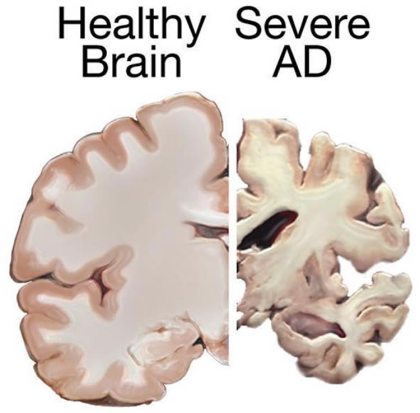
Earlier research showed that progranulin levels were elevated near plaques in the brains of patients with Alzheimer’s disease, but it was unknown whether this effect counteracted or exacerbated neurodegeneration. This image is for illustrative purposes only. Credit NIH.

Earlier research showed that progranulin levels were elevated near plaques in the brains of patients with Alzheimer’s disease, but it was unknown whether this effect counteracted or exacerbated neurodegeneration. This image is for illustrative purposes only. Credit NIH.

Low levels of the naturally occurring protein progranulin exacerbate cellular and cognitive dysfunction, while raising levels can prevent abnormalities in an Alzheimer model.

Teenagers who said they had a traumatic brain injury in their lifetime, especially girls, also reported significantly higher rates of harmful behavior, according to new research.

A new University of Iowa study further supports an inescapable message: caregivers have a profound influence – good or bad – on the emotional state of individuals with Alzheimer’s disease. Patients may not remember a recent visit by a loved one or having been neglected by staff at a nursing home, but those actions can have a lasting impact on how they feel. The findings of this study are published in the September 2014 issue of the journal Cognitive and Behavioral Neurology.

A new study reveals individual neurons in the human brain are triggered by the subject’s conscious perception, rather than by the visual stimulus.

A chemical in the brain plays a vital role in controlling the involuntary movements and vocal tics associated with Tourette Syndrome (TS), a new study has shown.

Researchers discover how the brain works during meditation.

Finally, this week, teenagers who regularly do not get enough sleep are more likely to struggle academically, the results of a new study show. Swedish researchers looked at over 20,000 teenagers aged between 12 and 19 and found that those who regularly slept for less than seven hours per night were more likely to fail in school. Details of these findings are published in the journal, Sleep Medicine.

.
 

Weekly Neuroscience Update

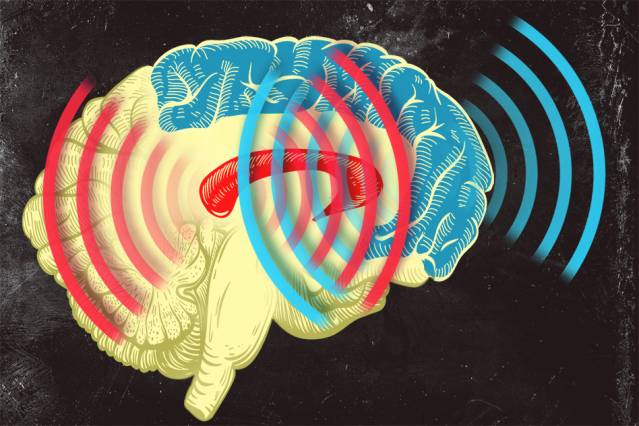
MIT neuroscientists found that brain waves originating from the striatum (red) and from the prefrontal cortex (blue) become synchronized when an animal learns to categorize different patterns of dots.  Illustration: Jose-Luis Olivares/MIT

MIT neuroscientists found that brain waves originating from the striatum (red) and from the prefrontal cortex (blue) become synchronized when an animal learns to categorize different patterns of dots.
Illustration: Jose-Luis Olivares/MIT

The human mind can rapidly absorb and analyze new information as it flits from thought to thought. These quickly changing brain states may be encoded by synchronization of brain waves across different brain regions, according to a new study from MIT neuroscientists.

Research published in the Proceedings of the National Academy of Sciences examines what happens to the brain when it recovers from the effects of anesthetic.

A new study finds that meditation strongly stimulates parts of the brain that help with memory and emotion processing, which in turn lowers stress. A team of researchers from the Norwegian University of Science and Technology, the University of Oslo, and the University of Sydney found that “nondirective” meditation, in which someone achieves a relaxed focus of attention by repeating a mantra or sound and lets his or her mind wander, is the most effective kind of meditation.

New research touts the ability of PET (Positron Emission Tomography) scans to identify patients in a minimally conscious state (MCS) far more accurately than other imaging technologies.

Weekly Neuroscience Update

How Would It Be to Have the Body of a Child Again? Changes in Perception and Behaviors Demonstrated When Embodying a Child Avatar

A research, recently published on the journal Proceedings of the National Academy of Sciences, suggests that a correlate of a body-ownership illusion is that the virtual type of body carries with it a set of temporary changes in perception and behaviours that are appropriate to that type of body.

A new study, published in the New England Journal of Medicine, examined whether or not higher glucose levels without diabetes was a risk factor for dementia.  Diabetes is already a known risk factor for dementia, but this study aimed to determine if the risk factor for diabetes is a risk factor for dementia.  Studying 2,067 participants without dementia, 232 of which already had diabetes, the researchers collected follow-up data after approximately seven years.  They found a significantly higher risk of dementia in individuals with higher than average blood glucose even if they did not have diabetes. Meanwhile, a study by researchers at Umeå University in Sweden suggests nine different factors that can increase the risk of developing dementia before age 65. The results have been published by the journal JAMA Internal Medicine.

Meditating before lectures can lead to better grades according to a new experimental study by George Mason University professor Robert Youmans and University of Illinois doctoral student Jared Ramsburg.

Researchers at Johns Hopkins have uncovered a protein switch that can either increase or decrease memory-building activity in brain cells, depending on the signals it detects. Its dual role means the protein is key to understanding the complex network of signals that shapes our brain’s circuitry, the researchers say.

Different parts of the brain are affected in women with autism than in men with autism, according to a new study.

Ending a 30-year search by scientists, researchers at Boston Children’s Hospital have identified two proteins in the inner ear that are critical for hearing, which, when damaged by genetic mutations, cause a form of delayed, progressive hearing loss.

Researchers have found human brains ‘divide and conquer’ when people learn to navigate around new environments. The research by UQ’s Queensland Brain Institute (QBI) could provide hope for people with spatial memory impairments.

Researchers have discovered how genetic mutations linked to Parkinson’s disease might play a key role in the death of brain cells, potentially paving the way for the development of more effective drug treatments.

The largest genome-wide study of its kind has determined how much five major mental illnesses are traceable to the same common inherited genetic variations. Researchers funded in part by the National Institutes of Health found that the overlap was highest between schizophrenia and bipolar disorder; moderate for bipolar disorder and depression and for ADHD and depression; and low between schizophrenia and autism. Overall, common genetic variation accounted for 17-28 percent of risk for the illnesses.

Weekly Neuroscience Update

Could our neurological soundtrack reveal insights into our mental state? To answer that question scientists in China developed a method for converting two kinds of brain wave recordings into music.

Scientists at The Scripps Research Institute (TSRI) have identified a new pathway that appears to play a major role in information processing in the brain. Their research also offers insight into how imbalances in this pathway could contribute to cognitive abnormalities in humans.

Stanford researchers have designed the fastest, most accurate algorithm yet for brain-implantable prosthetic systems that can help disabled people maneuver computer cursors with their thoughts. The algorithm’s speed, accuracy and natural movement approach those of a real arm, and the system avoids the long-term performance degradations of earlier technologies.

Researchers have designed a light-sensitive molecule that can stimulate a neural response in cells of the retina and brain — a possible first step to overcoming degenerative eye diseases like age-related macular degeneration, or to quieting epileptic seizures.

A new study has found that participating in an 8-week meditation training program can have measurable effects on how the brain functions even when someone is not actively meditating.

Weekly Neuroscience Update

People aren’t very good at media multitasking, but do it anyway because it makes them feel good, a new study suggests. The findings provide clues as to why multitasking is so popular, even though many studies show it is not productive.

A team of Montreal scientists has identified a blueprint for how memories are encoded. The findings may lead to a better understanding of memory impairments, as well as therapies for such neurodegenerative disorders as Alzheimer’s.

The way we use our hands may determine how emotions are organized in our brains, according to a recent study published inPLoS ONE. 

Researchers at Harvard, Yale, and the Massachusetts Institute of Technology have found the first evidence that meditation can alter the physical structure of our brains. Brain scans they conducted reveal that experienced meditators boasted increased thickness in parts of the brain that deal with attention and processing sensory input.

How to give your brain a break

Over a 24-hour period we can process up to 70,000 thoughts, even as we sleep. Each day contains 86,400 seconds, so that equates to a different thought every 1.2 seconds, or two thoughts for every heartbeat. Basically, your brain never shuts up!

Over a 24-hour period we can process up to 70,000 thoughts, even as we sleep. Each day contains 86,400 seconds, so that equates to a different thought every 1.2 seconds – your brain never stops!

Left unchecked, this incessant chatter can turn to the dark side and become an chorus of self-criticism and blame. Negative thinking can become much more dominant than the positive and supportive kind.

Left unchecked, this incessant chatter can turn to the dark side and become an chorus of self-criticism and blame. Negative thinking can become much more dominant than the positive and supportive kind.

These thoughts tend to become stuck and repetitive ¿ leading to anxiety, depression and burn-out. Only by freeing ourselves from them can we grow calmer, more focused, more present and happier.

These thoughts tend to become stuck and repetitive — leading to anxiety, depression and burn-out.  Only by freeing ourselves from them can we grow calmer,  more focused, more present  and happier.

There is a simple solution: meditation. It has been proven to ease stress, improve metabolism, reduce pain, lower blood pressure and enhance brain function.
Meditation has been proven to ease stress, improve metabolism, reduce pain, lower blood pressure and enhance brain function. And all you need to do is . .. nothing.

(Extracted from Quiet The Mind, an illustrated guide on how to meditate by Matthew Johnstone)

Related Posts:

Set your brain to meditate

Your brain and the art of confusion

Weekly Neuroscience Update

Recent cough research, highlighted in a feature at ScienceNews, suggests that the neural circuitry of coughing also involves temperature perception and higher brain areas.

Research undertaken at UCLA, used MRI scans to compare the brains of 50 meditators to 50 non-meditators. What they discovered was that long-term meditators display large amounts of gyrification in the brain (the amount of folding in the cortex) which is what gives the brain its unique, ridged appearance. The folded a brain is, the quicker it can process information.

Anxious people have a heightened sense of smell when it comes to sniffing out a threat, according to a new study by Elizabeth Krusemark and Wen Li from the University of Wisconsin-Madison in the US.

Nerve cells from the brain’s emotion hub talk directly to a region that doles out attention, a new study shows. The connection, described in the April 11 Journal of Neuroscience, may help explain how people automatically focus on emotional events.

Nerve cells from the brain’s emotion hub talk directly to a region that doles out attention, a study of monkeys shows. The connection, described in the April 11 Journal of Neuroscience, may help explain how people automatically focus on emotional events.

University of Illinois scientists have mapped the physical architecture of intelligence in the brain in one of the largest and most comprehensive analyses so far of the brain structures vital to general intelligence and to specific aspects of intellectual functioning, such as verbal comprehension and working memory.Theirs is one of the largest and most comprehensive analyses so far of the brain structures vital to general intelligence and to specific aspects of intellectual functioning, such as verbal comprehension and working memory.

Your Weekly Neuroscience Update


Laughter with friends releases the brain's "feel-good" chemicals, and helps reduce pain

Laughing with friends releases feel-good brain chemicals, which also relieve pain, new research indicates.

Millions of tinnitus sufferers could get relief thanks to a new treatment which stops the brain creating “phantom” noises by playing matching tones over headphones

Earlier evidence out of UCLA suggested that meditating for years thickens the brain (in a good way) and strengthens the connections between brain cells. Now a further report by UCLA researchers suggests yet another benefit. have found that long-term meditators have larger amounts of gyrification (“folding” of the cortex, which may allow the brain to process information faster) than people who do not meditate. Further, a direct correlation was found between the amount of gyrification and the number of meditation years, possibly providing further proof of the brain’s neuroplasticity, or ability to adapt to environmental changes.

Brain scans of Nasa astronauts who have returned to earth after more than a month in space have revealed potentially serious abnormalities that could jeopardise long-term space missions.

Weekly Round Up

Finnish researchers have developed a groundbreaking new method that allows them to study how the brain processes different aspects of music, such as rhythm, tonality and timbre (sound color) in a realistic listening situation. The study is pioneering in that it for the first time reveals how wide networks in the brain, including areas responsible for motor actions, emotions, and creativity, are activated during music listening. The new method helps us understand better the complex dynamics of brain networks and the way music affects us.

Dreaming may act like a type of overnight therapy, taking the edge off painful memories, a new study says.

Connectivity is a hot topic in neuroscience these days. Instead of trying to figure out what individual brain regions do, researchers are focusing more on how regions work together as a network to enable memory, language, and decision-making. Now, a study of more than 100 children finds that interconnected brain regions develop in concert through childhood and adolescence. The researchers say their work could have implications for understanding various puzzles in neuroscience, such as what goes wrong in autism or why adolescent boys are prone to risky behavior.

Using functional magnetic resonance imaging (fMRI), researchers have identified abnormalities in the brains of children with attention deficit/hyperactivity disorder (ADHD) that may serve as a biomarker for the disorder.

People who meditate seem to be able ‘switch off’ areas of the brain associated with daydreaming as well as psychiatric disorders such as autism and schizophrenia, according to a new brain imaging study published in the Proceedings of the National Academy of Sciences.

Sustained changes in the region of the brain associated with cognitive function and emotional control were found in young adult men after one week of playing violent video games, according to study results presented by Indiana University School of Medicine researchers at the annual meeting of the Radiological Society of North America.