Weekly Neuroscience Update

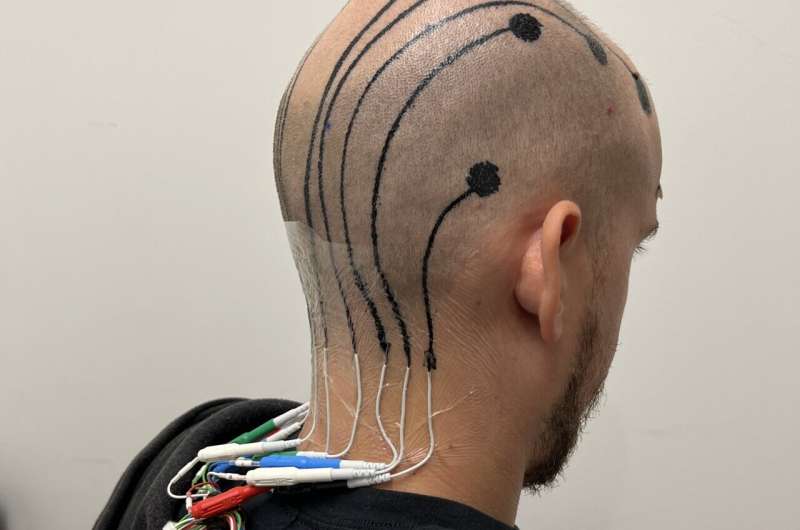
EEG setup with e-tattoo electrodes. Credit: Nanshu Lu

For the first time, scientists have invented a liquid ink that doctors can print onto a patient’s scalp to measure brain activity. The technology offers a promising alternative to the cumbersome process currently used for monitoring brainwaves and diagnosing neurological conditions. It also has the potential to enhance non-invasive brain-computer interface applications.

People who have chronic traumatic encephalopathy (CTE) who have a family history of mental illness may have a higher risk of aggression in middle age, according to a new study.

A loss of brain volume associated with new immunotherapies for Alzheimer’s disease may be caused by the removal of amyloid plaques, rather than the loss of neurons or brain tissue, finds a study led by UCL researchers.

A common heart drug may slow the progression of Huntington’s disease according to new research.

Men with cardiovascular disease risk factors, including obesity, face brain health decline a decade earlier—from their mid 50s to mid 70s—than similarly affected women who are most susceptible from their mid 60s to mid 70s, suggest the findings of a long term study, published online in the Journal of Neurology Neurosurgery & Psychiatry.

In a new study published in Briefings in Bioinformatics, researchers have found that depression can increase the chances of a person experiencing menstrual pain (dysmenorrhea).

Researchers have achieved a major milestone in the treatment of spinal cord injuries (SCI). By applying deep brain stimulation (DBS) to an unexpected region in the brain—the lateral hypothalamus (LH)—the team has improved the recovery of lower limb movements in two individuals with partial SCI, greatly improving their autonomy and well-being.

Soccer heading may cause more damage to the brain than previously thought, according to a study presented at the annual meeting of the Radiological Society of North America (RSNA).

New research reveals subtle changes in the visual pathways of individuals with chronic mild traumatic brain injury (TBI), even when standard eye examinations show no abnormalities. These findings include structural and functional deficits despite participants showing normal visual acuity during clinical examination.

A recent study identifies research strategies for tying brain function and structure to behaviour and health.

COVID-19 may be a risk factor for multiple sclerosis (MS). This has been shown by new research at Örebro University and Örebro University Hospital, Sweden. The study is published in the journal Brain Communications.

A study appearing in Nature Neuroscience has linked distinct neural and behavioral characteristics in autism spectrum disorder (ASD) to a simple computational principle.

Everyday physical activity, like going for a short walk or playing with the kids, may provide short-term benefits for cognitive health, equivalent to reversing four years of cognitive aging. That was a key finding a new study, published in the journal Annals of Behavioral Medicine.

Voice experiments in people with epilepsy have helped trace the circuit of electrical signals in the brain that allow its hearing center to sort out background sounds from their own voices.

A study led by University College London researchers found that large language models, a type of AI that analyzes text, can predict the results of proposed neuroscience studies more accurately than human experts.

Skeletal muscle loss is a risk factor for developing dementia, according to a study presented at the annual meeting of the Radiological Society of North America (RSNA).

A pioneering study has meticulously mapped the brain’s intricate neural pathways, shedding light on how specific regions work together to control impulsive actions. By employing advanced neuroimaging and noninvasive brain stimulation techniques, researchers uncover the mechanisms that allow us to halt unwanted actions.

Finally this week, new research reveals the unique human ability to conceptualize numbers may be rooted deep within the brain. 
Weekly Neuroscience Update

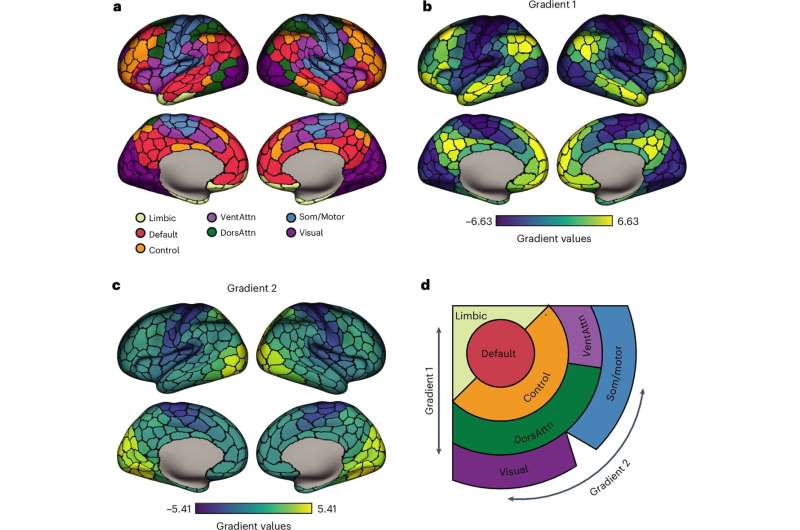
Large-scale functional networks are embedded along two principal gradients. Credit: Nature Neuroscience (2024).

Scientists have uncovered how different types of brain cells work together to form large-scale functional networks in the human brain—interconnected systems that support everything from sensory processing to complex decision-making—paving the way for new insights into brain health and disease.

A new neuroimaging marker of cerebral small vessel disease is related to general cognition and may serve to identify persons at risk of dementia in future clinical trials, a landmark study has found.

A recent study reveals that the genetic mutation causing Huntington’s disease (HD) enhances brain development and intelligence in early life, but leads to degeneration in adulthood. Children with the HD gene exhibit larger brains and higher IQs than those without the mutation.

In what could one day become a new treatment for epilepsy, researchers have used pulses of light to prevent seizure-like activity in neurons.

A team of researchers has found that certain factors are linked to faster brain shrinkage and quicker progression from normal thinking abilities to mild cognitive impairment (MCI). People with type 2 diabetes and low levels of specific proteins in their cerebrospinal fluid showed more rapid brain changes and developed MCI sooner than others.

A new study explores how brain waves reflect melody predictions while listening to music.

Neuroscientists have identified the binding site of low-dose ketamine, providing critical insight into how the medication, often described as a wonder drug, alleviates symptoms of major depression in as little as a few hours with effects lasting for several days.

New research indicates that cannabis use causes cellular damage that increases the risk of highly cancerous tumors by disrupting mitochondria and damaging DNA. 

Fampridine, used for improving walking in multiple sclerosis, may also enhance working memory in individuals with schizophrenia or depression. A study found that the drug significantly improved working memory in participants with initially poor performance, but had no effect on those with strong baseline memory.

A recent study links satellite and brain imaging data to identify how environmental factors can impact mental health, cognition and brain development in young people.

A new Alzheimer’s test collects just a few drops of blood from a finger prick, which can be mailed to a lab for analysis. The test measures biomarkers like pTau217 and has shown similar accuracy to traditional venous blood sampling.

Children born to mothers who take antiseizure medications during pregnancy may face increased risks of neurodevelopmental conditions, according to new data.

Researchers have shed light on the puzzling relationship between dopamine and rest tremor in Parkinson’s disease, finding that preserved dopamine in certain brain regions may actually contribute to tremor symptoms, challenging common beliefs.

New research has revealed the diverse assembly and regulation of Type-A GABA receptors (GABAARs), which are crucial for balancing brain activity. 

A recent study has found fascinating similarities in how the human brain and artificial intelligence models process language. The research, published in Nature Communications, suggests that the brain, like AI systems such as GPT-2, may use a continuous, context-sensitive embedding space to derive meaning from language, a breakthrough that could reshape our understanding of neural language processing.

A team of researchers has investigated the composition and communication of cells in so-called subcortical lesions, tissue damage to deep brain structures at different stages of multiple sclerosis.

Care for stroke survivors urgently needs to focus on non-motor skill outcomes such as fatigue, anxiety and reduced social participation to improve survivors’ quality of life and minimize care needs, according to a new study.

An international research collaboration has discovered how unusual spherical structures form in the brains of people with a mutation that causes a form of inherited Alzheimer’s disease. 

A new study identifies previously hidden brain network patterns in schizophrenia by focusing on nonlinear connectivity, offering potential biomarkers for early diagnosis. Traditional imaging methods often overlook these patterns, but researchers developed advanced statistical tools to uncover this new dimension of brain organization.

Finally this week, research published in the Journal of the American Geriatrics Society has identified several community-level factors that may increase people’s risk of experiencing cognitive impairment.

Weekly Neuroscience Update

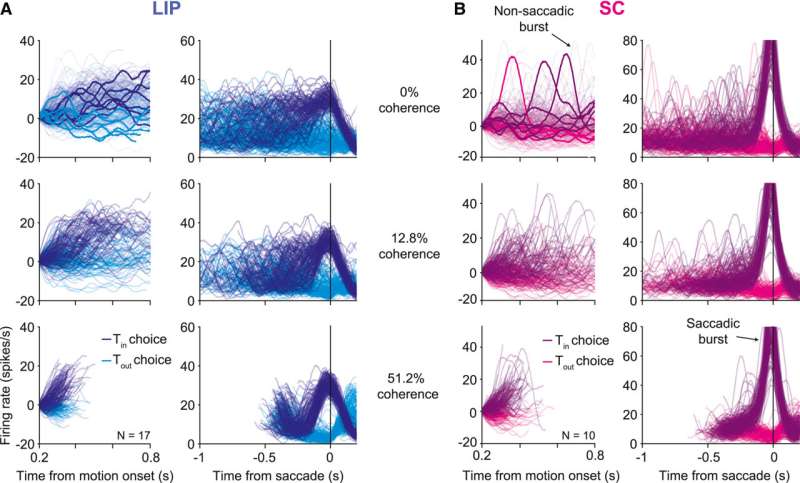
Single-trial dynamics in LIP and SC are different. (Neuron, 2023)

A new paper, published in Neuron, highlights the role of the superior colliculus (SC), a structure in the midbrain, in terminating decisions.

Degeneration of dopaminergic neurons is widely accepted as the first event that leads to Parkinson’s, but a new study suggests that a dysfunction in the neuron’s synapses—the tiny gap across which a neuron can send an impulse to another neuron—leads to deficits in dopamine and precedes the neurodegeneration.

Depression, a challenging condition to diagnose early, may now be detected more promptly using a simple 1-minute Electroencephalogram (EEG) test at home.

Scientists have confirmed that human brains are naturally wired to perform advanced calculations, much like a high-powered computer, to make sense of the world through a process known as Bayesian inference.

New research shows how repeated traumatic brain injury contributes to Alzheimer’s disease.

Racial disparities can be seen in dementia severity, functional impairment, and neuropsychiatric symptoms among patients with frontotemporal dementia (FTD), according to a study recently published in JAMA Neurology.

A new study identifies a potential new approach to PTSD treatment.

Any head injury—even a mild one—raises a person’s risk of later having an ischemic stroke. Having multiple injuries increases that risk, even more so than the severity of a single traumatic brain injury, researchers have found.

New research finds that cerebrospinal fluid net flow is markedly decreased in Huntington’s disease, with the decrease being greater in the later stages of the disease.

The targeted use of ultrasound technology can bring about significant changes in brain function that could pave the way towards treatment of conditions such as depression, addiction, or anxiety, a new study suggests.

Finally this week, new research finds that antidepressants may actually reduce negative memories in individuals suffering from depression while improving overall memory function.

Weekly Neuroscience Update

Music can induce a range of emotions and help us to better understand different cultures. But what is it that makes us tune in to some songs more than others? Researchers say when we listen to a song, our brains predict what happens next, and that prediction dictates whether we like that song or not.

New research has found significant changes in fathers’ brains between the prenatal and the postpartum period. The main changes occurred in cortical areas associated with visual processing, attention, and empathy toward their baby.

Objective measurement of psychiatric disorders has long proved challenging. Yet, there is ample evidence that analysis of speech patterns can accurately diagnose depression and psychosis, measure their severity, and predict their onset, according to a literature review featured in the January/February issue of the Harvard Review of Psychiatry

Alzheimer’s disease onset may be accelerated by viruses that inflame and disrupt signals from the olfactory system to the hippocampus, a new study reports.

As many as one in four patients who receive anesthesia may suffer accidental awareness during their procedure. Researchers have identified specific brain structures that may predict whether a person will experience accidental awareness under anesthesia. The findings will help identify patients who require higher-than-average doses of anesthesia.

A new study aims to investigate the interaction between the digestive and nervous systems, or the gut-brain axis, to discover more about the links between digestive health and neurodegenerative diseases.

Neuroscientists have now shown that two distinct cell populations in the striatum are affected differently by Huntington’s disease. They believe that neurodegeneration of one of these populations leads to motor impairments, while damage to the other population, located in structures called striosomes, may account for the mood disorders that are often seen in the early stages of the disease.

Finally this week, older adults with cognitive decline who have higher levels of vitamin D in their brains had better cognitive function than their peers with lower levels of vitamin D according to a new study.

Weekly Neuroscience Update

glial-cells-parkinsoins-neurosciencnewes (1).jpg

Image: di Domenico/Stem Cell Reports

A new study reveals a defective version of astrocytes may be linked to the build up of alpha synuclein and could spur Parkinson’s disease. The findings show the important role glial cells play in Parkinson’s and offers insights into new targets for therapies to fight the neurodegenerative disease.

A genome-wide analysis of nearly 45,000 people has identified 16 regions of DNA associated with epilepsy, 11 of which are newly identified.

Scientists at the Max Planck Institute for Metabolism Research in Cologne found when people crave specific foods, the brain releases more dopamine when they finally consume the item. The study reports the gastrointestinal tract is in constant contact with the brain and uses reward stimuli to control our desire for food.

Researchers have developed a method to determine the length of mutated genes associated with Huntington’s disease quickly and easily.

Men with dyslexia have altered structural connections between the thalamus and auditory cortex on the left side of the brain, new research published in Journal of Neuroscience reveals.

A new study reports when we retrieve information about visual objects, the brain first focuses on the core meaning and afterwards recalls specific details.

Researchers report that neuron loss in Alzheimer’s disease may not be such a bad thing. The study reveals the loss of neurons may be the result of a cell quality control mechanism attempting to protect the brain from the accumulation of malfunctioning neurons.

Neurofeedback training stimulates the cortical learning process and can help improve the sense of touch, a new study reveals.

Research led by stem cell scientists at Harvard University points to a potential new biomarker and drug target for amyotrophic lateral sclerosis (ALS), a neurological disease that is extremely difficult to diagnose and treat.

Finally this week, researchers have identified over 500 genetic variants which affect the use of, and addiction to, alcohol and tobacco.


Weekly Neuroscience Update

neural-network-communication-neurosciencneews.jpg

How do neural networks in different brain areas communicate with each other? The Bernstein Center Freiburg proposes a new model.

Researchers propose a new model to help explain how the level of activity in neural networks influences the flow of information.

A neurofeedback system enables Parkinson’s disease patients to voluntarily control brainwaves associated with symptoms of the disorder, according to new research published in eNeuro.

One night of sleep loss can increase the desirability of junk foods, finds a study of healthy weight young men published in Journal of Neuroscience.

When two events occur within a brief window of time they become linked in memory, such that calling forth the memory of one helps retrieve memory for the other event, according to research published in Psychological Science. This happens even when temporal proximity is the only feature that the two events share.

Researchers have identified specific diffusible molecules that are essential for boundary formation in the brain.

Scientists report that neuron loss in Alzheimer’s disease may not be such a bad thing. The study reveals the loss of neurons may be the result of a cell quality control mechanism attempting to protect the brain from the accumulation of malfunctioning neurons.

A new study reveals passive exposure to foreign speech sounds over the course of several consecutive days helps enhance language learning.

People with Huntington’s disease who participated in intellectually stimulating activities had less brain atrophy than those with the disease who did not take up such activities.

Finally this week, boys with good motor skills are better problem-solvers than their less skillful peers, a new study from Finland shows. 

Weekly Neuroscience Update


loopster-3010073_960_720.jpg

A new guideline for medical practitioners says they should recommend twice-weekly exercise to people with mild cognitive impairment to improve memory and thinking.

Researchers reveal Parkinson’s patients have more copies of mitochondrial DNA in the brain stem, leading to increased cell death within that area.

Musical training may enhance the ability to process speech in noisy settings, a new study shows.

A new study reveals the piriform cortex is able to archive long term memory, but requires instruction from the orbiotfrontal cortex to indicate the event is to be stored as a long-term memory.

Greater muscle strength is associated with better cognitive function in ageing men and women, according to a new Finnish study

Researchers have discovered a new biomarker that can help diagnose Huntington’s disease. They note the findings could result in the development of treatments to postpone neuron death in those who carry the Huntington’s gene mutation, but who do not currently show symptoms of the disease.

A new study reveals the superior temporal gyrus appears to be critical for voice recognition.

Researchers have identified several new genes responsible for Alzheimer’s disease (AD) including those leading to functional and structural changes in the brain and elevated levels of AD proteins in cerebrospinal fluid (CSF).

Finally this week, a new study adds to evidence that current clinical tools can fail to capture autism presentations in females.


Weekly Neuroscience Update

earworm-music-neurosciencenews-public.jpg

A new study finds those “earworm” songs that get stuck in our heads are usually faster, fairly generic and easier to remember, but with unique intervals that set them apart from ‘average’ pop songs.

Researchers have for the first time recorded how cells of the epidermis behave during the regrowth of adult limbs after amputation.

Proper communication between the left and right sides of the brain is critical for the development of advanced language skills, according to new research.

A team of researchers at TU Dresden has examined the underlying neural processes associated with short term task learning in a current imaging study. The results of the study are published today in Nature Communications.

A new study confirms that scanning a person’s brain with an fMRI is more accurate at picking up lies than a traditional polygraph test.

Contrary to popular belief, language is not limited to speech. A  recent study published in the journal PNAS, reveals that people also apply the rules of their spoken language to sign language.

Scientists at The University of Manchester have shown for the first time that if the brain is ‘tuned-in’ to a particular frequency, pain can be alleviated.

A new study appears to build on the previous research that suggests genetic mutations which affect mitochondria function could be critical to the development and progression of Alzheimer’s disease. Meanwhile, researchers have also discovered a possible new treatment for the disease after noticing the way in which insulin signaling works in the brains and pancreas of diabetic patients; and in another study degeneration of the basal forebrain appears before cognitive and behavioural symptoms of Alzheimer’s occur.

Researchers were able to predict the orientation preference of individual neurons by adding up the responses of their dendritic spines, a new study reports.

Scientists have mapped what happens neurologically when new information influences a person to change his or her mind, a finding that offers more insight into the mechanics of learning.

The brain regulates social behaviour differently in males and females, according to a new study published in the Proceedings of the National Academy of Sciences.

A team of  researchers has uncovered new details about the biology of telomeres, “caps” of DNA that protect the tips of chromosomes and play key roles in a number of health conditions, including cancer, inflammation and aging.

A new study uses retinal prosthetics to assess the brain’s ability to process visual information years after blindness occurs.

People suffering medical conditions causing low levels of oxytocin perform worse on empathy tasks, according to new research. And a new measuring method has detected oxytocin at much higher rates in blood serum and plasma than researchers previously thought.

Researchers believe they may have pinpointed an area of the brain that plays a role in maintaining human consciousness.

Scientists have uncovered new details about how a repeating nucleotide sequence in the gene for a mutant protein may trigger Huntington’s disease and other neurological diseases.

Finally this  week, a new study reports context processing problems could help to explain some of the symptoms and neuroimaging findings associated with PTSD.


Weekly Neuroscience Update

hearing-loss-frontal-cortex-neurosciencenews

Regions with significant phoneme classification at the NoNoise condition for each group. NeuroscienceNews.com image is credited to the researchers/Nature Communications.

Researchers have pinpointed the specific part of the brain that older adults rely on to differentiate speech sounds in background noise, which could revolutionise the treatment of hearing loss.

New research has identified how cells protect themselves against ‘protein clumps’ known to be the cause of neurodegenerative diseases including Alzheimer’s, Parkinson’s and Huntington’s disease.

Transcranial alternating current stimulation may help to improve memory when targeted to a specific kind of brain activity achieved during sleep.

Researchers in the US and Australia have made a breakthrough discovery in the international quest to discover a new and potentially effective vaccine targeting the pathological proteins associated with Alzheimer’s disease.

A new study identifies different brain regions that become active when a strategy of categorisation is applied.

Researchers have developed a new machine learning system that analyses the entire human genome to predict which genes may cause autism spectrum disorder, raising the number of genes that could be linked to the disorder from 65 to 2,500.

Results from a study published in the online publication Nature Genetics finds 15 genomic regions that are significantly associated with a diagnosis of depression.

According to researchers, age related changes in the organization of neural networks when performing short term memory tasks may help to compensate for other aspects of brain aging.

Researchers report smoking related deficits in dopamine return to normal three months after quitting.

Genetic changes associated with Parkinson’s disease have been found in liver, fat, immune and developmental cells, a new study reports.

Brain imaging, twin studies and transcriptome data reveal genetic relationships between lobes.

Finally this week, a new study suggests regular physical activity may lead to greater hippocampal volume and could stave off dementia, especially in older people.


Weekly Neuroscience Update

japanesesupe

Researchers in Japan have used the powerful K computer, the world’s fastest supercomputer, to simulate the complex neural structure of our brain.

Heavy drinking as a teenager is the single biggest risk factor for developing dementia unusually early, according to new research. A study of almost 500,000 Swedish men identified “alcohol intoxication” as a late adolescent as the most serious of nine separate risk factors for young onset dementia (YOD) – that is, dementia before reaching 65.

For the first time, researchers have documented irregular brain activity within the first 24 hours of a concussive injury, as well as an increased level of brain activity weeks later—suggesting that the brain may compensate for the injury during the recovery time. The findings are published in the September issue of the Journal of the International Neuropsychological Society.

New findings may help neuroscientists pinpoint better targets for anti-anxiety treatments.

The synapses in the brain act as key communication points between approximately one hundred billion neurons. They form a complex network connecting various centres in the brain through electrical impulses. New research from Lund University suggests that it is precisely here, in the synapses, that Huntington’s disease might begin.

In patients with early Alzheimer’s disease, disruptions in brain networks emerge about the same time as chemical markers of the disease appear in the spinal fluid, researchers at Washington University School of Medicine in St. Louis have shown.

New research indicates that teens with anorexia nervosa have bigger brains than teens that do not have the eating disorder.

Assessing consciousness in patients with severe brain trauma is a difficult challenge for doctors, as the injury effectively takes away any ability to blink, squeeze a hand or otherwise respond. But scientists have found a way to measure the brain’s response to a magnetic pulse, helping them determine a person’s level of awareness.