
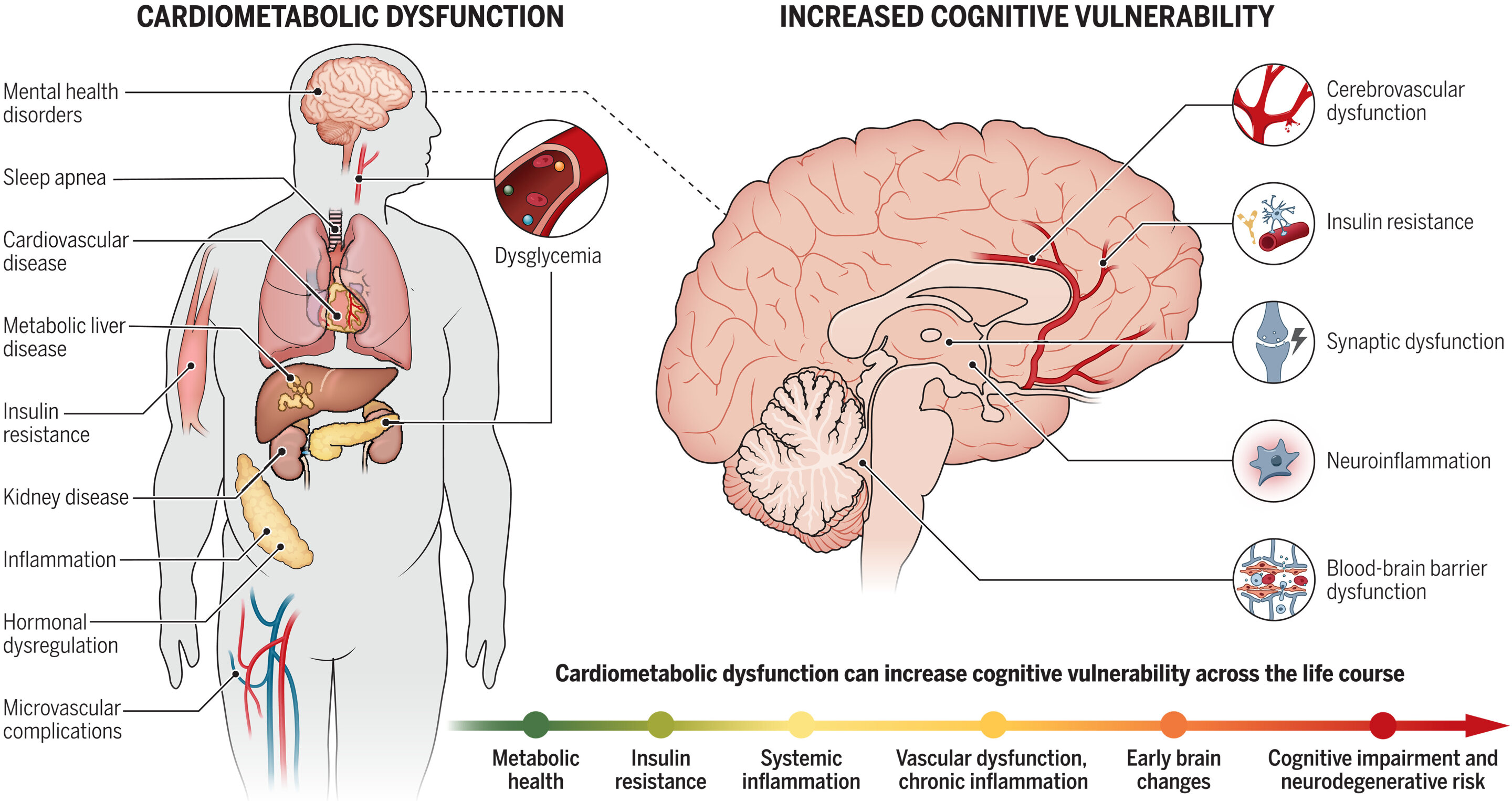
Drugs such as semaglutide and tirzepatide are already used to treat obesity and type 2 diabetes, but they also influence biological processes important for brain function. In a new review published in Science, researchers at the University of Gothenburg and the University of Copenhagen assessed the available evidence.
Scientists may have discovered a new strategy for treating complex neurodegenerative diseases. A study, recently published in Science, describes a new approach that allows specialized enzymes to clear out several disease-causing proteins.
In a neuroimaging study a team of researchers recorded the brain activity of healthy adults during sentence comprehension after raising catecholamine levels with stimulant medication (methylphenidate). Higher catecholamine levels led to stronger recruitment of cognitive resources during processing of grammatically ambiguous sentences, showing how neurochemical systems may shape language processing.
The brain’s own clearance mechanisms are most active during sleep. Researchers have now shown that this natural clearance process can also be enhanced while people are awake.
Researchers have identified 10 blood proteins that, when analyzed together, can distinguish people with amyotrophic lateral sclerosis (ALS) from healthy individuals with nearly 98% balanced accuracy. The findings, published in Nature Communications, could pave the way for a blood test that helps doctors recognize ALS earlier.
A new study is shedding light on how changes associated with different neurodegenerative diseases can overlap in the brain—and how that overlap may differ between women and men.
Researchers have developed an artificial intelligence (AI) model that helps fill gaps in brain wiring maps made with diffusion MRI, a type of scan that traces the brain’s nerve fiber pathways. This could help researchers study how key brain connections change with aging and disease.
Firing patterns in the brains of some cognitively normal adults predicted Alzheimer’s years before symptoms or brain changes, while other patterns indicated resilience to cognitive decline and potential “super ager” status.
Exposure to petroleum-derived lubricants at work, including engine oil, hydraulic oil and cutting fluids used to cool or lubricate metal during metalworking, is associated with higher odds of multiple sclerosis (MS), according to a study published in Neurology. The study does not prove that exposure to these lubricants causes MS. It only shows an association.
Patients with early-onset Alzheimer’s have more extensive tau deposits that accumulate more than twice as quickly and spread more widely throughout the brain than in older-onset patients.
Researchers have helped accelerate the search for disease-causing genes by building new genetic ‘families.’ The team uncovered hundreds of previously unrecognized family connections by analyzing the DNA of people with frontotemporal dementia (FTD) and motor neuron disease (MND).
People with type 2 diabetes, heart disease or stroke who sleep well have better cognitive function and greater brain volume than people with the same conditions who sleep poorly, according to a new study.
Recent findings published in the Journal of Clinical Investigation, links specific brain abnormalities in pulmonary hypertension to the same inflammatory processes that drive the disease in the lungs and heart, suggesting that cognitive decline may be present in other vascular and inflammatory conditions beyond pulmonary hypertension. The findings also point to a biological marker that could be used to screen people for future cognitive issues.
Scientists have developed an artificial intelligence model to streamline and improve screening for Parkinson’s disease (PD) so doctors can refer patients for early-stage testing.

