Weekly Neuroscience Update

New research has revealed how acute stress can affect the connectivity of different brain regions, leading to increased neural activity and changes in behavior.

New research has found that sleep has a crucial role in preparing the body to fight off infections. During sleep, the immune system produces cytokines, which help in fighting infections, inflammation, and stress. In contrast, sleep deprivation can weaken the immune system and increase the likelihood of getting sick. The study also found that sleeping for longer periods before an infection occurs can improve the chances of fighting it off.

A research team has found that people with chronic pain in multiple parts of the body had a higher risk of dementia and experienced broader and faster cognitive decline, including memory, executive function, learning, and attention.

Researchers have discovered how changes in blood vessels in the eye can be used to predict the progression of age-related macular degeneration (AMD), a leading cause of blindness. The researchers used high-resolution imaging techniques to measure the density of blood vessels in the retina of patients with AMD. They found that decreased blood vessel density in certain areas of the retina was associated with the progression of the disease.

A new study has identified changes in the levels of certain proteins in the blood of women with perinatal depression (depression during pregnancy or after childbirth).

A new brain connection discovered by researchers can explain how early-life stress and adversity trigger disrupted operation of the brain’s reward circuit, offering a new therapeutic target for treating mental illness. Impaired function of this circuit is thought to underlie several major disorders, such as depression, substance abuse and excessive risk-taking.

A study at the University of Tsukuba in Japan has found that routine exercise helps prevent cognitive impairment in older adults, with exercising alone being beneficial, but exercising with others having an even greater positive effect.

Although investigators have made strides in detecting signs of Alzheimer’s disease using high-quality brain imaging tests collected as part of research studies, a research team has developed an accurate method for detection that relies on routinely collected clinical brain images. The advance could lead to more accurate diagnoses.

Finally, this week, seizures can be predicted more than 30 minutes before onset in patients with temporal lobe epilepsy, opening the door to a therapy using electrodes that could be activated to prevent seizures from happening, according to new research.


Weekly Neuroscience Update

Any regular leisure-time physical activity at any age is linked to better brain function in later life, but maintaining an exercise routine throughout adulthood seems to be best for preserving mental acuity and memory, suggests a long-term study published in the Journal of Neurology Neurosurgery & Psychiatry.

Researchers have conducted a world-first pilot study investigating a sleep intervention for autistic adults, showing promising evidence at reducing insomnia and co-occurring anxiety symptoms.

Patients with Parkinson’s disease achieved a significant improvement in their tremors, mobility, and other physical symptoms after having a minimally invasive procedure involving focused ultrasound, according to a new study published in the New England Journal of Medicine.

Researchers have identified a mechanism for how signals from the environment are integrated with genetic information to influence the health and survival of brain cells, providing insight into the development of Parkinson’s disease.

A new study suggests a link between irritable bowel syndrome (IBS) and mental health disorders such as anxiety and depression. The study found that individuals with IBS were more likely to experience symptoms of anxiety and depression than those without IBS.

In a first-of-its-kind study, researchers developed an electronic implant that collected information about brain activity from a single neuron for over one year.

A new AI-powered tool developed by researchers can predict which patients with mild cognitive impairment (MCI) are most likely to develop Alzheimer’s disease. The tool uses machine learning algorithms to analyze data from brain scans, blood tests, and cognitive assessments to identify specific biomarkers associated with Alzheimer’s disease.

Finally this week, a person’s personality and psychopathology levels may be associated with how strongly they prefer to focus on human faces within images, according to a study published in the open-access journal PLOS ONE.

Weekly Neuroscience Update

A new study underscores the importance of healthy sleep to prevent the Alzheimer’s related amyloid-beta 42 protein from forming clumps in the brain.

It has long been known that there is an association between food and pain, as people with chronic pain often struggle with their weight. Researchers at the Del Monte Institute for Neuroscience may have found an explanation in a new study that suggests that circuitry in the brain responsible for motivation and pleasure is impacted when someone experiences pain.

Researchers have found 90 minutes of mild- to moderate-intensity exercise directly after a flu or COVID-19 vaccine may provide an extra immune boost.

When a person tries to access a memory, their brain quickly sifts through everything stored in it to find the relevant information. But as we age, many of us have difficulty retrieving memories. In a review published in the journal Trends in Cognitive Sciences researchers propose an explanation for why this might be happening: the brains of older adults allocate more space to accumulated knowledge and have more material to navigate when attempting to access memories.

Researchers have discovered a critical role the dorsal precentral gyrus plays in how people use the sound of their voices to control how they want the words they speak to sound.

Finally this week, a new study has uncovered new evidence linking higher levels of neuroticism and anxiety with the ability to experience a deeply relaxing sensation known as the Autonomous Sensory Meridian Response (ASMR).

Weekly Neuroscience Update

genetics-autism-neurosciencenews.jpg

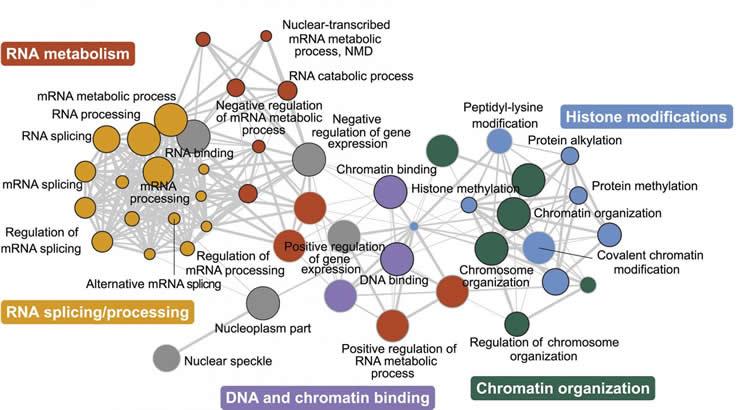
A network of more than 200 genes encoding proteins with diverse cellular roles was revealed in a non-biased CRISPR screen for regulators of microexon splicing. Many of the genes have previously been linked to autism. Image is credited to Thomas Gonatopoulos-Pournatzis.

Using CRISPR techniques, researchers have uncovered a genetic network linked to autism.

Researchers find evidence of cognitive issues and miRNA biomarkers, indicating brain injuries from concussions or head-to-head contact, in college football players. The findings indicated lasting damage caused by sports-related concussions occur earlier than expected.

A new method for studying the mircobiome has allowed researchers to identify a connection between metabolism in gut bacteria and the development of diabetes.

A new study has identified unique functional brain networks associated with characteristic behaviors of autism spectrum disorder (ASD) in 12- and 24-month old children at risk for developing ASD. The study is published in Biological Psychiatry: Cognitive Neuroscience and Neuroimaging.

Researchers have identified a brain network that may control the diversion of attention to focus on potential threats. Dopamine, they report, is key to the process.

New research has found preliminary evidence that high-intensity interval exercise temporarily impairs reward learning mechanisms in the brain. The research, which was published in Physiology & Behavior, indicates that this type of exercise does not improve all aspects of cognitive function.

A new study reports aerobic exercise can have antidepressant effects for patients with major depressive disorder.

Researchers propose a new theory of human thinking, suggesting our brain’s navigation system is key to thinking. This may explain why our knowledge seems to be organized in spatial fashion.

Scientists have solved a 125-year-old mystery of the brain, and, in the process, uncovered a potential treatment for acquired epilepsy.

A new neuroimaging study reveals the brains of teenage girls who self-harm show similar features to adults with borderline personality disorder.

Researchers were able to distinguish between children with or without ASD diagnosis, thanks to a new saliva-based biomarker panel. Researchers report the test can be used in children as young as 18 month, assisting in early diagnosis of autism.

Finally this week, a new study reveals common brain activity patterns associated with depressive moods.


Weekly Neuroscience Update

child-85321_960_720.jpgSleep researchers report for the first time evidence that naps and overnight sleep may work together to benefit memory in early childhood.

A group of researchers has found that our learning capabilities are limited during slow wave sleep. Using magnetoencephalography (MEG), they showed that while our brain is still able to perceive sounds during sleep, it is unable to group these sounds according to their organisation in a sequence.

Neuroscientists have debunked claims that getting better at a brain training game can translate to improved performance in other, untrained cognitive tasks.

Adults who hold back-and-forth conversations with young children rather than just talking to them may be helping to strengthen connections between the language regions of the children’s brains, new research shows.

Researchers say, to better understand working memory, it is important to resolve the debate over how we hold and judge multiple pieces of information in mind.

According to a new study dehydration can lead to more errors on task performance. Additionally, fMRI neuroimaging showed dehydration can alter brain structure temporarily.

It may be possible in the future to screen patients for Alzheimer’s disease using an eye exam.

Researchers used neuroimaging technology to identify brain differences between those who procrastinate and those who are doers. The study reveals people with poor action control have a larger amygdala, and the connection between the dorsal ACC and amygdala is less pronounced.

A new study reports lifestyle choices, such as smoking or drinking alcohol during early adulthood, can increase the risk of developing dementia or having a stroke later in life.

Scientists have discovered a network of brain cells that express our sense of time within experiences and memories.

In the first peer-reviewed published report of its kind, University of Toronto researchers have demonstrated that focused ultrasound can be used to safely open the blood-brain barrier (BBB) in patients with Alzheimer’s disease.

Finally, this week neuroscientists have discovered that ketamine works as an antidepressant at least in part by activating the brain’s opioid system.

Weekly Neuroscience Update

eye-1132531_960_720.jpg

Where objects appear in a person’s visual field can affect the ability to determine what the object is, researchers say.

Scientists have identified the brain networks that allow you to think of an object name and then verbalize that thought. The study appeared in the July issue of BRAIN. It represents a significant advance in the understanding of how the brain connects meaning to words and will help with the planning of brain surgeries.

New research suggests that shifts in the bacteria within a child’s mouth could provide objective biomarkers for identifying autism spectrum disorder. 

Researchers studying the functional connections among parts of the brain are finding that the “fingerprint” of these patterns can be used to identify individuals over many years and to distinguish their relatives from strangers.

Breaking with the long-held idea that working memory has fixed limits, a new study suggests that these limits adapt themselves to the task that one is performing. 

Young children who are regularly engaged in conversation by adults may have stronger connections between two developing brain regions critical for language, according to a study of healthy young children that confirms a hypothesis registered with the Open Science Framework.

A new study reports estrogen and other sex hormones may be responsible for the higher prevalence of migraines in women.

New therapies could be on the horizon for people living with epilepsy or anxiety, thanks to a breakthrough discovery by an international team of researchers studying how proteins interact to control the firing of brain cells.

Researchers report the interaction between two regions of the prefrontal cortex may underlie our motivation to cling to a desirable notion about the future.

A new study sheds light on the role the caudate nucleus plays in pessimism. The study reports stimulating this area of the brain generates a negative outlook that clouds decision making.

Exercise can help prevent relapses into cocaine addiction, according to new research.

A new study reveals a short time meditating can help to boost cognitive performance. Researchers report students exposed to a ten-minute meditation tape were able to complete simple cognitive tasks more quickly and accurately than their peers.

Researchers report transcranial alternating current stimulation applied during sleep can help accelerate learning, memory and skill acquisition.

Heavy alcohol drinkers attempt to acquire alcohol despite the threat of a negative consequence more so than light drinkers, a study in Biological Psychiatry: Cognitive Neuroscience and Neuroimaging has found, and this behavior is associated with unique activation of brain circuitry in heavy drinkers.

Finally this week,  new neuroimaging study reveals the dorsolateral prefrontal cortex plays a vital role in suppressing the act of revenge.


Weekly Neuroscience Update

feet-619399_960_720.jpg

A new study reveals children who are habitually barefoot show significantly different motor skills between the ages of 6-10 than those who are habitually shod. Researchers report those who habitually barefoot have better balance and jumping skills.

New research has found the natural vibrations of cars make people sleepier, affecting concentration and alertness levels just 15 minutes after drivers get behind the wheel.

Scientists have discovered a “Big Bang” of Alzheimer’s disease – the precise point at which a healthy protein becomes toxic but has not yet formed deadly tangles in the brain.

A new study reports people living in areas with more sunlight have lower rates of OCD.

Neuroscientists at the University of California-Berkeley are developing a technique that could give us the ability to fool our brain into thinking that we’d experienced something that never happened by manipulating electrical activity in the brain.

Researchers report boys on the autism spectrum tend to have lower fractal dimension in the right side of the cerebellum than those without autism.

Distinct molecular mechanisms can generate the same features in different neurons, a team of scientists has discovered. Its findings, which appear in the journal Cell, enhance our understanding of brain cell development.

Finally this week, a new study reports a short burst of exercise can dramatically improve long-term retention of new motor skills.


Weekly Neuroscience Update

xbox

When selecting a video game to play, opting to turn on your Wii may provide a different experience than playing your Xbox, according to a study from Mississippi State University.

Excessive alcohol use accounts for 4% of the global burden of disease, and binge drinking particularly is becoming an increasing health issue. A new review article published Cortex highlights the significant changes in brain function and structure that can be caused by alcohol misuse in young people.

Working with patients with electrodes implanted in their brains, researchers have shown for the first time that areas of the brain work together at the same time to recall memories. The unique approach promises new insights into how we remember details of time and place.

Researchers at the University of Glasgow are hoping to help victims of stroke to overcome physical disabilities by helping their brains to ‘rewire’ themselves.

Keeping active can slow down the progression of memory loss in people with Alzheimer’s disease, a study has shown.

Neuroscientists have released the results of a new study that examines how fear responses are learned, controlled, and memorized. They show that a particular class of neurons in a subdivision of the amygdala plays an active role in these processes.

Neuroscience researchers from Tufts University have found that our star-shaped brain cells, called astrocytes, may be responsible for the rapid improvement in mood in depressed patients after acute sleep deprivation. This in vivo study, published in the current issue ofTranslational Psychiatry, identified how astrocytes regulate a neurotransmitter involved in sleep. The researchers report that the findings may help lead to the development of effective and fast-acting drugs to treat depression, particularly in psychiatric emergencies.

UC Berkeley neuroscientists have found that the slow brain waves generated during the deep, restorative sleep we typically experience in youth play a key role in transporting memories from the hippocampus – which provides short-term storage for memories – to the prefrontal cortex’s longer term “hard drive.”

Researchers have found altered connectivity in the brain network for body perception in people with anorexia: The weaker the connection, the greater the misjudgement of body shape.

A group of scientists planning to map all the major connections in the human brain began studying their first test subjects in August. The $30 million Human Connectome Project will trace the main neural pathways that link the roughly 500 major regions in the brain, illuminating how biological circuitry underlies our mental functions. MRI scans of 1,200 people, including 300 pairs of twins, will be used to compile an atlas of communication routes throughout the brain. The resulting blueprint will also reveal how brain connectivity varies from person to person.

How to increase serotonin in the brain without drugs

Aerobic exercise has been shown to elevate mood

As a follow-on to my last post on depression, I would like to direct you to an article I have stumbled upon from the Journal of Psychiatry and Neuroscience (1) published in 2007.

Its primary focus is on individuals with a serotonin-related susceptibility to depression, and nonpharmacologic methods of increasing serotonin to prevent depression in those with such a susceptibility.

Nonpharmacologic methods of raising brain serotonin may not only improve mood and social functioning of healthy people — a worthwhile objective even without additional considerations — but would also make it possible to test the idea that increases in brain serotonin may help protect against the onset of various mental and physical disorders.

The article discusses four possible strategies that are worth further investigation:

1. Altering Thought Patterns

The idea that alterations in thought, either self-induced or due to psychotherapy, can alter brain metabolism is not new. Numerous studies have demonstrated changes in blood flow in such circumstances. However, reports related to specific transmitters are much less common. In one recent study, meditation was reported to increase release of dopamine.The study by Perreau-Linck and colleagues (2) is the first to report that self-induced changes in mood can influence serotonin synthesis.

2. Exposure to Bright Light

Bright light is, of course, a standard treatment for seasonal depression, but a few studies also suggest that it is an effective treatment for nonseasonal depression and also reduces depressed mood in women with premenstrual dysphoric disorder and in pregnant women suffering from depression.

3. Exercise

A third strategy that may raise brain serotonin is exercise. A comprehensive review of the relation between exercise and mood concluded that antidepressant and anxiolytic effects have been clearly demonstrated.

4. Diet

According to some evidence, tryptophan, which increases brain serotonin  is an effective antidepressant in mild-to-moderate depression. Further, in healthy people with high trait irritability, it increases agreeableness, decreases quarrelsomeness and improves mood. However, the idea, common in popular culture, that a high-protein food such as turkey will raise brain tryptophan and serotonin is, unfortunately, false. Another popular myth that is widespread on the Internet is that bananas improve mood because of their serotonin content. Although it is true that bananas contain serotonin, it does not cross the blood–brain barrier.

To read this article in full please click here.

1. J Psychiatry Neurosci. 2007 November; 32(6): 394–399.

2. Perreau-Linck E, Beauregard M, Gravel P, et al. In vivo measurements of brain trapping of α-[11C]methyl-L-tryptophan during acute changes in mood states. J Psychiatry Neurosci 2007;32:430-4.