After following a protocol of sensory-motor activities with cognitive engagement for two months, eleven children aged 10 to 12 who were diagnosed with dyslexia showed improvement in reading speed. This initiative combined recreational activities that incorporated motor and social skills, demonstrating promise in improving children’s reading performance.
Parkinson’s disease often starts on one side of the body, and new research shows this asymmetry influences how non-motor symptoms progress.
Memory helps us make sense of the present by retrieving past experiences based on either surface-level similarities or deeper conceptual connections. A recent study reveals that when a familiar mental category — like excuses or conflicts — is available, memory prioritizes structural, abstract links over superficial cues.
A device combining ultrasound and advanced imaging to provide information for the safe delivery of drugs into the brain has been developed by University of Queensland researchers.
A new study has upended decades of neuroscience dogma, revealing that dopamine, a neurotransmitter critical for movement, motivation, learning and mood, communicates in the brain with extraordinary precision, not broad diffusion as previously believed.
Researchers have found a new drug that may boost the brain’s ability to heal itself after injury. The discovery could lead to significant advances in treating traumatic brain injuries, or TBIs.
A study published in iScience suggests that the magic of live performance art may be reflected in our brains. When people watched a live contemporary dance performance, their brainwaves synced up, signaling shared focus and attention—but that synchrony didn’t occur when people watched the same performance alone on video.
A new study reveals that our organs age at different speeds, and those differences can predict future disease risk and even life expectancy. Using blood-based protein signatures from over 44,000 participants, researchers developed an algorithm to estimate the biological age of 11 organ systems.
Finally this week, a study in the journal Sciencepresents compelling new evidence that neurons in the brain’s memory center, the hippocampus, continue to form well into late adulthood.
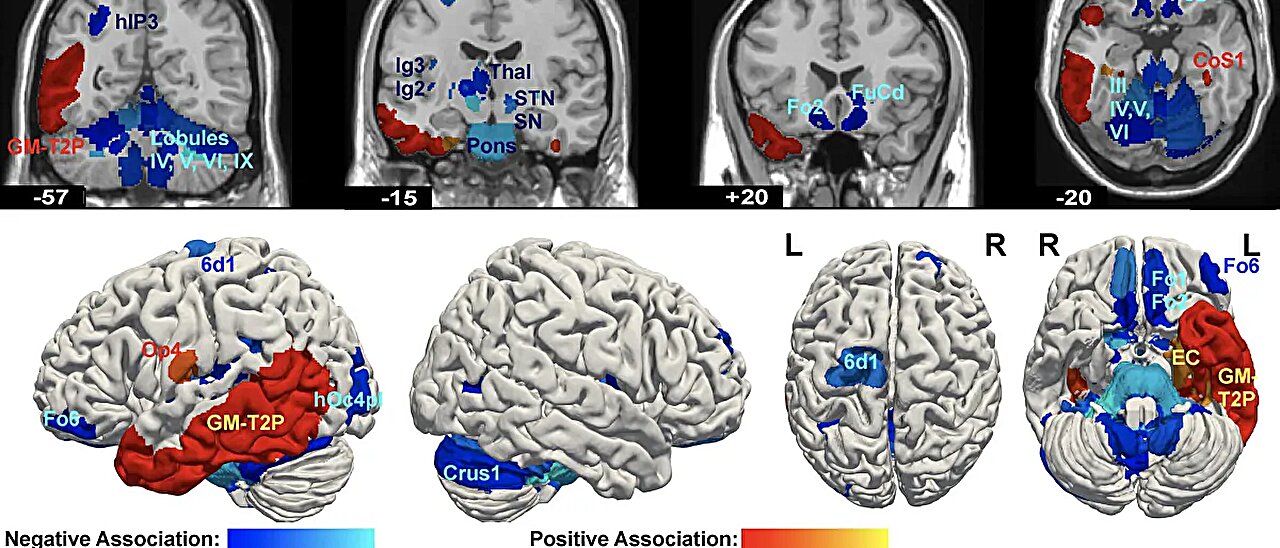
Coloured regions show where brain volume was associated with deviant lifestyle and antisocial behavior in individuals with psychopathic traits. Credit: European Archives of Psychiatry and Clinical Neuroscience (2025).
A recent study has shed light on the brain structure differences associated with psychopathy—a condition known to be one of the strongest predictors of persistent violent behaviour. The findings arepublishedin the journal European Archives of Psychiatry and Clinical Neuroscience.
Researchers are using a new approach to brain imaging that could improve how drugs are prescribed to treat Parkinson’s disease.
An analysis of over 375 trials shows that structured exercise significantly reduces depression and anxiety in children and teens. Low-intensity resistance activities like light weights were most effective for easing anxiety, while moderate mixed-mode programmes worked best for depression, especially when lasting under 12 weeks.
A new technology that uses clinical MRI machines to image metabolic activity in the brain could give researchers and clinicians unique insight into brain function and disease.
Diets rich in phosphate additives, commonly found in processed foods, can increase blood pressure by triggering a brain signaling pathway and overactivating the sympathetic nervous system that regulates cardiovascular function, UT Southwestern researchers discovered. Their findings could lead to treatment strategies for patients with hypertension caused by overconsumption of foods containing high levels of phosphates.
New research proposes a unified theory of brain function based on criticality—a state where the brain teeters between order and chaos, allowing it to learn, adapt, and process information optimally. When the brain strays from this delicate balance, cognitive performance weakens, and neurological disorders such as Alzheimer’s may begin to take hold.
A drug used for Parkinson’s disease has been shown to be effective in reducing the symptoms of difficult to treat depression, according to a study led by the University of Oxford.
A recent study shows that older adults may compensate for age-related cognitive decline by enhancing activity in a specific brain region linked to attention—the locus coeruleus (LC). In a brain imaging study, older participants showed stronger LC responses when interpreting ambiguous facial expressions, compared to younger adults.
Individuals with versus those without tinnitus have significantly lower scores on cognitive function tests, according to a recent study published in Frontiers in Neurology.
New research shows how the brain navigates emotional transitions, using music as a tool to map changing neural patterns. Scientists found that emotional responses in the brain depend heavily on the listener’s prior emotional state.
A clinical trial has revealed that Ambroxol, a common cough medicine in Europe, may help slow cognitive decline in people with Parkinson’s disease dementia.
In a study of 200 former professional rugby players (aged 30–61 years old), researchers from Imperial College London, University College London and the UK Dementia Research Institute found no cases of early-onset dementia.
Finally this week, new research findings show how synaptic connections in the cerebral cortex can strengthen during sleep, offering insight into how the brain continues learning even while we rest.
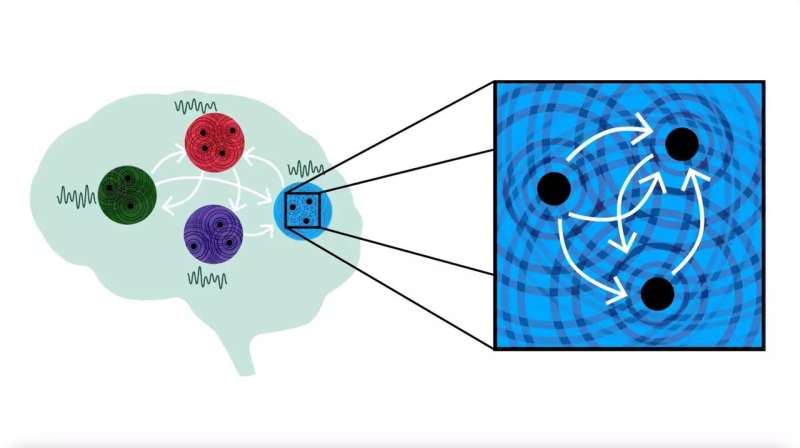
Schematic representation of the “Harmonic Oscillator Recurrent Network Model” (HORN). Credit: ESI
Researchers have made a new discovery in understanding fundamental brain processes. For the first time, the team has provided compelling evidence that the brain’s characteristic rhythmic patterns play a crucial role in information processing. While these oscillatory dynamics have long been observed in the brain, their purpose has remained mostly elusive until now.
Music has the best chance of providing pain relief when it is played at our natural rhythm, a McGill University research team has discovered.
Tiny plastic particles may accumulate at higher levels in the human brain than in the kidney and liver, with greater concentrations detected in postmortem samples from 2024 than in those from 2016, suggests a paper published in Nature Medicine. Although the potential implications for human health remain unclear, these findings may highlight a consequence of rising global concentrations of environmental plastics.
A team of scientists from the Center for Neuroscience Imaging Research (CNIR) at the Institute for Basic Science (IBS) has unveiled how the hippocampus orchestrates multiple memory processes, including encoding new information, forming memories, and retrieving them. The study ispublished in Nature Communications.
A recent study suggests that frequent treatment with intranasal oxytocin a hormone linked to empathy, may help address a key symptom in patients with frontotemporal dementia.
Could the key to easing anxiety be hidden in our gut? Scientists have discovered a crucial connection between gut microbes and anxiety-related behaviour.
People’s ability to interpret emotions or focus on performing a task is reduced by short-term exposure to particulate matter air pollution, potentially making everyday activities more challenging, according to a new study.
New research has revealed clear evidence that changes in the orchestration of brain oxygenation dynamics and neuronal function in Alzheimer’s disease contribute to the neurodegeneration.
Researchers are paving the way for the design of bionic limbs that feel natural to users. They demonstrate the connection between hand movement patterns and motoneuron control patterns. The study, published in Science Robotics, also reports the application of these findings to a soft prosthetic hand, which was successfully tested by individuals with physical impairments.
Occupational exposure to noise and/or vibrations is associated with the presence of vertigo, according to a study recently published in the Journal of Clinical Medicine.
A team of researchers recently carried out a study aimed at exploring the differences among patients with OCD. Their findings, publishedin Translational Psychiatry, allowed them to identify two broad OCD subtypes, which are associated with different patterns in gray matter volumes and disease epicenters.
A Canadian research team has revealed important new insights into the activation dynamics of neural stem cells (NSCs). These are the stem cells that build our central nervous systems and self-renew.
New research reveals that brain cells use a muscle-like signaling mechanism to relay information over long distances. Scientists discovered that dendrites, the branch-like extensions of neurons, contain a structured network of contact sites that amplify calcium signals—similar to how muscles contract. These contact sites regulate calcium release, activating key proteins involved in learning and memory.
Finally this week, a large study has found that heavy cannabis use, both recent and lifetime, is linked to reduced brain activity during working memory tasks in over 1,000 young adults.
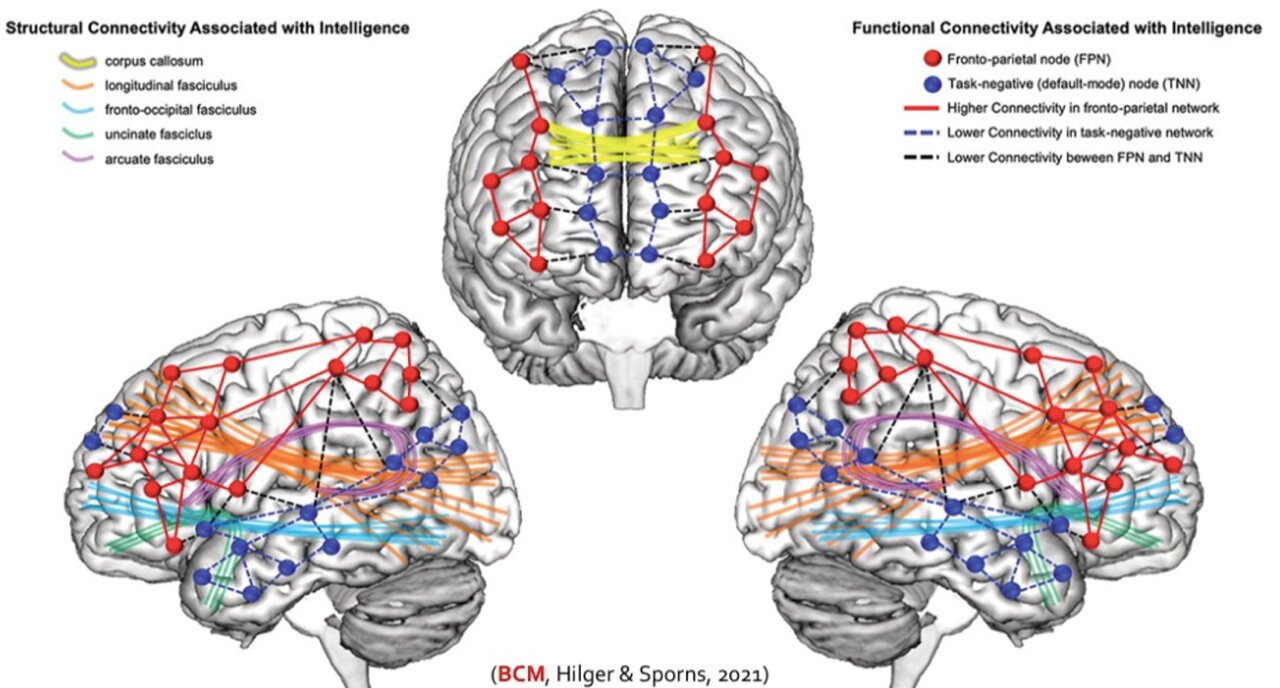
The Brain Connectivity Model of Intelligence. Schematic illustration of selected brain connections that have been linked to intelligence differences across studies. Adapted from Hilger & Sporns, 2021. Credit: Thiele et al.
Neuroscientists have developed machine learning models to predict human intelligence.
Researchers have found that incorporating specific nutrients into a regular diet may reduce iron buildup in the brain—a factor associated with cognitive decline in normal aging. The research team said the findings offer valuable insights for future clinical trials aimed at evaluating the impact of similar nutritional intake on brain iron accumulation and cognitive function.
The short-term boost our brains get after we do exercise persists throughout the following day, suggests a study led by UCL (University College London) researchers.
Thirteen proteins linked to brain aging in humans areidentifiedin a Nature Aging paper. Changes in the concentrations of these blood proteins may peak at 57, 70, and 78 years old in humans, and suggest that these ages may be important for potential interventions in the brain aging process.
A team of scientists has uncovered a novel mechanism that reshapes our understanding of how blood flow is regulated in the brain. The study, published in The Proceedings of the National Academy of Sciences introduces Electro-Calcium (E-Ca) Coupling, a process that integrates electrical and calcium signaling in brain capillaries to ensure precise blood flow delivery to active neurons.
Researchers at the Yale School of Medicine found structural and functional alterations in specific brain regions of individuals with opioid use disorder. The study’s results were published in Radiology.
A new study has identified a unique brain network that links varied patterns of brain atrophy, or shrinkage, associated with schizophrenia. By combining neuroimaging data from multiple studies involving more than 8,000 participants, the research team found a specific connectivity pattern of atrophy that was present across different stages and symptoms of schizophrenia—and distinct from brain networks associated with other psychiatric disorders.
New research provides valuable insights into the brain-body immune connection, identifying key communication hubs in the dural sinuses and skull bone marrow at the back of the head.
New research shows that slow-wave sleep strengthens synaptic connections in the neocortex, making it more receptive to long-term memory formation. Researchers found that during deep sleep, synapses in the neocortex reach peak efficiency at precise moments within slow-wave oscillations.
A new study suggests how brain, with sleep, learns meaningful maps of spaces.
A large-scale study revealed that genetic variants linked to dyslexia are associated with differences in brain areas controlling motor coordination, vision, and language. Using data from over a million individuals, researchers calculated genetic “polygenic scores” for dyslexia and analyzed their relationship to brain structures. Higher genetic risk for dyslexia was tied to lower volumes in brain regions related to speech processing and movement, and increased volumes in the visual cortex. Differences in the brain’s internal capsule, which connects regions, were also observed.
Cognitive impairment, especially in learning and memory, is more likely among people with epilepsy, according to a newly published study.
A recent study explores how connections across the entire brain predict human intelligence, moving beyond traditional focus on specific brain areas like the prefrontal cortex. Using fMRI data from over 800 individuals, researchers analyzed communication between brain regions to predict fluid, crystallized, and general intelligence scores. Findings reveal that distributed brain-wide connections play a crucial role, surpassing existing models that emphasize localized regions. This research highlights intelligence as a global property of the brain, offering fresh perspectives for understanding cognitive processes.
The chromosomal disorder 22q11.2 deletion syndrome (22q) has emerged as one of the strongest risks for schizophrenia.
New research reveals that brain structure varies with reading ability, particularly in the left hemisphere. Better readers have distinct traits, including a larger anterior temporal lobe for integrating word meaning and a thicker left Heschl’s gyrus for phonological processing.
Night shifts and poor sleep quality are associated with an increased risk for incident epilepsy, according to a study published in BMC Public Health.
People with severe, treatment-resistant depression who received a nerve-stimulating therapy showed significant improvement in depressive symptoms, quality of life and ability to complete everyday tasks after a year, according to the results of a national, multicenter clinical trial.
Finally this week, researchers have found a relationship between lifestyle choices that affect dementia risk and early signs of aging in the brain.
What if we could unlock the secrets of the human brain to revolutionize how we teach and learn?
A new science of learning is emerging, fueled by converging insights from fields like developmental psychology, machine learning, and neuroscience. This field is uncovering the biological, cognitive, and social factors that influence how we learn, paving the way for more effective teaching practices and improved learning outcomes. For instance, we now understand the importance of active learning, where students are engaged and challenged to construct their own knowledge rather than passively absorbing information. We also recognize the powerful role emotions play in learning. Positive emotions enhance learning while negative emotions like stress can hinder it, highlighting the need for supportive and engaging learning environments. Furthermore, this new science emphasizes the importance of personalized learning, recognizing that each student learns in their own unique way.
Optimizing Learning by Targeting Different Memory Systems
Neuroscience has shown us that memory is more complex than we once thought. It’s not just one thing, but a system of different types, each with its own job and connected to different parts of the brain.
Episodic memory is like a mental scrapbook. It helps us remember past experiences, like a fun school trip or a birthday party. Teachers can tap into this by using techniques that emphasize narrative construction, real-world applications, and the establishment of personal connections with the subject matter.
Semantic memory is our storehouse of facts and concepts. It’s how we remember things like state capitals or the rules of gravity. Teachers can help students build this type of memory by using visuals, diagrams, and clear explanations.
Procedural memory is all about skills. It’s how we learn to ride a bike or play an instrument. To get better at these things, we need practice, feedback, and to learn skills step-by-step.
Understanding these different memory systems can really change how we teach. When teachers know which type of memory is involved in a lesson, they can plan activities that make it easier for students to learn, remember, and use information.
The Adolescent Brain: A Period of Continued Development
Contrary to earlier assumptions, brain development is not confined to childhood. The prefrontal cortex, the brain’s executive control center responsible for planning, decision-making, and impulse inhibition, continues to mature well into early adulthood, typically around 20-25 years of age. This protracted developmental trajectory explains why adolescents often grapple with impulse control, risk assessment, and delaying gratification. They may engage in actions without fully considering the consequences, undertake risks without a complete understanding of potential dangers, or encounter difficulties prioritizing long-term goals over immediate rewards.
This understanding holds significant implications for educators. It underscores the necessity for patience and support as adolescents navigate the complexities of this developmental period. By providing structured environments, clear expectations, and opportunities to cultivate self-regulation techniques such as mindfulness or organizational strategies, educators can facilitate the strengthening of the prefrontal cortex and the development of essential life skills.
Neuroeducation: Bridging Neuroscience and Education
For much of recent history, the fields of neuroscience and education operated in distinct domains, with limited interaction between researchers. However, this began to shift in the 1990s with the growing recognition of the brain’s remarkable plasticity—its capacity to reorganize and adapt throughout the lifespan in response to experiences. This discovery, coupled with advancements in neuroimaging techniques, fueled increasing interest in how insights from neuroscience could inform and enhance educational practices, ultimately leading to the emergence of neuroeducation.
Neuroeducation is an interdisciplinary field that strives to bridge the gap between neuroscience and education. It investigates how the brain learns, remembers, and processes information, and applies these findings to develop more effective pedagogical approaches. By understanding the neural mechanisms underlying learning and cognition, educators can create learning environments that optimize brain function and promote deeper understanding. For instance, incorporating movement breaks into lessons can capitalize on the benefits of physical activity for cognitive function, while integrating mindfulness practices can assist students in managing stress and enhancing focus.
Neuroeducation emphasizes that learning is not a passive process of absorption but rather an active process that induces physical changes in the brain. Every new experience, every acquired skill, every learned fact—all leave their imprint on the brain’s intricate neural networks. This knowledge empowers educators to design learning experiences that leverage the brain’s inherent learning processes. Examples include incorporating spaced repetition into lesson plans to enhance memory consolidation or utilizing storytelling to engage the emotional dimensions of learning.
The goals of neuroeducation are far-reaching. It aims to improve educational outcomes for all learners, address learning challenges and disabilities such as dyslexia or ADHD, promote creativity and innovation in educational settings, and foster a lifelong love of learning. While a relatively nascent field, neuroeducation holds immense potential to transform educational practices and positively impact learners of all ages.
Neuroeducation: Integrating Neuroscience and Artificial Intelligence in Educational Practice
Augmenting the progress of neuroeducation is the advent of artificial intelligence (AI), which presents transformative potential for educational practices. Imagine AI systems functioning as personalized learning guides, identifying each student’s unique learning style, strengths, and areas for improvement. With this insight, AI can create custom-tailored learning plans, perfectly suited to each student’s needs. AI tutors can then step in, providing real-time support, feedback, and challenges that adapt to the student’s progress—keeping them both engaged and motivated. AI-powered games and simulations also turn learning into an immersive experience, designed to match each student’s pace and interests.
AI is also changing how we assess learning. By analyzing work products like essays or problem-solving exercises, AI can pinpoint areas that need further attention and deliver targeted, constructive feedback. It can even assess a learner’s emotional state and engagement during lessons, enabling teachers to adjust their instructional methods for optimal impact.
Looking ahead, brain-computer interfaces (BCIs) could allow our brains to interact directly with computers. This technology could be life-changing for students with disabilities, giving them new ways to control devices and communicate. BCIs could also provide real-time feedback on brain activity during learning, helping students improve their focus and self-regulation.
Despite these exciting possibilities, the integration of AI in neuroeducation comes with significant ethical and practical challenges. Protecting student data must be a top priority, necessitating AI systems that are built with privacy at their core. Equitable access to AI tools is also crucial to prevent exacerbating existing achievement gaps. Furthermore, teachers will need comprehensive training to effectively incorporate AI technologies into their classrooms. Striking a balance between technological innovation and human interaction is essential to maintaining the critical role of educators in fostering well-rounded student development.
Curiosity, interest, joy, and motivation—these are the cornerstones of effective learning. Neuroeducation, with its focus on understanding the brain’s role in learning, combined with AI’s innovative potential, offers a path toward a more personalized, engaging, and inclusive educational future.
A new study reveals a high fructose diet could contribute to bipolar disorder, ADHD, and behavioral aggression.
In Alzheimer’s disease, impaired blood flow to brain regions coincides with tau protein buildup. This relationship strengthens as cognition declines, according to new research published in Journal of Neuroscience.
A new lab test can accurately pinpoint and analyze the deadliest cells in the most common and aggressive brain cancer in adults.
A greater density of cells in a key reward center of the brain is associated with obesity in children and predicts future weight gain, a new study finds.
A team of researchers has found that an amino acid produced by the brain could play a crucial role in preventing a type of epileptic seizure.
The characteristics of language structure and writing system may explain why some bilingual people are dyslexic in English, but not in their other proficient language.
Finally this week, a study of four drugs to combat chronic neuropathic pain finds Nortriptyline has the highest efficacious percentage and lowest quit rate.
Image: Bansal et al., PLOS Computational Biology, October 2018.
Scientists are using computational models of the brain to simulate how the structure of the brain may impact brain activity and, ultimately, human behavior. The research focuses on interconnectivity, looking at how different regions are linked to and interact with one another.
Using a green filter helps to increase reading speed for children with dyslexia, researchers report.
Using three different training models, researchers report mental training, mindfulness and meditation can induce structural brain plasticity and reduce social stress.
A new brain imaging study reveals how the midbrain and striatum, two key areas of the dopamine system, become more active when a person updates their beliefs about the world around them.
Researchers report deep brain stimulation has little benefit for those suffering from early onset Alzheimer’s disease.
Finally this week, a decade worth of data reveals people who multitaskwith different forms of media at once are worse at completing simple memory tasks.
Researchers have discovered differences in the brain’s emotional networks between those who do not meditate, novice meditators and those who have practiced meditation for a long time.
According to researchers, people find it easier to lie in a foreign language than their native tongue.
A new study could revolutionize understanding of how signal flow can be measured in the brain and could have an impact into the development of new artificial neural networks.
Scientists in the US have announced they’ve developed an Artificial Intelligence (AI) system that can tell how smart a person is just by looking at a scan of their brain.
Researchers have developed a new, non-surgical methodto manipulate brain circuitry. The technique uses sound waves in combination with small bubble injections into the bloodstream that temporarily opens the blood-brain barrier.
A new study reports disrupted transportation routes in nerve cells are a significant cause of Parkinson’s disease.
According to researchers, vision and brain circuits perform regular background scans, making neurons available for focus based tasks. The process makes it possible for us to pay, and maintain attention.
Researchers report high density of neurons in the dorsolateral prefrontal cortex play a significant role in resilient dyslexia.
Finally this week, a new study reports children who exhibit excessive self-control and have tendencies toward perfectionism are twice as likely todevelop OCDby their teenage years.
According to researchers, endurance runners appear to have greater functional connectivity in their brains that those who don’t exercise as much.
New research reveals that children begin using olfactory information to help guide their responses to emotionally-expressive faces at about five years of age. The findings advance understanding of how children integrate different types of sensory information to direct their social behaviour.
A new study explores how neurons adapt their function to respond to stimuli quickly.
A distinctive neural signature found in the brains of people with dyslexia may explain why these individuals have difficulty learning to read, according to a new study from MIT neuroscientists.
Brain connections that play a key role in complex thinking skills show the poorest health with advancing age, new research suggests.
Researchers have identified immune cells in the membranes around the brain that could be a ‘missing link’ in the gut-brain axis. The immune cells also appear to have a positive impact on recovery following spinal cord injury.
Therapeutic hypothermia following a Traumatic Brain Injury (TBI) significantly improves survival rate, a new study reports.
An enzyme found in the fluid around the brain and spine is giving researchers a snapshot of what happens inside the minds of Alzheimer’s patients and how that relates to cognitive decline.
Finally this week,a new study looks at the way in which noise sensitivity is manifested due to changes in the way in which the brain processes auditory information.
The salience network, highlighted here in two epilepsy patients, is thought to mediate our response to important internal or external signals, such as pain or the sound of a siren. Image: Parvizi et al. Neuron 2013
In a rare study involving direct brain stimulation researchers say they have uncovered direct evidence that a brain region known as the anterior midcingulate cortex and its surrounding network play a central role in motivation and a readiness to act.
Many studies suggest that pushing your brain to multitask—writing emails, for instance, while watching the day’s latest news and eating breakfast—leads to poorer performance and lower productivity. But for at least one everyday task—visual sampling (the act of picking up bits of visual information through short glances)—multitasking is not a problem for the brain. A collaboration between researchers at the UC Santa Barbara and the University of Bristol in the UK has shown that during visual sampling, the brain can handle various visual functions simultaneously.
Researchers report a detailed account of how speech sounds are identified by the human brain, offering an unprecedented insight into the basis of human language. The finding, they said, may add to our understanding of language disorders, including dyslexia.
A new study correlating brain activity with how people make decisions suggests that when individuals engage in risky behavior, it’s probably not because their brains’ desire systems are too active, but because their self-control systems are not active enough.This might have implications for how health experts treat mental illness and addiction or how the legal system assesses a criminal’s likelihood of committing another crime.
Pain sensitivity is controlled by a genetic “dimmer switch”, which can be re-set, UK scientists have discovered.




 Researchers have discovered differences in the
  According to researchers, endurance runners appear to have greater
 inside-the-brain.com