Weekly Neuroscience Update

Credit: Nature Communications (2023). DOI: 10.1038/s41467-023-42088-7

A team of international neuroscientists has obtained the first direct recordings of the human brain in the minutes before and after a brain hub crucial for language meaning was surgically disconnected. The results reveal the importance of brain hubs in neural networks and the remarkable way in which the human brain attempts to compensate when a hub is lost, with immediacy not previously observed.

A new study, published in Cell Reports, describes a novel molecular link between vitamin B12 and multiple sclerosis that takes place in astrocytes—important non-neuronal glial cells in the brain.

Australian researchers have flagged potential concerns over the use of social chatbots, calling for more studies into the impact of AI software on neurodiverse people and those who find human interaction difficult.

An exploratory study has shown that light, regular exercise can improve the cognitive as well as physical health of adults with Down syndrome.

Researchers at Linköping University, Sweden, have examined the brains of 16 patients previously hospitalised for COVID-19 with persisting symptoms. They have found differences in brain tissue structure between patients with persisting symptoms after COVID-19 and healthy people.

Scientists have discovered a new way a ribonucleic acid (RNA) impacts fear-related learning and memory.

Comparing PET scans of more than 90 adults with and without mild cognitive impairment (MCI), researchers say relatively lower levels of the so-called “happiness” chemical, serotonin, in parts of the brain of those with MCI may play a role in memory problems including Alzheimer’s disease.

A new study reveals a significant association between adverse childhood experiences and symptoms of muscle dysmorphia in adolescents and young adults.

Using electrochemical techniques and machine learning, scientists measured dopamine levels in real time during a computer game involving rewards and penalties. The findings shed light on the intricate role of dopamine in human behavior and could have implications for understanding psychiatric and neurological disorders.

Researchers have identified a potential treatment target for a genetic type of epilepsy.

A new study sheds light on the significant role of patients’ beliefs in the effectiveness of neurostimulation treatments for conditions like depression and ADHD. Analyzing five studies, the research team found that patients’ perceptions of receiving real or placebo treatments often had more impact on outcomes than the treatments themselves.

New research has found that smoking causes the brain to shrink and age prematurely, a condition not reversible even after quitting smoking.

Researchers have discovered a key player in alcohol addiction: pituitary adenylate cyclase-activating polypeptide (PACAP). This peptide, found in the “bed nucleus of the stria terminalis” (BNST), is linked to heavy alcohol drinking and withdrawal.

Finally this week, new research reveals that moderate exercise improves cognitive performance even under conditions of sleep deprivation and low oxygen levels.

Unraveling The Mysteries of Dopamine [Video]

Drawing on a recent groundbreaking study, this video explores how dopamine operates within the paradigms of Pavlovian and operant conditioning. The study provides new insights into the intricate functionality of this essential neurotransmitter in the brain.

Classical conditioning, also known as Pavlovian conditioning, involves learning through associations between a neutral stimulus and an unconditioned stimulus. In this process, dopamine release is triggered when the neutral stimulus becomes associated with a reward or positive outcome. Dopamine helps in reinforcing the connection between the neutral stimulus and the reward, making the association stronger.

Dopamine is closely linked to reward learning and motivation. It is involved in the brain’s reward system, which helps in reinforcing behaviors that lead to pleasurable experiences or rewards. Dopamine release signals to the brain that a certain action or behavior is beneficial and should be repeated. It provides a sense of satisfaction and drives motivation to engage in actions that lead to positive outcomes.

Watch the video to explore:

🔹 What triggers dopamine release?

🔹 The difference between classical and Pavlovian conditioning.

🔹 The pivotal role of dopamine in reward learning and motivation.

🔹 Which disease is associated with a lack of dopamine.

🔹 How antipsychotics impact dopamine.

Weekly Neuroscience Update

New artificial intelligence technology reveals previously unknown cell components. The findings may shed new light on human development and diseases.

A new mathematical model explains how the brain has the ability to continuously acquire new skills, specifically movement-based skills, without forgetting or degrading old ones. The theory, dubbed COIN, suggests identifying current context is key to learning how to move our bodies when acquiring skills.

Playing video games that are heavy on action can make you better at some new tasks. New research reveals that these games are helping by teaching players to be quicker learners.

The “background noise” in the brain disrupts long-memory signals by neurons. This noise interrupts the consistent rhythm of long-memory alpha wave signals in people experiencing identity confusion.

Memory errors may indicate a way in which the human cognitive system is optimally running, researchers say.

Housework is linked to sharper memory, attention span, and better leg strength, and by extension, greater protection against falls, in older adults, finds research published in the open access journal BMJ Open.

Repetitive transcranial magnetic stimulation (rTMS) can be used to modulate brain rhythms and cognitive behaviors related to “giving up” during problem-solving tasks.

New research reveals that specialized cells within neural circuitry that triggers complex learning in songbirds bears a striking resemblance to a type of neural cell associated with the development of fine motor skills in the cortex of the human brain.

Finally this week, a new study links a propensity to binge-watch TV shows with personality traits. Researchers found those who lack impulse control and emotional clarity are most likely to binge-watch a television series.


Weekly Neuroscience Update

Image Credit: Dartmouth College

Distinct information about familiar faces is encoded in a neural code that is shared across brains, according to a new study published in the Proceedings of the National Academy of Sciences.

A new study conducted in adults with a history of childhood maltreatment showed that two groups – those with a history of sexual abuse and those with posttraumatic stress disorder (PTSD) – had reduced brain connectivity in the attention systems known as the ventral and dorsal attention network (VAN-DAN).

New findings reveals dopamine neurons that play a role in learning and memory also drive motivation.

For the first time, researchers have used human data to quantify the speed of different processes that lead to Alzheimer’s disease and found that it develops in a very different way than previously thought. Their results could have important implications for the development of potential treatments.

Musical therapy can help to improve fine motor skills in patients with Parkinson’s disease according to new research. 

A genetic predisposition for depression combined with exposure to high-particulate-matter air pollution greatly elevates the risk that healthy people will experience depression, according to a first-of-its-kind study published in the Proceedings of the National Academies of Sciences (PNAS).

Recently published research found people who continued to spend a higher amount of time sitting between April and June 2020 were likely to have higher symptoms of depression.

A new study, published in the International Journal of MS Care, found that the vibration training improved not only physical symptoms associated with multiple sclerosis, such as increased walking speeds, but also cognitive functions, such as memory capacity and executive function.

A newly developed AI algorithm can directly predict eye position and movement during an MRI scan. The technology could provide new diagnostics for neurological disorders that manifest in changes in eye-movement patterns.

A team of researchers has found a possible connection between depression and anxiety for IBD patients and the vascular barrier in the brain choroid plexus closing. In their paper published in the journal Science, the group describes their study of the gut-brain axis response to inflammation and its link to psychiatric illnesses.

Researchers have created the first body map of sensations experienced during hallucinations in people experiencing psychosis.

Recent resarch reveals the severity of PTSD symptoms was associated with fewer risky choices and increased activation of the amygdala. Decreased activity in the ventral striatum, an area of the brain associated with processing positive valence such as reward, predicted more severe PTSD symptoms 14 months post-trauma.

Finally this week, people who consume a diet containing anti-inflammatory foods, including fruits, vegetables, and coffee, are less likely to develop dementia as they age, a new study reports.


Weekly Neuroscience Update

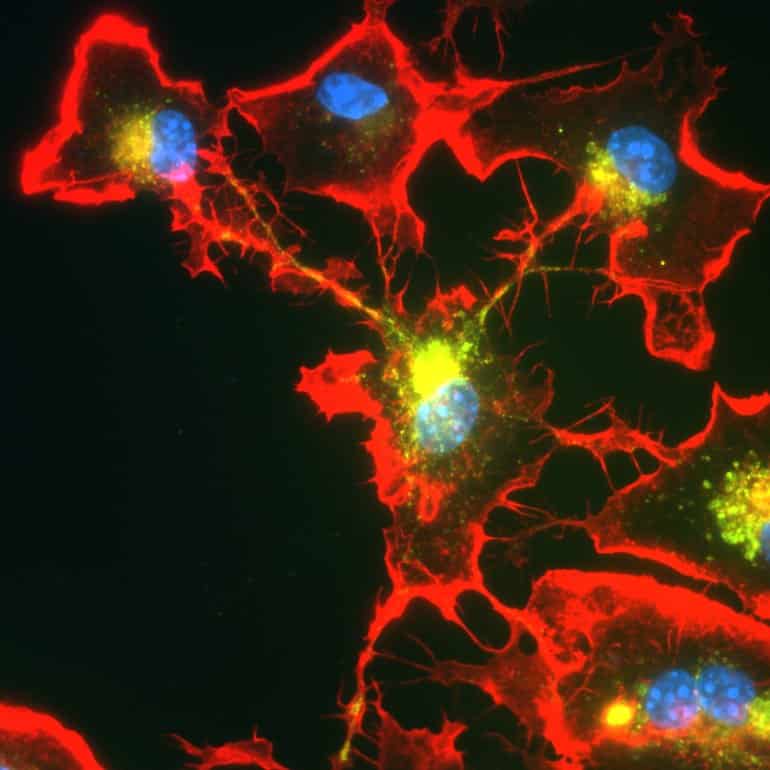
Microglial cells – (blue: the cell nuclei) can join together using tubular projections (red) to degrade dangerous proteins in a division of labor. Credit: AG Heneka/University of Bonn

To break down toxic proteins more quickly, immune cells in the brain can join together to form networks when needed. However, certain mutations associated with Parkinson’s disease can impair this process.

New work shows that neurons and other brain cells use DNA double-strand breaks, often associated with cancer, neurodegeneration and aging, to quickly express genes related to learning and memory.

New research has identified specific drug targets within the neural circuits that encode memories, paving the way for significant advances in the treatment of a broad spectrum of brain disorders.

Pioneering research shows that dopamine levels increase in response to stressful stimuli, and not just pleasurable ones, potentially rewriting facts about the “feel-good” hormone—a critical mediator of many psychiatric diseases. This discovery is cause to rethink treatment for psychiatric disease and addiction.

A new study links viral infections including mononucleosis and pneumonia experienced during adolescence with an increased risk of developing multiple sclerosis.

Researchers have discovered a new gene therapy pathway that has uncovered an important regulatory mechanism to keep our genome healthy. This pathway has the potential to protect us against serious life-limiting diseases such as cancer and dementia.

Neuroscientists have discovered specific types of neurons within the memory center of the brain that are responsible for acquiring new associative memories.

Amyloid protein made in the liver can cause neurodegeneration in the brain, according to a new study in the open-access journal PLOS Biology. Since the protein is thought to be a key contributor to development of Alzheimer’s disease (AD), the results suggest that the liver may play an important role in the onset or progression of the disease.

Higher glucose levels detected by a two-hour glucose test were an accurate predictor of poorer performance in tests of episodic memory ten years later, according to new research

A worsening cardiovascular profile after menopause may contribute to the fact that women are disproportionately affected by dementia. A new study identified a link between cardiovascular fat volume and radiodensity and cognitive function, as well as racial differences in this association.

Finally this week, a new study finds dopamine increases responses to stressful stimuli, not just pleasurable ones. The findings could have implications for the treatment of mental health disorders and addiction.


Weekly Neuroscience Update

dimethoxyphenethylamine-867172_640

A new study provides the first evidence that rotigotine, a drug that acts on dopamine transmission in the brain, improves cognitive function in patients with mild-to-moderate Alzheimer’s disease.

Tiny eye movements can be used as an index of humans’ ability to anticipate relevant information in the environment independent of the information’s sensory modality, a team of scientists has found. The work reveals a connection between eye movements and the sense of touch.

A team of researchers has identified for the first time brain-wide neural correlates of the transition from fear to anxiety.

A new study provides evidence that hearing is the last sense to go during the process of active death. Many people become unresponsive during the final hours of life, however, EEG data revealed the dying brain responds to sounds throughout the final moments of life.

Neurological complications of Covid-19 can include delirium, brain inflammation, stroke and nerve damage, finds new research.

A new study uncovers DNA hypermethylation is responsible for reduced amygdala volume in male patients with schizophrenia and bipolar disorder.

Finally this week, new research has identified the specific brain cells that control how much sugar you eat and how much you crave sweet tasting food.

Weekly Neuroscience Update

reading-925589_960_720.jpg

A new brain mapping experiment shows that whether you read or listen to a book, the same parts of the brain are stimulated to help you understand and respond to the meaning of the words

Poor oral health has been linked to cognitive decline and increased symptoms of stress.

The brains’ of first degree relatives of those with schizophrenia and bipolar disorder differ from those with no family history of the disorders. Relatives of those with bipolar disorder tend to have larger intracranial volume, while those who had a relative with schizophrenia had smaller brain volume.

Minute-to-minute fluctuations in human brain activity, linked to changing levels of dopamine, impact whether we make risky decisions, finds a new study.

Meditation and yoga practice is associated with smaller right amygdala volume, a brain region involved in emotional processing, according to research published in Brain Imaging and Behavior.

Tiny changes in the microscopic structure of the human brain may affect how patients respond to an emerging therapy for neurological problems.

The brains of people with epilepsy appear to react to music differently from the brains of those who do not have the disorder, a finding that could lead to new therapies to prevent seizures.

Major depressive disorder has been linked to at least 22 distinct diseases, including asthma, coronary heart disease, and an increased risk of E. coli infection.

Researchers have identified a specific area of the brain responsible for auditory verbal hallucinations in people with schizophrenia. The researchers were able to control the hallucinations with the help of transcranial magnetic stimulation.

A new study challenges the existing theory that testosterone levels are linked to reduced cognitive empathy.

Finally this week, new research provides insights into what happens in our brains when curiosity is piqued. The findings could help scientists find ways to enhance overall learning and memory in both healthy individuals and those with neurological conditions.


Weekly Neuroscience Update

robot-eyes-motor-impairment-neurosciencneews.jpg

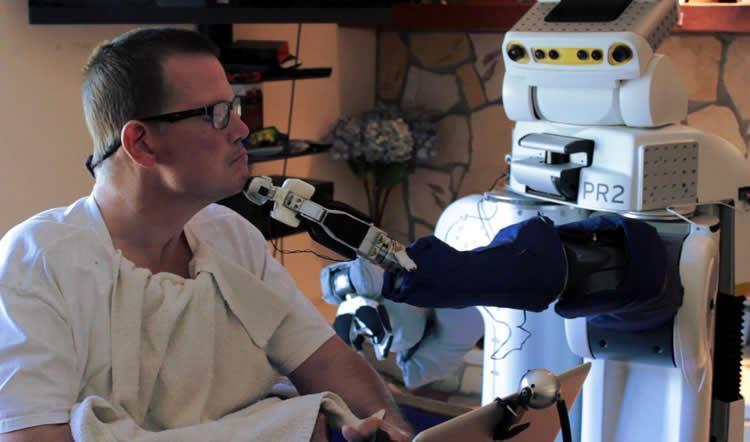
Robotic body surrogates can help people with profound motor deficits interact with the world. Here, Henry Evans, a California man who helped Georgia Tech researchers with improvements to a web-based interface, uses the robot to shave himself.  

People with profound motor deficits reported an improved quality of life while using robotic body surrogates.

A new study reports babies’ brains are sensitive to different emotional tones they hear in voices. Researchers suggest maternal interactions may help to shape the same brain region adults use for emotional processing.

Researchers are finding new evidence that exercise — even low-intensity, casual physical activity — can boost brain health in the short- and long-term.

The brain chemical serotonin, a neurotransmitter is long known for its role in passing signals between neurons in the brain, can also regulate expression of genes within neurons in an unexpected way, according to research conducted by neuroscientists at the Icahn School of Medicine at Mount Sinai and published on March 13 in the journal Nature.

New patterns of brain aging across the human lifespan have been revealed by scientists analysing microstructural changes in the brain’s white matter.

According to researchers, there is an optimum amount of dopamine that should be present within the brain. This optimum amount can help improve cognitive performance on tasks, researchers report.

Oxford University scientists have discovered a brain process common to sleep and aging in research that could pave the way for new treatments for insomnia.

Finally this week, a new review, which appears in The BMJ journal, examines the benefits of non-invasive brain stimulation for treating major depression and finds that the technique is a valid alternative to existing treatments.

Weekly Neuroscience Update

2-discoveryofn.jpg

Image Credit: Guillaume Sandoz, CNRS

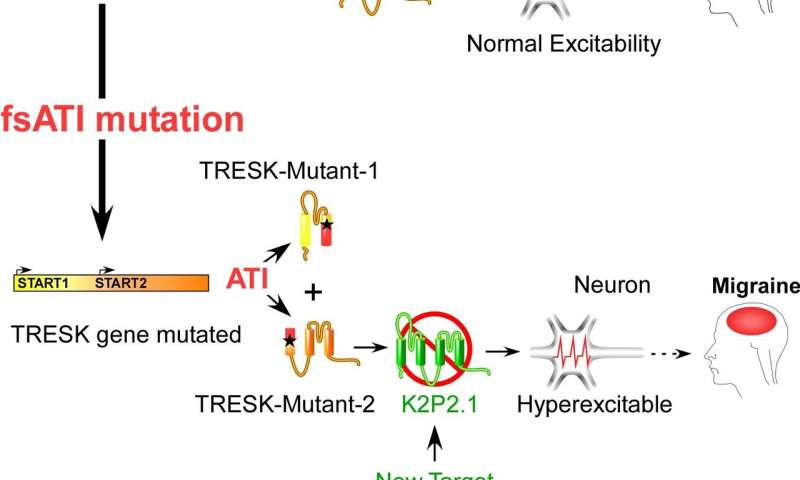
Researchers at CNRS, Université Côte d’Azur and Inserm have demonstrated a new mechanism related to the onset of migraine. In fact, they found how a mutation, causes dysfunction in a protein which inhibits neuronal electrical activity, induces migraines. These results, published in Neuron on Dec. 17, 2018, open a new path for the development of anti-migraine medicines.

Scientists using eye tracking software, report what we look at helps guide our decisions when faced with two visible choices.

A new study reports children and teens who face chronic bullying have altered brain structure, as well as problems with anxiety and depression. Researchers found those who were bullies had structural changes to the putamen and caudate, contributing to the development of anxiety related behaviors and emotional processing.

Researchers have identified specific neurons in the medial prefrontal cortex, called self-monitoring error neurons, that fire immediately after people make a mistake.

New findings show how alcohol influences dopaminergic and inhibitory neurons in the ventral tegmental area. The findings could help develop new treatments for alcohol dependence.

A diet of fast food, cakes and processed meat increases your risk of depression, according to a new study.

Scientists who recently identified the molecular start of Alzheimer’s disease have used that finding to determine that it should be possible to forecast which type of dementia will develop over time – a form of personalized medicine for neurodegenerative diseases.

A new study reports lightly stroking an infant, at a speed of 3 centimeters per second, can help to provide pain relief prior to medical procedures.

Researchers have identified cognitive subgroups related to genetic differences in Alzheimer’s patients. The findings could open the door for more personalized treatments of the neurodegenerative disease.

A previously unknown brain mechanism that regulates anxiety has come to light. It allows a gene-altering protein to enter the nucleus of brain cells.

Finally this week, researchers discovered activity in brain regions involved in reward response from dopamine was higher in subjects injected with the hormone ghrelin, but only when responding to images associated with food smells. The study reports ghrelin controls the extent to which the brain associates reward with food odors.


Weekly Neuroscience Update

boy-3360415_960_720.jpg

Researchers have found “different patterns” in brain scans among children who record heavy smart device and video game use, according to initial data from a major ongoing US study.

A new study reports the combination of a toxic herbicide and lectins may trigger Parkinsonism after the toxins travel from the stomach to the brain.

Later-born siblings of children with autism spectrum disorder (ASD) or attention-deficit/hyperactivity disorder (ADHD) are at elevated risk for both disorders, a new study has concluded. The study suggests that families who already have a child diagnosed with ASD or ADHD may wish to monitor younger siblings for symptoms of both conditions.

Researchers have shed light on the dual nature of dopamine, as a neurotransmitter that makes us seek pleasure and also reinforces avoidance of pain.

A new neuroimaging study reveals imagination may help people with fear or anxiety disorders overcome them. The study reports imagining a threat can alter the way it is represented in the brain.

Stimulating the lateral orbitofrontal cortex improves mood in those suffering from depression, a new study reveals.

Scientists report low levels of GABA producing bacteria is associated with brain signatures of depression. They believe it may be possible to treat clinical depression by increasing GABA producing bacteria.

Finally, this week, using machine learning to analyze fMRI brain scans of grieving people, researchers shed light on how unconscious suppression occurs.