Weekly Neuroscience Update

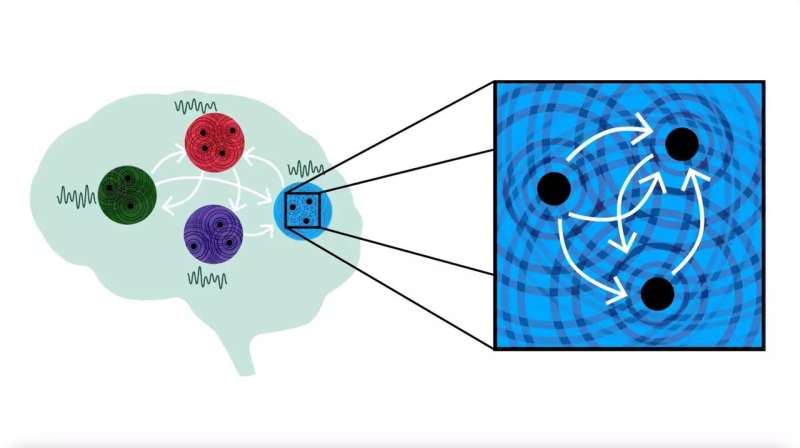
Schematic representation of the “Harmonic Oscillator Recurrent Network Model” (HORN). Credit: ESI

Researchers have made a new discovery in understanding fundamental brain processes. For the first time, the team has provided compelling evidence that the brain’s characteristic rhythmic patterns play a crucial role in information processing. While these oscillatory dynamics have long been observed in the brain, their purpose has remained mostly elusive until now.

Music has the best chance of providing pain relief when it is played at our natural rhythm, a McGill University research team has discovered.

Tiny plastic particles may accumulate at higher levels in the human brain than in the kidney and liver, with greater concentrations detected in postmortem samples from 2024 than in those from 2016, suggests a paper published in Nature Medicine. Although the potential implications for human health remain unclear, these findings may highlight a consequence of rising global concentrations of environmental plastics.

The first-ever ethics checklist developed for portable MRI brain researchers.

A team of scientists from the Center for Neuroscience Imaging Research (CNIR) at the Institute for Basic Science (IBS) has unveiled how the hippocampus orchestrates multiple memory processes, including encoding new information, forming memories, and retrieving them. The study is published in Nature Communications.

A recent study suggests that frequent treatment with intranasal oxytocin a hormone linked to empathy, may help address a key symptom in patients with frontotemporal dementia.

Researchers using intracranial electroencephalogram (EEG) recordings from deep within the brain found that meditation led to changes in activity in the amygdala and hippocampus, key brain regions involved in emotional regulation and memory.

Could the key to easing anxiety be hidden in our gut? Scientists have discovered a crucial connection between gut microbes and anxiety-related behaviour.

People’s ability to interpret emotions or focus on performing a task is reduced by short-term exposure to particulate matter air pollution, potentially making everyday activities more challenging, according to a new study.

New research has revealed clear evidence that changes in the orchestration of brain oxygenation dynamics and neuronal function in Alzheimer’s disease contribute to the neurodegeneration.

Researchers are paving the way for the design of bionic limbs that feel natural to users. They demonstrate the connection between hand movement patterns and motoneuron control patterns. The study, published in Science Robotics, also reports the application of these findings to a soft prosthetic hand, which was successfully tested by individuals with physical impairments.

Occupational exposure to noise and/or vibrations is associated with the presence of vertigo, according to a study recently published in the Journal of Clinical Medicine.

A team of researchers recently carried out a study aimed at exploring the differences among patients with OCD. Their findings, published in Translational Psychiatry, allowed them to identify two broad OCD subtypes, which are associated with different patterns in gray matter volumes and disease epicenters.

A Canadian research team has revealed important new insights into the activation dynamics of neural stem cells (NSCs). These are the stem cells that build our central nervous systems and self-renew.

New research reveals that brain cells use a muscle-like signaling mechanism to relay information over long distances. Scientists discovered that dendrites, the branch-like extensions of neurons, contain a structured network of contact sites that amplify calcium signals—similar to how muscles contract. These contact sites regulate calcium release, activating key proteins involved in learning and memory.

Finally this week, a large study has found that heavy cannabis use, both recent and lifetime, is linked to reduced brain activity during working memory tasks in over 1,000 young adults.
Weekly Neuroscience Update

Scientists have highlighted the most effective treatments for neurological diseases by overcoming one of medicine’s most difficult challenges: the blood–brain barrier. The findings offer new hope for patients with conditions including Alzheimer’s, and Parkinson’s disease, brain tumors, and epilepsy.

A study conducted in Finland showed that changes in the functioning of opioid neurotransmitters in the brain may underlie anorexia.

Poorer cardiovascular health in childhood and adolescence may be linked to early differences in brain structure, particularly in areas of the brain known to be affected in dementia in later life, according to a new scientific study.

Researchers have uncovered how specific patterns in brain activity can predict an individual’s sensitivity to pain, expanding opportunities for improved pain management strategies.

Delayed rapid eye movement (REM) sleep may be an early indicator of Alzheimer’s disease. Researchers found that participants with delayed REM sleep had higher levels of toxic proteins associated with Alzheimer’s and reduced levels of brain-derived neurotrophic factor (BDNF), which supports memory.

The microbial ecosystems in our mouths may impact cognitive function as we age, with pathogenic bacteria linked to cognitive decline.

New research suggests that mood swings in bipolar disorder are regulated by two clocks: the body’s 24-hour circadian rhythm and a dopamine-based clock that influences alertness. When these clocks align at specific intervals, they may trigger shifts between mania and depression.

A study in the Journal of Neuroscience reveals a new mechanism for how brain cells transmit signals from their tips to their nucleus, triggering gene activation crucial for learning and memory.

Investigators have discovered that activity in two widely distributed brain networks previously considered separate are actually correlated with each other and together play a key role in recognition memory, according to a study published in Cell Reports.

Cannabinoids offer new hope for safe and effective pain relief.

Researchers analyzed the genetic connection of retinal cells and several neuropsychiatric disorders. By combining different datasets, they found that schizophrenia risk genes were associated with specific neurons in the retina. The involved risk genes suggest an impairment of synapse biology, so the ability of neurons to communicate with each other. This impairment might also be present in the brains of schizophrenia patients.

Researchers at the University of Barcelona have identified a deficit in contrast perception in people with schizophrenia.

A study of nearly 1,000 people with post-COVID-19 syndrome (PCS) revealed that two-thirds still experienced significant symptoms, including reduced exercise capacity and cognitive performance, two years after infection. Persistent symptom clusters included fatigue, neurocognitive disturbances, and post-exertional malaise, with worse outcomes in individuals with obesity, lower education, or severe initial infections.

Finally this week, new research shows diets high in processed meat, fast food, and sugary drinks accelerate biological aging, even in young adults.

Weekly Neuroscience Update

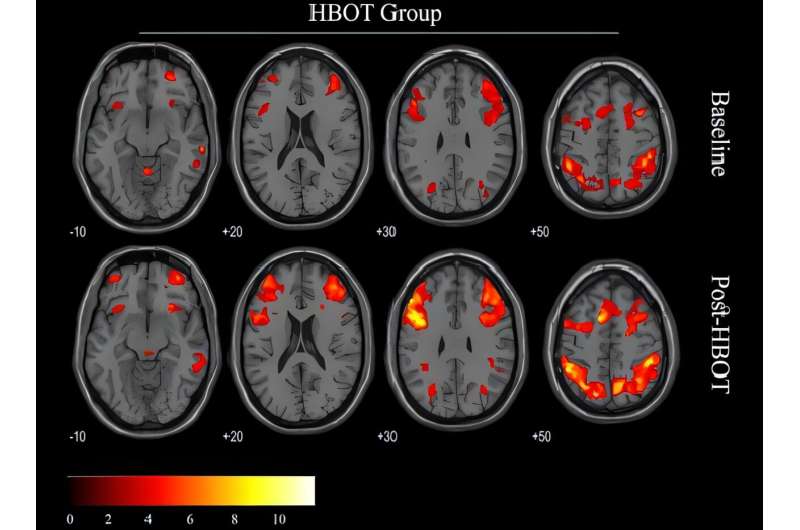
Functional MRI before and after HBOT. Credit: The Shamir Medical Center

Researchers have demonstrated that hyperbaric oxygen therapy (HBOT) improves the condition of PTSD sufferers who have not responded to psychotherapy or psychiatric medications.

Scientists have discovered for the first time a neural mechanism for memory integration that stretches across both time and personal experience. These findings, reported in Nature, demonstrate how memories stored in neural ensembles in the brain are constantly being updated and reorganized with salient information, and represent an important step in deciphering how our memories stay current with the most recently available information.

An international study has found frailty increases a person’s risk of dementia, but early intervention may be the key to prevention.

Neuroscientists have discovered brain cells that form multiple coordinate systems to tell us “where we are” in a sequence of behaviours. The findings help us understand the algorithms used by the brain to flexibly generate complex behaviors, such as planning and reasoning, and might be useful in understanding how such processes go wrong in psychiatric conditions such as schizophrenia.

New research finds that even single bouts of intense exercise can improve cognitive performance in young adults, particularly in memory, attention, and executive functioning. 

By scanning the brains of people while they watched movie clips, neuroscientists have created the most detailed functional map of the brain to date. The fMRI analysis, published in Neuron, shows how different brain networks light up when participants viewed short clips from a range of independent and Hollywood films, including Inception, The Social Network, and Home Alone.

Asthma is associated with memory difficulties in children, and early onset of asthma may exacerbate memory deficits, according to a new study.

Older adults with significant fluctuations in cholesterol levels are at increased risk for dementia and cognitive decline, even without medication changes. Researchers studied nearly 10,000 older adults, tracking their cholesterol levels and cognitive function over six years. High variability in total and LDL (“bad”) cholesterol was associated with a 60% increase in dementia and 23% increase in cognitive decline.

Scientists have successfully reprogrammed astroglia, a type of brain support cell, into neurons that mimic specific interneurons critical for brain function.

Exercise has been shown to improve brain health and reduce the risk of cognitive decline and dementia over the long-term. But engaging in everyday physical activity has immediate benefits for brain health, according to a new study.

A team of researchers has identified a potential biomarker of Parkinson’s disease progression.

New research highlights neuroglia (or glia cells) as critical players in mental health, potentially influencing conditions like depression and schizophrenia. Glia cells, long considered “support cells” in the brain, have now been shown to communicate through unique calcium signaling, impacting neuronal function and stress responses. Studies suggest that compromised astrocyte function, a glial cell type, may relate to depressive symptoms and schizophrenia.

Using deep brain stimulation techniques, neuroscientists are looking for early signals in the brain to help stop seizures.

A study investigated how cannabis use influences metabolomic patterns linked to psychotic-like experiences in adolescents. Blood samples revealed that non-cannabis users showed inflammatory metabolic changes associated with hallucinations, while cannabis users exhibited shifts in energy-related metabolites tied to brain ketogenesis.

Finally this week, a new study links satellite data with brain imaging to reveal how environmental factors like light pollution, green spaces, and urban density affect the mental health and brain development of children.

Weekly Neuroscience Update

Scientists have identified how depression alters the brain’s response to positive and negative stimuli, particularly in the amygdala, a key emotional processing center. The study found that depression reduces neural activity linked to positive perceptions while increasing it for negative perceptions.

People with atrial fibrillation (AF) who have a stroke could benefit from blood thinning treatments, known as anticoagulants, at an earlier stage than is currently recommended, finds a new study.

Researchers from the University of Oxford have identified a key biochemical mechanism relevant to the development of Huntington’s disease. This discovery opens up the possibility of studying the disease before its clinical onset and eventually stopping its progression.

Childhood attention issues, coupled with genetic predispositions, increase the likelihood of experiencing psychotic-like symptoms in adolescence.

UCLA Health researchers have found that people who experienced discrimination had pro-inflammatory bacteria and gene activity in their gut microbiome that was different from those who did not experience discrimination. The researchers could also predict with 91% accuracy which study participants faced discrimination by only analyzing their gut microbiome using stool samples.

A new study links hundreds of brain proteins to differences in how brain regions communicate, revealing how microscale molecules can influence macroscale brain connectivity.

Lifetime cannabis use is associated with several changes in brain structure and function in later life, suggests an observational study, but these associations may not be causal, finds a genetic analysis of the same data, published in the open access journal BMJ Mental Health. Meanwhile, new research shows that prenatal exposure to cannabis can negatively impact children’s thinking and behavioral skills, including impulse control, attention, and aggression.

A type of therapy that involves applying a magnetic field to both sides of the brain has been shown to be effective at rapidly treating depression in patients for whom standard treatments have been ineffective. The treatment—known as repetitive transcranial magnetic stimulation (TMS)—involves placing an electromagnetic coil against the scalp to relay a high-frequency magnetic field to the brain.

Scientists have identified new cell clusters in the amygdala for anxiety treatment.

Just one or two sessions of physical activity at the weekend may be just as likely to lower the risk of cognitive decline, which can often precede dementia, as more frequent sessions, concludes research published online in the British Journal of Sports Medicine.

A new study finds a link between genetic markers and neuropathic pain.

Finally this week, ultrasound, once used almost exclusively to take images of the body, is quickly developing into a targeted therapy that can have a potentially life-changing impact on our brains, according to the authors of a new article.


Weekly Neuroscience Update

mother-84628_960_720

A new study reports babies’ brains are sensitive to different emotional tones they hear in voices. Researchers suggest maternal interactions may help to shape the same brain region adults use for emotional processing.

Researchers report brain alterations associated with heightened feelings of negative emotion and alienation in people who have a dependence on cannabis.

Further evidence that the brain undergoes a continuous phase transition when we awaken from sleep has been discovered.

A new deep learning algorithm can predict those at risk of psychosis with 93% accuracy by examining the latent semantic content of an individual’s speech.

Scientists in Sweden have found that some viruses can increase the buildup of protein ‘plaques’ linked to Alzheimer’s disease, a discovery that could lead to new vaccines treating the condition.

Individual differences in the striatum of habitual cannabis users distinguish between who is at increased risk of addiction and cannabis use disorder.

A new study reports areas of the brain housing alertness and determination may be on the right side for left dominant people. The new theory suggests the location of a person’s neural system for emotion depends on their handedness.

Finally this week, new research shows that 2 hours a week is a key dose of nature for health and wellbeing.


Weekly Neuroscience Update

D56BDDNUwAAxsUD.jpg

Music and mindful music listening may help people who have suffered strokes recover their impaired cognitive abilities more effectively, new research suggests.

The loss of memory and cognitive function known to afflict survivors of septic shock is the result of a sugar that is released into the bloodstream and enters the brain during the life-threatening condition. This finding, published in the Proceedings of the National Academy of Sciences, explains the premature mental aging that follows septic shock and may shed light on memory loss in other diseases.

Researchers have identified a new autoimmune disease that causes muscle pain and weakness.

Scientists used brain signals recorded from epilepsy patients to program a computer to mimic natural speech–an advancement that could one day have a profound effect on the ability of certain patients to communicate.

Scientists have created a “neural decoder” that translates brain activity into speech.

Autism diagnosis becomes stable starting at 14 months of age, researchers report. The accurate diagnosis of ASD, four months earlier than previously believed, leads to more opportunities for early interventions.

A new two-tier diagnostic blood test which evaluates both amyloid beta and tau, can help detect Alzheimer’s disease in presymptomatic patients.

Researchers are officially defining a new brain disorder that mimics Alzheimer’s disease. The disorder will be known as LATE, which stands for limbic-predominant age-related TDP-43 encephalopathy.

Finally this week, a new deep learning algorithm can reliably determine what visual stimuli neurons in the visual cortex respond best to.


Weekly Neuroscience Update

elder-2762529__340

Image: Pixabay

How quickly do we experience the benefits of exercise? A new study of healthy older adults shows that just one session of exercise increased activation in the brain circuits associated with memory – including the hippocampus – which shrinks with age and is the brain region attacked first in Alzheimer’s disease.

Using a unique computational framework they developed, a team of scientist cyber-sleuths has identified 104 high-risk genes for schizophrenia.

Reduced connectivity between the amygdala and ventrolateral prefrontal cortex has been identified in children on the autism spectrum who exhibit disruptive behaviors, compared to those on the spectrum who do not. Findings suggest this distinct brain network could be independent of core autism symptoms.

A specially designed computer program can help diagnose post-traumatic stress disorder (PTSD) in veterans by analyzing their voices.

Using CRISPR-Cas9 gene editing, researchers identified actionable pathways responsible for the growth of glioblastoma stem cells. By reverse engineering brain cancer cells, multiple potential new targets for cancer treatments have been uncovered.

Obesity is associated with alterations in brain structure, including lower grey matter volume and smaller globus pallidus volume according to new research. 

Researchers have found certain clues in the brain waves that show the reason why angry dreams occur when a person sleeps. The results of the study titled, “EEG Frontal Alpha Asymmetry and Dream Affect: Alpha Oscillations Over the Right Frontal Cortex During REM Sleep and Pre-Sleep Wakefulness Predict Anger in REM Sleep Dreams,” were published in the Journal of Neuroscience.

People with the specific genotype of the Cannabinoid receptor 1 gene may be more prone to cannabis use disorder.

A rapid memory system transition from the hippocampus to the posterior parietal cortex is stabilized as we sleep. Sleep and repeated rehearsal of memory jointly contribute to long-term memory consolidation.

A new study confirms that a simple blood test can reveal whether there is accelerating nerve cell damage in the brain. 

Finally, this week, using a combination of movie clips and neuroimaging, researchers find people have positive biases to those they feel are more like them, even if they are unable to see the person’s face.

Weekly Neuroscience Update

sleep-55792_960_720

Contrary to a popular theory, researchers have discovered the brain remains connected during non-REM sleep. The study reports not all forms of communication within the cerebral cortex are disrupted during this sleep phase.

Breathing is not just for oxygen; it’s now linked to brain function.

UCLA neuroscientists are the first to show that rhythmic waves in the brain called theta oscillations happen more often when someone is navigating an unfamiliar environment, and that the more quickly a person moves, the more theta oscillations take place — presumably to process incoming information faster.

Researchers have identified a brain network that allows the brain to record memories of new places.

A new study reveals deep brain stimulation not only improves motor function, but can also increase survival rates for those with Parkinson’s disease.

A build up of urea in the brain to toxic levels may cause brain damage, eventually leading to dementia, a new study reports.

A new method to measure brain connectivity has found that people with depression have changes in the brain systems involved in memory and reward.

Researchers have developed a single cell sequencing method that can map the cellular origin of a wide variety of neurological and psychiatric disorders.

Finally this week, a new study reveals why some people find it more difficult than others to meet switching demands and change focus as efficiently.

Weekly Neuroscience Update

An experimental therapy which involves a face-to-face discussion between a person with schizophrenia and an avatar representing their auditory hallucination may help reduce symptoms, when provided alongside usual treatment, according to a study led by King’s College London and published in The Lancet Psychiatry journal.

Researchers have identified a number of variable locations in the genome that influence hippocampal gene activity and may contribute to brain disorders.

For the first time, scientists have found a connection between abnormalities in how the brain breaks down glucose and the severity of the signature amyloid plaques and tangles in the brain, as well as the onset of eventual outward symptoms, of Alzheimer’s disease.

A new study reports the rhythm of your breathing can influence neural activity that enhances memory recall and emotional judgment.

The amount of close and comforting contact between infants and their caregivers can affect children at the molecular level, an effect detectable four years later, according to new research.

The brain’s auditory system can be shaped by exposure to different auditory environments, such as native language and musical training.

Contrary to a popular theory, a new study has discovered the brain remains connected during non-REM sleep. The study reports not all forms of communication within the cerebral cortex are disrupted during this sleep phase.

Cannabis use in youth is linked to bipolar symptoms in young adults, finds new research.

According to researchers, when shifting attention from one spot to another, the brain blinks. They report these blinks are momentary unconscious gaps in visual perception.

How well we are able to complete simple and complex tasks depends upon the organization of subnetworks in the brain, a new study reports.

Researchers are working to create a neurochip capable of transmitting a signal to healthy brain cells. The neurochip can be used in devices intended to replace damaged parts of the brain.

A new brain mapping study reveals smokers could be predisposed to their addiction due to the molecular make up of their brains.

In a new study, researchers describe a unique model for the biology of Alzheimer’s disease which may lead to an entirely novel approach for treating the disease. The findings appear in the journal Nature Neuroscience.

Scientists hope to have found a new neurobiological marker to help recognise patients with post-traumatic stress disorder (PTSD).

Researchers have identified a mechanism that drives hunger. A new study reports the sight or smell of food can temporarily turn of AgRP neurons, which drive the urge to eat. These neurons remain inactive until the brain receives a signal from the gut that calories have been consumed.

Finally this week, a new study reports that certain brain regions interact more closely, while others are less engaged, in people with higher intelligence.

Weekly Neuroscience Update

short-term-memory-visual-distractions

John Gaspar, an SFU psychology doctoral student, places 128 electrodes into a cap. The electrodes will pick up tiny changes in the wearer’s brain activity. Image is adapted from the SFU press release.

A new study has found that differences in an individual’s working memory capacity correlate with the brain’s ability to actively ignore distraction.

A research team has connected neurons using ultrashort laser pulses. With their study, which was published in Scientific Reports, the team became the first ever to find a way to bond neurons.

Physicians and biomedical engineers from Johns Hopkins report what they believe is the first successful effort to wiggle fingers individually and independently of each other using a mind-controlled artificial “arm” to control the movement.

Researchers have identified a gene which can be used to predict how susceptible a young person is to the mind-altering effects of smoking cannabis.

Young adults with hostile attitudes or those who don’t cope well with stress may be at increased risk for experiencing memory and thinking problems decades later, according to a study published in the March 2, 2016, online issue of Neurology.

Researchers have found how lactate, a waste product of glucose metabolism can protect neurons from damage following acute trauma such as stroke or spinal cord injury.

Neuroscientists have discovered a specific enzyme that plays a critical role in spinal muscular atrophy, and that suppressing this enzyme’s activity, could markedly reduce the disease’s severity and improve patients’ lifestyles.

Birds that migrate the greatest distances have more new neurons in the regions of the brain responsible for navigation and spatial orientation, suggests a new paper published in Scientific Reports.

Scientists have now described the engineering of a bright red fluorescent protein-based voltage indicator, providing pathways to understanding complex neurological disorders.

Children with autism and other similar conditions often have difficulties in several areas of communication. A new doctoral thesis in linguistics from the University of Gothenburg shows that these children can develop speech, gestures and a sense of rhythm and melody by listening to various speech sounds.

Finally this week,  new research suggests that small numbers are processed in the right side of the brain, while large numbers are processed in the left side of the brain.