Weekly Neuroscience Update

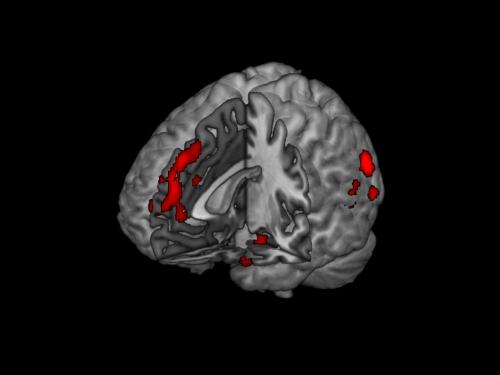
Crime films, action films, comedies, or documentaries? A person’s favourite film genre reveals a lot about how their brain works. This is the finding of a new study that compared data on film preferences with recordings of the brain activity of around 260 people.

Using functional magnetic resonance imaging (fMRI), neuroscientists have identified several regions of the brain that are responsible for processing language.

Certain regions of the brain show changes during the early stages after quitting drinking that may contribute to increased anxiety and relapse rates in people attempting recovery from alcohol use disorder, according to a recent study.

A research team has found evidence suggesting that minor brain injuries that occur early in life, may have health impacts later on.

Scientists have discovered a mutation in SARS-CoV-2, the virus that causes COVID-19, that plays a key role in its ability to infect the central nervous system. The findings may help scientists understand its neurological symptoms and the mystery of “long COVID,” and they could one day even lead to specific treatments to protect and clear the virus from the brain.

Scientists have identified how gene variations lead to brain changes associated with essential tremor, a common movement disorder affecting over 60 million people worldwide.

A new study reveals that non-cognitive skills like motivation and self-regulation are as crucial as intelligence in determining academic success. These skills, influenced by both genetics and environment, grow increasingly important throughout a child’s education.

Researchers have developed an innovative device that can diagnose glioblastoma, an aggressive brain cancer, in under an hour using a novel biochip.

A recent study investigates how the brain reacts to different types of love, ranging from parental to romantic, through sophisticated imaging methods. The findings indicate that the love for one’s children elicits the strongest brain response, particularly within the reward system.

Researchers have developed a system that detects genetic markers of autism in brain images with 89-95% accuracy, potentially enabling earlier diagnosis and treatment.

In a small pilot study, researchers used a new closed-loop system to measure the electrical brain patterns of individual patients and then stimulate those patterns with a weak electrical current, resulting in significantly improved symptoms of major depressive disorder.

A deeper understanding of the communication inside the body when someone is going through opioid withdrawal has led to a new clinical trial at the University of Calgary.

Researchers have developed a brain-inspired AI technique that utilizes neural networks to model the complex quantum states of molecules, which are essential for technologies such as solar panels and photocatalyst.

Finally this week, a new finding could open doors to new treatments for a range of psychiatric and neurological disorders attributed to dysfunctions in specific dopamine pathways.


Weekly Neuroscience Update

The place-memory network of the human brain, compared with the brain areas that process visual scenes (white). Credit: A.Steel et al.

Researchers have identified three areas of the posterior cerebral cortex that bridge the brain’s perception and memory systems.

A new study reveals that being overweight or obese significantly reduces blood flow in the brain. The study also shows that increased physical activity can positively modify, or even negate, this reduction in brain blood flow.

Soccer players who feel anxious at the thought of kicking a penalty kick and who miss the goal show more activity in the prefrontal cortex. Overthinking the shot, researchers say, could play a role in missing a goal.

Non-invasive neuromodulation delivered via low-intensity focused ultrasound can have cell-type-specific selectivity in manipulating neurons.

People born into families with members who live longer lives show better cognitive performance and a slower decline in cognitive processing speed as they age.

A new neuroimaging technique captures the brain in motion in real-time, generating a 3D view and with improved detail. The new technology could help clinicians to spot hard-to-detect neurological conditions.

Researchers found in a recent study that modulation of map-like representations in our brain’s hippocampal formation can predict contextual memory retrieval in an ambiguous environment.

A new study reports on an association between specific gut bacteria species and the manifestation of neurodegenerative disorders.

New research reveals why sleep can put people with epilepsy at increased risk of sudden death.

A new study uncovers the genetic architecture of progression and prognosis, identifying five genetic locations (loci) associated with progression. The team also developed the first risk score for predicting progression of PD over time to dementia (PDD), a major determinant of quality of life.

A newly developed artificial intelligence algorithm can accurately and reliably assess unconsciousness in patients under anesthesia based on brain activity.

Damage to highly connected regions of white matter in the brain following injury is more predictive of cognitive impairment than damage to highly connected gray matter hubs.

The cerebellum underwent evolutionary changes that may have contributed to the development of language, culture, and tool use in humans, a new study reveals.

A new study sheds light on how highly sensitive people process information. After experiencing something emotionally evocative, brain activity displayed a depth of processing while at rest. Depth of processing is a key feature of high emotional sensitivity.

Researchers have uncovered molecular clues that help explain what makes some neurons more susceptible than others in Alzheimer’s disease.

Finally this week tking a daily prebiotic supplement improves general wellbeing, reduces symptoms of anxiety, and promotes better gut health, a new study reports.

Weekly Neuroscience Update

sleep-55792_960_720.jpg

Researchers report people with poor sleep quality were less likely to experience symptoms of depression if they had higher activity in the ventral striatum.

A new study, published in the open-access journal Frontiers in Human Neuroscience, has uncovered a simple, measurable explanation that can determine your preference for one song over another.

Almost a quarter of girls and one-tenth of boys show signs of depression at age 14, say researchers from the University College London.

Excessive neurogenesis following brain injury may lead to neurological problems and cognitive decline researchers report. The findings challenge common assumptions that excessive brain cell growth following injury is advantageous.

Whether we are consciously aware of seeing a familiar face and object or not, our brains actively notice

A new study has investigated which neurons react to different vocal pitches, discerning between different voices and reacting to emphasis. The findings help us to understand how the brain gains meaning from the sound of speech.

A new report examines the effect stress can have on our bodies and general health.

Finnish researchers have revealed that exercise-induced endorphin release in the brain depends on the intensity of the exercise. Endorphin release induced by exercise may be an important mechanism which affects exercise motivation and maintenance of regular physical activity.

Researchers reveal people who report higher levels of moral reasoning show increased activity in brain areas associated with reward. 

Finally this week, for most people, laughter is highly contagious. But researchers reporting in Current Biology on September 28 have new evidence to show that boys at risk of developing psychopathy when they become adults don’t have that same urge.


Weekly Neuroscience Update

adobe-spark-81

Practicing paying attention can boost performance on a new task, and change the way the brain processes information, a new study says. This might explain why learning a new skill can start out feeling grueling, but eventually feels more natural — although right now, the study’s findings are limited to a simple pattern-recognition game.

A new study reports traumatic brain injury is associated with a higher risk of developing dementia in people of working age.

According to researchers, the ability to assess memory quality appears in children, and metamemory continues to improve beyond childhood into adolescence. The findings could provide new insights into effective learning methods and assist teachers to devise new educational strategies.

Researchers report harmful plaques associated with Alzheimer’s disease may build up in the brain as a result of high blood pressure and decreased cerebral blood flow.

A new paper may help answer some questions as to why some infants die suddenly. Looking at blood samples from infants who had died of SIDS, researchers discover 31% of the children had elevated levels of serotonin. The researchers concluded that abnormal serotonin metabolism could indicate an underlying vulnerability that increases SIDS risk.

Using musical cues to learn a physical task significantly develops an important part of the brain, according to a new study.

Poor sleep may be a sign that people who are otherwise healthy may be more at risk of developing Alzheimer’s disease later in life than people who do not have sleep problems, according to a study published in Neurology. Researchers have found a link between sleep disturbances and biological markers for Alzheimer’s disease found in the spinal fluid.

A new study reports that listening to something while looking in a different direction may slow reaction times and increase the effort for auditory attention.

Finally, this week, higher intelligence (IQ) in childhood is associated with a lower lifetime risk of major causes of death, including heart disease, stroke, smoking-related cancers, respiratory disease and dementia, finds a study published by The BMJ.

Weekly Neuroscience Update

iphone-1283665_960_720

Sending text messages on a smartphone can change the rhythm of brain waves, according to a new study published in Epilepsy & Behavior.

An international research team has found that our perception is highly sensitised for absorbing social information. The brain is thus trained to pay a great degree of attention to everyday actions. The results are reported in the journal Consciousness and Cognition.

A new study unravels the mechanisms driving excess brain growth that affects as many as 30 percent of people with autism.

Researchers have developed a new technology that could lead to new therapeutics for traumatic brain injuries. The discovery, published in Nature Communications, provides a means of homing drugs or nanoparticles to injured areas of the brain.

Researchers have coupled machine learning with neuroimaging to detect early forms of dementia.

Neuroscientists have come up with a way to observe brain activity during natural reading. It’s the first time researchers have been able to study the brain while reading actual texts, instead of individual words. The research has potential implications for understanding dyslexia and other reading deficits.

A new study links hippocampal inflammation in multiple sclerosis with an increased risk of developing depression.

In a partnership melding neuroscience and electrical engineering, researchers have developed a new technology that will allow neuroscientists to capture images of the brain almost 10 times larger than previously possible – helping them better understand the behavior of neurons in the brain.

Researchers report acquiring new memories can interfere with old ones, making them more likely to be forgotten.

A European study has shown that the dopamine D2 receptor is linked to the long-term episodic memory, which function often reduces with age and due to dementia. This new insight can contribute to the understanding of why some but not others are affected by memory impairment. The results have been published in the journal PNAS.

Finally this week, a new study shows how new linguistic information is integrated into the same brain areas used for your native language.

Weekly Neuroscience Update

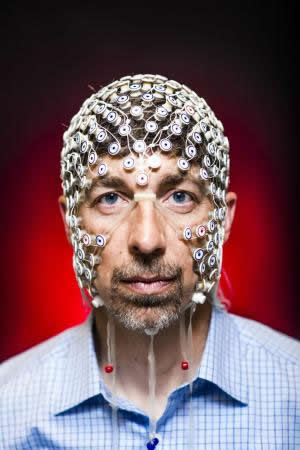
Electrical and computer engineering professor Barry Van Veen wears an electrode net used to monitor brain activity via EEG signals. His research with psychiatry professor and neuroscientist Giulio Tononi could help untangle what happens in the brain during sleep and dreaming. Credit Nick Berard.

Electrical and computer engineering professor Barry Van Veen wears an electrode net used to monitor brain activity via EEG signals. His research with psychiatry professor and neuroscientist Giulio Tononi could help untangle what happens in the brain during sleep and dreaming. Credit Nick Berard.

As real as that daydream may seem, its path through your brain runs opposite reality. Aiming to discern discrete neural circuits, researchers at the University of Wisconsin-Madison have tracked electrical activity in the brains of people who alternately imagined scenes or watched videos.

People with mentally taxing jobs, including lawyers and graphic designers, may end up having better memory in old age, research suggests.

Researchers at the RIKEN Brain Science Institute in Japan have identified a key neuronal pathway that makes learning to avoid unpleasant situations possible. Published online in the November 20 issue of Neuron, the work shows that avoidance learning requires neural activity in the habenula representing changes in future expectations.

Combining behavioral and physiologic measures depicts gradual process, may help diagnose sleep disorders. 

Neurophysicists have found that space-mapping neurons in the brain react differently to virtual reality than they do to real-world environments. Their findings could be significant for people who use virtual reality for gaming, military, commercial, scientific or other purposes.

New brain imaging technology is helping researchers to bridge the gap between art and science by mapping the different ways in which the brain responds to poetry and prose.

As methods of imaging the brain improve, neuroscientists and educators can now identify changes in children’s brains as they learn, and start to develop ways of personalizing instruction for kids who are falling behind.

Scientists have identified a weak spot in the human brain for Alzheimer’s disease and schizophrenia, revealing a connection between the two diseases.

A team of scientists has found a simple method to convert human skin cells into the specialized neurons that detect pain, itch, touch and other bodily sensations. These neurons are also affected by spinal cord injury and involved in Friedreich’s ataxia, a devastating and currently incurable neurodegenerative disease that largely strikes children.

Berkeley lab reports proper copper levels are essential to spontaneous neural activity.

Researchers are using an enhanced MRI approach to visualize brain injury in the blood brain barrier in order to identify significant changes to the blood-brain barrier in professional football players following a concussion.

A new study reports that older learners retained the mental flexibility needed to learn a visual perception task but were not as good as younger people at filtering out irrelevant information.

Finally this week, in the largest study of the genetics of memory ever undertaken, an international researcher team have discovered two common genetic variants that are believed to be associated with memory performance. The findings, which appear in the journal Biological Psychiatry, are a significant step towards better understanding how memory loss is inherited.


Death Of Cricketer Phillip Hughes: Why Are Some Brain Injuries Worse Than Others?

Australian cricketer, Phillip Hughes.

Australian cricketer, Phillip Hughes.

Australian cricketer Phillip Hughes has died two days after being struck in the head by a bouncer while batting for South Australia at the The Sydney Cricket Ground. Hughes, 25, had been in an induced coma since the accident on Tuesday afternoon.

Two of the most tragic events within Australian cricket in just over the past decade have involved catastrophic head injuries: firstly to David Hookes in a hotel altercation, secondly to Phillip Hughes while batting. According to research published in The Lancet, approximately a fifth of adults with a severe traumatic brain injury make a good recovery. But many more die or are left with enduring disability.  

So why are some brain injuries worse than others?

The effects of brain injury fall into three main categories:

  • Cognitive – problems with memory, concentration, information processing
  • Emotional and behavioural problems – anxiety, explosive anger and irritability, lack of awareness or empathy
  • Physical – problems with movement, balance and co-ordination, fatigue, epilepsy

Sometimes a head injury which seems severe is followed by a good recovery while a seemingly small head injury can have very serious, long-lasting consequences.  Why is this?

Location, location, location.

The reason is that brain injury operates a bit like the property market in that the three most important things to consider are location, location and location. When nerve pathways are damaged, those brain areas served by those pathways may wither or have their functions taken over by other brain regions. Nerve pathways are also called ‘white’ pathways or ‘white matter’ because they are covered by an insulating sheath of myelin and appear white to the naked eye.

The challenge is to determine the location of key ‘scaffold’ pathways and to understand what makes them so vulnerable and important. This is not an easy task given the total length of nerve pathways in the average 20-year old human brain is 160,000 km. A recent study provides new findings on the brain’s network scaffold that will help inform clinicians about the neurological impacts of brain diseases such as multiple sclerosis, Alzheimer’s disease and brain injury.


Weekly Neuroscience Update

EvC dwarfism results from genetic mutations that disrupt the signaling pathway known as sonic hedgehog (Shh). Statistical analyses confirmed the significant negative association between EvC and bipolar disorder. This further suggested that the Shh pathway plays a role in bipolar disorder. This image is for illustrative purposes only and shows the 3D structure of the Sonic Hedgehog protein. Credit Peter Znamenskiy/ Hall et al.

EvC dwarfism results from genetic mutations that disrupt the signaling pathway known as sonic hedgehog (Shh). Statistical analyses confirmed the significant negative association between EvC and bipolar disorder. This further suggested that the Shh pathway plays a role in bipolar disorder. This image is for illustrative purposes only and shows the 3D structure of the Sonic Hedgehog protein. Credit Peter Znamenskiy/ Hall et al.

Researchers have identified what is likely a key genetic pathway underlying bipolar disorder, a breakthrough that could lead to better drugs for treating bipolar affective disorder, as well as depression and other related mood disorders.

Hubs are locations in the brain where different networks come together to help us think and complete mental tasks. Now, a new study offers a fresh view of how injury affects the brain. It finds damage to brain hubs disrupts our capacity to think and adapt to everyday challenges more severely than damage to locations distant from hubs.

Neuroscientists have found that a gene mutation that arose more than half a million years ago may be key to humans’ unique ability to produce and understand speech.

A paper published this month in Biological Psychiatry shows that children who spent their early years in these institutions have thinner brain tissue in cortical areas that correspond to impulse control and attention.

Researchers have found vital new evidence on how to target and reverse the effects caused by one of the most common genetic causes of Parkinson’s.

Neuroscientists and engineers at North Carolina’s Duke University have pioneered a method with which the effects of transcranial magnetic stimulation (TMS) on the brain can be measured. The Duke team has made it possible to measure the response of a single neuron to an electromagnetic charge–something that has not before been possible. The work offers the potential to improve and initiate novel TMS therapy approaches.

Weekly Neuroscience Update

Neuroscience research demonstrates that the brain regions underpinning moral judgment share resources with circuits controlling other capacities such as emotional saliency, mental state understanding and decision-making. Credit: Jean Decety

Neuroscience research demonstrates that the brain regions underpinning moral judgment share resources with circuits controlling other capacities such as emotional saliency, mental state understanding and decision-making. Credit: Jean Decety

People who care about justice are swayed more by reason than emotion, according to new brain scan research from the Department of Psychology and Center for Cognitive and Social Neuroscience. Researchers have discovered a gene that is likely to play a role in the risk of psychosis in bipolar disorders.

A new way to artificially control muscles using light, with the potential to restore function to muscles paralysed by conditions such as motor neuron disease and spinal cord injury, has been developed by scientists at UCL and King’s College London.

Researchers at the University of California, San Diego School of Medicine and the Allen Institute for Brain Science have published a study that gives clear and direct new evidence that autism begins during pregnancy.

A new study is the first documented study that shows cognitive behavioral therapy in a group setting is capable of changing the brain structure in patients with chronic pain.

By examining the sense of touch in stroke patients, a University of Delaware cognitive psychologist has found evidence that the brains of these individuals may be highly plastic even years after being damaged.

A new chemical messenger that is critical in protecting the brain against Parkinson’s disease has been identified by scientists.

Scents and smells can form the basis of some of the most significant memories humans form in their lives, a new study suggests

In the first study of its kind, two researchers have used popular music to help severely brain-injured patients recall personal memories.

Why Are Some Brain Injuries Worse Than Others?

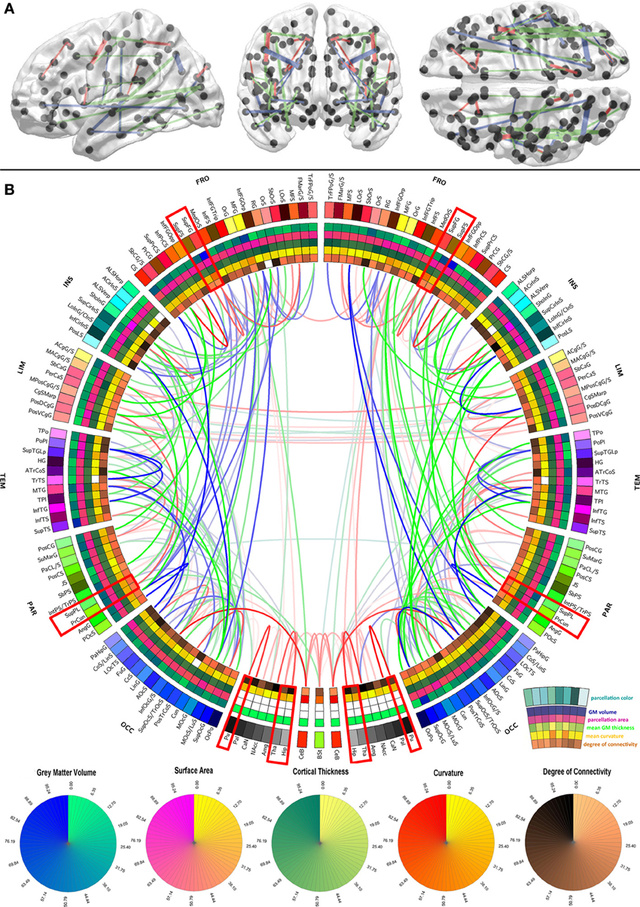
Image A: 3-D models of how the white matter in the brain connects, paired with a "connectogram" visualizing linkages between different areas of the brain / USC

3-D models of how the white matter in the brain connects, paired with a “connectogram” visualizing linkages between different areas of the brain / USC

According to research published in The Lancet, approximately a fifth of adults with a severe traumatic brain injury make a good recovery. But many more die or are left with enduring disability. Although doctors caring for Michael Schumacher, the Formula One World Champion who sustained a severe head injury while skiing, haven’t commented on how he is responding to their latest tests and treatment, Dr Peter Kirkpatrick, a leading British neurosurgeon based at Addenbrooke’s hospital in Cambridge, says that it is “extremely unlikely” that Schumacher will return to his previous level of health, although he insists it is “medically possible”.

The effects of brain injury fall into three main categories:

  • Cognitive – problems with memory, concentration, information processing
  • Emotional and behavioural problems – anxiety, explosive anger and irritability, lack of awareness or empathy
  • Physical – problems with movement, balance and co-ordination, fatigue, epilepsy

Sometimes a head injury which seems severe is followed by a good recovery while a seemingly small head injury can have very serious, long-lasting consequences.  Why is this?

Location, location, location.

The reason is that brain injury operates a bit like the property market in that the three most important things to consider are location, location and location. When nerve pathways are damaged, those brain areas served by those pathways may wither or have their functions taken over by other brain regions. Nerve pathways are also called ‘white’ pathways or ‘white matter’ because they are covered by an insulating sheath of myelin and appear white to the naked eye.

The challenge is to determine the location of key ‘scaffold’ pathways and to understand what makes them so vulnerable and important. This is not an easy task given the total length of nerve pathways in the average 20-year old human brain is 160,000 km. A recent study provides new findings on the brain’s network scaffold that will help inform clinicians about the neurological impacts of brain diseases such as multiple sclerosis, Alzheimer’s disease and brain injury.