Weekly Neuroscience Update

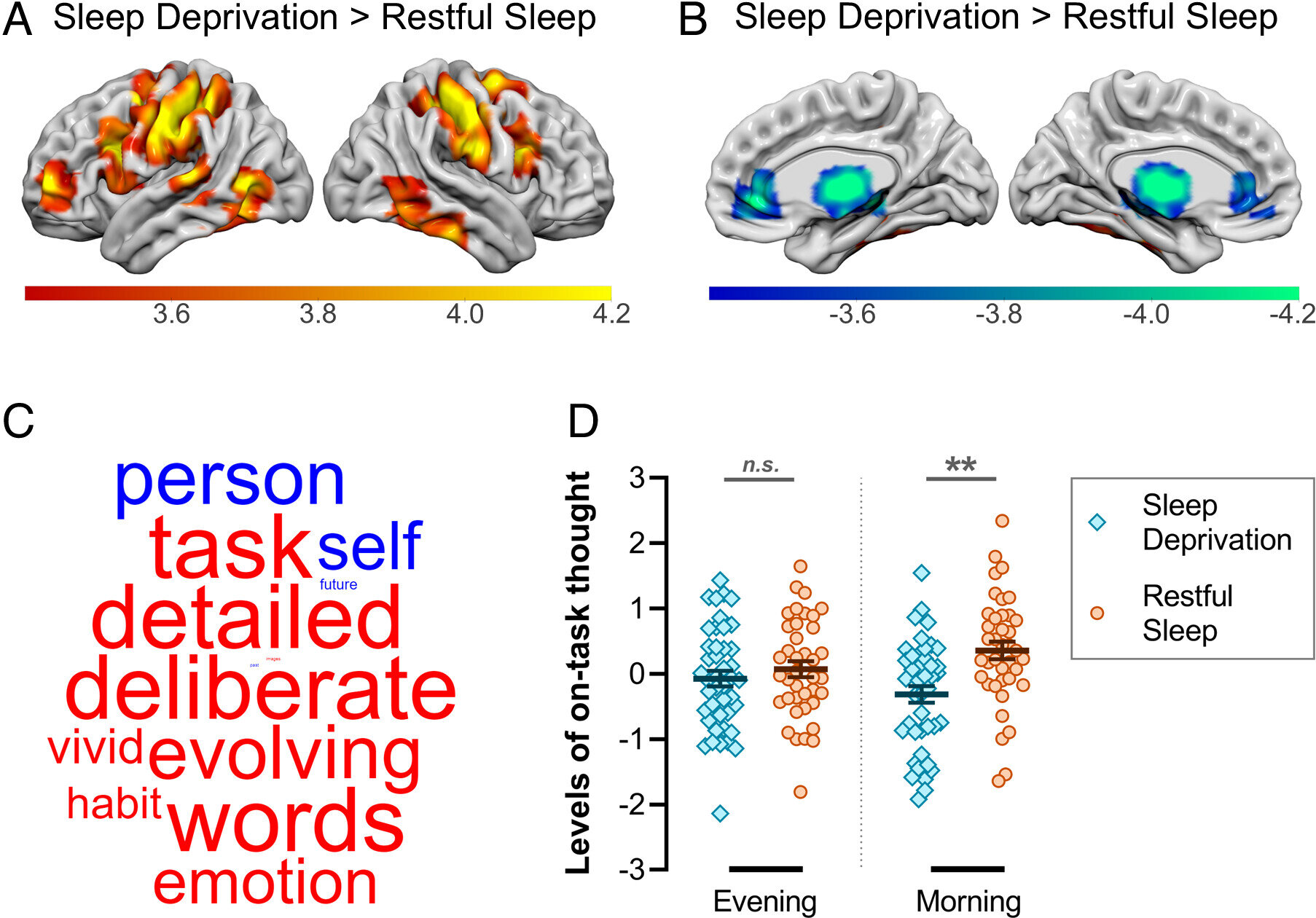
Credit: Proceedings of the National Academy of Sciences (2024). 

The link between poor sleep and mental health problems could be related to deficits in brain regions that keep unwanted thoughts out of the mind, according to hew research.

Researchers from Trinity College Dublin have collaborated with international partners to explore if societal inequality affects the brain. The study reveals a direct link between structural inequality—such as socioeconomic disparities measured by a country-level index (GINI)—and changes in brain structure and connectivity associated with aging and dementia.

New research has explained how the body’s internal clock influences the inflammatory process of the immune system.

Researchers used AI to analyze brain images from 70-year-olds, estimating their biological brain age and uncovering connections to lifestyle and health factors. Diabetes, inflammation, and high glucose levels were linked to older-looking brains, while regular exercise and healthy habits were associated with younger-looking brains.

An international research team, including researchers at Karolinska Institutet, has mapped the genes expressed in the brain cells of people with multiple sclerosis.

Gestational hypertension, preeclampsia, and eclampsia are associated with an increased risk for neurological outcomes in the months or years after giving birth, according to a recent study published in JAMA Neurology.

People with breathing problems during sleep may have a larger hippocampus, the area of the brain responsible for memory and thinking, according to a new study.

Researchers have discovered a connection between Alzheimer’s disease and herpes simplex virus-1 (HSV-1), suggesting viral infections may contribute to neurodegeneration. The study found that tau protein, typically seen as harmful in Alzheimer’s, might initially protect the brain from the virus but later exacerbate damage.

COVID-19 infection is not associated with immediate changes in multiple sclerosis (MS) symptom severity or disability, according to a study published in Neurology.

A study of nearly 10,000 adolescents found that those who initiated substance use before age 15 exhibited distinct differences in brain structures compared to their peers. Many of these differences were present before substance use, suggesting a role in predisposing factors like genetics and environment.

A new study reveals that humans think at a rate of 10 bits per second, while sensory systems process a billion bits per second—100 million times faster. 

New research in epigenetics reveals how early-life experiences influence gene expression and brain development. By bridging the gap between nature and nurture, this work shows that environmental factors leave lasting biological imprints, shaping long-term health and resilience.

For patients with neurodevelopmental disorders, a genomics-informed model can provide clinical benefits, directly affecting management, according to a new study.

A new “molecular lantern” technique allows researchers to monitor molecular changes in the brain non-invasively using a thin light-emitting probe. This innovative tool utilizes Raman spectroscopy to detect chemical changes caused by tumors, injuries, or other pathologies without altering the brain beforehand.

Finally this week, researchers have found that the pupil is key to understanding how, and when, the brain forms strong, long-lasting memories.
Weekly Neuroscience Update

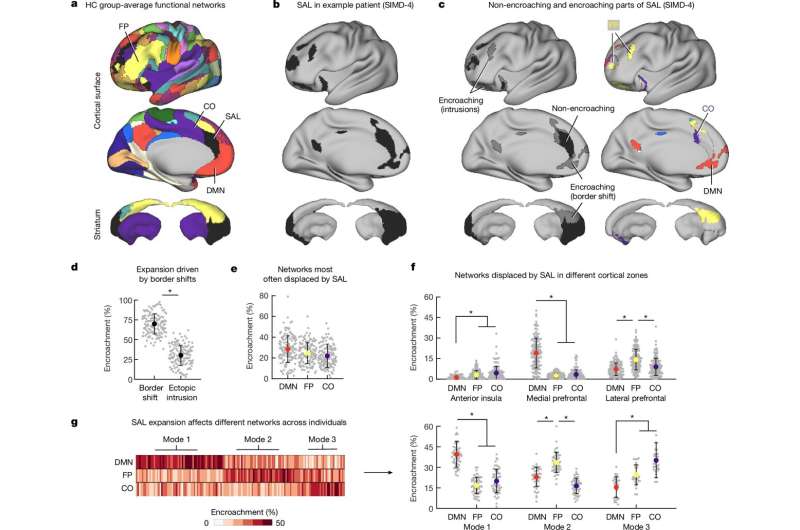
Three modes of salience network expansion in depression. Credit: Nature (2024)

By repeatedly scanning the brains of a small group of patients for a year and a half, researchers have identified a distinct pattern of neuronal interactions that appears to predispose some people to developing depression.

A new study reveals that higher levels of inequality—whether economic, environmental, or health-related—are associated with faster brain aging, particularly in countries with greater disparities

Researchers have published a new clinical protocol examining the combination of aerobic exercise and cognitive rehabilitation to improve learning and memory in individuals with multiple sclerosis (MS) who have mobility disability.

A new study reveals that the protein Tau – a key player implicated in several neurodegenerative conditions including Alzheimer’s disease – also plays a positive role in the brain.

Scientists have revealed new insights into the mechanisms behind cerebral small vessel disease, a condition that affects the smaller blood vessels in the brain and causes approximately half of all dementia cases.

Sports-related concussions may not be associated with long-term cognitive risks for non-professional athletes, a new study suggests.

Researchers have discovered that the Tau protein, often linked to neurodegenerative diseases like Alzheimer’s, also has a protective role in the brain. Tau helps combat oxidative stress by aiding in the formation of lipid droplets in glial cells, which sequester toxic lipids and protect neurons.

Scientists have developed an integrated optical sensor capable of detecting dopamine directly from an unprocessed blood sample.

A recent study has mapped genes linked to schizophrenia and uncovered a mechanism that disrupts synaptic plasticity in affected individuals. The researchers showed the role of three proteins in mediating the impairments of plasticity in schizophrenia. The findings may hold promise for the development of new treatments.

Finally this week, researchers have identified a protein called OSER1 that plays a key role in regulating longevity, offering new insights into why some people live longer than others. 

Weekly Neuroscience Update

Credit: Nature (2023)

A new study has identified the link between memory and appetite.

Scientists have made a ‘paradigm shifting’ discovery on the mechanisms required for learning and memory that could lead to new therapies for Alzheimer’s disease and potentially Down syndrome.

Researchers have analyzed which physiological indicators recorded when watching a movie can predict the audience’s assessment. It turned out that the activity of zygomaticus major (the “smiling muscle”), heart rate variability and EEG indicators can tell us most about the viewer’s impression of the movie.

The largest genetic study of its kind has discovered specific changes in our DNA that increase the risk of developing epilepsy.

Researchers found that the skin, not pre-existing genetic programming, instructs nerve cells on how to mature for specific sensory tasks. The findings showcase that skin cues determine whether nerve endings develop to detect sensations in hairy or hairless skin. If corroborated by further research, this discovery could pave the way for therapies to mend damaged nerves or better comprehend congenital neuropathies.

A new study has explored the link between infant birthweight, gestational age and future cognitive problems.

Researchers have successfully developed temporary, organic electrodes that can be seamlessly integrated into biological systems. The method opens up a future where bioelectronics can be implanted in and removed from the body without surgery.

New research shows wildfire smoke impacts on the brain.

A new study has found that, among a sample of 152 young athletes exposed to repetitive head impacts (RHI) who were under age 30 at the time of death, 41.4% (63) had neuropathological evidence of CTE, a degenerative brain disease caused by RHI.

New research supports the idea that the brains of older adults who maintain physical fitness by engaging in regular strenuous exercise more closely resemble those of younger adults.

Researchers have succeeded in transforming brain signals into audible speech. By decoding signals from the brain through a combination of implants and AI, they were able to predict the words people wanted to say with an accuracy of 92 to 100%. Their findings are published in the Journal of Neural Engineering.

Finally this week, a virtual reality study has revealed a link between a sense of presence and cognitive abilities.

Weekly Neuroscience Update

autism-body-clock-neurosciencnews.jpg

Image Source: RIKEN

Researchers report the hierarchy of intrinsic neural timescales appears to be disrupted in adults on the autism spectrum. 

A new study reveals teenage binge drinking can result in lasting epigenetic changes that alter the expression of BDNF-AS, a protein vital for the formation of neural connection in the amygdala.

Researchers shed light on the neural networks that appear to govern human consciousness.

Scientists report the popular bodybuilding protein supplement, L-norvaline, can have a negative impact on brain health. Researchers found that in low concentrations, the supplement causes damage to neurons which eventually leads to cell death.

A new study finds cannabis use in teens is associated with a higher risk of developing depression and anxiety as adults.

According to researchers, there is an optimum amount of dopamine that should be present within the brain. This optimum amount can help improve cognitive performance on tasks, researchers report.

A new study reveals the somatosensory cortex plays a complex role in memory and reward learning.

Scientists report EEG technology can help to predict the onset of epileptic seizures up to four minutes in advance. Additionally, acetate, an edible acid, may help to prevent seizures if they are detected with enough notice.

Teenagers suffering with depression may struggle with recalling specific memories, according to new research from the University of Reading.

A new study reveals women’s brains tend to appear three years younger than males of the same age. Researchers report this could be a reason why women tend to remain mentally sharp longer than men.

A new prosthetic hand enables amputees to regain a subtle, close to natural, sense of touch.

Finally this week, new research reports that older adults who exercise by using electric bicycles experience comparable cognitive and mental health benefits to those who use a standard, pedal-powered bike.

Weekly Neuroscience Update


d41586-018-01290-0_15417716.jpg

Neurons store and transmit information in the brain.Credit: CNRI/SPL

Superconducting computing chips modeled after neurons can process information faster and more efficiently than the human brain.  

New research published in JAMA Neurology suggests that those people whose memory is intact and who do not show any signs of Alzheimer’s can have disrupted circadian rhythms — which may be a very early sign of Alzheimer’s.

Stimulating specific regions of the brain can help to improve memory and word recall in those with severe epilepsy, a new Nature Communications study reports.  

Gene therapies promise to revolutionize the treatment of many diseases, including neurological diseases such as ALS. But the small viruses that deliver therapeutic genes can have adverse side effects at high doses. Researchers have now found a structure on these viruses that makes them better at crossing from the bloodstream into the brain – a key factor for administering gene therapies at lower doses for treating brain and spinal disorders.

Researchers discover the activity of 80 percent of genes follow a day/night rhythm in many tissue types and brain regions. 

Aging or impaired brains can once again form lasting memories if an enzyme that applies the brakes too hard on a key gene is lifted, according to University of California, Irvine neurobiologists.

Researchers have implicated mossy cells in both seizures and memory problems in those with temporal lobe epilepsy. 

Increasing evidence has linked autism spectrum disorder (ASD) with dysfunction of the brain’s cerebellum, but the details have been unclear. In a new study, researchers at Boston Children’s Hospital used stem cell technology to create cerebellar cells known as Purkinje cells from patients with tuberous sclerosis complex (TSC), a genetic syndrome that often includes ASD-like features. In the lab, the cells showed several characteristics that may help explain how ASD develops at the molecular level.

Finally this week, neuroscientists have discovered how the brain can determine an object’s value almost as soon as we see it.

Weekly Neuroscience Update

A growing body of evidence suggests that learning to play an instrument and continuing to practice and play it may offer mental benefits throughout life. Hearing has also been shown to be positively affected by making music. The latest study, published in the July issue of Frontiers in Human Neuroscience, shows that musical instrument training may reduce the effects of mental decline associated with aging. The research found that older adults who learned music in childhood and continued to play an instrument for at least 10 years outperformed others in tests of memory and cognitive ability.

Neuroscientists are finding that, as we get older, our aging brains are proving surprisingly malleable, and in ways not previously anticipated. But there are limitations. There is growing evidence that, beyond what was previously believed, the adult human brain is remarkably malleable and capable of new feats — even in the last decades of life. And UCLA researchers found that older adults who regularly used a brain fitness program played on a computer demonstrated significantly improved memory and language skills.

From older to younger brains now…

Determining when a teenage brain becomes an adult brain is not an exact science but it’s getting closer, according to an expert in adolescent developmental psychology, speaking at the American Psychological Association’s 120th Annual Convention.

Researchers at Aalto University in Finland have developed the world’s first device designed for mapping the human brain that combines whole-head magnetoencephalography (MEG) and magnetic resonance imaging (MRI) technology. MEG measures the electrical function and MRI visualizes the structure of the brain. The merging of these two technologies will produce unprecedented accuracy in locating brain electrical activity non-invasively

According to a study conducted by the National Institutes of Health, children with attention-deficit/hyperactivity disorder (ADHD) experience a developmental delay in frontal regions of the brain.

The brain differences found in people with schizophrenia are mainly the result of the disease itself or its treatment, as opposed to being caused by genetic factors, according to a Dutch study

Bilingual children outperform children who speak only one language in problem-solving skills and creative thinking, according to research led at the University of Strathclyde.

When we focus intently on one task, we often fail to see other things in plain sight – a phenomenon known as ‘inattention blindness’. Scientists already know that performing a task involving high information load – a ‘high load’ task – reduces our visual cortex response to incoming stimuli. Now researchers from UCL have examined the brain mechanisms behind this, further explaining why our brain becomes ‘blind’ under high load.

Neuroscience News Update

University of Georgia researchers have developed a map of the human brain that shows great promise as a new guide to the inner workings of the body’s most complex and critical organ.

Brains that maintain healthy nerve connections as we age help keep us sharp in later life, new research funded by the charity Age UK has found.

The brain reward systems of women with anorexia may work differently from those of women who are obese, a new study suggests.

Emotional stress caused by last year’s tsunami caused a part of some survivors’ brains to shrink, according to scientists in Japan who grasped a unique chance to study the neurological effects of trauma. On a quest to better understand post-traumatic stress disorder (PTSD), the researchers compared brain scans they had taken of 42 healthy adolescents in other studies in the two years before the killer wave, with new images taken three to four months thereafter. Among those with PTSD symptoms, they found a shrinking in the orbitofrontal cortex, a part of the brain involved in decision-making and the regulation of emotion, said a study published in the Nature journal Molecular Psychiatry.

Weekly Round Up

Latest study shows buddhist meditation promotes rational thinking

Studies looking at the brains of people playing a fairness game found very different responses between Buddhist meditators and other participants.

It’s possible that depression could be cured by reducing mild swelling in your brain.

New York University neuroscientists have identified the parts of the brain we use to remember the timing of events within an episode. The study, which appears in the latest issue of the journal Science, enhances our understanding of how memories are processed and provides a potential roadmap for addressing memory-related afflictions.

A leading University of Chicago researcher on empathy is launching a project to understand psychopathy by studying criminals in prisons.

A new study at the University of California at Davis has made progress in determining the factors that affect brain degeneration and why our brains shrink with age and a new drug to prevent the development of Alzheimer’s disease could be tested on patients within six years according to researchers at Lancaster University.