Could this tactic help you give up smoking and other addictions?

Over the past three decades I have visited high schools and colleges to talk on how addictive drugs affect the brain and to explain the many theories about why certain people become addicted. There are as many reasons why someone becomes addicted as there are addicts. This situation is not helped by the fact that we cannot yet predict who will become addicted, or how to cure it.

Psychiatrist Judson Brewer studies the relationship between mindfulness and addiction — from smoking to overeating to all those other things we do even though we know they’re bad for us. In this short video, you will learn more about the mechanism of habit development and discover a simple but profound tactic that might help you beat your next urge to smoke, snack or check a text while driving.

The opposite of addiction is not sobriety. The opposite of addiction is connection.


Today  I want to expand on a previous post entitled Does addiction exist?  Despite decades of research on the effects of addictive drugs on the brain, neuroscience cannot yet predict who will become addicted, or how to cure it.

This begs the sobering question – Is everything we think we know about addiction wrong?

This short video really nails the lie that addictive drugs alone (e.g. alcohol, cocaine, heroin and nicotine) are the sole culprit in creating addiction and it does so by giving powerful examples of how our environment and in particular the people around us, and how we engage with them that is actually the deciding factor as to whether-or-not we become addicted.

Probably the most important message to be taken from this video is the realization that for an addiction therapy to be effective it must rely less on medication and more on compassion and inclusion, a fact known to all good addiction therapists for a long time. I look forward to developing this theme in greater detail in future posts including drug-free tips on how to beat addiction.


Weekly Neuroscience Update

The human brain using colors and shapes to show neurological differences between two people. Credit Arthur Toga, University of California, Los Angeles via NIGMS.

The human brain using colors and shapes to show neurological differences between two people. Credit Arthur Toga, University of California, Los Angeles via NIGMS.

While many different combinations of genetic traits can cause autism, brains affected by autism share a pattern of ramped-up immune responses, an analysis of data from autopsied human brains reveals. The study, published online in the journal Nature Communications, included data from 72 autism and control brains.

Teenagers who have suffered a traumatic brain injury are twice as likely to drink alcohol or use drugs when compared with whose who have never experienced a similar blow or trauma to the head.

Activating the brain’s amygdala, an almond-shaped mass that processes emotions, can create an addictive, intense desire for sugary foods, a new study found. Rewards such as sweet, tasty food or even addictive drugs like alcohol or cocaine can be extremely attractive when this brain structure is triggered. And another study, led by researchers at University of California, San Diego School of Medicine, revealed that the brains of obese children literally light up differently when tasting sugar.

Scientists have discovered a link between sleep loss and cell injury. Results of a new study find sleep deprivation causes the damage to cells, especially in the liver, lung, and small intestine. Recovery sleep following deprivation heals the damage.

Neural circuits that activate when we daydream run in the opposite direction to how we process reality, a new study finds.

Yale researchers using a new brain imaging analysis method have confirmed that smoking cigarettes activates a dopamine-driven pleasure and satisfaction response differently in men compared to women.

Whether we’re paying attention to something we see can be discerned by monitoring the firings of specific groups of brain cells. Now, new work from Johns Hopkins shows that the same holds true for the sense of touch.

Serious, long-term stress can have dire consequences for your brain. That’s because the immune system and the brain are intimately related, say researchers at the Ruhr University Bochum, Germany.

In the current issue of Psychotherapy and Psychosomatics a new study identifies biological characteristics who may predict who is going to respond to psychotherapy.

Some high school football players exhibit measurable brain changes after a single season of play even in the absence of concussion, according to a study presented at the annual meeting of the Radiological Society of North America. Meanwhile, as debate increases about whether female lacrosse players should wear headgear, a new study reports measurements of the accelerations that stick blows deliver to the head. The study also measured the dampening effect of various kinds of headgear.

Quitting smoking sets off a series of changes in the brain that researchers say may better identify smokers who will start smoking again.

Everyday events are easy to forget, but unpleasant ones can remain engraved in the brain. A new study published in the Proceedings of the National Academy of Sciences identifies a neural mechanism through which unpleasant experiences are translated into signals that trigger fear memories by changing neural connections in a part of the brain called the amygdala. The findings show that a long-standing theory on how the brain forms memories, called Hebbian plasticity, is partially correct, but not as simple as was originally proposed.

Drugs, Addiction and the Brain

alcohol-addiction-brain-scan

I will be giving a talk on drugs, addiction and the brain for alcohol and drug awareness week  which is scheduled to take place November 17th – 21st 2014.

This talk will explain how the brain basically works and how and where drugs such as heroin, cocaine, alcohol and cannabis work in the brain. The concept of “reward” which is the property that is characteristic of many addictive drugs will also be discussed. The talk will be useful for those interested in learning about the diverse effects of drugs of abuse on the brain.

Details: Wednesday 19th November 7-9 pm at the Absolute Hotel, Limerick– Abbey Suite 3. Free Admission.

Weekly Neuroscience Update

neuronal-heat-maps-in-brain

Scientists at CSHL have developed a new mathematical model that makes predictions about where different types are neurons are located throughout the brain. Here are “heat maps” of the brain, made using the mathematical model to predict the distribution of different neurons. Each row represents one neuronal type, and different sections of the brain are shown in each column. Color indicates the likelihood of a particular neuronal type appearing in that area of the brain (white, most likely; black, least). Credit Mitra et al.

A new mathematical model uses gene expression data to predict where neurons are located throughout the brain.

Researchers have studied the acquisition and development of language in babies on the basis of the temporary coordination of gestures and speech. The results are the first in showing how and when they acquire the pattern of coordination between the two elements which allows them to communicate very early on.

The problems people with autism have with memory formation, higher-level thinking and social interactions may be partially attributable to the activity of receptors inside brain cells, researchers have learned.

A new study documents the brain activity underlying our strong tendency to infer a structure of context and rules when learning new tasks (even when a structure isn’t valid). The findings, which revealed individual differences, shows how we try to apply task knowledge to similar situations and could inform future research on learning disabilities.

Researchers have discovered impaired neuronal activity in the parts of the brain associated with anticipatory functioning among occasional 18- to 24-year-old users of stimulant drugs, such as cocaine, amphetamines and prescription drugs such as Adderall.

Why do some teenagers start smoking or experimenting with drugs — while others don’t? In the largest imaging study of the human brain ever conducted — involving 1,896 14-year-olds — scientists have discovered a number of previously unknown networks that go a long way toward an answer.

New research shows that, contrary to what was previously assumed, suppressing unwanted memories reduces their influence on behaviour, and sheds light on how this process happens in the brain.

For our brain, animate and inanimate objects belong to different categories and any information about them is stored and processed by different networks. A study shows that there is also another category that is functionally distinct from the others, namely, the category of “social” groups.

A new technique provides a method to noninvasively measure human neural networks in order to characterize how they form.

Education significantly improves mental functioning in seniors even four decades after finishing school, shows a new study. The study shows that people who attended school for longer periods performed better in terms of cognitive functioning than those who did not.


Top ten blog posts of 2013

Top-10-ListThese were the most popular blog posts on Inside the Brain ranked according to most page views in 2013.

Does Addiction Exist?

What is ‘attention’ and where is it in the brain?

Understanding ADHD and Learning Disability

Understanding ADHD and Learning Disability Part V: Diagnosing ADHD

Could there an evolutionary advantage in having ADHD?

What can mirror neurons teach us about consciousness, mental health and well-being?

Inside The Musical Brain

This Is Your Brain On Poetry

Why Parkinson’s Disease Has Robbed Linda Ronstadt Of Her Singing Voice

How Did Tolerance Kill Cory Monteith?

Weekly Neuroscience Update

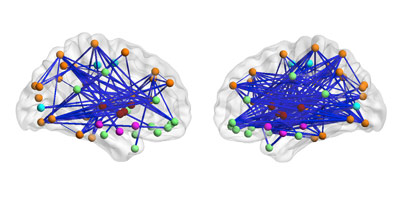
Overly connected: Many pairs of brain regions — including those involved in sensory processing, emotion and motivation — are more tightly synchronized in children with autism (right) than in controls (left).

Overly connected: Many pairs of brain regions — including those involved in sensory processing, emotion and motivation — are more tightly synchronized in children with autism (right) than in controls (left).

Three studies published over the past two months have found significant evidence that children and adolescents with autism have brains that are overly connected compared with the brains of controls. The findings complicate the theory that autism is fundamentally characterized by weakly connected brain regions. Meanwhile new findings suggest the oxytocin receptor, a gene known to influence mother-infant bonding and pair bonding in monogamous species, also plays a special role in the ability to remember faces. This research has important implications for disorders in which social information processing is disrupted, including autism spectrum disorder. In addition, the finding may lead to new strategies for improving social cognition in several psychiatric disorders.

Researchers are gaining a better understanding of the neurochemical basis of addiction with a new technology called optogenetics.

We know that getting even a measly extra hour of sleep a night can have major benefits for us–like more memories, less anxiety, and happier genes. But scientists have tested another hypothesis for why we need to spend so much time horizontal: Sleep cleans our brains.

Scientists have pinpointed a specific part of the brain where Alzheimer’s begins and traced how the disease spreads.

Scientists have zapped an electrical current to people’s brains to erase distressing memories, part of an ambitious quest to better treat ailments such as mental trauma, psychiatric disorders and drug addiction.

Finally this week, many people can recall reading at least one cherished story that they say changed their life. Now researchers at Emory University have detected what may be biological traces related to this feeling: Actual changes in the brain that linger, at least for a few days, after reading a novel.

Does Addiction Exist?

Addiction (1)American actor and addiction-awareness activist Matthew Perry and journalist Peter Hitchens traded blows in a televised interview last week,  with the latter questioning the reality of drug addiction. Hitchens questions how Perry has suffered in his ‘battle with addiction’ and for his motives in supporting special courts for people who buy and use illegal drugs.  Hitchens has gone further to question if in fact ‘addiction’ actually exists at all.  Not surprisingly this has resulted in one hell of a row.

Over the past two decades I have visited high schools and colleges to talk on how addictive drugs affect the brain and to explain the many theories about why certain people become addicted.

What is an addictive drug?

All addictive drugs release the neurotransmitter dopamine in the brain and this is thought to contribute to their addictive properties. Dopamine is carried in a nerve pathway called the reward pathway which controls the brain’s reward and pleasure centers. The reward pathway does this by regulating emotional responses that enable us not only to see rewards but also to take action to move toward them.  Addictive drugs hijack the reward pathway by causing it to release dopamine and this leads to the compulsive behavior including the loss of control in limiting intake found in addiction.

Are some drugs more addictive than others?

Yes. The type of drug taken is important as some drugs are more addictive than others.  This is because drugs differ in their ability to release dopamine in the reward pathway.  How a drug is taken is also very important. Nicotine is very addictive because it is smoked.  Smoking is the quickest way to get a substance into the brain and this makes it more addictive.

Don’t forget the buzz

The initial use of addictive drugs such as cocaine, heroin, alcohol and marijuana is often driven by the immediate euphoria – the buzz – that accompanies it and because their brains are so rich in dopamine this is of great importance to adolescents and young adults.  In this way drug addiction is predominantly a disease of the young.

Why do people take addictive drugs?

People dabble in addictive drugs for all sorts of reasons  – availability, affluence, to rebel, to seek attention, for a sense of adventure, naivety, the pressure to conform  or just plain boredom.

Who becomes an addict?

Addiction is complex and there are as many reasons why someone becomes addicted as there are addicts. This situation is not helped by the fact that we cannot yet predict who will become addicted, or how to cure it.

Addiction is a three-legged stool

The problem is that not everyone who takes addictive drugs becomes addicted. In fact, most drug users can with a little effort, drop their habit.  In order to explain who becomes addicted it is best to think of addiction as a three-legged stool and just as a stool needs all three legs in place- all three legs must also be in place for addiction to take hold. The three legs of addiction are

  • Biological.  For instance, children of alcoholics are four times more likely to become addicted to drink, even if they’re brought up away from their natural parents.
  • Psychological.  For instance, chronic, inescapable stress including the stress of boredom contributes to addictive behavior.
  • Social.  For instance, the availability of a drug is important – it’s harder to become an alcoholic in Saudi Arabia where the sale of alcohol is forbidden.

Hitchens is right – addiction doesn’t exist – that is, until you become an addict.

So, in one way Hitchens is right- addiction doesn’t exist – that is, until you become an addict. Then it controls your every waking and sleeping moment, it can destroy your life and those of your loved ones, shatter talent and ambition, wreck communities and economies.

Drug taking as a way of coping

The row between Perry and Hitchens over the nature of addiction might not be in vain if it opens up a debate on how we as a society deal with stress. We all know of, or have heard of someone suffering from chronic addiction and we are led to surmise that alcohol and drug taking is their way of coping.  In this we are not alone. As the world economy continues on its downward slide, and unemployment and financial worries beset us, are we going to turn more and more to these quick fixes to handle our dis-stress?

Probably the most important lesson to be taken from this row is the realization that the stresses of life and how we manage them IS the difference between life and death. I look forward to developing this theme in greater detail including drug-free tips on how to avoid worry and stress in future posts, but in the meantime, I salute both Perry and Hitchens for bringing addiction back into the spotlight.

Weekly Neuroscience Update

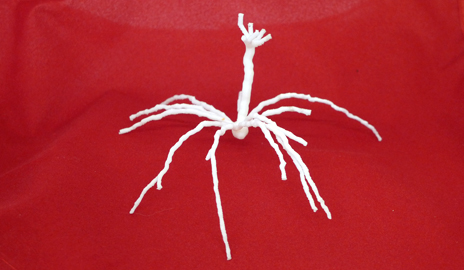
3D-printed model of a neuron (credit: Yale University)

3D-printed model of a neuron (credit: Yale University)

A Yale neuroscientist  has created the first 3D-printed neuron.

Studies released today suggest promising new treatments for nicotine and heroin addiction, and further our understanding of pathological gambling and heroin abuse in those suffering chronic pain. This new knowledge, released at Neuroscience 2013, the annual meeting of the Society for Neuroscience (SFN) and the world’s largest source of emerging news about brain science and health, may one day lead to non-pharmaceutical interventions and therapies to treat addiction. Also presented at SFN, new studies revealing links between social status and specific brain structures and activity, particularly in the context of social stress.

A new study has found that people experiencing a depressive episode process information about themselves differently than people who are not depressed.

To flexibly deal with our ever-changing world, we need to learn from both the negative and positive consequences of our behaviour. In other words, from punishment and reward. Hanneke den Ouden from the Donders Institute in Nijmegen demonstrated that serotonin and dopamine related genes influence how we base our choices on past punishments or rewards. This influence depends on which gene variant you inherited from your parents. These results were published in Neuron on November 20.

Brain scans reveal that people with fibromyalgia are not as able to prepare for pain as healthy people, and they are less likely to respond to the promise of pain relief.

Scientists have used RNA interference (RNAi) technology to reveal dozens of genes which may represent new therapeutic targets for treating Parkinson’s disease. The findings also may be relevant to several diseases caused by damage to mitochondria, the biological power plants found in cells throughout the body.

Playing a fast-paced strategy video games can help the brain to become more agile and improve strategic thinking, according to new research.

While young children sleep, connections between the left and the right hemispheres of their brain strengthen, which may help brain functions mature, according to a new study by the University of Colorado Boulder.  And in another sleep study, a team of sleep researchers  has confirmed the mechanism that enables the brain to consolidate memory and found that a commonly prescribed sleep aid enhances the process. Those discoveries could lead to new sleep therapies that will improve memory for aging adults and those with dementia, Alzheimer’s and schizophrenia.