Mobile health trends for 2012

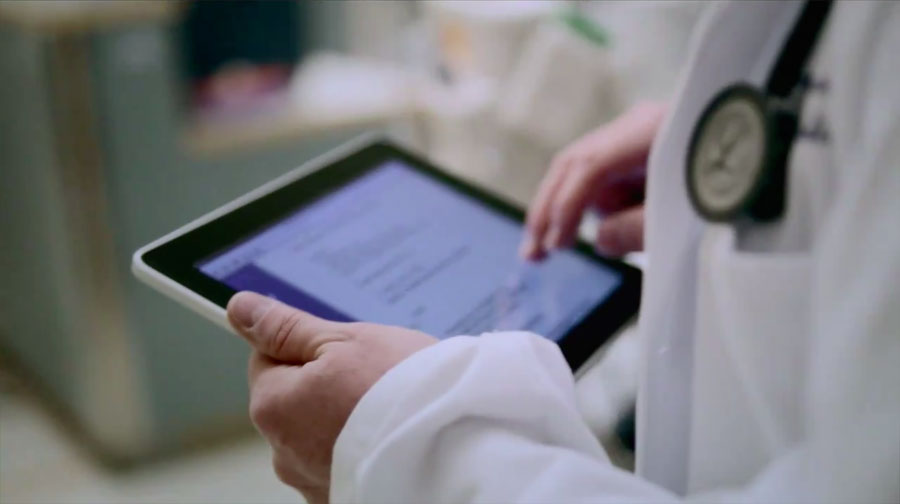
doctor using ipad

Brian Edwards, mHealth feature editor at iMedicalApps highlights five mobile trends in healthcare to look for in 2012.

1. Apps that track patient activity. Edwards said the ability to track patient data on a phone will have many benefits in the year to come. “How many phone calls they take, where they are, and … their activity level” can be “surefire” indicators of patients’ conditions, he said. “Especially with chronic conditions like diabetes; when there’s a flare-up, it’s integral to know when … it’s like a check-engine light for the body.” On his blog, Edwards explained how apps of this nature can be beneficial for other patient subsets, like autistic children. For example, body sensor technology has been developed to detect and record signs of stress in children, “by measuring slight electrical changes in the skin,” Edwards wrote. “Since autistic children have a difficult time expressing or even understanding their emotions, teachers and caregivers can have a difficult time anticipating and preventing meltdowns.”

2. Binary network apps. Binary network apps, or apps that track peripheral devices, will possibly be the biggest trend in 2012, said Edwards. “I think that’s going to be something that’ll be the first big business in mobile health,” he said. “Wearable censors, or apps that fit into the diagnostic process in an ambulatory setting. It’s the ability to take the iPhone and a patient with a T-shirt with a built-in censor and keep track of their vitals all day.” This enables techs and caregivers to “see triggers,” said Edwards, while the app sends an alarm depending on a predetermined threshold for the patient. “It’s powerful,” he added.

3. Health-focused games. “Everyone’s trying to game-ify everything,” said Edwards. He referenced Games for Health, which uses games and gaming technology to improve health and healthcare. Organizations such as the University of Southern California have also studied turning simple games into “stealth health,” said Edwards – and had success doing so. “People love to play games – it’s something across all ages and it’s more enjoyable. If the questions are in the form of a funny little game, and you don’t even realize you’re answering the questions you’re answering, it’s going to be easier to answer the question and comply.”

4. Apps that diagnose and treat patients. On his blog, Edwards mentioned a number of start-ups making progress in developing innovative body area network (BAN) technologies. For example, a device aimed at more efficient EEG data collection uses a miniature electronics box attached to a light, head harness, and electrodes to monitor a patient while he/she sleeps. “The device has HIPAA compliant security for easy transfer of data via the Internet,” he added. A similar tool, designed for the diagnosing and monitoring of epileptic patients, allows for continuous brain wave monitoring. “The patient app guides the user through the application of the body worn sensors, which can currently include up to 16-channels of EEG data. Once the patient has applied the body worn sensors, they simply pair the sensors and peripheral device via Bluetooth with the app and go about their day while the data is continuously captured and sent to remote server,” Edwards wrote.

5. Apps that empower patients. Tools that help consumers make health-related decisions will be popular in the upcoming years. On his blog, Edwards documented apps that take publicly available information from government and non-profit grounds and divide it into categories, such as healthcare facilities, medical suppliers and prescription drugs. “Using the phone’s geo-location, an individual can enter his or her ZIP code and find provider facilities in their area,” he wrote. “By utilizing the Center for Medicare and Medicaid’s Hospital Compared database, users can review ratings for all facilities, details on quality of care and patient services, as well as what coverage is provided for Medicare and Medicaid recipients.”


Source: Health Care IT News

Inside the teenage brain

In this brain video Dr. Greg Berns talks about a new study using brain imaging to study teen brain development. It turns out that adolescents who engage in dangerous activities have frontal white matter tracts that are more adult in form than their more conservative peers.

Risky Behavior in Adolescents May Signal Mature Brain 

PLoS Journal Article: “Adolescent Engagement in Dangerous Behaviors Is Associated with Increased White Matter Maturing of Frontal Cortex”

Weekly Round Up

Image Source: The Dana Foundation

Our senses of sight and hearing work closely together, perhaps more than people realize, a new UCLA psychology study shows.

A team of neurobiologists  has shown for the first time that cortex, the largest area of the brain that is typically associated with higher functions such as perception and cognition, is also a prominent site of emotional learning.

Tiny electric currents applied across regions of the brain can improve hand movements in recovering stroke patients for a short period, an Oxford University study has demonstrated.

For the first time, scientists have proven that cannabis harms the brain. But the same study challenges previously-held assumptions about use of the drug, showing that some brain irregularities predate drug use.

How might keeping patients awake during surgery lead to the more successful removal of brain tumours? James Keidel, in his shortlisted entry for the 2011 Wellcome Trust Science Writing Prize, explains.

Researchers from the University of Bristol have discovered that a chemical compound in the brain can weaken the synaptic connections between neurons in a region of the brain important for the formation of long-term memories. The findings, published in the Journal of Neuroscience, may also provide a potential explanation for the loss of memory associated with Alzheimer’s.

Weekly Round Up

Finnish researchers have developed a groundbreaking new method that allows them to study how the brain processes different aspects of music, such as rhythm, tonality and timbre (sound color) in a realistic listening situation. The study is pioneering in that it for the first time reveals how wide networks in the brain, including areas responsible for motor actions, emotions, and creativity, are activated during music listening. The new method helps us understand better the complex dynamics of brain networks and the way music affects us.

Dreaming may act like a type of overnight therapy, taking the edge off painful memories, a new study says.

Connectivity is a hot topic in neuroscience these days. Instead of trying to figure out what individual brain regions do, researchers are focusing more on how regions work together as a network to enable memory, language, and decision-making. Now, a study of more than 100 children finds that interconnected brain regions develop in concert through childhood and adolescence. The researchers say their work could have implications for understanding various puzzles in neuroscience, such as what goes wrong in autism or why adolescent boys are prone to risky behavior.

Using functional magnetic resonance imaging (fMRI), researchers have identified abnormalities in the brains of children with attention deficit/hyperactivity disorder (ADHD) that may serve as a biomarker for the disorder.

People who meditate seem to be able ‘switch off’ areas of the brain associated with daydreaming as well as psychiatric disorders such as autism and schizophrenia, according to a new brain imaging study published in the Proceedings of the National Academy of Sciences.

Sustained changes in the region of the brain associated with cognitive function and emotional control were found in young adult men after one week of playing violent video games, according to study results presented by Indiana University School of Medicine researchers at the annual meeting of the Radiological Society of North America.

Inside the brain of a buddhist monk

Dr Josipovic has scanned the brains of more than 20 experienced meditators during the study

Since 2008, Dr Zoran Josipovic, a research scientist and adjunct professor at New York University, has been placing the minds and bodies of prominent Buddhist figures into a five-tonne (5,000kg) functional magnetic resonance imaging (fMRI) machine. He says he has been peering into the brains of monks while they meditate in an attempt to understand how their brains reorganise themselves during the exercise.

“Meditation research, particularly in the last 10 years or so, has shown to be very promising because it points to an ability of the brain to change and optimise in a way we didn’t know previously was possible.”

Dr Josipovic’s research is part of a larger effort better to understand what scientists have dubbed the default network in the brain. He says the brain appears to be organised into two networks: the extrinsic network and the intrinsic, or default, network.

The extrinsic portion of the brain becomes active when individuals are focused on external tasks, like playing sports or pouring a cup of coffee. The default network churns when people reflect on matters that involve themselves and their emotions. But the networks are rarely fully active at the same time. And like a seesaw, when one rises, the other one dips down. This neural set-up allows individuals to concentrate more easily on one task at any given time, without being consumed by distractions like daydreaming.

“What we’re trying to do is basically track the changes in the networks in the brain as the person shifts between these modes of attention,” Dr Josipovic says.

Dr Josipovic has found that some Buddhist monks and other experienced meditators have the ability to keep both neural networks active at the same time during meditation – that is to say, they have found a way to lift both sides of the seesaw simultaneously. And Dr Josipovic believes this ability to churn both the internal and external networks in the brain concurrently may lead the monks to experience a harmonious feeling of oneness with their environment.

Read more on this story at BBC Health

Weekly Round Up

The secret world of dreams could soon be cracked open. Innovative neuroscientists have already begun to figure out the thoughts of awake people– now, a team reckon they can use similar methods to tap into dreams.

We already know that “mirror therapy” – visual feedback from mirrors – has been shown to reduce some kinds of chronic pain, notably the pain felt in  “phantom limbs” of amputees. Preliminary results from a new study, described November 12 at the annual meeting of the Society for Neuroscience, suggests mirror therapy may offer a  may offer a powerful and inexpensive way to fight persistent arthritis pain.

Brain scans have revealed the workings of the brain’s GPS that underpin our decisions as we navigate towards a destination.

A team of researchers co-led by the University of Pennsylvania has developed and tested a new high-resolution, ultra-thin device capable of recording brain activity from the cortical surface without having to use penetrating electrodes. The device could make possible a whole new generation of brain-computer interfaces for treating neurological and psychiatric illness and research.

How you think about pain can have a major impact on how it feels. That’s the intriguing conclusion neuroscientists are reaching as scanning technologies let them see how the brain processes pain.

Fourteen-year-olds who were frequent video gamers had more gray matter in the rewards center of the brain than peers who didn’t play video games as much – suggesting that gaming may be correlated to changes in the brain, much as addictions are.

The Craving Brain

This is a terrific animated film which describes the pathology of addiction according to the theories presented in Dr. Ronald Ruden’s book The Craving Brain.

Ruden maintains that all addictions are “craving disorders” of the brain, caused by a “craving response” to life experiences and environment. A craving brain is a brain chemically out of balance, and the solution is to put it back into balance, or “biobalance.”

This video also outlines the role that chronic, inescapable stress contributes to addictive behavior.

Once we understand these responses, and understand the landscape of the craving brain, we can then learn to balance the brain (biobalance) by adopting healthy, serotonin-boosting habits.