Weekly Neuroscience Update

The human brain can recognize thousands of different objects, but neuroscientists have long grappled with how the brain perceives and identifies different objects. Now researchers have discovered that the brain organizes objects based on their physical size, with a specific region of the brain reserved for recognizing large objects and another reserved for small objects.

New research suggests that it is possible to suppress emotional autobiographical memories. The study published this month by psychologists at the University of St Andrews reveals that individuals can be trained to forget particular details associated with emotional memories. The important findings may offer exciting new potential for therapeutic interventions for individuals suffering from emotional disorders, such as depression and post-traumatic stress disorder.

Neuropsychiatric conditions such as autism, schizophrenia and epilepsy involve an imbalance between two types of synapses in the brain: excitatory synapses that release the neurotransmitter glutamate, and inhibitory synapses that release the neurotransmitter GABA. Little is known about the molecular mechanisms underlying development of inhibitory synapses, but a research team from Japan and Canada has reported that a molecular signal between adjacent neurons is required for the development of inhibitory synapses.

A new study by University of Pennsylvania and Thomas Jefferson University scientists is using brain recordings to infer the way people organize associations between words in their memories.

Towards an understanding of synesthesia

Synesthesia is a neurological condition in which information between the senses is blended.  For instance a synesthete (a person who experiences this condition) might see colors when listening to music, or taste flavors when hearing a spoken

In this documentary, Dr. David Eagleman of Baylor College of Medicine explains synesthesia  and four synesthetes explain how they perceive the world.

Weekly Neuroscience Update

Visual and auditory stimuli that elicit high levels of engagement and emotional response can be linked to reliable patterns of brain activity, a team of researchers reports. Their findings could lead to new ways for producers of films, television programs and commercials to predict what kinds of scenes their audiences will respond to.

Implants that deliver pulses of light into the brain could lead to new treatments for diseases such as epilepsy and Alzheimer’s Disease.

Post traumatic stress disorder (PTSD) is a severe type of anxiety disorder that can occur after an individual experiences a traumatic event. However, at present, doctors are unable to predict who will develop these disorders. Now, a new study seeks to identify individuals who are more susceptible to long-standing disorders if exposed to a traumatic event.

Researchers have discovered how a part of the brain helps predict future events from past experiences. The work sheds light on the function of the front-most part of the frontal lobe, known as the frontopolar cortex, an area of the cortex uniquely well developed in humans in comparison with apes and other primates.

Fish cannot display symptoms of autism, schizophrenia or other human brain disorders. However, a team of MIT biologists has shown that zebrafish can be a useful tool for studying the genes that contribute to such disorders.

Johns Hopkins researchers say they have discovered one of the most important cellular mechanisms driving the growth and progression of meningioma, the most common form of brain and spinal cord tumor. A report on the discovery, published in the journal Molecular Cancer Research, could lead the way to the discovery of better drugs to attack these crippling tumors, the scientists say.

Researchers have furthered understanding of the mechanism by which the cells that insulate the nerve cells in the peripheral nervous system, Schwann cells, protect and repair damage caused by trauma and disease.

Weekly Neuroscience Update

New research shows that sleep loss markedly exaggerates the degree to which we anticipate impending emotional events, particularly among highly anxious people, who are especially vulnerable.

Music training has a lifelong good impact on the aging process, says a new study out of Northwestern University.

New research by scientists at the University of University of North Carolina School of Medicine may have pinpointed an underlying cause of the seizures that affect 90 percent of people with Angelman syndrome (AS), a neurodevelopmental disorder.

Scientists have shown that brain levels of serotonin, the ‘happy hormone’ are regulated by the amount of bacteria in the gut during early life.

Two U.S. scientists have updated findings that link a form of Chinese meditation to positive changes in brain structure, suggesting that just 11 hours of practising the technique over a month could help prevent mental illness. In a paper to be released this week in the online version of the Proceedings of the National Academy of Sciences, researchers Yi-Yuan Tang and Michael Posner report that the practice known as integrative body-mind training (IBMT) can have a positive physical affect on the brain, boosting connectivity and efficiency.

Researchers at the University of Missouri have demonstrated the effectiveness of a potential new therapy for stroke patients in an article published in the journal Molecular Neurodegeneration. Created to target a specific enzyme known to affect important brain functions, the new compound being studied at MU is designed to stop the spread of brain bleeds and protect brain cells from further damage in the crucial hours after a stroke.

A receptor recently discovered to control the movement of immune cells across the blood-brain barrier may hold the key to treating multiple sclerosis (MS), a neuroinflammatory disease of the central nervous system.

In a pair of related studies, scientists from the Florida campus of The Scripps Research Institute have identified several proteins that help regulate cells’ response to light—and the development of night blindness, a rare disease that abolishes the ability to see in dim light.

A recent breakthrough in the development of an artificial synapse suggests that assistive devices and other prostheses won’t be limited to just missing joints and failing organs. Researchers in Japan have shown that it’s possible to mimic synaptic function with nanotechnology, a breakthrough that could result in not just artificial neural networks, but fixes for the human brain as well.

Patients vary widely in their response to concussion, but scientists haven’t understood why. Now, using a new technique for analyzing data from brain imaging studies, researchers at Albert Einstein College of Medicine of Yeshiva University and Montefiore Medical Center have found that concussion victims have unique spatial patterns of brain abnormalities that change over time.

Using a new and powerful approach to understand the origins of neurodegenerative disorders such as Alzheimer’s disease, researchers at Mayo Clinic in Florida are building the case that these diseases are primarily caused by genes that are too active or not active enough, rather than by harmful gene mutations.

Is Ireland heading for a depression epidemic?

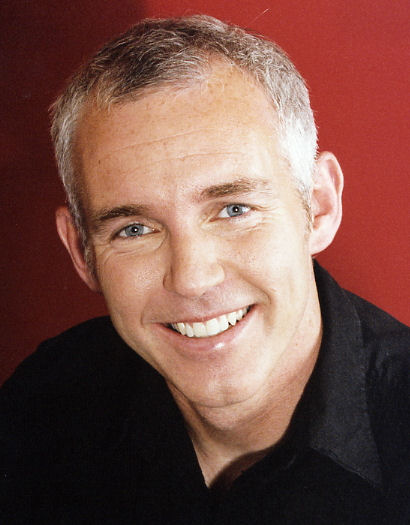
Ray D’Arcy, presenter of “Ireland’s Depression Epidemic”

Is Ireland heading for a depression epidemic?

That’s the provocative question which a new three-part series on depression, posed to us on Tuesday night.

Presented by popular radio persona (and psychology graduate) Ray D’Arcy, the first part of  this series on TV3 focussed on the personal stories of those living with depression, interspersed with contributions by experts in the field of mental health.

Throughout the show we were made aware of the Irish people’s traditional reluctance to acknowledge their own or their loved ones’ depression, let alone seek treatment.  Agnes (59), who’s been battling depression since she was 21,recalls her mother’s bouts of depression, when she refused to leave the bedroom for weeks on end, yet it was never openly discussed. “If we don’t talk about it, it doesn’t exist.”

With the suicide rate in Ireland  running at 500 a year, this investigation into the rise of depression in Ireland is to be commended for tackling the issue in such a measured, thoughtful and sensitive way.

I hope that those who are dealing with depression right now can draw hope from the stories of those who have been there, sought treatment, and come out the other side. Far from being an affliction, depression and how we handle it is an essential part of being human.  The Tv3 documentary showed that depression is no respecter of age, gender or social circumstance, but it can be successfully treated. Newer treatments for depression now involve a combination of different therapies such as medication, psychological therapies, social support, and self-help techniques. This combined approach treats the person as a whole, and marks the beginning of the journey back to wellness and a normal life.

If you missed the show you can catch up on the Tv3 player. Click here to view.

Related Post:

Is Depression and Anxiety Best Treated With Medication or Psychotherapy?

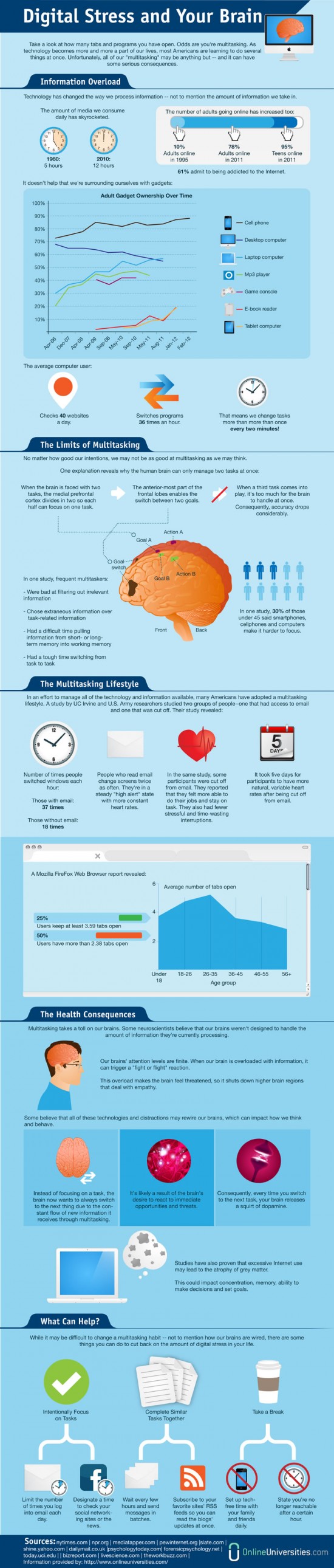
How does the brain multitask?

Dr Adam Gazzaly,  director of the Neuroscience Imaging Center at the University of California, San Francisco, answers the question of how the brain multitasks on the brainfacts.org website:

Multitasking is an attempt to engage in more than one goal at the same time. When two tasks demand competing attention, there is generally a switching that occurs between the neural processes involved, rather than concurrent processing as may be expected with true multitasking. Of note, recent research suggests that it may be possible for the brain to split two demanding tasks.

The prefrontal cortex has been frequently implicated as a brain region that mediates multitasking and the switching processes. Multitasking is commonly shown to impair cognitive performance, as each switch results in a reduction in performance compared to doing one task at a time. However, there is growing evidence that the ability to multitask can be trained with repetitive and adaptive practice. Multitasking abilities have been observed to decline as we age.

Your Weekly Neuroscience Update

Drinking three cups of coffee daily could help keep Alzheimer’s disease at bay, according to the results of a new study.

People who frequently use tanning beds experience changes in brain activity during their tanning sessions that mimic the patterns of drug addiction, new research shows.

A research team at Aalto University and Turku PET Centre has revealed how experiencing strong emotions synchronizes brain activity across individuals.

A new study has begun to unravel one long-observed enigma in major depressive disorder: why, for most patients, it continues to come back, even after it seems to have been cured or gone away on its own.

A recent placebo-controlled study showed evidence of trans-cranial bright light’s effect to brain functions when administered through the ear. Bright light stimulation was found to increase activity in brain areas related to processing of visual sensory information and tactile stimuli. The findings are the first ever published scientific article about functional modulation of the brain with bright light delivered to the brain through the ears. Researchers from the Max Planck Florida Institute (MPFI) and New York’s Columbia University have discovered that the rewiring involves fibers that provide primary input to the cerebral cortex, which is involved in cognition, sensory perception and motor control.

When people close their eyes, they can form mental images of things that exist only in their minds. Neuroscientists studying this phenomenon at medical schools in the Texas Medical Center believe that there may be a way to use these mental images to help some of the estimated 39 million people worldwide who are blind.

A Canadian doctor has found a promising way to detect concussions using a simple blood test that can tell within the first hour after a blow to the head how severe the injury may be.