Weekly Neuroscience Update

Researchers have found that neurons in a specific region of the frontal cortex, called the anterior cingulate cortex, become active during decisions involving competitive effort.

In a major breakthrough, an international team of scientists has proven that addiction to morphine and heroin can be blocked, while at the same time increasing pain relief.

Researchers have shown that activity in a certain region of the brain changes as children learn to reason about what other people might be thinking.

The human brain contains billions of neurons that are arranged in complex circuits, which enable people to function with regard to controlling movements, perceiving the world and making decisions. In order to understand how the brain works and what malfunctions occur in neurological disorders it is crucial to decipher these brain circuits. A new study, which is featured in the August 9 edition of Nature reveals that MIT neuroscientists have now come closer towards this goal, by discovering that two major classes of brain cells repress neural activity in specific mathematical ways by which one type subtracting from overall activation, whilst the other type divides it.

That fact that heavy drinking impacts the brain of developing youths is a well-known fact. However, now researchers from the University of California, San Diego School of Medicine and VA San Diego Healthcare System have discovered that certain patterns of brain activity could also help to predict which youths are at risk of becoming problem drinkers. The study is featured online in the August edition of the Journal of Studies on Alcohol and Drugs. The study involved functional magnetic resonance imaging (fMRI) of 12 to 16 year old teenagers’ brains before they started drinking and who had an fMRI three years later. About half of the teenagers started drinking heavily over the 3-year period but the researchers noted that the fMRI scans taken before these group of teenagers started drinking, they already showed less fMRI response in areas of the brain that were associated earlier with heavy drinking.

Major depression or chronic stress can cause the loss of brain volume, a condition that contributes to both emotional and cognitive impairment. Now a team of researchers led by Yale scientists has discovered one reason why this occurs — a single genetic switch that triggers loss of brain connections in humans and depression in animal models.

Neuroscientists from The Scripps Institute have identified a specialized population of stem cells that have an impressive vocational calling: higher brain functioning. It’s an important finding that holds promise for the treatments of serious cognitive disorders — including those that impact on conscious function. And it also reveals how humans and other mammals are able to have such big brains.

Neuroscientists have discovered that the universal saying of “living in the moment” may be impossible. A study published in the journal Neuron reveals that neuroscientists have identified an area in the brain, which is responsible for using past decisions and outcomes to guide future behavior. The study is the first of its kind to analyze signals linked to metacognition, known as a person’s ability to monitor and control cognition, which researchers describe as “thinking about thinking.”

Thought For Today

What is to give light must endure burning. -Viktor Frankl, author, neurologist and psychiatrist, Holocaust survivor (1905-1997)

Weekly Neuroscience Update

A growing body of evidence suggests that learning to play an instrument and continuing to practice and play it may offer mental benefits throughout life. Hearing has also been shown to be positively affected by making music. The latest study, published in the July issue of Frontiers in Human Neuroscience, shows that musical instrument training may reduce the effects of mental decline associated with aging. The research found that older adults who learned music in childhood and continued to play an instrument for at least 10 years outperformed others in tests of memory and cognitive ability.

Neuroscientists are finding that, as we get older, our aging brains are proving surprisingly malleable, and in ways not previously anticipated. But there are limitations. There is growing evidence that, beyond what was previously believed, the adult human brain is remarkably malleable and capable of new feats — even in the last decades of life. And UCLA researchers found that older adults who regularly used a brain fitness program played on a computer demonstrated significantly improved memory and language skills.

From older to younger brains now…

Determining when a teenage brain becomes an adult brain is not an exact science but it’s getting closer, according to an expert in adolescent developmental psychology, speaking at the American Psychological Association’s 120th Annual Convention.

Researchers at Aalto University in Finland have developed the world’s first device designed for mapping the human brain that combines whole-head magnetoencephalography (MEG) and magnetic resonance imaging (MRI) technology. MEG measures the electrical function and MRI visualizes the structure of the brain. The merging of these two technologies will produce unprecedented accuracy in locating brain electrical activity non-invasively

According to a study conducted by the National Institutes of Health, children with attention-deficit/hyperactivity disorder (ADHD) experience a developmental delay in frontal regions of the brain.

The brain differences found in people with schizophrenia are mainly the result of the disease itself or its treatment, as opposed to being caused by genetic factors, according to a Dutch study

Bilingual children outperform children who speak only one language in problem-solving skills and creative thinking, according to research led at the University of Strathclyde.

When we focus intently on one task, we often fail to see other things in plain sight – a phenomenon known as ‘inattention blindness’. Scientists already know that performing a task involving high information load – a ‘high load’ task – reduces our visual cortex response to incoming stimuli. Now researchers from UCL have examined the brain mechanisms behind this, further explaining why our brain becomes ‘blind’ under high load.

The Brain That Changes Itself

The cliché that you can’t teach an old dog new tricks may soon be obsolete. The more we learn about the human brain, the more we understand the potential that it has to change, adapt and grow. Traditionally the brain was seen as being like a machine, its neural pathways set in stone from childhood. But new studies have shown that the brain can be trained to recover from strokes or paralysis, lifelong habits can be broken, and aging brains be rejuvenated. Through new experiences and brain exercises we can alter our brain’s anatomy to improve cognition, perception, memory and intelligence. In this enlightening session at the Sydney Writers Festival, Norman Doidge talks about the remarkable plasticity of the brain, and shares some examples of how we can open it up to new realms of possibilities.

Weekly Neuroscience Update

Two powerful brain chemical systems work together to paralyze skeletal muscles during rapid eye movement (REM) sleep, according to new research in The Journal of Neuroscience. The finding may help scientists better understand and treat sleep disorders, including narcolepsy, tooth grinding, and REM sleep behavior disorder.

Raising levels of the neurotransmitter dopamine in the frontal cortex of the brain significantly decreased impulsivity in healthy adults, in a study conducted by researchers at the Ernest Gallo Clinic and Research Center at the University of California, San Francisco.

Neuroscientists have found strong evidence that vivid memory and directly experiencing the real moment can trigger similar brain activation patterns.

Severe psychological and physical neglect produces measurable changes in children’s brains, finds a study led by Boston Children’s Hospital. But the study also suggests that positive interventions can partially reverse these changes.

Scientists at Johns Hopkins have discovered a “scaffolding” protein that holds together multiple elements in a complex system responsible for regulating pain, mental illnesses and other complex neurological problems.

Weekly Neuroscience Update

Research from the University of Southampton, which examines how dolphins might process their sonar signals, could provide a new system for man-made sonar to detect targets, such as sea mines, in bubbly water.

Evidence is mounting that exercise provides some protection from memory loss and Alzheimer’s disease, with three new studies showing that a variety of physical activities are associated with healthier brains in older adults.

Researchers  have discovered an important clue to how the human brain —important clue to how the human brain — which is constantly bombarded with millions of pieces of visual information, can filter out what’s unimportant and focus on what’s most useful.

Scientists at the California Institute of Technology (Caltech) pioneered the study of the link between irregularities in the immune system and neurodevelopmental disorders such as autism a decade ago. Since then, studies of postmortem brains and of individuals with autism, as well as epidemiological studies, have supported the correlation between alterations in the immune system and autism spectrum disorder.

Researchers at Aalto University in Finland have developed the world’s first device designed for mapping the human brain that combines whole-head magnetoencephalography (MEG) and magnetic resonance imaging (MRI) technology. MEG measures the electrical function and MRI visualizes the structure of the brain. The merging of these two technologies will produce unprecedented accuracy in locating brain electrical activity non-invasively. 

Cognition psychologists have discovered why stressed persons are more likely to lapse back into habits than to behave goal-directed. The researchers have now reported in the Journal of Neuroscience that the interaction of the stress hormones hydrocortisone and noradrenaline shut down the activity of brain regions for goal-directed behaviour. The brain regions responsible for habitual behaviour remained unaffected.

Raising levels of the neurotransmitter dopamine in the frontal cortex of the brain significantly decreased impulsivity in healthy adults, in a study conducted by researchers at the Ernest Gallo Clinic and Research Center at the University of California, San Francisco

What Stephen Covey taught us about the neuroscience of focus

I was saddened to hear of the death of Stephen Covey yesterday. He was a truly inspirational figure who studied human behaviour and drew up a set of simple instructions for human happiness – The 7 Habits of Highly Effective People.

One of these habits was –‘The main thing is to keep the main thing the main thing.’

Covey proposed that happiness in life depends not only in having a focus or goal (i.e. the main thing) but in having the discipline to stay focused on that goal (i.e. keeping the main thing the main thing). He contended that one reason why people fail to achieve their full potential was in not staying focused on that goal.

Where in the brain do we create focus and how can we strengthen it?

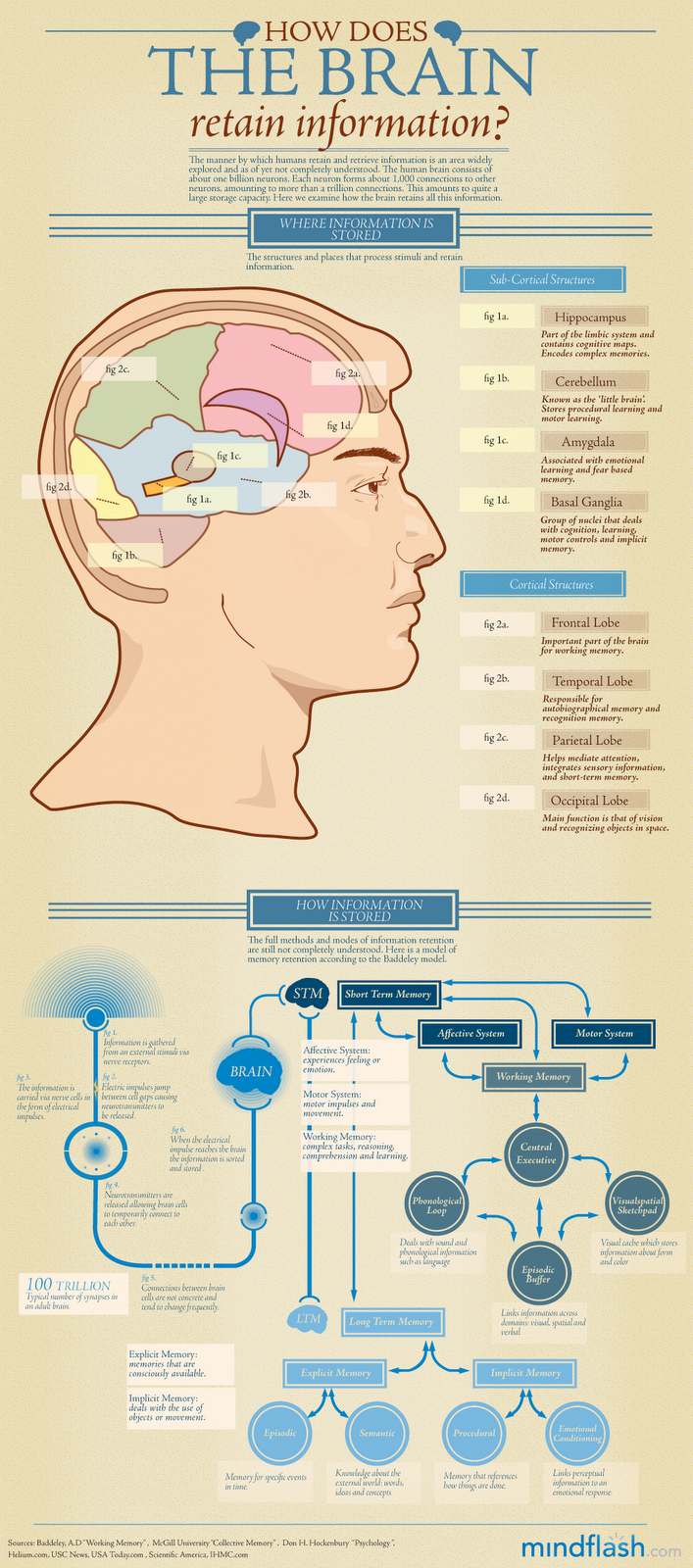
There are two types of focused attention in two separate regions of the brain. The prefrontal lobes are in charge of goal setting and willful concentration; if you are studying for a test or writing a novel, the impetus and the orders come from there. But if there is a sudden, riveting event – the attack of a tiger or the scream of a child – it is the parietal lobes behind each ear that are activated. Neuroscientists have learned that these two brain regions sustain concentration when neurons emit pulses of electricity at specific rates – faster frequencies for the automatic processing of the parietal cortex, slower frequencies for the deliberate, intentional work of the prefrontal.

Furthermore, studies of seasoned meditators – Tibetan Buddhist monks show that regular meditation – i.e. paying attention on purpose – generates brain wave patterns which synchronise neuronal firing in both the frontal and parietal lobes – a phenomenon which is thought to underlie the sustained concentration involved in focused attention i.e. in keeping the main thing the main thing.  In fact, the ability of mediation to strengthen the connection between these two key brain regions involved in sustained concentration explains the ability of seasoned meditators to stay calm and focused.

These finding on attention in the brain may also radically alter our understanding of attention disorders and provide new opportunities to learn how brains pay attention in real world settings and acquire healthy habits to stay focused and prevent distraction.