Related:
Weekly Neuroscience Update
 Two recent pieces of work raise the prospect of being able to predict and even regulate a person’s risk-taking behavior, by first observing activity of the anterior cingulate cortex and then dialing it up or down.
A new study shows that for millions of individuals around the world who suffer from Generalized Anxiety Disorder (GAD), anger is more than an emotion; it’s an agent that exacerbates their illness.
Brain changes persist for months in children who have sustained a mild traumatic brain injury, or concussion, U.S. researchers say.
Chinese researchers have devised a new technique for reprogramming cells from human urine into immature brain cells that can form multiple types of functioning neurons and glial cells. The technique, published in the journal Nature Methods, could prove useful for studying the cellular mechanisms of neurodegenerative conditions such as Alzheimer’s and Parkinson’s and for testing the effects of new drugs that are being developed to treat them.
Researchers have discovered how the brain assesses confidence in its decisions. The findings explain why some people have better insight into their choices than others.
Scientists have combined and translated two kinds of brain wave recordings into music, transforming one recording (EEG) to create the pitch and duration of a note, and the other (fMRI) to control the intensity of the music.
A compassion-based meditation program can significantly improve a person’s ability to read the facial expressions of others, finds a study published by Social Cognitive and Affective Neuroscience. This boost in empathic accuracy was detected through both behavioral testing of the study participants and through functional magnetic resonance imaging (fMRI) scans of their brain activity.
Your brain has at least four different senses of location — and perhaps as many as 10. And each is different, according to new research from the Kavli Institute for Systems Neuroscience, at the Norwegian University of Science and Technology.
photo credit: Amanda Nicole Betley via photopin cc
Twitter is a well known microblogging platform. People can post updates in the form of 140 character “tweets” that can be read by followers, who can “retweet,” i.e. repost that tweet to their own followers, or reply to the original post. I started using it about a year ago, and have found it to be equal parts whimsical and hilarious, along with useful and informative.
Several other authors have discussed reasons why scientists should be using Twitter, including this excellent post on Deep Sea News and this post through the American Geophysical Union. As I pointed out in my previous weekly roundup, Dr Jeremy Segrott gave his thoughts after he used Twitter for a three months. Scientists are realizing that social media is an important way to translate knowledge to the public when done well, and Twitter provides another avenue by which this can be accomplished.
What I…
View original post 762 more words
Brain Development & Learning: Making Sense of the Science
[Click on the title beneath the QR code (top box)
or scan with your smart-device to go to the conference website.]

~~~~~
Links to important conference information (pdf files):
To save any of these files to your computer, go to your FILE Menu.
Select PRINT >> PDF >> Save as PDF
~~~~~
How alcohol affects your brain
Find out how alcohol molecules alter your brain.
Weekly Neuroscience Update

A new clinical study in the journal Brain and Behavior, has been undertaken to decide whether a non-invasive method, using musical tones to regulate brain activity, can actually reprogram the brain, resulting in insomnia prevention.
Researchers have shown that synchronization emerges between brains when making music together, and even when musicians play different voices.
People are able to detect, within a split second, if a hurtful action they are witnessing is intentional or accidental, new research on the brain at the University of Chicago shows.
Everyone knows that men and women tend to hold different views on certain things. However, new research by scientists from the University of Bristol and published in PLoS ONE indicates that this may literally be the case.
All patients with Alzheimer’s disease (AD) lose brain cells, which leads to a shrinking, or atrophy, of the brain. But the pattern of gray matter loss is significantly different in men and women, according to a study presented recently at the annual meeting of the Radiological Society of North America.
How to build a brain
A team of researchers from the University of Waterloo have built what the claim is the world’s largest simulation of a functioning brain.
The purpose is to help scientists understand how the complex activity of the brain gives rise to the complex behavior exhibited by animals, including humans.
The model is called Spaun (Semantic Pointer Architecture Unified Network). It consists of 2.5 million simulated neurons. The model captures biological details of each neuron, including which neurotransmitters are used, how voltages are generated in the cell, and how they communicate.
Spaun uses this network of neurons to process visual images to control an arm that draws Spaun’s answers to perceptual, cognitive and motor tasks.
For more information, see: http://nengo.ca/build-a-brain/
Weekly Neuroscience Update
 Mind wandering may increase creative thinking, according to a new international study.
Simple mental activity such as reading, writing, playing games and doing puzzles may protect brain health in old age, according to a new study.
Reduced production of myelin, a type of protective nerve fiber that is lost in diseases like multiple sclerosis, may also play a role in the development of mental illness, according to researchers at the Graduate School of Biomedical Sciences at Mount Sinai School of Medicine.
A small molecule known to regulate white blood cells has a surprising second role in protecting brain cells from the deleterious effects of stroke, Johns Hopkins researchers report.
Scientists have revealed the minutely detailed pain map of the hand that is contained within our brains, shedding light on how the brain makes us feel discomfort and potentially increasing our understanding of the processes involved in chronic pain.
People with Parkinson’s disease benefit from exercise programs on stationary bicycles, with the greatest effect for those who pedal faster, according to a study presented at the annual meeting of the Radiological Society of North America (RSNA).
A new method to study widespread networks of neurons responsible for our memory has been discovered by scientists from the Max Planck Institute for Biological Cybernetics.
The first study to estimate rates of traumatic brain injury (TBI), without relying on official figures, suggests the worldwide incidence of TBI could be six times higher than previously estimated.
MRI shows changes in the brains of people with post-concussion syndrome (PCS), according to a new study published online in the journal Radiology. Researchers hope the results point the way to improved detection and treatment for the disorder.
photo credit: pamlau.com via photopin cc
This is your brain on music

Weekly Neuroscience Update
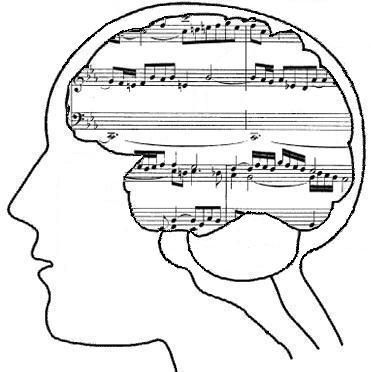 Could our neurological soundtrack reveal insights into our mental state? To answer that question scientists in China developed a method for converting two kinds of brain wave recordings into music.
Scientists at The Scripps Research Institute (TSRI) have identified a new pathway that appears to play a major role in information processing in the brain. Their research also offers insight into how imbalances in this pathway could contribute to cognitive abnormalities in humans.
Stanford researchers have designed the fastest, most accurate algorithm yet for brain-implantable prosthetic systems that can help disabled people maneuver computer cursors with their thoughts. The algorithm’s speed, accuracy and natural movement approach those of a real arm, and the system avoids the long-term performance degradations of earlier technologies.
Researchers have designed a light-sensitive molecule that can stimulate a neural response in cells of the retina and brain — a possible first step to overcoming degenerative eye diseases like age-related macular degeneration, or to quieting epileptic seizures.
A new study has found that participating in an 8-week meditation training program can have measurable effects on how the brain functions even when someone is not actively meditating.
 inside-the-brain.com