Walking Again At The World Cup

Thanks to an international collaboration between universities such as Colorado State University, the Technical University of Munich and the Lily Safra International Institute of Neuroscience of Natal in Brazil, a paralyzed teen is set to open next month’s World Cup event by kicking a football while wearing a motorized exoskeleton controlled by his or her brain. The demonstration, known as the Walk Again project, will take place during the opening ceremony June 12 in Sao Paulo, Brazil.

Colorado State University  recently published a video of its portion of the Walk Again Project, describing just how the mind-control helmet was 3D-printed layer-by-layer in order to fit the wearer’s head and connect the electrodes. This video is a fascinating glimpse into how advances in robotics and 3D printing can improve people’s lives.


Weekly Neuroscience Update

human-brain-120329

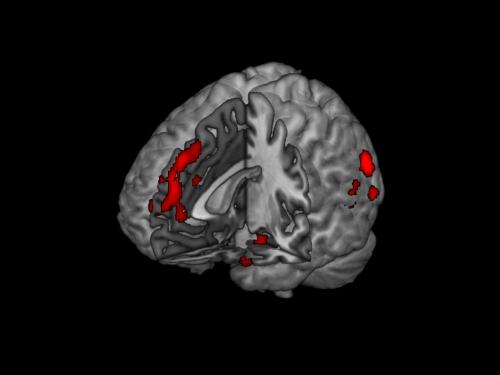
MRIs work by aligning the magnetic spin of the hydrogen molecules in the body. Credit: Image courtesy of MGH-UCLA Human Connectome Project.

Brain scans are now starting to peer down to the molecular level, revealing what brain cells are telling one another, researchers say.

A new study has provided insight into the behavioral damage caused by repeated blows to the head. The research provides a foundation for scientists to better understand and potentially develop new ways to detect and prevent the repetitive sports injuries that can lead to the condition known as chronic traumatic encephalopathy (CTE).

Sufferers of a common sleep-breathing disorder have diminished activity among neurons responsible for keeping heart rate low, reveals a new study published in The Journal of Physiology. The research discovered that in obstructive sleep apnoea (OSA), neurons in the brainstem that control heart rate experience a blunting of their activity. The reduction of neuronal activity likely contributes to the increased heart rate,blood pressure and risk of adverse cardiovascular events that occur in patients with OSA.

A variant of the gene KLOTHO is known for its anti-aging effects in people fortunate enough to carry a copy. Now researchers have found that it also has benefits when it comes to brain function.

Humans who lack the corpus callosum, a bundle of 200 million fibers that connect the left and right hemispheres of the brain, have long fascinated physicians, neuroscientists and other curious minds. Now, a group of researchers puts an end to the Sperry’s paradox, which describes major differences between individuals born with reduced or absent brain connections and those who acquire this condition later in life.

A study has shown that a long-overlooked form of neuron-to-neuron communication called miniature neurotransmission plays an essential role in the development of synapses, the regions where nerve impulses are transmitted and received.

The way that your heart rate increases in response to alertness in the brain has been recently discovered by researchers. Specifically, this study looked at the interactions between neurons that fire upon increased attention and anxiety and neurons that control heart rate to discover the “why,” “how,” and “where to next” behind this phenomenon. The results may have important implications for how certain conditions are treated in the future, such as post-traumatic stress disorder, chronic anxiety, or even stress.

A growing body of evidence suggests nonhuman animals can group living and inanimate things based on less than obvious shared traits, raising questions about how creatures accomplish this task.

Researchers at the University of Liverpool found musical training can increase blood flow in the left hemisphere of the brain, suggesting the area of the brain responsible for music and language share common pathways.

Weekly Neuroscience Update

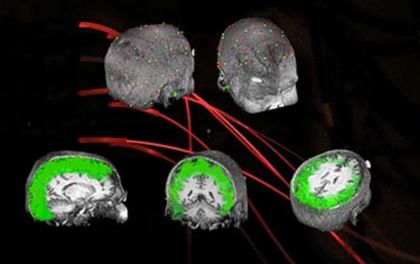
By using a novel technique to test brain waves, researchers are discovering how the brain processes external stimuli that do and don’t reach our awareness. Credit Beckman Institute.

By using a novel technique to test brain waves, researchers are discovering how the brain processes external stimuli that do and don’t reach our awareness. Credit Beckman Institute.

Researchers at the Beckman Institute are using a novel technique to test brain waves to see how the brain processes external stimuli that do and don’t reach our awareness. A group of international scientists has for the first time identified genetic mutations that suggest that schizophrenia and autism share underlying mechanisms. The research could help with future understanding of both conditions and may contribute to the development of treatments. Two psychologists have made a discovery that could revolutionize doctors’ perception and treatment of attention-deficit disorders. A newly identified disorder affecting the human nervous system is caused by a mutation in a gene never before implicated in human disease, according to two studies published in the journal Cell. By performing DNA sequencing of children affected by neurological problems, two research teams independently discovered that a disease marked by reduced brain size, as well as sensory and motor defects, is caused by a mutation in a gene called CLP1. Insights into this rare disorder may have important implications for the treatment of common disorders.

Scientists at the Salk Institute have created a new model of memory that explains how neurons retain select memories a few hours after an event. This new framework provides a more complete picture of how memory works, which can inform research into disorders liked Parkinson’s, Alzheimer’s, post-traumatic stress and learning disabilities.

Stanford scientists have developed faster, more energy-efficient microchips based on the human brain – 9,000 times faster and using significantly less power than a typical PC. This offers greater possibilities for advances in robotics and a new way of understanding the brain. For instance, a chip as fast and efficient as the human brain could drive prosthetic limbs with the speed and complexity of our own actions.

Finally this week, laughter triggers brain waves similar to those associated with meditation, according to a small new studyThe study included 31 people whose brain waves were monitored while they watched humorous, spiritual or distressing video clips. While watching the humorous videos, the volunteers’ brains had high levels of gamma waves, which are the same ones produced during meditation, researchers found.


Scientists Identify Key Cells in Touch Sensation

Ellen Lumpkin, PhD, professor of somatosensory biology at Columbia University College of Physicians and Surgeons, explains how her lab revealed how cells in our skin help us feel fine textures and details.

Touch is the last frontier of sensory neuroscience. The cells and molecules that initiate vision—rod and cone cells and light-sensitive receptors—have been known since the early 20th century, and the senses of smell, taste, and hearing are increasingly understood. But almost nothing is known about the cells and molecules responsible for initiating our sense of touch.

This study is the first to use optogenetics—a new method that uses light as a signaling system to turn neurons on and off on demand—on skin cells to determine how they function and communicate.

The team showed that skin cells called Merkel cells can sense touch and that they work virtually hand in glove with the skin’s neurons to create what we perceive as fine details and textures.

The findings not only describe a key advance in our understanding of touch sensation, but may stimulate research into loss of sensitive-touch perception.

Several conditions—including diabetes and some cancer chemotherapy treatments, as well as normal aging—are known to reduce sensitive touch. Merkel cells begin to disappear in one’s early 20s, at the same time that tactile acuity starts to decline. “No one has tested whether the loss of Merkel cells causes loss of function with aging—it could be a coincidence—but it’s a question we’re interested in pursuing,” Dr. Lumpkin said.

In the future, these findings could inform the design of new “smart” prosthetics that restore touch sensation to limb amputees, as well as introduce new targets for treating skin diseases such as chronic itch.

“The new findings should open up the field of skin biology and reveal how sensations are initiated,” Dr. Lumpkin said. Other types of skin cells may also play a role in sensations of touch, as well as less pleasurable skin sensations, such as itch. The same optogenetics techniques that Dr. Lumpkin’s team applied to Merkel cells can now be applied to other skin cells to answer these questions.

Source: Columbia University Medical Center

Vital research into the illness of mind and brain

In this short seven-minute video Stephen Gentleman, Professor of Neuropathology at the Hammersmith Hospital in London dissects a recently preserved human brain according to international protocol.The brain sections are then stored in a ‘brain tissue bank’ for further research.

The brains are donated by people who suffered from Parkinson’s disease or multiple sclerosis (both degenerative and incurable diseases of the central nervous system), but sometimes ‘control’ samples of healthy brains (also donated) are required too for accurate comparisons.

While some viewers may find this video unsettling it is important to stress that this type of research is vital in discovering safer and more effective treatments for illnesses of mind and brain. Brain dissections may also be performed in autopsy when the cause of death is unclear.

Weekly Neuroscience Update

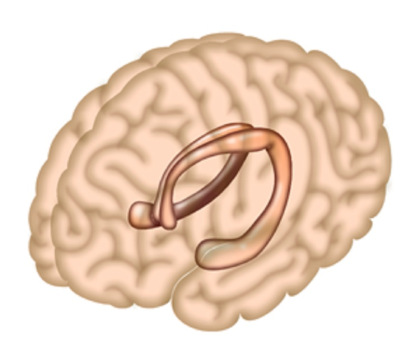
The hippocampus is a region of the brain largely responsible for memory formation. Credit Salk Institute.

The hippocampus is a region of the brain largely responsible for memory formation. Credit Salk Institute.

Scientists have created a new model of memory that explains how neurons retain select memories a few hours after an event. This new framework provides a more complete picture of how memory works, which can inform research into disorders liked Parkinson’s, Alzheimer’s, post-traumatic stress and learning disabilities.

A switch in the brain of people with epilepsy dictates whether their seizures will be relatively mild or lead to a dangerous and debilitating loss of consciousness, Yale researchers have found.

By predicting our eye movements, our brain creates a stable world for us. Researchers used to think that those predictions had so much influence that they could cause us to make errors in estimating the position of objects. Neuroscientists at Radboud University have shown this to be incorrect. The Journal of Neuroscience published their findings – which challenge fundamental knowledge regarding coordination between brain and eyes.

Extreme and traumatic events can change a person — and often, years later, even affect their children. Researchers have now unmasked a piece in the puzzle of how the inheritance of traumas may be mediated.

Artists have structurally different brains compared with non-artists, a study has found. Participants’ brain scans revealed that artists had increased neural matter in areas relating to fine motor movements and visual imagery. The research, published in NeuroImage, suggests that an artist’s talent could be innate. But training and environmental upbringing also play crucial roles in their ability, the authors report.

Certain errors in visual perception in people with schizophrenia are consistent with interference or ‘noise’ in a brain signal known as a corollary discharge, a new study shows.

Finally this week,  a recent study has shown that use of abstract gestures is a powerful tool for helping children understand and generalize mathematical concepts.


Are Pessimistic Brains Different?


The ability to stay positive when times get tough – and, conversely, of being negative – may be hardwired in the brain, finds new research led by a Michigan State University psychologist.

The study, which appears in the Journal of Abnormal Psychology, is the first to provide biological evidence validating the idea that there are, in fact, positive and negative people in the world.

“It’s the first time we’ve been able to find a brain marker that really distinguishes negative thinkers from positive thinkers,” said Jason Moser, lead investigator and assistant professor of psychology.

For the study, 71 female participants were shown graphic images and asked to put a positive spin on them while their brain activity was recorded. Participants were shown a masked man holding a knife to a woman’s throat, for example, and told one potential outcome was the woman breaking free and escaping.

The participants were surveyed beforehand to establish who tended to think positively and who thought negatively or worried. Sure enough, the brain reading of the positive thinkers was much less active than that of the worriers during the experiment.

“The worriers actually showed a paradoxical backfiring effect in their brains when asked to decrease their negative emotions,” Moser said. “This suggests they have a really hard time putting a positive spin on difficult situations and actually make their negative emotions worse even when they are asked to think positively.”

The study focused on women because they are twice as likely as men to suffer from anxiety related problems and previously reported sex differences in brain structure and function could have obscured the results.

Moser said the findings have implications in the way negative thinkers approach difficult situations.

“You can’t just tell your friend to think positively or to not worry – that’s probably not going to help them,” he said. “So you need to take another tack and perhaps ask them to think about the problem in a different way, to use different strategies.”

Negative thinkers could also practice thinking positively, although Moser suspects it would take a lot of time and effort to even start to make a difference.

– See more at: http://msutoday.msu.edu/news/2014/positive-negative-thinkers-brains-revealed/#sthash.PHIphaY2.dpuf

Mental Health and Well-Being for Mind and Brain

Why do some of us show only minor effects of stress while others show a more severe and disabling mental and physical decline? This slide share presentation explains how you can use your brain to recognise stress and manage it so as to benefit yourself and others in your lives.

Topics addressed include (i) understanding the brain and how it processes emotions, (ii) understanding psychological stress including its sources and consequences and (iii) reducing and preventing stress through the practice of mindfulness (awareness), cognitive restructuring (recognising your thoughts), diet, exercise and progressive relaxation.

Click here for audio recording of a workshop presentation to students and faculty at the Flinders University Department of Education, Adelaide, South Australia.


Weekly Neuroscience Update

Neuroscience research demonstrates that the brain regions underpinning moral judgment share resources with circuits controlling other capacities such as emotional saliency, mental state understanding and decision-making. Credit: Jean Decety

Neuroscience research demonstrates that the brain regions underpinning moral judgment share resources with circuits controlling other capacities such as emotional saliency, mental state understanding and decision-making. Credit: Jean Decety

People who care about justice are swayed more by reason than emotion, according to new brain scan research from the Department of Psychology and Center for Cognitive and Social Neuroscience. Researchers have discovered a gene that is likely to play a role in the risk of psychosis in bipolar disorders.

A new way to artificially control muscles using light, with the potential to restore function to muscles paralysed by conditions such as motor neuron disease and spinal cord injury, has been developed by scientists at UCL and King’s College London.

Researchers at the University of California, San Diego School of Medicine and the Allen Institute for Brain Science have published a study that gives clear and direct new evidence that autism begins during pregnancy.

A new study is the first documented study that shows cognitive behavioral therapy in a group setting is capable of changing the brain structure in patients with chronic pain.

By examining the sense of touch in stroke patients, a University of Delaware cognitive psychologist has found evidence that the brains of these individuals may be highly plastic even years after being damaged.

A new chemical messenger that is critical in protecting the brain against Parkinson’s disease has been identified by scientists.

Scents and smells can form the basis of some of the most significant memories humans form in their lives, a new study suggests

In the first study of its kind, two researchers have used popular music to help severely brain-injured patients recall personal memories.