Like Valium and Oxycontin, without the Side Effects


A Buddhist monk—this one with a doctorate in cell biology—has teamed with two prominent neuroscientists to present the latest findings on what meditation does to the brain and how those changes to neural circuits have some of the trappings of what might be labeled a perfect drug—Prozac-like muting of depression symptoms or prophylaxis against PTSD (just two on the list). In this video Richard Davidson, Ph.D., presents their research at Stanford University in a talk entitled,  The Emergence of Contemplative Neuroscience.

Weekly Neuroscience Update

EvC dwarfism results from genetic mutations that disrupt the signaling pathway known as sonic hedgehog (Shh). Statistical analyses confirmed the significant negative association between EvC and bipolar disorder. This further suggested that the Shh pathway plays a role in bipolar disorder. This image is for illustrative purposes only and shows the 3D structure of the Sonic Hedgehog protein. Credit Peter Znamenskiy/ Hall et al.

EvC dwarfism results from genetic mutations that disrupt the signaling pathway known as sonic hedgehog (Shh). Statistical analyses confirmed the significant negative association between EvC and bipolar disorder. This further suggested that the Shh pathway plays a role in bipolar disorder. This image is for illustrative purposes only and shows the 3D structure of the Sonic Hedgehog protein. Credit Peter Znamenskiy/ Hall et al.

Researchers have identified what is likely a key genetic pathway underlying bipolar disorder, a breakthrough that could lead to better drugs for treating bipolar affective disorder, as well as depression and other related mood disorders.

Hubs are locations in the brain where different networks come together to help us think and complete mental tasks. Now, a new study offers a fresh view of how injury affects the brain. It finds damage to brain hubs disrupts our capacity to think and adapt to everyday challenges more severely than damage to locations distant from hubs.

Neuroscientists have found that a gene mutation that arose more than half a million years ago may be key to humans’ unique ability to produce and understand speech.

A paper published this month in Biological Psychiatry shows that children who spent their early years in these institutions have thinner brain tissue in cortical areas that correspond to impulse control and attention.

Researchers have found vital new evidence on how to target and reverse the effects caused by one of the most common genetic causes of Parkinson’s.

Neuroscientists and engineers at North Carolina’s Duke University have pioneered a method with which the effects of transcranial magnetic stimulation (TMS) on the brain can be measured. The Duke team has made it possible to measure the response of a single neuron to an electromagnetic charge–something that has not before been possible. The work offers the potential to improve and initiate novel TMS therapy approaches.

Drugs, Addiction and the Brain

alcohol-addiction-brain-scan

I will be giving a talk on drugs, addiction and the brain for alcohol and drug awareness week  which is scheduled to take place November 17th – 21st 2014.

This talk will explain how the brain basically works and how and where drugs such as heroin, cocaine, alcohol and cannabis work in the brain. The concept of “reward” which is the property that is characteristic of many addictive drugs will also be discussed. The talk will be useful for those interested in learning about the diverse effects of drugs of abuse on the brain.

Details: Wednesday 19th November 7-9 pm at the Absolute Hotel, Limerick– Abbey Suite 3. Free Admission.

What Happens Inside The Musician’s Brain?

When musicians play, what is happening inside their brains? Scientists at Berlin’s Max Planck Institute for Human Development have discovered that while performing together, their neurological activity goes into a kind of synchronization mode – almost as though they were connected by a wireless network.

Weekly Neuroscience Update

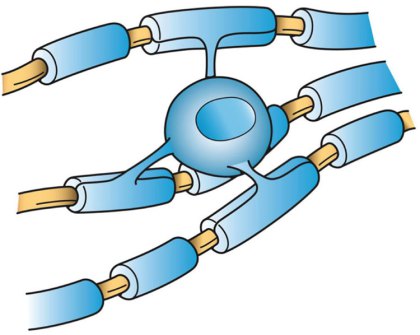
Oligodendrocytes are formed by a type of stem cell in the brain called oligodendrocyte progenitor cells (OPCs), and are responsible for re-wrapping, or remyelinating, the bare axons with myelin in response to injuries or diseases. This image is for illustrative purposes only and shows and artist’s representation of an oligodendrocyte. Credit Holly Fischer.

Oligodendrocytes are formed by a type of stem cell in the brain called oligodendrocyte progenitor cells (OPCs), and are responsible for re-wrapping, or remyelinating, the bare axons with myelin in response to injuries or diseases. This image is for illustrative purposes only and shows and artist’s representation of an oligodendrocyte. Credit Holly Fischer.

Like conducting an errant orchestra to play together, researchers are guiding processes that go awry in multiple sclerosis to repair themselves.

For the first time, scientists have discovered the exact mechanism rabies uses to efficiently enter the central nervous system, where it erupts in a toxic explosion of symptoms.

Neurons in human skin perform advanced calculations, previously believed that only the brain could perform.

Brain scans of college students have shed light on why people learn more effectively when their curiosity is piqued than when they are bored stiff. Researchers in the US found evidence that curiosity ramped up the activity of a brain chemical called dopamine, which in turn seemed to strengthen people’s memories.Students who took part in the study were better at remembering answers to trivia questions when they were curious, but their memories also improved for unrelated information they were shown at the same time.The findings suggest that while grades may have their place in motivating students, stimulating their natural curiosity could help them even more.

Researchers have discovered that T-cells – a type of white blood cell that learns to recognize and attack microbial pathogens – are activated by a pain receptor.

Quantitative tools dissect how two genes mutated in early-onset Parkinson’s disease collaborate in flagging damaged mitochondria.

A new study suggests a neural link between curiosity, motivation, and memory.

In a recent study published in the journal PLOS One, scientists uncovered a new pathway by which the brain uses an unusual steroid to control blood pressure. The study also suggests new approaches for treating high blood pressure and heart failure

Research using state-of-the-art eye-tracking technology has found that people suffering from chronic pain pay more frequent and longer attention to pain-related words than individuals who are pain-free.

The traditional view is that learning is based on the strengthening or weakening of the contacts between the nerve cells in the brain. However, this has been challenged by new research findings from Lund University in Sweden. These indicate that there is also a third mechanism – a kind of clock function that gives individual nerve cells the ability to time their reactions.

And finally this week, how your brain decides who to make friends with when you start university.

Your Brain On Improv


What happens in the brain during musical improv? Researcher Charles Limb scanned the brains of jazz musicians to find out.

About Charles Limb

Dr. Charles Limb is an Associate Professor in the Johns Hopkins Department of Otolaryngology — Head and Neck Surgery, as well as faculty at the Peabody Conservatory of Music. He combines his two passions to study the way the brain creates and perceives music. He’s a hearing specialist and surgeon at Johns Hopkins who performs cochlear implantations. In his free time, he plays sax, piano and bass.

In search of a better understanding of how the mind processes complex auditory stimuli such as music, Dr. Limb has been working with Dr. Allen Braun to look at the brains of improvising musicians and study what parts of the brain are involved when a musician is really in the groove.

Weekly Neuroscience Update

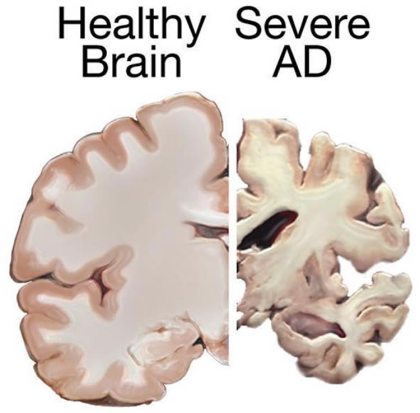
Earlier research showed that progranulin levels were elevated near plaques in the brains of patients with Alzheimer’s disease, but it was unknown whether this effect counteracted or exacerbated neurodegeneration. This image is for illustrative purposes only. Credit NIH.

Earlier research showed that progranulin levels were elevated near plaques in the brains of patients with Alzheimer’s disease, but it was unknown whether this effect counteracted or exacerbated neurodegeneration. This image is for illustrative purposes only. Credit NIH.

Low levels of the naturally occurring protein progranulin exacerbate cellular and cognitive dysfunction, while raising levels can prevent abnormalities in an Alzheimer model.

Teenagers who said they had a traumatic brain injury in their lifetime, especially girls, also reported significantly higher rates of harmful behavior, according to new research.

A new University of Iowa study further supports an inescapable message: caregivers have a profound influence – good or bad – on the emotional state of individuals with Alzheimer’s disease. Patients may not remember a recent visit by a loved one or having been neglected by staff at a nursing home, but those actions can have a lasting impact on how they feel. The findings of this study are published in the September 2014 issue of the journal Cognitive and Behavioral Neurology.

A new study reveals individual neurons in the human brain are triggered by the subject’s conscious perception, rather than by the visual stimulus.

A chemical in the brain plays a vital role in controlling the involuntary movements and vocal tics associated with Tourette Syndrome (TS), a new study has shown.

Researchers discover how the brain works during meditation.

Finally, this week, teenagers who regularly do not get enough sleep are more likely to struggle academically, the results of a new study show. Swedish researchers looked at over 20,000 teenagers aged between 12 and 19 and found that those who regularly slept for less than seven hours per night were more likely to fail in school. Details of these findings are published in the journal, Sleep Medicine.

.