Weekly Neuroscience Update

Carnegie Mellon University neuroscientists have identified a new pathway by which several brain areas communicate within the brain’s striatum.
An over-active habit system may be at the root of many psychological problems involving repetitive behaviours like OCD, alcoholism and binge eating, new research suggests. The neuroimaging study, which is published in the American Journal of Psychiatry, found that people with Obsessive-Compulsive Disorder (OCD) had difficulty controlling their habits.
A new study suggests that the right hemisphere of the brain may be able to assist a damaged left hemisphere in protecting visual attention after a stroke.
Computer based ‘brain training’ can boost memory and thinking skills in older adults, but many programs promoted by the $1 billion brain training industry are ineffective, reveals new research by the University of Sydney.
Researchers have found that navigational brain cells that help sense direction are as electrically active during deep sleep as they are during wake time—and have visual and vestibular cues to guide them. Such information could be useful in treating navigational problems, among the first major symptoms of Alzheimer’s disease and other neurological disorders.
New technology could help researchers advance blood biomarker capabilities that show changes in low concentrations of specific proteins present following a neurological injury.
Our brains generate a constant hum of activity: As neurons fire, they produce brain waves that oscillate at different frequencies. Long thought to be merely a byproduct of neuron activity, recent studies suggest that these waves may play a critical role in communication between different parts of the brain.
Thousands of genetic “dimmer” switches, regions of DNA known as regulatory elements, were turned up high during human evolution in the developing cerebral cortex, according to new research from the Yale School of Medicine.
People with anorexia nervosa and with body dysmorphic disorder have similar abnormalities in their brains that affect their ability to process visual information, a new study reveals.
Finally this week, overall fluid intelligence — the ability to analyze information, engage in critical thinking, and solve problems — is thought to peak in early adulthood, but a new study suggests that different aspects of fluid intelligence peak at different ages.
How does the brain change with age?
Some people’s minds remain sharp and intact well into their 80s and 90s, whereas others can slide into cognitive decline from their early 50s. Why such a divergence? And then there are the people struck by the spectrum of conditions known as Alzheimer’s disease; why do some people succumb to such a slow and debilitating fate, while others live longer, healthier lives?
A major £5M grant from BBSRC has established a new team called the Cambridge Centre for Ageing and Neuroscience (Cam-CAN) that seeks answers to these questions. By studying the brain and its cognitive functions using advanced brain imaging techniques and cognitive experiments, the team of researchers, based at the University of Cambridge and the MRC Cognition and Brain Sciences Unit, hope to unravel the mechanisms and processes of healthy brain ageing.
Inside The Sleeping Brain
We spend about one-third of our time on Planet Earth asleep. That’s about 16 hours a night as infants, 9 hours as teens and 7 to 8 hours as adults. Until 25 years ago, scientists knew little about this nighttime habit of ours. In this infographic experts in the Cleveland Clinic’s Sleep Disorders Center share some interesting facts about sleep.

Weekly Neuroscience Update
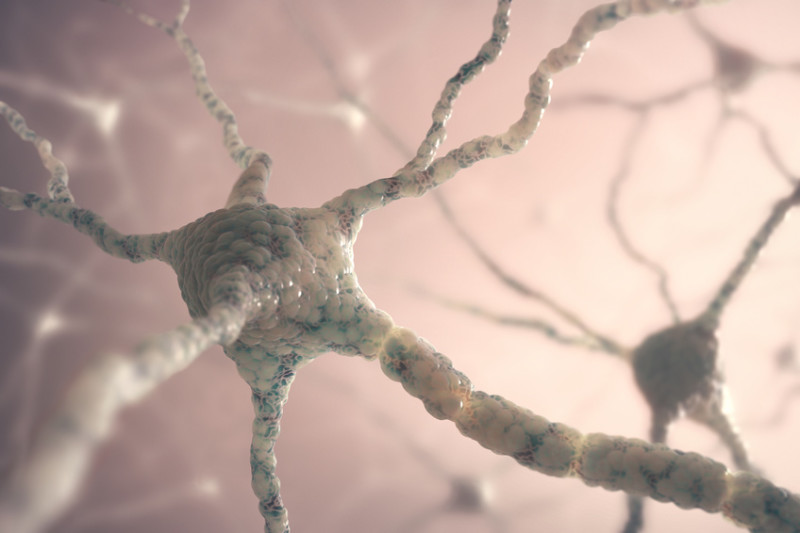
Neurons (stock image). “New neurons may serve as a means to fine-tune the hippocampus to the predicted environment,” Opendak says. “In particular, seeking out rewarding experiences or avoiding stressful experiences may help each individual optimize his or her own brain.
The discovery that the human brain continues to produce new neurons in adulthood challenged a major dogma in the field of neuroscience, but the role of these neurons in behavior and cognition is still not clear. In a review article, researchers synthesize the vast literature on this topic, reviewing environmental factors that influence the birth of new neurons in the adult hippocampus.
An analysis of how nerve fibers make vital connections during brain development could aid the understanding of how some cognitive disorders occur.
Our hearing has a secret bodyguard, a newly discovered connection from the cochlea to the brain that warns of intense incoming noise that causes tissue damage and hearing loss, according to new research.
In a recent study scientists have found evidence of neuroinflammation in key regions of the brains of patients with chronic pain.
Three Austrian men have become the first in the world to undergo a new technique called “bionic reconstruction”, enabling them to use a robotic prosthetic hand controlled by their mind, according to new research.
New research shows that infants learning more than one language do more lip-reading than infants learning a single language.
Finally this week, a new study confirms what has long been suspected: highly processed foods like chocolate, pizza and French fries are among the most addictive.
How the Brain Makes Memories

Here’s a nice infographic on how the brain makes memories. It was created by Dwayne Godwin, a neuroscientist and Jorge Cham of www.phdcomics.com.
Click here for a higher image resolution.
Could your brain direct an Oscar winner?
Neuroscience is being used in Hollywood to measure and predict audience reactions.
Weekly Neuroscience Update

With the aid of this detailed brain map, researchers were able to identify previously unknown cell types, including six different types of oligodendrocytes and a nerve cell. This image of an oligodendrocyte is for illustrative purposes only. Image credit: Jurjen Broeke.
Using a process known as single cell sequencing, scientists at Karolinska Institutet have produced a detailed map of cortical cell types and the genes active within them. The study, which is published in the journal ‘Science’, marks the first time this method of analysis has been used on such a large scale on such complex tissue.
Researchers have identified five genetic variants that influence the size of structures within the brain, a discovery that could help determine the genetic processes that underlie neuropsychiatric diseases.
A new study sheds light on the brain cells that function in establishing one’s location and direction. The findings contribute to our understanding of the neural mechanisms underlying our abilities to successfully navigate our environment, which may be crucial to dealing with brain damage due to trauma or a stroke and the onset of diseases such as Alzheimer’s.
Meditation over many years is tied to smaller age-related decreases in brain volume, according to a new study.
In the social world, people constantly gather information through visual cues that are used to evaluate others and interact. A new study has determined that babies can make sense of complex social situations, and that they expect people to behave appropriately.
According to a new study published in the journal JAMA Psychiatry, clinical depression is associated with a 30 percent increase of inflammation in the brain. The study set out to investigate whether inflammation is a driver of clinical depression independent of other physical illness.
Finally this week, the brain’s speech area, named after 19th century French physician Pierre Paul Broca, shuts down when we talk out loud, according to a new study that challenges the long-held assumption that ‘Broca’s area’ governs all aspects of speech production.
Weekly Neuroscience Update

A neural network is like a social network: The strongest bonds exist between like-minded partners.
Credit: Biozentrum, University of Basel
Neurons in the brain are wired like a social network, report researchers from Biozentrum, University of Basel. Each nerve cell has links with many others, but the strongest bonds form between the few cells most similar to each other. The results are published in the journal Nature.
Stroke survivors can have “significant” improvement in arm movements after using the Nintendo Wii as physiotherapy according to researchers.
Grasping an object involves a complex network of brain functions. First, visual cues are processed in specialized areas of the brain. Then, other areas of the brain use these signals to control the hands to reach for and manipulate the desired object. New findings suggest that the cerebellum, a region of the brain that has changed very little over time, may play a critical role. Findings could lead to advancements in assistive technologies benefiting the disabled.
A process previously thought to be mere background noise in the brain has been found to shape the growth of neurons as the brain develops, according to research published in Cell Reports.
Applying lessons learned from autism to brain cancer, researchers at The Johns Hopkins University have discovered why elevated levels of the protein NHE9 add to the lethality of the most common and aggressive form of brain cancer, glioblastoma. Their discovery suggests that drugs designed to target NHE9 could help to successfully fight the deadly disease.
Scientists at the Hebrew University of Jerusalem in Israel claim to have overturned standard thinking on how the brain is able to perform different tasks by studying brain activity in blind people.
Previously, it was thought ability to repair DNA was the same throughout the body, but new research overturns this idea and shows organs vary in the extent to which they carry out a type of DNA repair called nucleotide excision repair.
Finally this week, a major study by an international team shows new evidence that long-term smoking could cause thinning of the brain’s cortex. The cortex is the outer layer of the brain in which critical cognitive functions such as memory, language and perception take place. Interestingly, the findings also suggest that stopping smoking helps to restore at least part of the cortex’s thickness.
Upcoming Talk On Empathy, Engagement and the Brain
As part of Limerick Lifelong Learning Festival which takes place Monday 23rd – Sunday 29th March, I will be giving a talk on the topic of empathy and the brain.
The date is Friday, 27 March 2015 from 14:00 to 16:00; Tickets are free, but limited to 50 places only; book your place via Eventbrite if you wish to attend.

