
In a new study, researchers identified the most common characteristics of 85 COVID-19 patients who died in Wuhan, China in the early stages of the coronavirus pandemic. The study reports on commonalities of the largest group of coronavirus patient deaths to be studied to date.
Abnormal blood clotting contributes to death in some patients with severe COVID-19 infections.
A newly developed blood test for Alzheimer’s disease measures a specific variant of the tau protein. Early results show the test has a good capacity to distinguish Alzheimer’s disease from other tauopathies.
New findings support the theory that impaired prefrontal control of the dopamine system is a key mechanism for the development of schizophrenia.
Researchers report that in depressed individuals there are increased amounts of an unmodified structural protein, called tubulin, in lipid rafts — fatty sections of a cell membrane — compared with non-depressed individuals.
A new genetics test for COVID-19 has been developed by an international team of researchers.
Genetic variability in the human immune system may affect susceptibility to, and severity of infection by severe acute respiratory syndrome coronavirus 2 (SARS-CoV-2), the virus responsible for the coronavirus disease (COVID-19).
Researchers have developed a new approach to prevent amyloid plaque formation by engineering a nanodevice that captures the peptides before they can assemble.
A new study puts into question conventional belief that the eyes communicate with the brain exclusively via one signaling pathway. Researchers have identified a subset of retinal neurons that sends inhibitory signals to the brain. This subset of neurons is also involved in the synchronization of circadian rhythms to light/dark cycles and pupil constriction to bright light intensity.
Finally, this week, a new study sheds light on the role brain insulin plays in weight and visceral fat accumulation.
Using Your Brain To Beat Worry and Stress
I was delighted to join Migraine Ireland this week to discuss recent neuroscience findings on how our brain responds to worry and stress, and provides various strategies to overcome them.

Weekly Neuroscience Update
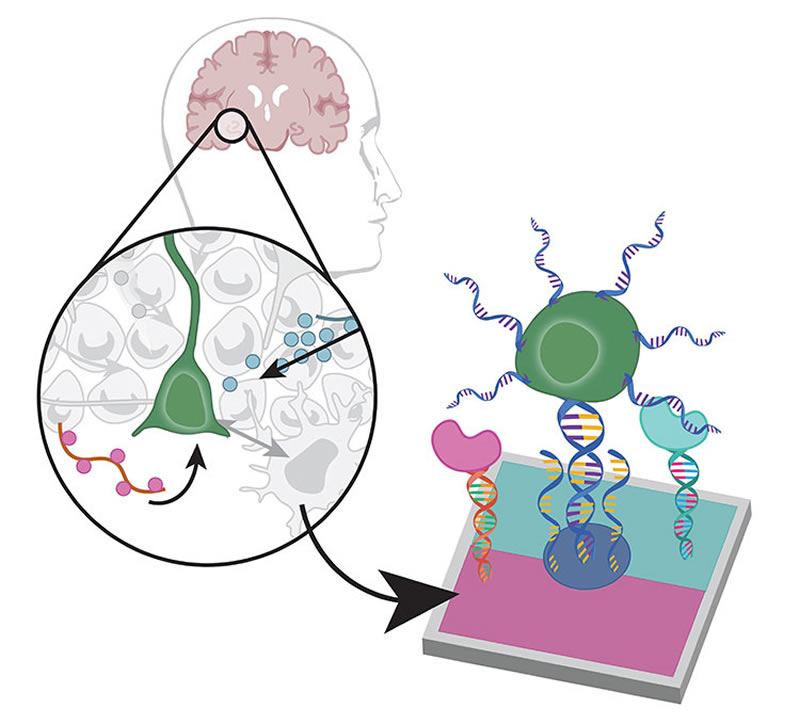
People who develop Parkinson’s disease before age 50 may have been born with disordered brain cells that went undetected for decades, according to new research. The research points to a drug that potentially might help correct these disease processes.
A new substance named Lu AF60097 may help reduce side effects from tricyclic antidepressants in those with severe depression.
Researchers have uncovered a key role of medial prefrontal cortex corticotropin-releasing factor interneurons for bidirectionally controlling motivated behavioral styles under stress. The findings could help in the development of new treatments for PTSD.
MIT researchers have identified a protein fragment that may inhibit COVID-19’s ability to enter human lung cells.
Researchers have developed a new method to record brain activity at scale. The new technique could help in the development of new neuroprosthetic devices to help amputees and those with movement restricting neurological conditions.
New research suggests that eye movements may come before hand movements in actions that require a two-step decision-making process.
A new method to accurately record brain activity at scale has been developed by researchers. The technique could lead to new medical devices to help amputees, people with paralysis or people with neurological conditions such as motor neuron disease.
Stress, loneliness, and sleep loss can weaken the immune system, leaving people more susceptible to COVID-19.
Finally this week. using robotics, researchers have uncovered mechanisms in the cerebellum and spinal cord that determine how the nervous system responds to induced changes in step length. The findings could have implications for physical rehabilitation programs for people with movement disorders.
Anatomy Of A Migraine Attack #BrainAwarenessWeek
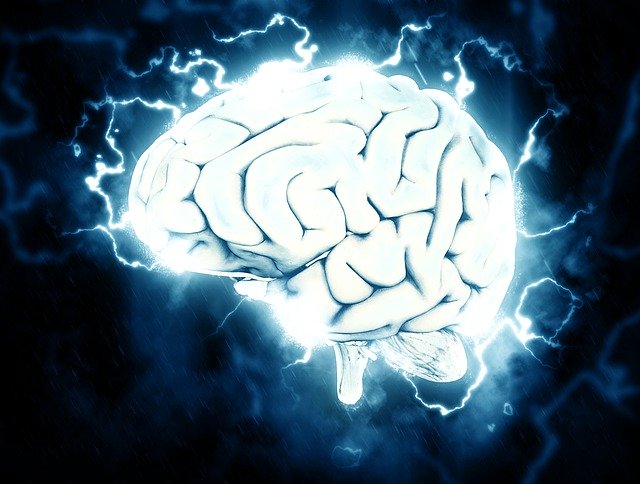
Scientists have learned a lot in recent years about what happens in the brain to explain the throbbing pain, nausea, heightened sensitivity to light or sound felt during a migraine headache and the mysterious ‘aura’ that both doctors and scientists use to describe the telltale period, starting up to an hour before a migraine attack, when a person sees dots, wavy lines, flashing lights, blind spots or difficulty with speech, sensation, or movement.
What triggers a migraine attack?
Although researchers don’t understand exactly what triggers migraine attacks, they do know that certain foods, lack of sleep, changes in weather, and even stress can trigger a migraine attack in 1 in 200 people.
The anatomy of a migraine attack
Neuroscientists now see migraine as firstly a disturbance in nerve function rather than a disorder of the brain’s blood vessels. It is believed that in most patients, a wave of electrical activity passing through a major nerve that collects and transmits signals to the face – the trigeminal nerve – and stimulates the release of chemicals such as CGRP and other substances that cause inflammation, makes the nerves more sensitive to pain, and causes blood vessels near the brain to expand (dilate). This nerve irritation often progresses as an electrical wave from the skin to nerves located centrally in the brain.
The key to treatment is to act quickly to stop the irritation spreading. In fact, anti-migraine drugs can offer relief only in the earlier stages of the attack, but not later, when the pain neurons in the brain have become sensitized. For this reason, patients are advised to take medication within 20 minutes of an attack and while migraine pain is still mild.
The wave that turns into a flood
A migraine attack is triggered when a wave of electrical activity that starts in the trigeminal nerve on the side of the face enters the brain and ripples across the surface of the brain. In fact, researchers have been able to demonstrate a possible link between this wave and the experience of ‘aura’ particularly as it spreads across the visual part of the brain. Several drugs used to prevent migraine attacks work by preventing this wave from spreading.
Notes
Migraine is a complex neurological condition that is classified by the World Health Organisation as the 7th most disabling disease worldwide, the 4th for women.
Migraine is the most common neurological condition in the world, affecting about 12 – 15% of people. It is three times more common in women than it is in men and is usually inherited. It is a very individual condition. Some people experience only one or two attacks per year while others suffer on a weekly basis. An attack can last from 4 to 72 hours.
For more information and support visit https://migraine.ie
Weekly Neuroscience Update
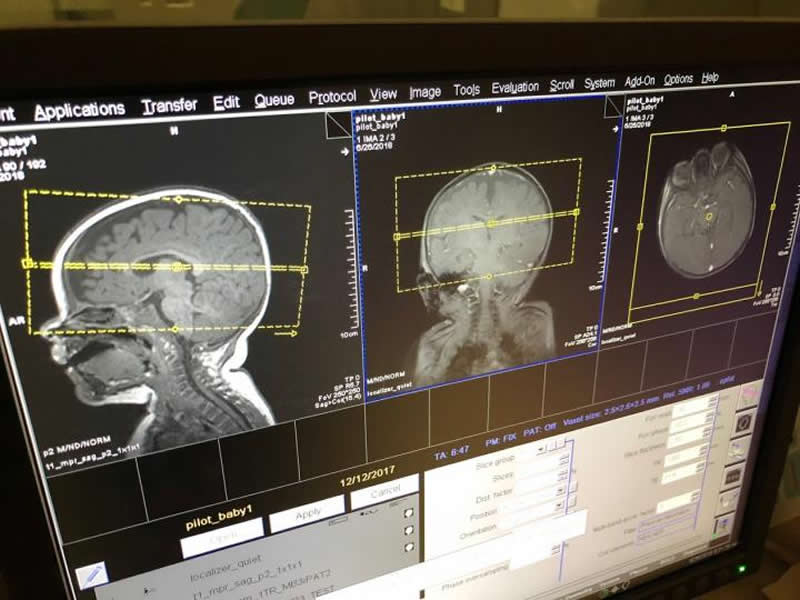
A newborn’s brain is more adult-like than previously assumed. Neuroimaging revealed much of the visual cortex scaffolding is in place, along with patterns of brain activity at 27 days of age, although it is not quite as strong as seen in adult brains.
New research uses the mating songs of birds to show how intrinsic properties of cells are closely tied to the complex processes of learning.
People with a life-long history of antisocial behavior had decreased mean surface area of the brain and lower mean cortical thickness than those with no history of antisocial behavior. Much of the cortical thinning was in areas associated with emotional regulation, motivation, and goal-directed behavior.
Two separate studies display the fascinating relations between AI and neuroscience.
Low-intensity exercise triggers brain networks associated with cognitive control and attention processing, while high-intensity exercise activates networks involved in emotional processing.
Following a stroke, dysfunction in the glymphatic system causes cerebrospinal fluid to flood the brain, drowning neurons, and triggering cerebral edema.
An unexpected research finding is providing new information that could lead to new treatments of certain neurological diseases and disorders, including multiple sclerosis, Alzheimer’s disease and spinal cord injury.
Male patients on the autism spectrum who were given oxytocin for four weeks experienced improvements in social attachment behaviors for up to 12 months.
Finally this week, new brain networks come ‘online’ during adolescence, allowing teenagers to develop more complex adult social skills, but potentially putting them at increased risk of mental illness, according to new research.
Weekly Neuroscience Update

Researchers have developed a new method of measuring axons using MRI neuroimaging.
People with autism spectrum disorder (ASD) appear to suffer malfunctions in a cell that produces a special coating around nerve fibers that facilitates efficient electrical communication across the brain.
New findings about dopaminergic neurons in the striatum could have implications for treating Parkinson’s disease and Tourette syndrome.
Researchers have found that it is possible to assess a person’s ability to feel empathy by studying their brain activity while they are resting rather than while they are engaged in specific tasks.
Boys who exhibit inattention-hyperactivity by age 10 have an increased risk for traumatic brain injury later in life.
Combining fMRI and behavioral data, researchers examined gender identity in cisgender and transgender individuals using a new machine learning algorithm. The AI identified at least nine dimensions of brain-gender variation.
New research has provided insights into why people often make unrealistic plans that are doomed to fail.
Finally this week, a new study has found that dopamine — a neurotransmitter that plays an important role in our cognitive, emotional, and behavioral functioning — plays a direct role in the reward experience induced by music. The findings have been published in the Proceedings of the National Academy of Sciences.
Exploring the mysteries of your Heart on Valentine’s Day
The Effect of Social Media on the Brain
Slide-deck from presentation: The Effect of Social Media on the Brain – at the Safety and Wellbeing on CyberMedia Conference hosted by the Tipperary Children and Young People’s Services Committee. The Conference provided a forum to discuss social media and its impact on children and young people and marked International Safer Internet Day.
Weekly Neuroscience Update

Is music really a “universal language”? Two articles in Science support the idea that music all around the globe shares important commonalities, despite many differences.
Researchers studying six adults who had one of their brain hemispheres removed during childhood to reduce epileptic seizures found that the remaining half of the brain formed unusually strong connections between different functional brain networks, which potentially help the body to function as if the brain were intact.
Excessive exposure to certain antibiotics can predispose a person to Parkinson’s disease, with a delay of onset of up to 15 years.
Findings debunk the common theory that attention is the only cognitive function affected by sleep deprivation. Lack of sleep also hinders a person’s ability to complete activities that require following multiple steps.
A new study reveals how the insular cortex helps assess and predict physiological states of the body. The findings shed light on the neural basis for interoception.
Finally this week, neuroscientists have discovered how the listening brain scans speech to break it down into syllables. The findings provide for the first time a neural basis for the fundamental atoms of language and insights into our perception of the rhythmic poetry of speech.
Weekly Neuroscience Update
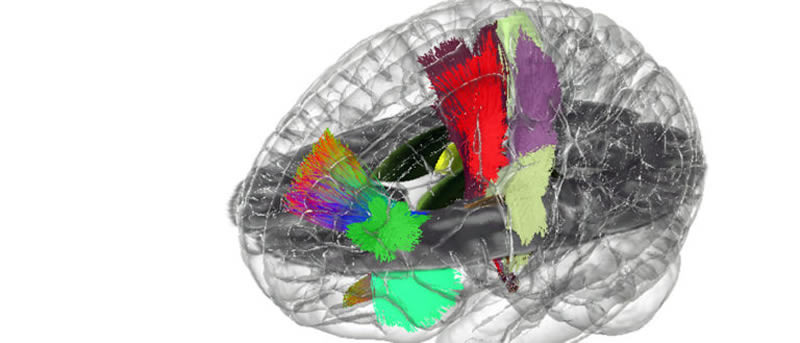
Researchers have used the HoloLense software to create an interactive holographic mapping system for axonal pathways in the human brain.
Does Parkinson’s disease (PD) start in the brain or the gut? In a new contribution published in the Journal of Parkinson’s Disease, scientists hypothesize that PD can be divided into two subtypes: gut-first, originating in the peripheral nervous system (PNS) of the gut and spreading to the brain; and brain-first, originating in the brain, or entering the brain via the olfactory system, and spreading to the brainstem and peripheral nervous system.
In the largest study of its kind, researchers identified similarities in the brain activity of people with major depressive disorder, post-traumatic stress disorder, bipolar disorder, and anxiety disorders.
A new theory, inspired by thermodynamics, takes a high-level perspective of how neural networks in the brain transiently organize to give rise to memories, thought and consciousness.
For the first time, researchers have extracted and isolated amyloid beta (Aβ) fibrils from the brains of three people who had died of Alzheimer’s disease.
A new study has revelled that deep sleep restores the medial prefrontal cortex mechanisms that restore emotion. This lowers emotional and physiological reactivity, preventing the escalation of stress and anxiety.
The largest brain imaging study of its kind may have found the reason why people with anxiety and mood disorders so often feel unable to escape negative thoughts and emotions.
Finally this week, researchers have now developed a novel computational approach to accelerate finding optimal stimuli, by building deep artificial neural networks that can accurately predict the neural responses produced by a biological brain to arbitrary visual stimuli.

