Important role of mother’s voice in activating newborn’s brain

brain activity in baby

Exciting  new research has proved for the first time that a newborn baby’s brain responds strongly to its mother’s voice.*

A research team from the University of Montreal and the Sainte-Justine University Hospital Research Centre conducted experiments  on newborn infants by performing electrical recordings within the 24 hours following their birth. Brain exploration has never before been undertaken on such young participants. 

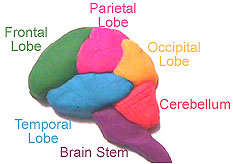
When the baby’s mother spoke, the scans very clearly show reactions in the left-hemisphere of the brain, and in particular the language processing and motor skills circuit.

It was already well known that babies have some innate language capacities, but researchers are only just beginning to understand what these capacities are and how they work.

“This research confirms that the mother is the primary initiator of language and suggests that there is a neurobiological link between prenatal language acquisition and motor skills involved in speech,” said lead researcher Dr. Maryse Lassonde.

*Université de Montréal (2010, December 17). Mom’s voice plays special role in activating newborn’s brain. ScienceDaily.

How to increase serotonin in the brain without drugs

Aerobic exercise has been shown to elevate mood

As a follow-on to my last post on depression, I would like to direct you to an article I have stumbled upon from the Journal of Psychiatry and Neuroscience (1) published in 2007.

Its primary focus is on individuals with a serotonin-related susceptibility to depression, and nonpharmacologic methods of increasing serotonin to prevent depression in those with such a susceptibility.

Nonpharmacologic methods of raising brain serotonin may not only improve mood and social functioning of healthy people — a worthwhile objective even without additional considerations — but would also make it possible to test the idea that increases in brain serotonin may help protect against the onset of various mental and physical disorders.

The article discusses four possible strategies that are worth further investigation:

1. Altering Thought Patterns

The idea that alterations in thought, either self-induced or due to psychotherapy, can alter brain metabolism is not new. Numerous studies have demonstrated changes in blood flow in such circumstances. However, reports related to specific transmitters are much less common. In one recent study, meditation was reported to increase release of dopamine.The study by Perreau-Linck and colleagues (2) is the first to report that self-induced changes in mood can influence serotonin synthesis.

2. Exposure to Bright Light

Bright light is, of course, a standard treatment for seasonal depression, but a few studies also suggest that it is an effective treatment for nonseasonal depression and also reduces depressed mood in women with premenstrual dysphoric disorder and in pregnant women suffering from depression.

3. Exercise

A third strategy that may raise brain serotonin is exercise. A comprehensive review of the relation between exercise and mood concluded that antidepressant and anxiolytic effects have been clearly demonstrated.

4. Diet

According to some evidence, tryptophan, which increases brain serotonin  is an effective antidepressant in mild-to-moderate depression. Further, in healthy people with high trait irritability, it increases agreeableness, decreases quarrelsomeness and improves mood. However, the idea, common in popular culture, that a high-protein food such as turkey will raise brain tryptophan and serotonin is, unfortunately, false. Another popular myth that is widespread on the Internet is that bananas improve mood because of their serotonin content. Although it is true that bananas contain serotonin, it does not cross the blood–brain barrier.

To read this article in full please click here.

1. J Psychiatry Neurosci. 2007 November; 32(6): 394–399.

2. Perreau-Linck E, Beauregard M, Gravel P, et al. In vivo measurements of brain trapping of α-[11C]methyl-L-tryptophan during acute changes in mood states. J Psychiatry Neurosci 2007;32:430-4.

What can we learn from Gerry Ryan’s death?

Gerry Ryan

I was saddened this week to read of the coroner’s verdict on the death of the radio DJ and TV personality Gerry Ryan (53). I have vivid memories of listening to Gerry late into the night in the mid 1980’s as I worked away in the Pharmacology laboratory in University College Galway, Ireland – on my experiments for my PhD degree on possible mechanisms of action of antidepressant drugs.

It was the middle of a devastating recession with thousands of young people including myself preparing to emigrate and very unsure of what fate awaited us. I vividly recall a riveting moment when alone in the lab one evening I was literally stuck to the floor as the then popular Terence Trent Darby’s song ‘Sign you name across my heart’ came on air and in the background was Gerry’s weary yet empathetic voice saying…’I wish you well my friends as you sign your name on your passports, on your visas, on you dole cards.’  It must be over 25 years ago but that memory has always remained with me. The power of memory! But that’s for another blog post.

Cocaine and Alcohol – a potentially lethal mix

Over the past two decades I have given talks in schools and colleges on how addictive drugs including cocaine affect the brain and it still amazes me how little the general public understand  how these potentially lethal drugs work.

The post mortem showed the Gerry had died from an abnormal heart rhythm which was likely to have been triggered by cocaine. Gerry also had “cocaethylene” in his system, which is produced when cocaine and alcohol are mixed.

Both cocaine and alcohol have very different modes of action on the brain. Cocaine is a stimulant which elevates mood, increases heart rate and puts your brain into a vigilant attentive state. Alcohol is what’s called a narcotic- a nervous system depressant – which puts you to sleep. What both drugs have in common however is that both are highly addictive.   Not only that but some studies show that when alcohol is taken before (the cocaine), it causes a greater buzz and that an alcohol and cocaine combination is 25pc more potent. To make matter worse at high enough doses both alcohol and cocaine are anesthetics – drugs that switch off important nervous functions – which does not help either.

More harmful drugs found in the cocktail

Other drugs also found in Gerry’s body were Levamisole, a veterinary medicine until recently used to treat parasitic worm infections in humans and commonly used as a cutting agent in cocaine where it adds bulk and weight to powdered cocaine (whereas other adulterants will produce smaller “rocks” of cocaine) and makes the drug appear more pure.

Also found was a small quantity was codeine – a powerful pain killer from the opiate family of morphine-like drugs –  and sold over-the-counter as Nurofen Plus or Solpadine.  Gerry probably took this because he was in some discomfort.

It is clear from reading newspaper reports that Gerry Ryan’s friends and loved ones are deeply shocked by the revelations of the inquest, insisting they had no idea about Ryan’s cocaine use. It is particularly sad that our memories of this popular broadcaster may be tarnished by the revelation. Many of his media friends have urged people not to let this be the case, and to remember Gerry for his talent and not the sordid nature of his death.

Today FM broadcaster Ian Dempsey has told the Herald newspaper that he would “It’s a pity that something like this has to overshadow what he achieved during his life. I don’t think it’s of any benefit to anyone.”

While I agree to an extent with Dempsey, I do think that Gerry’s death might be of some benefit if it opens up a debate on how we as a society deal with stress. We have heard that Gerry was under a great deal of stress in the days and weeks leading up to his death, and we are led to surmise that alcohol and drug taking was his way of coping. In this he is not alone. As the world economy continues on its downward slide, and unemployment and financial worries beset us, are we going to turn more and more to these quick fixes to handle our dis-stress?

Probably the most important lesson to be taken from Gerry’s death is the realization that the stresses of life and how we manage them IS the difference between life and death. I look forward to developing this theme in greater detail including drug-free tips on how the avoid worry and stress in future posts, but in the meantime, my deepest sympathy go to Gerry’s loved ones at this difficult time.

Slow protein clearance ‘clue to Alzheimer’s’

Amyloid plaques build up in the brains of people with Alzheimer's disease. Image: BBC Health

The BBC News website this week reports on the latest research to suggest that people with Alzheimer’s disease clear a damaging protein from their brains more slowly than those who are healthy. With an ageing population,  dementia, including Alzheimer’s, is currently seen as one of the main health challenges in Ireland the UK.

Amyloid plaques are one of the hallmarks of Alzheimer’s disease. Amyloid is a general term for protein fragments that the body produces normally. Beta amyloid is a protein fragment snipped from an amyloid precursor protein. In a healthy brain, these protein fragments are broken down and eliminated. For some reason, in Alzheimer’s disease, the fragments accumulate to form hard, insoluble plaques.

The findings from this study suggests that people with Alzheimer’s disease clear the damaging protein from their brains 30% more slowly than those who are healthy suggesting that  it is the poor clearance of the protein, not the build-up, that is the problem. Admittedly it’s a small study – just 24 people were looked at, but exciting, and could help the understanding of the disease.

Not meaning to blow my own trumpet (ahem!) but in 2008 my research group showed how the amyloid protein might be toxic in higher concentration …by inappropriately increasing the concentrations of a neurotransmitter called glutamate in the hippocampus – a brain region long associated with Alzheimer’s disease*. It’s well known that high concentrations of glutamate can damage local nerve cells and thus impair the functioning of the hippocampus.

It’s exciting to see the pieces of evidence coming together as the search for an effective treatment for dementia continues apace.

*  O’Shea S.D., Smith I.M., McCabe O.M., Cronin M.M., Walsh D.M., O’Connor W.T. Sensors. 2008; 8(11):7428-7437.

Latest research from computational neuroscience

Another fascinating topic from the SFN Annual Meeting was the research being undertaken in the area of computational neuroscience.

Computational neuroscience is the study of brain function in terms of the information processing properties of the structures that make up the nervous system.

It is an interdisciplinary science that links the diverse fields of neuroscience, cognitive science and psychology with electrical engineering, computer science, mathematics and physics.

In an interview in the current edition of New Scientist, Professor Terry Sejnowski, head of the computational neurobiology lab at the Salk Institute in La Jolla, California, says some of the most intriguing results in computational neuroscience come from collaborations between modelers and experimentalists.

Professor Sejnowski and his research colleagues’ research in modeling signal transfer patterns throughout the brain has resulted in new techniques which make it possible to simultaneously record signals from many neurons. The sensitivity means scientists can for the first time, watch the output from a neuron spread through the brain.

Research has also found that neurons respond differently to different stimuli (for example, signals required to move a prosthetic arm can change when people are tired). This research will help improve brain-machine interferences such as prosthetic limbs and thought-controlled wheelchairs.

Neuroscience research may help brain injury recovery

New research shows that the way the brain first captures and encodes a situation or event is quite different from how it processes subsequent similar events.

I was interested to read a special report from the Center for Neuro Skills which describes the latest developments into how the brain registers new memory and equally importantly, how it strengthens older memories.

It has been known for years that the so-called NMDA receptor – a  lock on the skin of the nerve cell which is ‘opened’ by a special key – the neurotransmitter glutamate – is involved in new learning and memory.

However this research shows that the way the brain first captures and encodes a situation or event is quite different from how it processes subsequent similar events,  and suggests a whole new NMDA-independent system involving the so-called AMPA receptor – a less powerful type of NMDA receptor –  involved in strengthening older memories.
Why is this so important?   

Well, this new system is known to be critically involved in Alzheimer’s disease and other kinds of brain deficit memory impairment including stroke and head injury.

In fact, you may be interested to know that several drug companies have developed drugs that open the AMPA receptors called ampakines – a class of compounds known to enhance attention span and alertness, and facilitate learning and memory.

Unlike earlier stimulants such as caffeine, methylphenidate (Ritalin), and the amphetamines, ampakines do not seem to have unpleasant, long-lasting side effects such as sleeplessness.

These new memory enhancing drugs will be coming to a pharmacy near you within the next few years!

Don’t forget!

Early childhood experiences influence the brain for life

Among the hot topics of debate at last month’s SFN meeting was that of the developing brain and how early childhood experiences, whether good or bad, influence the brain for a lifetime. 

Regina Sullivan of New York University postulates that child abuse-related epigenetic changes, which alter the brain, are passed on to the next generation, perhaps explaining the cycle of abuse observed in many families. (The development and maintenance of an organism is orchestrated by a set of chemical reactions that switch parts of the genome off and on at strategic times and locations. Epigenetics is the study of these reactions and the factors that influence them.)

The primary evidence for stress-related changes comes from human brain imaging, which has uncovered brain differences between children with a typical childhood and those who suffer abuse.

However, work being done by Bruce McEwen, professor of neuroscience at Rockefeller University in New York, shows that the effects of childhood experiences such as neglect or abuse, can be reversed through interventions such as high-quality early care and education programmes.

Source: New Scientist

See inside your brain in real time

Here’s a short video describing how recent advances in brain imaging with fMRI which allows you watch activity in discrete parts of the brain – for instance when in pain can allow you control it.  If true, the implications of this finding are staggering …and liberating for those with seemingly intractable emotional issues.

What can neuroscience teach us about teaching?

This Friday 3rd December, I am heading to an International Conference on Engaging Pedagogy (ICEP) in NUI Maynooth. This is an annual event that brings together researchers and practitioners in the field of third-level teaching in order to discuss means and methods of improving student engagement.

I am looking forward to presenting recent findings on how recent findings from neuroscience – the scientific study of the brain – impacts on education. You can view my abstract and those of the other presenters here.

Society for Neuroscience Annual Meeting

I have just returned from the Society for Neuroscience Annual Meeting in San Diego, California, at which I made a poster presentation.

The Society for Neuroscience annual meeting is the premier venue for neuroscientists from around the world to debut cutting-edge research. Since 1971, the meeting has offered attendees the opportunity to learn about the latest breakthroughs and network with colleagues at top destinations throughout North America.

One of the highlights of the meeting was a talk on Saturday by award-winning actress Glenn Close whose presentation, entitled “Bringing Change to Mind on Mental Illness,” focused on how science and society can work together to change minds on mental illness. Acknowledging that much work must be done to help the American public understand that mental illness is a brain disease, Close tackled questions like: “how do we reduce misconceptions, stigma, and bias that confront those with conditions like depression, bipolar disorder, and PTSD?” and “how can we help the public discern fact from fiction to bring positive change for families struggling with mental illness?” Glenn Close’s nephew, Calen Pick, and her sister, Jessie Close, also spoke about their personal struggles with mental illness.

View the full video of presentation 

On Monday, Rep. Patrick Kennedy, a tireless advocate for biomedical research and for people struggling with brain-based illnesses, highlighted his vision for a new campaign for brain research at Neuroscience 2010. Kennedy delivered the special presentation, entitled “A Neuroscience ‘Moonshot’: Rallying a New Global Race for Brain Research,” to a crowd filled with Neuroscience 2010 attendees and the general public at the San Diego Convention Center. His speech addressed the urgency of helping a generation of veterans affected by PTSD and TBI, and how public advocacy combined with growing science funding can help realize major advances in basic research and translational application for all brain-based conditions.

View the full video of Kennedy’s presentation.

I will be writing more in coming posts on the many interesting insights I gained from the meeting.

My poster presentation, SFN 2010, San Diego