Weekly Neuroscience Update

macine-learning-thought-fmri-neurosciencenews.jpg

This latest research builds on the pioneering use of machine learning algorithms with brain imaging technology to “mind read.” The findings indicate that the mind’s building blocks for constructing complex thoughts are formed by the brain’s various sub-systems and are not word-based.  Image is credited to Carnegie Mellon University.

Researchers report they can use brain activation patterns to identify complex thoughts. Their findings suggest the building blocks for complex human thoughts are not word based, but formed by the brain’s sub systems. The study provides evidence that the neural dimensions of concept representation are universal across people and languages.

A new study considers how echolocation can benefit visually impaired people to navigate safely through the environment.

Neuroscientists have used a classic branch of maths in a totally new way to peer into the structure of our brains. What they’ve discovered is that the brain is full of multi-dimensional geometrical structures operating in as many as 11 dimensions.

People tend to change the pitch of their voice depending on who they are talking to, and how dominant they feel, a new study has found.

Researchers have identified a network of neurons that plays a vital role in learning vocalizations by aiding communication between motor and auditory regions of the brain.

A new study reinforces the idea that serotonin, a molecule associated with mood, directly contributes to the actions of cocaine.

A new report published by the National Academies of Sciences, Engineering, and Medicine shows evidence supporting three interventions for cognitive decline and dementia—cognitive training, blood pressure management for people with hypertension, and increased physical activity, which might slow down cognitive decline and the onset of dementia.

Therapies to change the bacteria in the gut, through diet, pro-and prebiotic supplements, faecal matter transplants or antibiotics, could treat autism.

Finally this week, researchers say a protein usually associated with the immune system could play a role in the development of neurological conditions such as epilepsy and schizophrenia.


Weekly Neuroscience Update

girl-1990347_960_720.jpgA new report reveals how the development of music is so closely tied to our own evolution.

Even a single bout of physical activity can have significant positive effects on people’s mood and cognitive functions, according to a new study in Brain Plasticity.

A new study reports on the complex brain connections employed during word retrieval.

New research provides an unprecedented level of resolution and insight into disturbances in cortical GABAergic microcircuits, which are thought to underlie cognitive impairments in schizophrenia.

A sign language study helps researchers better understand how the brain processes language.

Researchers say the goal of memory is not to transmit the most accurate information over time, but to optimize intelligent decision making by holding on to valuable information.

A new study reports microglia may play a role in a diverse array of neurodegenerative and psychiatric illnesses.

A new brain imaging study shows for the first time that brain inflammation is significantly elevated – more than 30 per cent higher – in people with obsessive-compulsive disorder (OCD) than in people without the condition.

A research team has studied two structurally-similar proteins in the adult brain and have found that they play distinct roles in the development of dementia. 

Neurons found to be abnormal in psychosis play an important role in our ability to distinguish between what is real and what is perceived, researchers say.

A new study sheds light on the neural mechanism behind why some people with autism are unable to make eye contact with others.

While researchers report the risk of developing psychosis from cannabis use is relatively small, those who use the drug and already suffer from schizophrenia may notice their condition worsen.

Finally this week, researchers have discovered a mechanism of glucose sensing by muscles that contribute to the regulation of blood sugar levels in the body.

Weekly Neuroscience Update

neuroimaging-early-alzheimers-neurosciencneews.jpg

image credited to Per Uvdal

New technology allows researchers to produce images that predate the formation of amyloid beta in the brain. The findings have prompted researchers to suggest stabilizing the protein, rather than attempting to limit it, in order to reduce Alzheimer’s symptoms.

new study shines light on the process by which head injuries lead to brain disease later in life. 

A new type of long-term potentiation that is controlled by kainate receptors has been reported by scientists. The finding could have major benefits to understanding how the brain works and what goes wrong in neurodegenerative disorders such as epilepsy and dementia.

According to researchers, axons coordinate each other’s destruction, contributing to neurodegeneration.

Dendrites are not just passive conduits, a new study reports. The finding could change scientists’ understanding of how the brain works, and lead to new approaches for treating neurological disorders.

Structural differences have been found in the cerebral cortex of patients with depression, and these differences normalize with appropriate medication,  a new study reports.

Researchers at Karolinska Institutet collaborating in the large-scale Karolinska Schizophrenia Project are taking an integrative approach to unravel the disease mechanisms of schizophrenia. In the very first results now presented in the prestigious scientific journal Molecular Psychiatry, the researchers show that patients with schizophrenia have lower levels of the vital neurotransmitter GABA as well as changes in the brain’s immune cells.

Finally this week, researchers have identified a genetic variant that can accelerate normal brain aging in older people by up to 12 years.


Weekly Neuroscience Update

cheese

Cheese contains a chemical found in addictive drugs, scientists have found.

Chronic marijuana use disrupts the brain’s natural reward processes, according to researchers at the Center for BrainHealth at The University of Texas at Dallas.

Understanding the relation of dopamine to network activity could improve schizophrenia treatment.

Using MRI brain scans, researchers have determined there is an association between the extent of disruption to the blood-brain barrier and the severity of bleeding following a stroke.

Researchers have proposed a computational model that could help explain multisensory integration in humans.

Scientists have developed a blood test that could identify which people with depression will respond to treatment so that patients can avoid spending months taking antidepressants that do not help them.

Researchers have discovered a unique pattern of scarring in the brains of those who were exposed to blast brain injuries that differs from those exposed to other types of head injury.

Intensive physical exercise four hours after learning is the key to remembering information learnt, say Dutch researchers.

Scientists have discovered a new cause of Parkinson’s disease – mutations in a gene called TMEM230. This appears to be only the third gene definitively linked to confirmed cases of Parkinson’s disease.

Finally this week, a protein called Scribble appears to orchestrate the intracellular signaling process for forgetting, a new study reports.


Weekly Neuroscience Update

alzheimers-synapse-loss

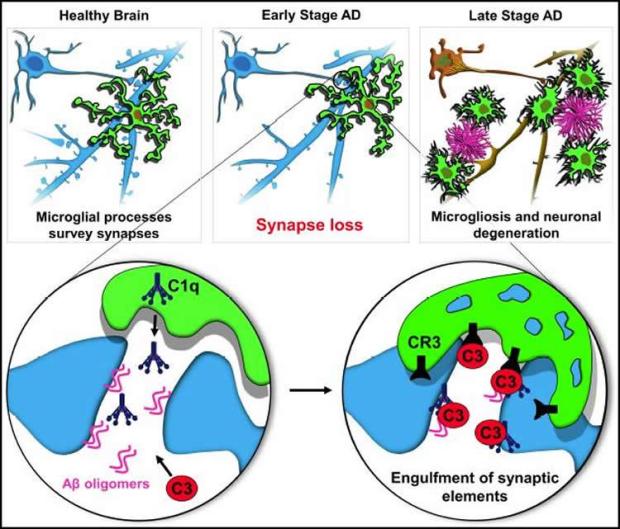
Researchers show how brain connections, or synapses, are lost early in Alzheimer’s disease and demonstrate that the process starts, and could potentially be halted, before telltale plaques accumulate in the brain.

Older adults who exercise regularly could buy an extra decade of good brain functioning, a new study suggests.

Researchers have identified an area of the brain that helps us to perceive boundaries.

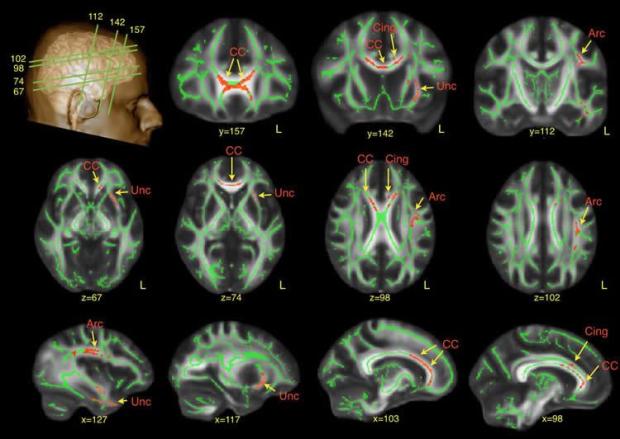
Using a sophisticated MRI technique, researchers have found abnormalities in the brain’s white matter tracts in patients with insomnia. Results of the study were published online in the journal Radiology.

A pioneering new study has revealed how an individual’s movement can give a unique insight into their inherent personality traits.

The fluctuations of your heartbeat may affect your wisdom, according to new research.

Researchers have found that the emotional impact experienced by music listeners depends on the concert hall’s acoustics.

Lysergic acid diethylamide (LSD) use causes changes in the way that people think about time that may help develop drug therapies for people suffering from depression, according to a study published in the Journal of Psychopharmacology.

Repeated minor trauma to the head and other body parts can lead to early dementia, according to a new study.

The risk of schizophrenia in children associated with younger and older maternal age appears to be partly explained by the genetic association between schizophrenia and age at first birth, according to an article published online by JAMA Psychiatry.

A new imaging study shows that intense exercise boosts two critical neurotransmitters — glutamate and gamma-aminobutyric acid (GABA) — resulting in better mental fitness.

Religion and science activate different networks in the brain and each suppresses the other, new research finds.

Sensory neurons in human muscles provide important information used for the perception and control of movement. Learning to move in a novel context also relies on the brain’s independent control of these sensors, not just of muscles, according to a new study published in the journal Current Biology.

Finally this week, women with Alzheimer’s have poorer cognitive abilities than men at the same stage of the disease, according to a new paper published in World Journal of Psychiatry.


Weekly Neuroscience Update

Early-diagnosis-staging-of-Alzheimers-disease-seen-in-PET-scans

Dr. William Jagust explains how tau and beta amyloid, two proteins associated with Alzheimer’s disease, develop in the aging brain, which his research team has visualized using positron emission tomography, or PET, scans. Photo by Stephen McNally/University of California Berkeley

Researchers have visualized the development of Alzheimer’s disease in the brain in living people using positron emission tomography, or PET scans, which they say will aid with its diagnosis and treatment. 

Researchers have  also identified a drug that targets the first step in the toxic chain reaction leading to the death of brain cells, suggesting that treatments could be developed to protect against Alzheimer’s disease, in a similar way to how statins are able to reduce the risk of developing heart disease.

new study shows that a variety of physical activities from walking to gardening and dancing can improve brain volume and cut the risk of Alzheimer’s disease by 50%.

In another study jointly led by King’s College London and the University of Southampton has found a link between gum disease and greater rates of cognitive decline in people with early stages of Alzheimer’s Disease.

Women may have a better memory for words than men despite evidence of similar levels of shrinkage in areas of the brain that show the earliest signs of Alzheimer’s disease, according to a study published in Neurology.

Refugees face a substantially higher risk of psychotic disorders, including schizophrenia, compared to non-refugee migrants from the same regions of origin, finds a study published in The BMJ

Research on decision-making bias found that interactive training exercises using video games improved participants’ general decision-making abilities when used alongside other traditional training methods.

Reducing a person’s calorie intake can protect against the development of neurodegenerative diseases such as Parkinson’s Disease.  Meanwhile, researchers may be closer to unraveling the underlying causes of Parkinson’s disease, after identifying the point at which alpha-synuclein – a protein believed to play a key role in the condition – becomes toxic to the brain.

Scientists have developed a 3D micro-scaffold technology that promotes reprogramming of stem cells into neurons, and supports growth of neuronal connections capable of transmitting electrical signals.

Finally this week, researchers in Japan have found that repetitive movements in slow-learning stages can alter an area of the brain responsible for movement, and help individuals retain these motor skills.

Weekly Neuroscience Update

autism-men-neuroimaging

Red regions indicate reduced fractional anisotropy values in autism spectrum disorder (ASD). Credit: The researchers/King’s College London.

Research at King’s College London has revealed subtle brain differences in adult males with autism spectrum disorder (ASD), which may go some way towards explaining why symptoms persist into adulthood in some people with the disorder.

Women who take estrogen supplements from before or at the start of menopause and continue with them for a few years have better preserved brain structure, which may reduce the risk of dementia.

Scientists have taken a significant step toward understanding the cause of schizophrenia, in a landmark study that provides the first rigorously tested insight into the biology behind any common psychiatric disorder.

Stopping disruptions in cellular “trash removal” brought on by errors in molecular marks on DNA may guard against neurodegenerative diseases like Parkinson’s.

Roughly twenty years before the first symptoms of Alzheimer’s disease appear, inflammatory changes in the brain can be seen, according to a new study from Karolinska Institutet published in the medical scientific journal Brain.

In a new study, researchers reveal how brain scans could be used to identify children at high risk for later-life depression – information that could pave the way for early intervention and prevention.

Researchers have shown that graphene can be used to make electrodes that can be implanted in the brain, which could potentially be used to restore sensory functions for amputee or paralysed patients, or for individuals with motor disorders such as Parkinson’s disease.

A new study has linked stress and anxiety to the same neurocircuitry in the brain as depression and dementia.

Different regions of our brain need to work simultaneously in order for us to process emotion. But according to new research, such regions are disconnected among individuals who experience multiple episodes of major depression.

A team of international researchers have announced the discovery of a system in the brain that may underlie the development of involuntary vocalizations (commonly called vocal tics) that often occur in people with Tourette syndrome.

A new study sheds light on multiple sclerosis (MS), specifically damage in the brain caused by the disease that may explain the slow and continuous cognitive decline that many patients experience. The findings, which appear in the Journal of Neuroscience, show that the brain’s immune system is responsible for disrupting communication between nerve cells, even in parts of the brain that are not normally considered to be primary targets of the disease.

Cognitive function and health appear to be genetically linked, according to research published in Molecular Psychiatry. The study was carried out by an international team from the US, the UK and Germany.

Researchers have discovered the mechanics of how dopamine transports into and out of brain cells, a finding that could someday lead to more effective treatment of drug addictions and neurological disorders such as Parkinson’s disease.

The brains of children who are obese function differently from those of children of healthy weight, and exhibit an “imbalance” between food-seeking and food-avoiding behaviors, researchers at Vanderbilt University Medical Center have found.

Finally this week, neuroscientists have now shown that rhythmic brain waves, called theta oscillations, engage and synchronize the brain regions that support the integration of memories. The results were published in the journal Current Biology.

Weekly Neuroscience Update

twentyqs

Scientists have successfully completed what is believed to be the most complex human brain-to-brain communication experiment ever. It allowed two people located a mile apart to play a game of “20 Questions” using only their brainwaves, a nearly imperceptible flash of light, and an internet connection to communicate.

A new study reveals clues to how thoughts take shape.

University of Pennsylvania researchers have made another advance in understanding how the brain detects errors caused by unexpected sensory events. This type of error detection is what allows the brain to learn from its mistakes, which is critical for improving fine motor control.

A new study shows that music can improve the quality of sleep of adults with sleep disorders.

From “brain games” designed to enhance mental fitness, to games used to improve real-world problems, to games created purely to entertain, today’s video games can have a variety of potential impacts on the brain. A new article argues that it is the specific content, dynamics, and mechanics of individual games that determine their effects on the brain and that action video games might have particularly positive benefits.

Training people to be compassionate rather than empathic might help to solve problems such as depression, burnout and narcissism, according to researchers at the Max Planck Institute for Human Cognitive and Brain Sciences.

How does the brain determine which direction to let its thoughts fly? Looking for the mechanisms behind cognitive control of thought, researchers have used brain scans to shed new light on this question.

The risk of suffering a stroke is significantly reduced for up to two months after receiving a flu vaccine, a major new study has shown.

A new study sheds light on why people with schizophrenia misinterpret social cues in others, often leading to unpleasant paranoid and persecutory thoughts.

A malfunctioning enzyme may be a reason that binge drinking increases the odds of alcoholism, according to a study by scientists at the Stanford University School of Medicine.

A new study finds that the part of the brain responsible for seeing is more powerful than previously believed. In fact, the visual cortex can essentially make decisions just like the brain’s traditional “higher level” areas.

The brain’s wiring patterns can shed light on a person’s positive and negative traits, researchers report in Nature Neuroscience.

Combining MRI and other data helps machine-learning systems predict effects of neurodegenerative disease.

The way our brain responds to others’ good fortune is linked to how empathetic people report themselves to be, according to new research.

Finally this week, a team of researchers have discovered that images of brain activity scanned by using functional magnetic resonance imaging (fMRI) can act as a signature pattern to accurately identify certain individuals.

Weekly Neuroscience Update

Total correct score on the Eyes test for each individual is plotted as a dot, coloured according to group, to illustrate the distribution of performance by group. Mean score for each group is shown by a black dot, and the error bars indicate the 95% confidence interval of the mean score. Credit: Baron-Cohen et al./PLOS ONE.

Total correct score on the Eyes test for each individual is plotted as a dot, coloured according to group, to illustrate the distribution of performance by group. Mean score for each group is shown by a black dot, and the error bars indicate the 95% confidence interval of the mean score. Credit: Baron-Cohen et al./PLOS ONE.

New results published by researchers at the Autism Research Centre (ARC) show both men and women with autism show an extreme of the typical male pattern on the ‘Reading the Mind in the Eyes’ test.

Researchers at Mayo clinic completed analysis of a 4 year prospective study comparing detailed neurologic examination versus magnetic resonance imaging (MRI) of the brain to localize neurologic dysfunction. The findings, demonstrated MRI’s superior performance to the clinical exam.

Researchers at the University of Oslo have tested a new device for delivering hormone treatments for mental illness through the nose. This method was found to deliver medicine to the brain with few side effects.

Researchers have performed the first focused ultrasound treatments in the United States for dyskinesia associated with Parkinson’s disease.

A computer-based brain-training game could improve the daily lives of people with schizophrenia, say University of Cambridge researchers.

A gene linked in previous research, appears to predict more severe post-traumatic stress disorder (PTSD) symptoms as well as a thinner cortex in regions of the brain critical for regulating strong emotions and coping with stressful experiences. This study is believed to be the first to show that the spindle and kinetochore-associated complex subunit 2 (SKA2) gene may play a role in the development of PTSD.

Midday naps are associated with reduced blood pressure levels and prescription of fewer antihypertensive medications, according to new research.

A ‘gene signature’ that could be used to predict the onset of diseases, such as Alzheimer’s, years in advance has been developed in research published in the open access journal Genome Biology.

Weekly Neuroscience Update

Using a technique dubbed “brainbow,” the Virginia Tech Carilion Research Institute scientists tagged synaptic terminals with proteins that fluoresce different colors. The researchers thought one color, representing the single source of the many terminals, would dominate in the clusters. Instead, several different colors appeared together, intertwined but distinct. Credit: Virginia Tech.

Using a technique dubbed “brainbow,” the Virginia Tech Carilion Research Institute scientists tagged synaptic terminals with proteins that fluoresce different colors. The researchers thought one color, representing the single source of the many terminals, would dominate in the clusters. Instead, several different colors appeared together, intertwined but distinct. Image Credit: Virginia Tech.

Neuroscientists know that some connections in the brain are pruned through neural development. Function gives rise to structure, according to the textbooks. But scientists have discovered that the textbooks might be wrong. Their results were published this week in Cell Reports.

In 2011, MIT neuroscientist Rebecca Saxe and colleagues reported that in blind adults, brain regions normally dedicated to vision processing instead participate in language tasks such as speech and comprehension. Now, in a study of blind children, Saxe’s lab has found that this transformation occurs very early in life, before the age of 4. The study, appearing in the Journal of Neuroscience, suggests that the brains of young children are highly plastic, meaning that regions usually specialized for one task can adapt to new and very different roles. The findings also help to define the extent to which this type of remodeling is possible.

New research suggests individuals with autistic traits may have more advanced creativity skills than those without such traits.

Physically fit people tend to have larger brain volumes and more intact white matter than their less-fit peers. Now a new study reveals that older adults who regularly engage in moderate to vigorous physical activity have more variable brain activity at rest than those who don’t. This variability is associated with better cognitive performance, researchers say.

Young adults diagnosed with attention deficit/hyperactivity disorder (ADHD) in adolescence show differences in brain structure and perform poorly in memory tests compared to their peers, according to new research from the University of Cambridge, UK, and the University of Oulu, Finland.

People who will develop dementia may begin to lose awareness of their memory problems two to three years before the actual onset of the disease, according to a new study published in the online issue of Neurology. The study also found that several dementia-related brain changes, or pathologies, are associated with the decline in memory awareness.

People with Alzheimer’s disease have fat deposits in the brain. For the first time researchers have discovered accumulations of fat droplets in the brain of patients who died from the disease and have identified the nature of the fat.

Finally this week, a computer analyzing speech has correctly identified five individuals who would later experience a psychotic episode against 29 who would not among a group of high-risk patients in a proof-of-principle study. The findings raise the prospect of a clinical tool to aid the diagnosis and prognosis of severe mental disorders such as schizophrenia.