Weekly Neuroscience Update

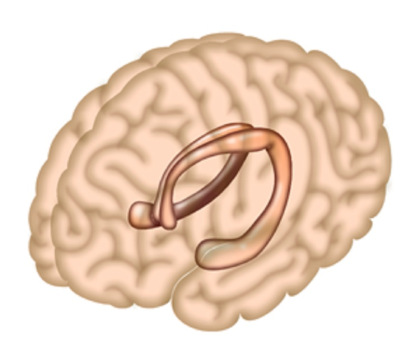
The hippocampus is a region of the brain largely responsible for memory formation. Credit Salk Institute.

The hippocampus is a region of the brain largely responsible for memory formation. Credit Salk Institute.

Scientists have created a new model of memory that explains how neurons retain select memories a few hours after an event. This new framework provides a more complete picture of how memory works, which can inform research into disorders liked Parkinson’s, Alzheimer’s, post-traumatic stress and learning disabilities.

A switch in the brain of people with epilepsy dictates whether their seizures will be relatively mild or lead to a dangerous and debilitating loss of consciousness, Yale researchers have found.

By predicting our eye movements, our brain creates a stable world for us. Researchers used to think that those predictions had so much influence that they could cause us to make errors in estimating the position of objects. Neuroscientists at Radboud University have shown this to be incorrect. The Journal of Neuroscience published their findings – which challenge fundamental knowledge regarding coordination between brain and eyes.

Extreme and traumatic events can change a person — and often, years later, even affect their children. Researchers have now unmasked a piece in the puzzle of how the inheritance of traumas may be mediated.

Artists have structurally different brains compared with non-artists, a study has found. Participants’ brain scans revealed that artists had increased neural matter in areas relating to fine motor movements and visual imagery. The research, published in NeuroImage, suggests that an artist’s talent could be innate. But training and environmental upbringing also play crucial roles in their ability, the authors report.

Certain errors in visual perception in people with schizophrenia are consistent with interference or ‘noise’ in a brain signal known as a corollary discharge, a new study shows.

Finally this week,  a recent study has shown that use of abstract gestures is a powerful tool for helping children understand and generalize mathematical concepts.


Weekly Neuroscience Update

Drumming

People who are better able to move to a beat show more consistent brain responses to speech than those with less rhythm, according to a study published in the September 18 issue of The Journal of Neuroscience. The findings suggest that musical training could possibly sharpen the brain’s response to language.

Concussions are connected with substance abuse and suicidal thoughts in adolescents, according to new research presented at a conference on sports-related brain injuries.

The structure of the brain may predict whether a person will suffer chronic low back pain, according to researchers who used brain scans. The results, published in the journal Pain, support the growing idea that the brain plays a critical role in chronic pain, a concept that may lead to changes in the way doctors treat patients.

A drug commonly used for treating diabetes may reverse symptoms of late-stage Alzheimer’s disease and is now in the process of entering a major clinical trial.

Scientists have found a new link between early-onset Parkinson’s disease and a piece of DNA missing from chromosome 22. The findings help shed new light on the molecular changes that lead to Parkinson’s disease.

The pain and itching associated with shingles and herpes may be due to the virus causing a “short circuit” in the nerve cells that reach the skin, researchers have found.

In a new study looking at toddlers and preschoolers with autism, researchers have found that children with better motor skills were more adept at socializing and communicating. This study adds to growing evidence of the important link between autism and motor skill deficits. Motor skills and muscle memory are held in the cerebellum.

Scientists have discovered differences in the brain structure of ballet dancers that may help them avoid feeling dizzy when they perform pirouettes.

New research could offer solutions into slowing down the progression of motor neurone disease (MND).

Playing first person action games can enhance your perception of movement – but only when you’re walking backwards. This is one of the findings of a new paper by University of Leicester psychologists, published in the journal Perception, which examines the effect of playing video games on motion perception.

Two new studies investigate the relationship between self-control and reward processing for chronic dieters and people who would like to control their food intake.

Scientists say they have discovered the specific brain circuitry that causes overeating, according to a study published in the journal Science.

Bad experiences enhance memory formation about places, scientists at The University of Queensland have found.

Finally this week, a new study from MIT reveals a gene that is critical to the process of memory extinction. Enhancing the activity of this gene, known as Tet1, might benefit people with posttraumatic stress disorder (PTSD) by making it easier to replace fearful memories with more positive associations,

Weekly Neuroscience Update

This image from the study shows changes in degree of connectivity in the feedback group. Increases are shown in red/yellow and decreases in blue/purple. Decreases in connectivity are seen in limbic areas, and increases are seen in prefrontal regions. (Credit: D Scheinost et al./Yale University)

People provided with a real-time readout of activity in specific regions of their brains can learn to control that activity and lessen their anxiety, say Yale researchers.

A new study provides neurobiological evidence for dysfunction in the neural circuitry underlying emotion regulation in people with insomnia, which may have implications for the risk relationship between insomnia and depression.

Different brain areas are activated when we choose for ourselves to suppress an emotion, compared to situations where we are instructed to inhibit an emotion, according to a new study from the UCL Institute of Cognitive Neuroscience and Ghent University.

Migraines and depression can each cause a great deal of suffering, but new research indicates the combination of the two may be linked to something else entirely—a smaller brain.

The epigenetic modifications, which alter the way genes function without changing the underlying DNA sequence, can apparently be detected in the blood of pregnant women during any trimester, potentially providing a simple way to foretell depression in the weeks after giving birth, and an opportunity to intervene before symptoms become debilitating.

A three-year multinational study has tracked and detailed the progression of Huntington’s disease (HD), predicting clinical decline in people carrying the HD gene more than 10 years before the expected onset of symptoms.

Researchers have pinpointed a catalytic trigger for the onset of Alzheimer’s disease – when the fundamental structure of a protein molecule changes to cause a chain reaction that leads to the death of neurons in the brain.

Individuals who learn two languages at an early age seem to switch back and forth between separate “sound systems” for each language, according to new research conducted at the University of Arizona.

Chronic trauma can inflict lasting damage to brain regions associated with fear and anxiety. Previous imaging studies of people with post-traumatic stress disorder, or PTSD, have shown that these brain regions can over-or under-react in response to stressful tasks, such as recalling a traumatic event or reacting to a photo of a threatening face. Now, researchers at NYU School of Medicine have explored for the first time what happens in the brains of combat veterans with PTSD in the absence of external triggers.

And finally this week…

Listening to new music is rewarding for the brain, a study suggests. Using MRI scans, a Canadian team of scientists found that areas in the reward centre of the brain became active when people heard a song for the first time. The more the listener enjoyed what they were hearing, the stronger the connections were in the region of the brain called the nucleus accumbens. The study is published in the journal Science

Latest research on PTSD shows smaller brain area regulating fear response

CAT scans. Recent combat veterans who are diagnosed with post traumatic stress disorder have significantly smaller volume in an area of the brain critical for regulating fear and anxiety responses. (Credit: © svedoliver / Fotolia)

Recent combat veterans who are diagnosed with post traumatic stress disorder have significantly smaller volume in an area of the brain critical for regulating fear and anxiety responses, according to research led by scientists at Duke University and the Durham VA Medical Center.

The finding, published Nov. 5, 2012, in the journal Archives of General Psychiatry, for the first time provides clear evidence that smaller amygdala volume is associated with PTSD, regardless of the severity of trauma. But it’s not clear whether the physiological difference was caused by a traumatic event, or whether PTSD develops more readily in people who naturally have smaller amygdalas.

Read the full story here

Weekly Neuroscience Update

The human brain can recognize thousands of different objects, but neuroscientists have long grappled with how the brain perceives and identifies different objects. Now researchers have discovered that the brain organizes objects based on their physical size, with a specific region of the brain reserved for recognizing large objects and another reserved for small objects.

New research suggests that it is possible to suppress emotional autobiographical memories. The study published this month by psychologists at the University of St Andrews reveals that individuals can be trained to forget particular details associated with emotional memories. The important findings may offer exciting new potential for therapeutic interventions for individuals suffering from emotional disorders, such as depression and post-traumatic stress disorder.

Neuropsychiatric conditions such as autism, schizophrenia and epilepsy involve an imbalance between two types of synapses in the brain: excitatory synapses that release the neurotransmitter glutamate, and inhibitory synapses that release the neurotransmitter GABA. Little is known about the molecular mechanisms underlying development of inhibitory synapses, but a research team from Japan and Canada has reported that a molecular signal between adjacent neurons is required for the development of inhibitory synapses.

A new study by University of Pennsylvania and Thomas Jefferson University scientists is using brain recordings to infer the way people organize associations between words in their memories.

Neuroscience News Update

University of Georgia researchers have developed a map of the human brain that shows great promise as a new guide to the inner workings of the body’s most complex and critical organ.

Brains that maintain healthy nerve connections as we age help keep us sharp in later life, new research funded by the charity Age UK has found.

The brain reward systems of women with anorexia may work differently from those of women who are obese, a new study suggests.

Emotional stress caused by last year’s tsunami caused a part of some survivors’ brains to shrink, according to scientists in Japan who grasped a unique chance to study the neurological effects of trauma. On a quest to better understand post-traumatic stress disorder (PTSD), the researchers compared brain scans they had taken of 42 healthy adolescents in other studies in the two years before the killer wave, with new images taken three to four months thereafter. Among those with PTSD symptoms, they found a shrinking in the orbitofrontal cortex, a part of the brain involved in decision-making and the regulation of emotion, said a study published in the Nature journal Molecular Psychiatry.

Neuroscience News Update

Image Credit: Shutterstock

Harvard neuroscience researchers have just confirmed what many of us have suspected all along: social networks like Facebook, Twitter, Instagram and Pinterest are “brain candy” for Internet users. Every status update, every tweet, every pin is a micro-jolt delivered squarely to the pleasure centers of our brains.

Brain networks — areas of the brain that regularly work together — might avoid traffic jams at their busiest intersections by communicating on different frequencies, according to new research.

Researchers at Stanford University have determined from brain-imaging data whether experimental subjects are recalling events of the day, singing silently to themselves, performing mental arithmetic, or merely relaxing.

Recent research has revealed some of the changes that take place in women’s brains during motherhood, and experts say that it could help them figure out what motivates mothers to care for their babies.

A study recently published by a University of Colorado School of Medicine researcher shows that reward circuits in the brain are sensitized in anorexic women and desensitized in obese women. The findings also suggest that eating behavior is related to brain dopamine pathways involved in addictions.

Researchers at the University of Leeds have found a previously unknown mechanism through which pain is signalled by nerve cells – a discovery that could explain the current failings in the drug development process for painkillers and which may offer opportunities for a new approach.

Post-traumatic stress is estimated to afflict more than 300,000 veterans of Iraq and Afghanistan, but until now, it’s been labeled a “soft disorder” — one without an objective biological path to diagnosis. That may have changed this week, after researchers at the University of Minnesota and the Minneapolis VA Medical Center announced they’d found a distinct pattern of brain activity among PTSD sufferers.

A live tweeted brain surgery this week reached an online audience of more than 14 million people, according to the hospital that used social media to broadcast the operation.

High-impact activities like football are known to cause creeping brain damage that can’t easily be detected until after death. But promising research may give rise to new methods of diagnosing chronic traumatic encephalopathy.

Scientists have proven that light intensity influences our cognitive performance and how alert we feel.

Scientists at Weill Cornell Medical College have discovered that the single protein—alpha 2 delta—exerts a spigot-like function, controlling the volume of neurotransmitters and other chemicals that flow between the synapses of brain neurons. The study, published online in Nature, shows how brain cells talk to each other through these signals, relaying thoughts, feelings and action, and this powerful molecule plays a crucial role in regulating effective communication.

Weekly Round Up


All in the mind: Repressing bad memories for long enough can lead to us forgetting them completely, researchers claim

Fear burns memories into our brain, according to new research by University of California, Berkeley and if those memories are causing you distress, a team of researchers from Lund University in Sweden may have the answer. People can train their minds to erase embarrassing moments from their mind, according to their research. Scientists used EEG scans to monitor the parts of the brain that became active when volunteers actively tried to forget something. They were also able to pinpoint the exact moment a memory is ‘forgotten’, and claim that long-term suppression of a memory is a sure-fire way of permanently erasing it. The researchers say that mastering the technique could be useful for people who suffer from depression or post traumatic stress disorder, where constantly dwelling on upsetting or traumatic memories has a devastating effect on mental health.

And on the subject of PTSD, researchers at the Max Planck Institute of Psychiatry in Munich, are looking into the link between post-traumatic stress disorder and shrinkage of the hippocampus structure in the brain. (The hippocampus, which is Greek for “seahorse,” is a paired structure tucked inside each temporal lobe and shaped like a pair of seahorses, thence its name).

When we find something funny, our brains as well as our faces “light up” and the funnier we find a joke, the more activity is seen in “reward centres” – specific neurons which create feelings of pleasure, recent research shows.

Another region of the brain which also ‘lights up’  is in the medial orbito-frontal cortex when we experience beauty in a piece of art or a musical excerpt, according to new research funded by the Wellcome Trust. The study, published July 6 in the open access journal PLoS One, suggests that the one characteristic that all works of art, whatever their nature, have in common is that they lead to activity in that same region of the brain, and goes some way to supporting the belief that beauty does indeed lie in the beholder.