World Teacher’s Day: What Can Neuroscience Teach Us About Teaching?

What if we could unlock the secrets of the human brain to revolutionize how we teach and learn?

A new science of learning is emerging, fueled by converging insights from fields like developmental psychology, machine learning, and neuroscience. This field is uncovering the biological, cognitive, and social factors that influence how we learn, paving the way for more effective teaching practices and improved learning outcomes. For instance, we now understand the importance of active learning, where students are engaged and challenged to construct their own knowledge rather than passively absorbing information. We also recognize the powerful role emotions play in learning. Positive emotions enhance learning while negative emotions like stress can hinder it, highlighting the need for supportive and engaging learning environments. Furthermore, this new science emphasizes the importance of personalized learning, recognizing that each student learns in their own unique way.

Optimizing Learning by Targeting Different Memory Systems

Neuroscience has shown us that memory is more complex than we once thought. It’s not just one thing, but a system of different types, each with its own job and connected to different parts of the brain.

Episodic memory is like a mental scrapbook. It helps us remember past experiences, like a fun school trip or a birthday party. Teachers can tap into this by using techniques that emphasize narrative construction, real-world applications, and the establishment of personal connections with the subject matter.

Semantic memory is our storehouse of facts and concepts. It’s how we remember things like state capitals or the rules of gravity. Teachers can help students build this type of memory by using visuals, diagrams, and clear explanations.

Procedural memory is all about skills. It’s how we learn to ride a bike or play an instrument. To get better at these things, we need practice, feedback, and to learn skills step-by-step.

Understanding these different memory systems can really change how we teach. When teachers know which type of memory is involved in a lesson, they can plan activities that make it easier for students to learn, remember, and use information.

The Adolescent Brain: A Period of Continued Development

Contrary to earlier assumptions, brain development is not confined to childhood. The prefrontal cortex, the brain’s executive control center responsible for planning, decision-making, and impulse inhibition, continues to mature well into early adulthood, typically around 20-25 years of age. This protracted developmental trajectory explains why adolescents often grapple with impulse control, risk assessment, and delaying gratification. They may engage in actions without fully considering the consequences, undertake risks without a complete understanding of potential dangers, or encounter difficulties prioritizing long-term goals over immediate rewards.

This understanding holds significant implications for educators. It underscores the necessity for patience and support as adolescents navigate the complexities of this developmental period. By providing structured environments, clear expectations, and opportunities to cultivate self-regulation techniques such as mindfulness or organizational strategies, educators can facilitate the strengthening of the prefrontal cortex and the development of essential life skills.

Neuroeducation: Bridging Neuroscience and Education

For much of recent history, the fields of neuroscience and education operated in distinct domains, with limited interaction between researchers. However, this began to shift in the 1990s with the growing recognition of the brain’s remarkable plasticity—its capacity to reorganize and adapt throughout the lifespan in response to experiences. This discovery, coupled with advancements in neuroimaging techniques, fueled increasing interest in how insights from neuroscience could inform and enhance educational practices, ultimately leading to the emergence of neuroeducation.

Neuroeducation is an interdisciplinary field that strives to bridge the gap between neuroscience and education. It investigates how the brain learns, remembers, and processes information, and applies these findings to develop more effective pedagogical approaches. By understanding the neural mechanisms underlying learning and cognition, educators can create learning environments that optimize brain function and promote deeper understanding. For instance, incorporating movement breaks into lessons can capitalize on the benefits of physical activity for cognitive function, while integrating mindfulness practices can assist students in managing stress and enhancing focus.  

Neuroeducation emphasizes that learning is not a passive process of absorption but rather an active process that induces physical changes in the brain. Every new experience, every acquired skill, every learned fact—all leave their imprint on the brain’s intricate neural networks. This knowledge empowers educators to design learning experiences that leverage the brain’s inherent learning processes. Examples include incorporating spaced repetition into lesson plans to enhance memory consolidation or utilizing storytelling to engage the emotional dimensions of learning.  

The goals of neuroeducation are far-reaching. It aims to improve educational outcomes for all learners, address learning challenges and disabilities such as dyslexia or ADHD, promote creativity and innovation in educational settings, and foster a lifelong love of learning. While a relatively nascent field, neuroeducation holds immense potential to transform educational practices and positively impact learners of all ages.  

Neuroeducation: Integrating Neuroscience and Artificial Intelligence in Educational Practice

Augmenting the progress of neuroeducation is the advent of artificial intelligence (AI), which presents transformative potential for educational practices. Imagine AI systems functioning as personalized learning guides, identifying each student’s unique learning style, strengths, and areas for improvement. With this insight, AI can create custom-tailored learning plans, perfectly suited to each student’s needs. AI tutors can then step in, providing real-time support, feedback, and challenges that adapt to the student’s progress—keeping them both engaged and motivated. AI-powered games and simulations also turn learning into an immersive experience, designed to match each student’s pace and interests.

AI is also changing how we assess learning. By analyzing work products like essays or problem-solving exercises, AI can pinpoint areas that need further attention and deliver targeted, constructive feedback. It can even assess a learner’s emotional state and engagement during lessons, enabling teachers to adjust their instructional methods for optimal impact.

Looking ahead, brain-computer interfaces (BCIs) could allow our brains to interact directly with computers. This technology could be life-changing for students with disabilities, giving them new ways to control devices and communicate. BCIs could also provide real-time feedback on brain activity during learning, helping students improve their focus and self-regulation.

Despite these exciting possibilities, the integration of AI in neuroeducation comes with significant ethical and practical challenges. Protecting student data must be a top priority, necessitating AI systems that are built with privacy at their core. Equitable access to AI tools is also crucial to prevent exacerbating existing achievement gaps. Furthermore, teachers will need comprehensive training to effectively incorporate AI technologies into their classrooms. Striking a balance between technological innovation and human interaction is essential to maintaining the critical role of educators in fostering well-rounded student development.

Curiosity, interest, joy, and motivation—these are the cornerstones of effective learning. Neuroeducation, with its focus on understanding the brain’s role in learning, combined with AI’s innovative potential, offers a path toward a more personalized, engaging, and inclusive educational future.


Further Reading: What can neuroscience teach us about teaching?

Weekly Neuroscience Update

Illustration of the triple-wise correlation network model. Credit: Science Advances (2024). 

By mapping brain activity in three dimensions, researchers have achieved a more detailed picture of how the brain changes with age.

A new study reveals epigenetic alterations in the immune system of Alzheimer’s patients’ blood, suggesting environmental or behavioral factors could influence Alzheimer’s risk. The study indicates these epigenetic changes affect genes associated with Alzheimer’s susceptibility, potentially due to factors like viral infections or pollutants.

Almost half of people who suffer a sports-related traumatic brain injury are still experiencing physical symptoms after six months according to new research findings.

A new study suggests a novel link between depression and higher body temperatures, analyzing data from over 20,000 participants worldwide. While the causal relationship remains unclear, findings indicate that body temperature increases with the severity of depression symptoms, offering a potential new avenue for treatment.

Acupuncture may improve language function in patients with poststroke motor aphasia, according to a new study.

Researchers have found that adolescents being bullied by their peers are at greater risk of the early stages of psychotic episodes and in turn experience lower levels of a key neurotransmitter in a part of the brain involved in regulating emotions.

The contraceptive pill also affects the brain and the regulation of emotions, say researchers.

An international research team has developed a computational biology tool, based on multi-level network analysis, to achieve an integrated vision of multiple sclerosis. This tool could be used to study other complex diseases such as types of dementia.

A new scanning study of 390 babies has shown distinct patterns between term and pre-term babies in the moment-to-moment activity and connectivity of brain networks.

Researchers have developed a machine-learning tool that accurately identifies individuals at high risk of psychosis through MRI brain scans. This innovative approach, which achieved an 85% accuracy rate in training and 73% using new data, offers a promising avenue for early intervention in psychosis, potentially improving treatment outcomes.

A new study highlights music’s crucial role in enhancing the quality of life for people aged 50 to 80, with 98% reporting at least one health benefit from engaging with music.

Researchers have unveiled the “MiniTouch,” a revolutionary device that equips prosthetic limbs with the ability to convey thermal sensations to amputees, bridging a significant gap in sensory feedback technology. This breakthrough allows a transradial amputee to differentiate between objects of varying temperatures and experience more human-like touch, enhancing both functional use and emotional connection with the prosthesis.

Scientists have found a new treatment target for CDKL5 deficiency disorder (CDD), one of the most common types of genetic epilepsy.

A new study presents a compelling case for the integration of Large Language Models (LLMs) like ChatGPT into neuroscience, highlighting their potential to transform research by analyzing vast datasets beyond human capability. The authors suggest that LLMs can bridge diverse neuroscience fields by communicating with each other, thus accelerating discoveries in areas such as neurodegeneration drug development.

Finally this week, researchers have developed a robotic sensor that incorporates artificial intelligence techniques to read braille at speeds roughly double that of most human readers.

Weekly Neuroscience Update


smellsensiti.jpg

Credit: Herz et. al./Brown University

new study provides the first direct evidence that within each person, smell sensitivity varies over the course of each day. The pattern, according to the data, tracks with the body’s internal day-night cycle, or circadian rhythm.

Researchers have revealed the neural signatures for explicit and implicit learning.

Neuroscientists have discovered precisely where and how to electrically stimulate the human brain to enhance people’s recollection of distinct memories. People with epilepsy who received low-current electrical pulses showed a significant improvement in their ability to recognize specific faces and ignore similar ones.

Adults likely do not develop ADHD, according to new research.

Researchers propose a new theory of memory formation, reporting memory storage does not rely on the strengthening of connection between memory cells, but on the pattern of connections that form within the first few minutes of an event.

A new Finnish study shows that individual circadian preference is associated with brain activity patterns during the night.

According to researchers, the size, shape and number of dendritic spines in the brain may determine whether a person develops Alzheimer’s disease.

Finally this week, migraine triggers can increase oxidative stress, a new study reports. Targeting oxidative stress may help to prevent migraines.


Weekly Neuroscience Update

neurons-1773922_960_720.jpg

A new study has identified a novel signaling system controlling neuronal plasticity.

A lack of shrinkage in the area of the brain responsible for memory may be a sign that people with thinking and memory problems may go on to develop dementia with Lewy bodies rather than Alzheimer’s disease, according to a new study published in the November 2, 2016, online issue of Neurology.

A new paper offers an overview as to how neurons ‘communicate’ with one another.

Researchers have confirmed a genetic link between mitochondrial DNA (mtDNA), which is passed on from the mother, and some forms of autism spectrum disorder (ASD).

A new study looks at how the digestive tract communicates with the brain and could help find new treatment options for obesity.

Scientists can now map what happens neurologically when new information influences a person to change his or her mind, a finding that offers more insight into the mechanics of learning.

New studies may help to explain the path from stem cells to dopamine neurons.

Increased muscle strength leads to improved brain function in adults with Mild Cognitive Impairment (MCI), new results from a recent trial led by the University of Sydney has revealed.

Researchers have identified a previously unknown stage of human brain development.

Finally, this  week  a new study finds that subtle, unconscious increases in arousal – indicated by a faster heartbeat and dilated pupils – shape our confidence for visual experiences.


Weekly Neuroscience Update

Electrical and computer engineering professor Barry Van Veen wears an electrode net used to monitor brain activity via EEG signals. His research with psychiatry professor and neuroscientist Giulio Tononi could help untangle what happens in the brain during sleep and dreaming. Credit Nick Berard.

Electrical and computer engineering professor Barry Van Veen wears an electrode net used to monitor brain activity via EEG signals. His research with psychiatry professor and neuroscientist Giulio Tononi could help untangle what happens in the brain during sleep and dreaming. Credit Nick Berard.

As real as that daydream may seem, its path through your brain runs opposite reality. Aiming to discern discrete neural circuits, researchers at the University of Wisconsin-Madison have tracked electrical activity in the brains of people who alternately imagined scenes or watched videos.

People with mentally taxing jobs, including lawyers and graphic designers, may end up having better memory in old age, research suggests.

Researchers at the RIKEN Brain Science Institute in Japan have identified a key neuronal pathway that makes learning to avoid unpleasant situations possible. Published online in the November 20 issue of Neuron, the work shows that avoidance learning requires neural activity in the habenula representing changes in future expectations.

Combining behavioral and physiologic measures depicts gradual process, may help diagnose sleep disorders. 

Neurophysicists have found that space-mapping neurons in the brain react differently to virtual reality than they do to real-world environments. Their findings could be significant for people who use virtual reality for gaming, military, commercial, scientific or other purposes.

New brain imaging technology is helping researchers to bridge the gap between art and science by mapping the different ways in which the brain responds to poetry and prose.

As methods of imaging the brain improve, neuroscientists and educators can now identify changes in children’s brains as they learn, and start to develop ways of personalizing instruction for kids who are falling behind.

Scientists have identified a weak spot in the human brain for Alzheimer’s disease and schizophrenia, revealing a connection between the two diseases.

A team of scientists has found a simple method to convert human skin cells into the specialized neurons that detect pain, itch, touch and other bodily sensations. These neurons are also affected by spinal cord injury and involved in Friedreich’s ataxia, a devastating and currently incurable neurodegenerative disease that largely strikes children.

Berkeley lab reports proper copper levels are essential to spontaneous neural activity.

Researchers are using an enhanced MRI approach to visualize brain injury in the blood brain barrier in order to identify significant changes to the blood-brain barrier in professional football players following a concussion.

A new study reports that older learners retained the mental flexibility needed to learn a visual perception task but were not as good as younger people at filtering out irrelevant information.

Finally this week, in the largest study of the genetics of memory ever undertaken, an international researcher team have discovered two common genetic variants that are believed to be associated with memory performance. The findings, which appear in the journal Biological Psychiatry, are a significant step towards better understanding how memory loss is inherited.


Weekly Neuroscience Update

Parkin-expressing cells (red) are undergoing programmed cell death. Credit Dr. Emilie Hollville and Professor Seamus Martin, Trinity College Dublin.

Parkin-expressing cells (red) are undergoing programmed cell death. Credit Dr. Emilie Hollville and Professor Seamus Martin, Trinity College Dublin.

Scientists at Trinity College Dublin have made an important breakthrough in our understanding of Parkin – a protein that regulates the repair and replacement of nerve cells within the brain. This breakthrough generates a new perspective on how nerve cells die in Parkinson’s disease.

A new study, which may have implications for approaches to education, finds that brain mechanisms engaged when people allow their minds to rest and reflect on things they’ve learned before may boost later learning.

A study in which more than 43,000 children were evaluated for head trauma offers an unprecedented picture of how children most frequently suffer head injuries. For teens, top causes are assaults, sports, car crashes; for younger children, falls lead the list.The findings also indicate how often such incidents result in significant brain injuries, computerized tomography (CT) scans to assess head injuries, and neurosurgery to treat them.

Neighborhoods that motivate walking can stave off cognitive decline in older adults.

People who are depressed often complain that they find it difficult to make decisions. A new study provides an explanation. Researchers tested 29 patients diagnosed with major depression and 27 healthy controls and they found that the people with depression had an impaired ability to go with their gut instincts, or what we might call intuition.

Learning a new language changes your brain network both structurally and functionally, according to Penn State researchers.

Finally this week, being shown pictures of others being loved and cared for reduces the brain’s response to threat, new research from the University of Exeter has found.


Weekly Neuroscience Update

The theory and experimental findings showed that fast Hebbian and slow homeostatic plasticity work together during learning, but only after each has independently assured stability on its own timescale. This image is for illustrative purposes only. Credit Nicolas P. Rougier.

The theory and experimental findings showed that fast Hebbian and slow homeostatic plasticity work together during learning, but only after each has independently assured stability on its own timescale. This image is for illustrative purposes only. Credit Nicolas P. Rougier.

Complex biochemical signals that coordinate fast and slow changes in neuronal networks keep the brain in balance during learning, according to an international team of science researchers.

An imaging study by Stanford University School of Medicine investigators has found distinct differences between the brains of patients with chronic fatigue syndrome and those of healthy people. The findings could lead to more definitive diagnoses of the syndrome and may also point to an underlying mechanism in the disease process.

Breakdown in gut barriers to bacteria may promote inflammation and craving in alcoholics. 

Seizures and migraines have always been considered separate physiological events in the brain, but now a team of engineers and neuroscientists looking at the brain from a physics viewpoint discovered a link between these and related phenomena.

All physical activity benefits the brain. This is the main message of a new study that compared the effects of different kinds of exercise on cognition in older adults.

Finally this week, certain meditation techniques can promote creative thinking, even if you have never meditated before. This is the outcome of a study by cognitive psychologist Lorenza Colzato and Dominique Lippelt at Leiden University, published in Mindfulness.

Weekly Neuroscience Update

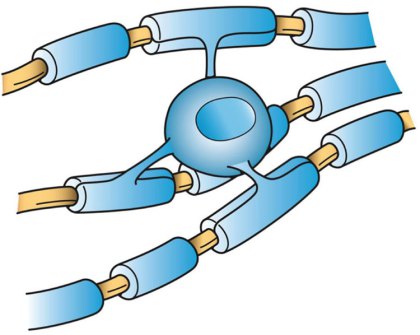
Oligodendrocytes are formed by a type of stem cell in the brain called oligodendrocyte progenitor cells (OPCs), and are responsible for re-wrapping, or remyelinating, the bare axons with myelin in response to injuries or diseases. This image is for illustrative purposes only and shows and artist’s representation of an oligodendrocyte. Credit Holly Fischer.

Oligodendrocytes are formed by a type of stem cell in the brain called oligodendrocyte progenitor cells (OPCs), and are responsible for re-wrapping, or remyelinating, the bare axons with myelin in response to injuries or diseases. This image is for illustrative purposes only and shows and artist’s representation of an oligodendrocyte. Credit Holly Fischer.

Like conducting an errant orchestra to play together, researchers are guiding processes that go awry in multiple sclerosis to repair themselves.

For the first time, scientists have discovered the exact mechanism rabies uses to efficiently enter the central nervous system, where it erupts in a toxic explosion of symptoms.

Neurons in human skin perform advanced calculations, previously believed that only the brain could perform.

Brain scans of college students have shed light on why people learn more effectively when their curiosity is piqued than when they are bored stiff. Researchers in the US found evidence that curiosity ramped up the activity of a brain chemical called dopamine, which in turn seemed to strengthen people’s memories.Students who took part in the study were better at remembering answers to trivia questions when they were curious, but their memories also improved for unrelated information they were shown at the same time.The findings suggest that while grades may have their place in motivating students, stimulating their natural curiosity could help them even more.

Researchers have discovered that T-cells – a type of white blood cell that learns to recognize and attack microbial pathogens – are activated by a pain receptor.

Quantitative tools dissect how two genes mutated in early-onset Parkinson’s disease collaborate in flagging damaged mitochondria.

A new study suggests a neural link between curiosity, motivation, and memory.

In a recent study published in the journal PLOS One, scientists uncovered a new pathway by which the brain uses an unusual steroid to control blood pressure. The study also suggests new approaches for treating high blood pressure and heart failure

Research using state-of-the-art eye-tracking technology has found that people suffering from chronic pain pay more frequent and longer attention to pain-related words than individuals who are pain-free.

The traditional view is that learning is based on the strengthening or weakening of the contacts between the nerve cells in the brain. However, this has been challenged by new research findings from Lund University in Sweden. These indicate that there is also a third mechanism – a kind of clock function that gives individual nerve cells the ability to time their reactions.

And finally this week, how your brain decides who to make friends with when you start university.

Understanding how your brain works helps you learn better

Evidence is accumulating that knowledge about the brain empowers learning. This is because understanding how your brain learns and remembers fosters a sense of autonomy (i.e. making your learning independent of someone/something else) and autonomy is recognised as a key factor in effective learning.

This 10 minute video can provide you with insights into how to prime your brain for effective learning and it may help if you are worried about exams and feel that you are not learning optimally.

Comments are welcome.