Category: Memory
Weekly Neuroscience Update
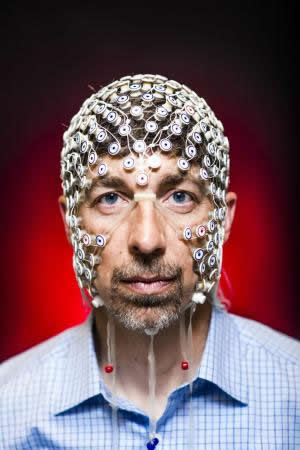
Electrical and computer engineering professor Barry Van Veen wears an electrode net used to monitor brain activity via EEG signals. His research with psychiatry professor and neuroscientist Giulio Tononi could help untangle what happens in the brain during sleep and dreaming. Credit Nick Berard.
As real as that daydream may seem, its path through your brain runs opposite reality. Aiming to discern discrete neural circuits, researchers at the University of Wisconsin-Madison have tracked electrical activity in the brains of people who alternately imagined scenes or watched videos.
People with mentally taxing jobs, including lawyers and graphic designers, may end up having better memory in old age, research suggests.
Researchers at the RIKEN Brain Science Institute in Japan have identified a key neuronal pathway that makes learning to avoid unpleasant situations possible. Published online in the November 20 issue of Neuron, the work shows that avoidance learning requires neural activity in the habenula representing changes in future expectations.
Combining behavioral and physiologic measures depicts gradual process, may help diagnose sleep disorders.
Neurophysicists have found that space-mapping neurons in the brain react differently to virtual reality than they do to real-world environments. Their findings could be significant for people who use virtual reality for gaming, military, commercial, scientific or other purposes.
New brain imaging technology is helping researchers to bridge the gap between art and science by mapping the different ways in which the brain responds to poetry and prose.
As methods of imaging the brain improve, neuroscientists and educators can now identify changes in children’s brains as they learn, and start to develop ways of personalizing instruction for kids who are falling behind.
Scientists have identified a weak spot in the human brain for Alzheimer’s disease and schizophrenia, revealing a connection between the two diseases.
A team of scientists has found a simple method to convert human skin cells into the specialized neurons that detect pain, itch, touch and other bodily sensations. These neurons are also affected by spinal cord injury and involved in Friedreich’s ataxia, a devastating and currently incurable neurodegenerative disease that largely strikes children.
Berkeley lab reports proper copper levels are essential to spontaneous neural activity.
Researchers are using an enhanced MRI approach to visualize brain injury in the blood brain barrier in order to identify significant changes to the blood-brain barrier in professional football players following a concussion.
A new study reports that older learners retained the mental flexibility needed to learn a visual perception task but were not as good as younger people at filtering out irrelevant information.
Finally this week, in the largest study of the genetics of memory ever undertaken, an international researcher team have discovered two common genetic variants that are believed to be associated with memory performance. The findings, which appear in the journal Biological Psychiatry, are a significant step towards better understanding how memory loss is inherited.
Weekly Neuroscience Update

Granule cells connect with other cells via long projections (dendrites). The actual junctions (synapses) are located on thorn-like protuberances called “spines”. Spines are shown in green in the computer reconstruction Credit DZNE/Michaela Müller.
New findings on the link between nerve cells at the interface to the hippocampus may have an influence on learning and memory.
People choosing between two or more equally positive outcomes experience paradoxical feelings of pleasure and anxiety, feelings associated with activity in different regions of the brain, according to research at the Princeton Neuroscience Institute at Princeton University.
Latest findings on how stress hormones promote the brain’s building of negative memories.
Researchers have studied the changes in the brain that are associated with impulsiveness, a personality trait that causes difficulties in inhibiting a response in the face of a stimulus and leads to unplanned actions without considering the negative consequences. These patterns can serve as an indicator for predicting the risk of behavioural problems.
People taking dopamine for Parkinson’s disease sometimes begin to generate a lot of artwork. New research differentiates their expressiveness from obsessive or impulsive tendencies.
Researchers have uncovered more than 100 genetic markers linked to developing schizophrenia.
A type of immune cell widely believed to exacerbate chronic adult brain diseases, such as Alzheimer’s disease and multiple sclerosis (MS), can actually protect the brain from traumatic brain injury (TBI) and may slow the progression of neurodegenerative diseases, according to research published in the online journal Nature Communications.
Weekly Neuroscience Update
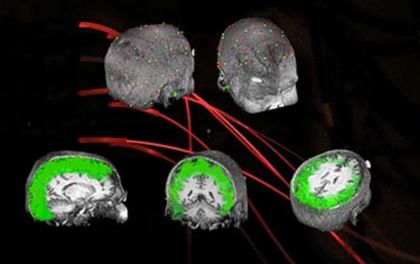
By using a novel technique to test brain waves, researchers are discovering how the brain processes external stimuli that do and don’t reach our awareness. Credit Beckman Institute.
Researchers at the Beckman Institute are using a novel technique to test brain waves to see how the brain processes external stimuli that do and don’t reach our awareness. A group of international scientists has for the first time identified genetic mutations that suggest that schizophrenia and autism share underlying mechanisms. The research could help with future understanding of both conditions and may contribute to the development of treatments. Two psychologists have made a discovery that could revolutionize doctors’ perception and treatment of attention-deficit disorders. A newly identified disorder affecting the human nervous system is caused by a mutation in a gene never before implicated in human disease, according to two studies published in the journal Cell. By performing DNA sequencing of children affected by neurological problems, two research teams independently discovered that a disease marked by reduced brain size, as well as sensory and motor defects, is caused by a mutation in a gene called CLP1. Insights into this rare disorder may have important implications for the treatment of common disorders.
Scientists at the Salk Institute have created a new model of memory that explains how neurons retain select memories a few hours after an event. This new framework provides a more complete picture of how memory works, which can inform research into disorders liked Parkinson’s, Alzheimer’s, post-traumatic stress and learning disabilities.
Stanford scientists have developed faster, more energy-efficient microchips based on the human brain – 9,000 times faster and using significantly less power than a typical PC. This offers greater possibilities for advances in robotics and a new way of understanding the brain. For instance, a chip as fast and efficient as the human brain could drive prosthetic limbs with the speed and complexity of our own actions.
Finally this week, laughter triggers brain waves similar to those associated with meditation, according to a small new study. The study included 31 people whose brain waves were monitored while they watched humorous, spiritual or distressing video clips. While watching the humorous videos, the volunteers’ brains had high levels of gamma waves, which are the same ones produced during meditation, researchers found.
Weekly Neuroscience Update
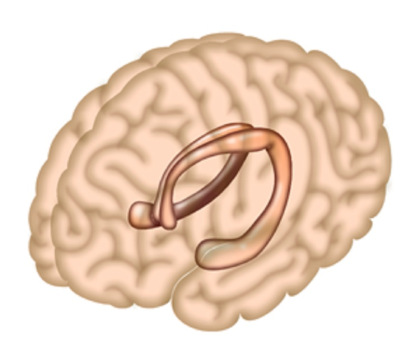
The hippocampus is a region of the brain largely responsible for memory formation. Credit Salk Institute.
Scientists have created a new model of memory that explains how neurons retain select memories a few hours after an event. This new framework provides a more complete picture of how memory works, which can inform research into disorders liked Parkinson’s, Alzheimer’s, post-traumatic stress and learning disabilities.
A switch in the brain of people with epilepsy dictates whether their seizures will be relatively mild or lead to a dangerous and debilitating loss of consciousness, Yale researchers have found.
By predicting our eye movements, our brain creates a stable world for us. Researchers used to think that those predictions had so much influence that they could cause us to make errors in estimating the position of objects. Neuroscientists at Radboud University have shown this to be incorrect. The Journal of Neuroscience published their findings – which challenge fundamental knowledge regarding coordination between brain and eyes.
Extreme and traumatic events can change a person — and often, years later, even affect their children. Researchers have now unmasked a piece in the puzzle of how the inheritance of traumas may be mediated.
Artists have structurally different brains compared with non-artists, a study has found. Participants’ brain scans revealed that artists had increased neural matter in areas relating to fine motor movements and visual imagery. The research, published in NeuroImage, suggests that an artist’s talent could be innate. But training and environmental upbringing also play crucial roles in their ability, the authors report.
Certain errors in visual perception in people with schizophrenia are consistent with interference or ‘noise’ in a brain signal known as a corollary discharge, a new study shows.
Finally this week, a recent study has shown that use of abstract gestures is a powerful tool for helping children understand and generalize mathematical concepts.
Weekly Neuroscience Update

Scientists at CSHL have developed a new mathematical model that makes predictions about where different types are neurons are located throughout the brain. Here are “heat maps” of the brain, made using the mathematical model to predict the distribution of different neurons. Each row represents one neuronal type, and different sections of the brain are shown in each column. Color indicates the likelihood of a particular neuronal type appearing in that area of the brain (white, most likely; black, least). Credit Mitra et al.
A new mathematical model uses gene expression data to predict where neurons are located throughout the brain.
Researchers have studied the acquisition and development of language in babies on the basis of the temporary coordination of gestures and speech. The results are the first in showing how and when they acquire the pattern of coordination between the two elements which allows them to communicate very early on.
The problems people with autism have with memory formation, higher-level thinking and social interactions may be partially attributable to the activity of receptors inside brain cells, researchers have learned.
A new study documents the brain activity underlying our strong tendency to infer a structure of context and rules when learning new tasks (even when a structure isn’t valid). The findings, which revealed individual differences, shows how we try to apply task knowledge to similar situations and could inform future research on learning disabilities.
Researchers have discovered impaired neuronal activity in the parts of the brain associated with anticipatory functioning among occasional 18- to 24-year-old users of stimulant drugs, such as cocaine, amphetamines and prescription drugs such as Adderall.
Why do some teenagers start smoking or experimenting with drugs — while others don’t? In the largest imaging study of the human brain ever conducted — involving 1,896 14-year-olds — scientists have discovered a number of previously unknown networks that go a long way toward an answer.
New research shows that, contrary to what was previously assumed, suppressing unwanted memories reduces their influence on behaviour, and sheds light on how this process happens in the brain.
For our brain, animate and inanimate objects belong to different categories and any information about them is stored and processed by different networks. A study shows that there is also another category that is functionally distinct from the others, namely, the category of “social” groups.
A new technique provides a method to noninvasively measure human neural networks in order to characterize how they form.
Education significantly improves mental functioning in seniors even four decades after finishing school, shows a new study. The study shows that people who attended school for longer periods performed better in terms of cognitive functioning than those who did not.
Does the brain rewrite memories?
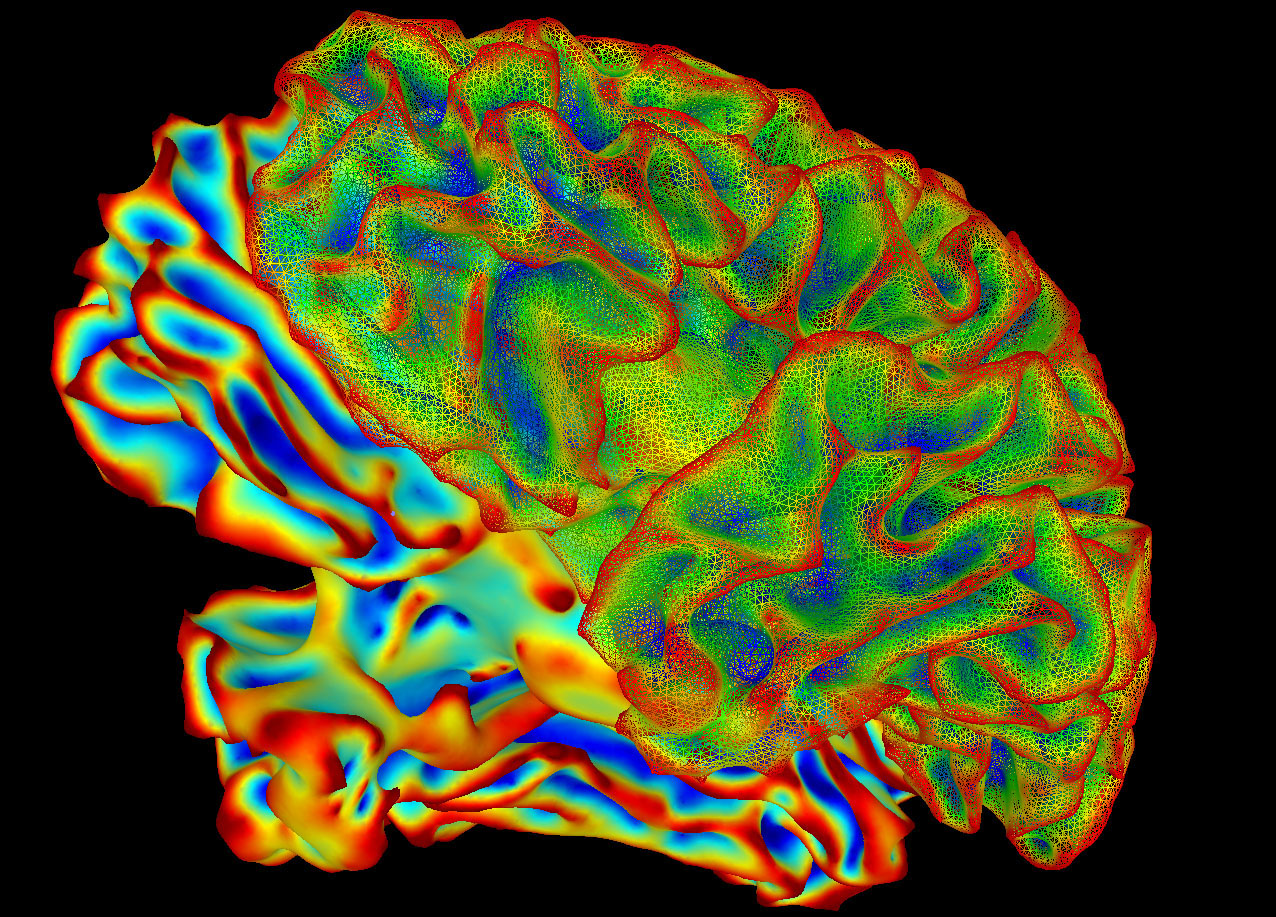
A multi-colored image of a brain for imaging research. Researchers from Northwestern University released a study showing that the memories can adapt. Scientists used a functional MRI and eye tracking as part of their research.
Memories are not picture perfect. The brain can rewrite old memories to update them with new experiences and information, according to a new study by Northwestern University scientists. The study, published in the Journal of Neuroscience, monitored 17 participants using three different tools: behavioral measures, a functional MRI and eye-movement tracking. Despite the number of participants appearing small, the researchers said it is a statistically robust study.
The Influence of Taking Photos on Memory

Taking a picture to help you remember something might end up having the opposite effect, according to new research.
A study showed that people who took photographs of items during a museum tour were less likely to remember details than those who merely looked at the objects.
“People so often whip out their cameras almost mindlessly to capture a moment, to the point that they are missing what is happening right in front of them,” says psychological scientist Linda Henkel, author of the study, which was published in the journal Psychological Science.
Henkel set up an experiment in the university’s museum, in which students were led on a tour and were asked to take note of certain objects, either by photographing them or by simply observing them. The next day, their memory for the objects was tested – and participants were less accurate in recognising the items they had photographed compared to those they had only observed. Henkel called this the “photo-taking impairment effect.”
“When people rely on technology to remember for them – counting on the camera to record the event and thus not needing to attend to it fully themselves – it can have a negative impact on how well they remember their experiences,” she says.
A second group offered a slight variation on the findings: those taking a photograph of a specific detail on the object by zooming in on it with the camera seemed to preserve memory for the object, not just for the part that was zoomed in on but also for the part that was out of frame.
“These results show how the ‘mind’s eye’ and the camera’s eye are not the same,” Henkel says, adding that memory research indicates taking pictures can help people remember, but only if they take time to observe and review.
photo credit: Carollainy via photopin cc
How Your Memory Works – And How To Improve It

Weekly Neuroscience Update
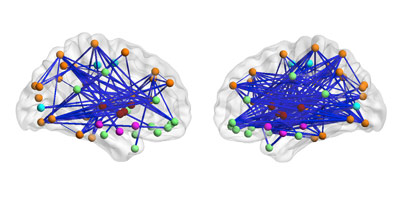
Overly connected: Many pairs of brain regions — including those involved in sensory processing, emotion and motivation — are more tightly synchronized in children with autism (right) than in controls (left).
Three studies published over the past two months have found significant evidence that children and adolescents with autism have brains that are overly connected compared with the brains of controls. The findings complicate the theory that autism is fundamentally characterized by weakly connected brain regions. Meanwhile new findings suggest the oxytocin receptor, a gene known to influence mother-infant bonding and pair bonding in monogamous species, also plays a special role in the ability to remember faces. This research has important implications for disorders in which social information processing is disrupted, including autism spectrum disorder. In addition, the finding may lead to new strategies for improving social cognition in several psychiatric disorders.
Researchers are gaining a better understanding of the neurochemical basis of addiction with a new technology called optogenetics.
We know that getting even a measly extra hour of sleep a night can have major benefits for us–like more memories, less anxiety, and happier genes. But scientists have tested another hypothesis for why we need to spend so much time horizontal: Sleep cleans our brains.
Scientists have pinpointed a specific part of the brain where Alzheimer’s begins and traced how the disease spreads.
Scientists have zapped an electrical current to people’s brains to erase distressing memories, part of an ambitious quest to better treat ailments such as mental trauma, psychiatric disorders and drug addiction.
Finally this week, many people can recall reading at least one cherished story that they say changed their life. Now researchers at Emory University have detected what may be biological traces related to this feeling: Actual changes in the brain that linger, at least for a few days, after reading a novel.
 inside-the-brain.com