Weekly Neuroscience Update

man-3337573_960_720.jpg

A new study reports people who sit down too much during middle to older age show signs of thinning in the medial temporal cortex, an area of the brain associated with the formation of new memories.

Researchers explore the neuroscience behind binge eating and the triggers that might make us reach for comfort foods.

According to a new study, children with executive function deficits were more likely to show physical and reactive aggression later in life. Researchers suggest helping children to improve executive function could help to reduce aggression levels.

Olfactory system neurons appear to play a role in the connection between rhythmic breathing and emotional regulation, researchers report.

Researchers report newly identified risk factors differ from currently known genetic causes of autism. The variants identified do not alter the genes directly, but disrupt the neighboring DNA control elements that turn genes on or off. Additionally, the variants do not occur as new mutations in autistic children, but are inherited from parents.

A new study reveals we quickly process opinions we agree with as facts, even if the opinion is non-factual.

New research implicates the hippocampus in conceptual memory formation. The study reveals activity within the hippocampus and ventromedial prefrontal cortex is consistent with the retrieval of new concepts.

Researchers report the later a women enters into natural menopause, the better, on average, her verbal memory is later in life.

A new study adds to growing evidence that early exposure to pollution can increase both suicide risks in younger people and Alzheimer’s disease as people age.

Finally this week, new research reveals specific parts of the hippocampus may play a key role in emotional regulation.


The Neuroscience of Memory

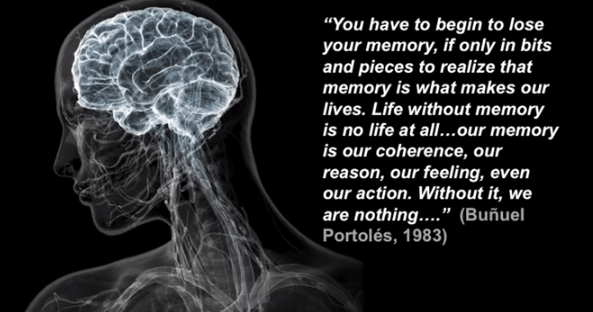
Our memories are our lives, and a fundamental basis of our culture. Collective memoirs of the past both bind society together and shape our potential future. With our brains we can travel through time and space, calling to mind places of significance, evoking images and emotions of past experiences. It’s no wonder, then, that we so desperately fear the prospect of memory loss.

Many regions of the brain are involved in memory, but one of the most critical components is the hippocampus, which plays a crucial role in the formation of long-term memories. Damage to the hippocampus can therefore result in significant memory loss.

In this video, Eleanor Maguire draws on evidence from virtual reality, brain imaging and studies of amnesia to show that the consequences of hippocampal damage are even more far-reaching than suspected, robbing us of our past, our imagination and altering our perception of the world. Maguire also explains how, despite our beliefs, our memories are not actually as accurate as you might think. In fact, they’re not really even about the past.

Weekly Neuroscience Update


d41586-018-01290-0_15417716.jpg

Neurons store and transmit information in the brain.Credit: CNRI/SPL

Superconducting computing chips modeled after neurons can process information faster and more efficiently than the human brain.  

New research published in JAMA Neurology suggests that those people whose memory is intact and who do not show any signs of Alzheimer’s can have disrupted circadian rhythms — which may be a very early sign of Alzheimer’s.

Stimulating specific regions of the brain can help to improve memory and word recall in those with severe epilepsy, a new Nature Communications study reports.  

Gene therapies promise to revolutionize the treatment of many diseases, including neurological diseases such as ALS. But the small viruses that deliver therapeutic genes can have adverse side effects at high doses. Researchers have now found a structure on these viruses that makes them better at crossing from the bloodstream into the brain – a key factor for administering gene therapies at lower doses for treating brain and spinal disorders.

Researchers discover the activity of 80 percent of genes follow a day/night rhythm in many tissue types and brain regions. 

Aging or impaired brains can once again form lasting memories if an enzyme that applies the brakes too hard on a key gene is lifted, according to University of California, Irvine neurobiologists.

Researchers have implicated mossy cells in both seizures and memory problems in those with temporal lobe epilepsy. 

Increasing evidence has linked autism spectrum disorder (ASD) with dysfunction of the brain’s cerebellum, but the details have been unclear. In a new study, researchers at Boston Children’s Hospital used stem cell technology to create cerebellar cells known as Purkinje cells from patients with tuberous sclerosis complex (TSC), a genetic syndrome that often includes ASD-like features. In the lab, the cells showed several characteristics that may help explain how ASD develops at the molecular level.

Finally this week, neuroscientists have discovered how the brain can determine an object’s value almost as soon as we see it.

Weekly Neuroscience Update

brain-waves-sleep-memory-neurosciencenews.jpg

As we age, slow brain waves during non-REM sleep fail to time contact with sleep spindles efficiently, leading to a lessened ability to form new memories correctly, a new study reports.

Researchers report children are more attentive and have improved memory when they exercise at their own pace, rather than embark on exhaustive exercise.

Inflammation in the blood plays a key role in “chemo-brain,” according to a published pilot study that provides evidence for what scientists have long believed.

A new study sheds light on the neurons tasks glial cells perform to insure brain activity is optimized.

According to researchers, children who eat fish at least once a week score four points higher on IQ tests and sleep better than those who consume fish less frequently, or not at all.

A new study looks how it may be possible to help reduce trauma associated with bad memories while we sleep.

Researchers reveal even after one short, ten minute, burst of exercise, cognitive processing and attention improve temporarily.

Finally this week, a new study supports the hypothesis that people with focal epilepsy are more susceptible to mood disorders, such as depression and anxiety.

Weekly Neuroscience Update


loopster-3010073_960_720.jpg

A new guideline for medical practitioners says they should recommend twice-weekly exercise to people with mild cognitive impairment to improve memory and thinking.

Researchers reveal Parkinson’s patients have more copies of mitochondrial DNA in the brain stem, leading to increased cell death within that area.

Musical training may enhance the ability to process speech in noisy settings, a new study shows.

A new study reveals the piriform cortex is able to archive long term memory, but requires instruction from the orbiotfrontal cortex to indicate the event is to be stored as a long-term memory.

Greater muscle strength is associated with better cognitive function in ageing men and women, according to a new Finnish study

Researchers have discovered a new biomarker that can help diagnose Huntington’s disease. They note the findings could result in the development of treatments to postpone neuron death in those who carry the Huntington’s gene mutation, but who do not currently show symptoms of the disease.

A new study reveals the superior temporal gyrus appears to be critical for voice recognition.

Researchers have identified several new genes responsible for Alzheimer’s disease (AD) including those leading to functional and structural changes in the brain and elevated levels of AD proteins in cerebrospinal fluid (CSF).

Finally this week, a new study adds to evidence that current clinical tools can fail to capture autism presentations in females.


Weekly Neuroscience Update

internal-experience-neurosciencenews.jpg

Simultaneous activity of three cognitive systems found in the study NeuroscienceNews.com image is credited to Vadim Axelrod, Bar-Ilan University.

Internal experiences, such as recalling personal memories, are associated with the simultaneous activity of at least three different cognitive systems, a new study reports.

Neuroscientists have shown how the human brain can predict what our eyes will see next, using functional magnetic resonance imaging (fMRI).

A new study sheds light on ADHD, reporting teens with the disorder fit into one of three specific subgroups with distinct brain impairments and no common abnormalities between them.

Musical training may enhance the ability to process speech in noisy settings, a new study reveals.

Scientists are examining the feasibility of treating autistic children with neuromodulation after a new study showed social impairments can be corrected by brain stimulation.

The fear of losing control over thoughts and actions can impact OCD behaviors and other anxiety disorders, researchers report.

Recent functional studies suggest that noise sensitivity, a trait describing attitudes towards noise and predicting noise annoyance, is associated with altered processing in the central auditory system.

Finally this week, a new study reveals the frontal regions of the brain play a vital role in assessing and interpreting emotions communicated orally.

Weekly Neuroscience Update

tired-brain-cells-mental-lapses-neurosciencenews.jpg

Sleep-deprived brain cells react more slowly and fire more weakly, and their signals are more drawn out. NeuroscienceNews.com image is credited to UCLA.

A Japanese research group has revealed that elderly people with mild cognitive impairment (MCI) have a particularly weakened ability to memorize human faces in the short term when compared to healthy elderly people. MCI patients also had a different gaze behavior when trying to memorize a face. This research may lead to the early detection of dementia.

Researchers provide new insight into human consciousness, reporting we don’t consciously choose our feelings or thoughts; we simply become aware of them.

If a mother’s immune system is activated by infection during pregnancy, it could result in critical cognitive deficits linked to schizophrenia in her offspring, a new study has revealed.

People on the autism spectrum appear to have different reactions to subliminal social odors, researchers report.

Information from brain MRIs can help identify people with attention deficit hyperactivity disorder (ADHD) and distinguish among subtypes of the condition, according to a study appearing online in the journal Radiology.

Migraine triggers can increase oxidative stress, a new study reports. Targeting oxidative stress may help to prevent migraines.

A new study reveals how the mechanism for storing olfactory memories differs slightly from erasing unnecessary memories. Understanding how the brain gets rid of unimportant memories could help unlock new avenues of research to better understand memory loss in aging, researchers say.

Finally this week, researchers report a developmental abnormality more prevalent in premature and male babies, may contribute to SIDS risk, in conjunction to the sleep position.


Weekly Neuroscience Update


smellsensiti.jpg

Credit: Herz et. al./Brown University

new study provides the first direct evidence that within each person, smell sensitivity varies over the course of each day. The pattern, according to the data, tracks with the body’s internal day-night cycle, or circadian rhythm.

Researchers have revealed the neural signatures for explicit and implicit learning.

Neuroscientists have discovered precisely where and how to electrically stimulate the human brain to enhance people’s recollection of distinct memories. People with epilepsy who received low-current electrical pulses showed a significant improvement in their ability to recognize specific faces and ignore similar ones.

Adults likely do not develop ADHD, according to new research.

Researchers propose a new theory of memory formation, reporting memory storage does not rely on the strengthening of connection between memory cells, but on the pattern of connections that form within the first few minutes of an event.

A new Finnish study shows that individual circadian preference is associated with brain activity patterns during the night.

According to researchers, the size, shape and number of dendritic spines in the brain may determine whether a person develops Alzheimer’s disease.

Finally this week, migraine triggers can increase oxidative stress, a new study reports. Targeting oxidative stress may help to prevent migraines.


Weekly Neuroscience Update

girl-1990347_960_720.jpgA new report reveals how the development of music is so closely tied to our own evolution.

Even a single bout of physical activity can have significant positive effects on people’s mood and cognitive functions, according to a new study in Brain Plasticity.

A new study reports on the complex brain connections employed during word retrieval.

New research provides an unprecedented level of resolution and insight into disturbances in cortical GABAergic microcircuits, which are thought to underlie cognitive impairments in schizophrenia.

A sign language study helps researchers better understand how the brain processes language.

Researchers say the goal of memory is not to transmit the most accurate information over time, but to optimize intelligent decision making by holding on to valuable information.

A new study reports microglia may play a role in a diverse array of neurodegenerative and psychiatric illnesses.

A new brain imaging study shows for the first time that brain inflammation is significantly elevated – more than 30 per cent higher – in people with obsessive-compulsive disorder (OCD) than in people without the condition.

A research team has studied two structurally-similar proteins in the adult brain and have found that they play distinct roles in the development of dementia. 

Neurons found to be abnormal in psychosis play an important role in our ability to distinguish between what is real and what is perceived, researchers say.

A new study sheds light on the neural mechanism behind why some people with autism are unable to make eye contact with others.

While researchers report the risk of developing psychosis from cannabis use is relatively small, those who use the drug and already suffer from schizophrenia may notice their condition worsen.

Finally this week, researchers have discovered a mechanism of glucose sensing by muscles that contribute to the regulation of blood sugar levels in the body.

Weekly Neuroscience Update

auditory-memory-magnets-neurosciencenews.jpg

image is credited to McGill University. Philippe Albouy

A new study reveals people showed improvements in auditory memory when transcranial magnetic stimulation was applied.

The part of the brain that creates mental maps of one’s environment plays a much broader role in memory and learning than was previously thought, according to new research published this week in the journal Nature by researchers at Princeton University.

Researchers have developed new tests to help quantify automatic moral and empathetic judgement.

Neurons in the prefrontal cortex “teach” neurons in the hippocampus to “learn” rules that distinguish memory-based predictions in otherwise identical situations, suggesting that learning in the present helps guide learning in the future, according to research conducted at the Icahn School of Medicine at Mount Sinai and published April 5 in the journal Neuron.

Neuroimaging technology can help determine the success of failure possibilities of cochlear implants for those who lose their hearing during adulthood.

Scientists have known that a lack of sleep can interfere with the ability to learn and make memories. Now, a group of researchers have found how sleep deprivation affects memory-making in the brain.

Reducing stress in those with epilepsy may be a beneficial, low risk preventative treatment for seizures, researchers report.

Using PET scans of the brain, researchers have shown that dopamine falls and fluctuates at different times during a migraine headache.

MRIs show a brain anomaly in nearly 70 percent of babies at high risk of developing the condition who go on to be diagnosed, laying the groundwork for a predictive aid for pediatricians and the search for a potential treatment.

A new study reports the anterior cingulate cortex, an area of the brain associated with empathy, activates very weakly in people with autism.

Scientists at Max Planck Florida Institute for Neuroscience developed a light-sensitive technique to visualize and manipulate neuromodulation with unprecedented spatial and temporal precision.

Finally this weekk, new research indicates that some autobiographical memories are more vulnerable to Alzheimer’s disease and dementia than others.