Weekly Round-Up

Blogging may have psychological benefits for teens suffering from social anxiety, improving their self-esteem and helping them relate better to their friends, according to new research published by the American Psychological Association.

Scientists at The Scripps Research Institute have discovered that DNA stays too tightly wound in certain brain cells of schizophrenic subjects. The findings suggest that drugs already in development for other diseases might eventually offer hope as a treatment for schizophrenia and related conditions in the elderly.

Deep depression that fails to respond to any other form of therapy can be moderated or reversed by stimulation of areas deep inside the brain.

Radiology researchers at The University of Texas Health Science Center at Houston (UTHealth) have found evidence that multiple sclerosis affects an area of the brain that controls cognitive, sensory and motor functioning apart from the disabling damage caused by the disease’s visible lesions.

People with diets high in several vitamins or in omega 3 fatty acids are less likely to have the brain shrinkage associated with Alzheimer’s disease than people whose diets are not high in those nutrients, according to a new study published in the December 28, 2011, online issue of Neurology®, the medical journal of the American Academy of Neurology.

When you experience a new event, your brain encodes a memory of it by altering the connections between neurons. This requires turning on many genes in those neurons. Now, MIT neuroscientists have identified what may be a master gene that controls this complex process. The findings, described in the Dec. 23 issue of Science, not only reveal some of the molecular underpinnings of memory formation — they may also help neuroscientists pinpoint the exact locations of memories in the brain.

Weekly Round-Up

Researchers believe they found a link between the volume of one’s cerebellum and general intelligence. The cerebellum is involved in the coordination of voluntary motor movement, balance and equilibrium and muscle tone. It is located just above the brain stem and toward the back of the brain.

A small but promising study suggests that magnetic stimulation of the brain could aid the recovery of some stroke patients.

Treatment that increases brain levels of an important regulatory enzyme may slow the loss of brain cells that characterizes Huntington’s disease (HD) and other neurodegenerative disorders.

How much do babies remember about the world around them? New research reveals that even though infants can’t remember the details of an object that has been hidden from view, their brains have built-in “pointers” that help them retain the idea that the object still exists even though they can’t see it anymore.

Neuroscience research involving epileptic patients with brain electrodes surgically implanted in their medial temporal lobes shows that patients learned to consciously control individual neurons deep in the brain with thoughts.

Loyola University Medical Center researchers are reporting what could become the first reliable method to predict whether an antidepressant will work on a depressed patient.

How we perceive motion is a significantly more complex process than previously thought, researchers at New York University’s Center for Neural Science, Stanford University and the University of Washington have found. Their results, which appear in the journalCurrent Biology, show that the relationship between the brain and visual perception varies, depending on the type of motion we are viewing.

After birth, the developing brain is largely shaped by experiences in the environment. However, neurobiologists at Yale and elsewhere have also shown that for many functions the successful wiring of neural circuits depends upon spontaneous activity in the brain that arises before birth independent of external influences.

How social and emotional learning can affect the brain

Neuroscientist Richard Davidson‘s research is focused on cortical and subcortical substrates of emotion and affective disorders, including depression and anxiety.

Using quantitative electrophysiology, positron emission tomography and functional magnetic resonance imaging to make inferences about patterns of regional brain function, his lab studies normal adults and young children, and those with, or at risk for, affective and anxiety disorders.

A major focus of his current work is on interactions between prefrontal cortex and the amygdala in the regulation of emotion in both normal subjects and patients with affective and anxiety disorders.

In this video Professor Davidson presents his research on how social and emotional learning can affect the brain.

Weekly Round-Up

Peer pressure is hard-wired into our brains

A new study explains why people take stupid chances when all of their friends are watching that they would never take by themselves. According to the study,the human brain places more value on winning in a social setting than it does on winning when you’re alone. Scientists have identified the part of the brain responsible for controlling whether we conform to expectations and group pressure.

Does a blind person reading Braille process words in the brain differently than a person who reads by sight? Mainstream neuroscience thinking implies that the answer is yes because different senses take in the information. But a recent study in Current Biology finds that the processing is the same, adding to mounting evidence that using sensory inputs as the basis for understanding the brain may paint an incomplete picture.

New research sheds light on how and why we remember dreams–and what purpose they are likely to serve.

Child neurologist and neuroscientist Dr. Tallie Z. Baram has found that maternal care and other sensory input triggers activity in a baby’s developing brain that improves cognitive function and builds resilience to stress.

University of British Columbia scientists may have uncovered a new explanation for how Alzheimer’s disease destroys the brain.

The brains of people who relapse into depression differ from those of people who maintain a recovery, a new study shows. The results may provide insight into why some people relapse and why certain therapies may help, the researchers said.

Researchers using scanning technology say they discovered physical differences in the brains of older children with autism compared to those of kids without autism.

And finally, in an effort to understand what happens in the brain when a person reads or considers such abstract ideas as love or justice, Princeton researchers have for the first time matched images of brain activity with categories of words related to the concepts a person is thinking about. The results could lead to a better understanding of how people consider meaning and context when reading or thinking.


Death of scientist who discovered serotonin

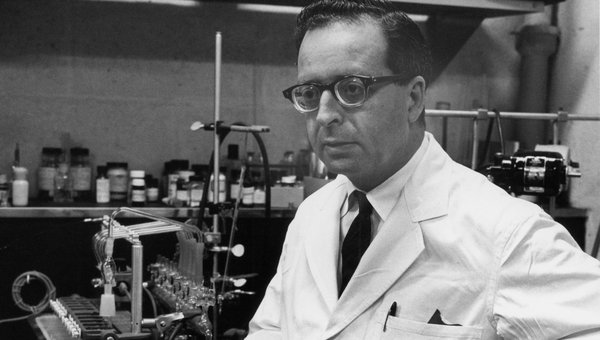
Maurice M. Rapport pictured at the Albert Einstein College of Medicine.

The death has taken place of Maurice Rapport, a biochemist who helped isolate and name the neurotransmitter serotonin in the late 1940s.  Rapport’s work isolating this chemical which plays a key role in regulating mood, was revolutionary at a time when little was known about the way the brain functioned, and led to the creation of a wide variety of psychiatric and other drugs.

The New York Times, reporting on his death, outlined the background to his discovery.

Scientists had known since the 1860s of a substance in the serum released during clotting that constricts blood vessels by acting on the smooth muscles of the blood-vessel walls. In the 20th century, researchers pinpointed its source in blood platelets, but its identity remained a mystery.

Dr. Rapport, working with Dr. Page and Arda A. Green, isolated the substance and, in a paper published in 1948, gave it a name: serotonin, derived from “serum” and “tonic.”

On his own, Dr. Rapport identified the structure of serotonin as 5-hydroxytryptamine, or 5-HT, as it is called by pharmacologists. His findings, published in 1949, made it possible for commercial laboratories to synthesize serotonin and study its properties as a neurotransmitter.

More than 90,000 scientific papers have been published on 5-HT, and the Serotonin Club, a professional organization, regularly holds conferences to report on research in the field.

Maurice Rapport died on Aug. 18 in Durham, N.C. He was 91.

Weekly Round Up

Latest study shows buddhist meditation promotes rational thinking

Studies looking at the brains of people playing a fairness game found very different responses between Buddhist meditators and other participants.

It’s possible that depression could be cured by reducing mild swelling in your brain.

New York University neuroscientists have identified the parts of the brain we use to remember the timing of events within an episode. The study, which appears in the latest issue of the journal Science, enhances our understanding of how memories are processed and provides a potential roadmap for addressing memory-related afflictions.

A leading University of Chicago researcher on empathy is launching a project to understand psychopathy by studying criminals in prisons.

A new study at the University of California at Davis has made progress in determining the factors that affect brain degeneration and why our brains shrink with age and a new drug to prevent the development of Alzheimer’s disease could be tested on patients within six years according to researchers at Lancaster University.

Weekly Round Up

Researchers Aim for Direct Brain Control of Prosthetic Arms Credit J. Contreras-Vidal/University of Maryland.

Engineering researchers at four U.S. universities are embarking on a four-year project to design a prosthetic arm that amputees can control directly with their brains and that will allow them to feel what they touch. The researchers have developed a prototype of a device that provides feedback to the wearer’s arm while objects are moved with a prosthetic ‘hand,’ a gripper. The prototype, which incorporates noninvasive monitoring of electrical activity and blood-oxygen levels in the brain, may be incorporated into next-generation prosthetic arms.

Millions of people with severe, treatment-resistant depression could improve their condition by adding an anti-inflammatory drug to their antidepressant medication, a leading consortium of UK researchers in biological psychiatry has reported.

A new study of the brain’s master circadian clock — known as the suprachiasmatic nucleus, or SCN — reveals that a key pattern of rhythmic neural activity begins to decline by middle age.

Vanderbilt University psychologists have found that our visual perception can be contaminated by memories of what we have recently seen, impairing our ability to properly understand and act on what we are currently seeing.

And finally, a new study provides clues about the cellular mechanisms of traumatic brain injury, a signature injury of the wars in Iraq and Afghanistan.

Weekly Round Up


All in the mind: Repressing bad memories for long enough can lead to us forgetting them completely, researchers claim

Fear burns memories into our brain, according to new research by University of California, Berkeley and if those memories are causing you distress, a team of researchers from Lund University in Sweden may have the answer. People can train their minds to erase embarrassing moments from their mind, according to their research. Scientists used EEG scans to monitor the parts of the brain that became active when volunteers actively tried to forget something. They were also able to pinpoint the exact moment a memory is ‘forgotten’, and claim that long-term suppression of a memory is a sure-fire way of permanently erasing it. The researchers say that mastering the technique could be useful for people who suffer from depression or post traumatic stress disorder, where constantly dwelling on upsetting or traumatic memories has a devastating effect on mental health.

And on the subject of PTSD, researchers at the Max Planck Institute of Psychiatry in Munich, are looking into the link between post-traumatic stress disorder and shrinkage of the hippocampus structure in the brain. (The hippocampus, which is Greek for “seahorse,” is a paired structure tucked inside each temporal lobe and shaped like a pair of seahorses, thence its name).

When we find something funny, our brains as well as our faces “light up” and the funnier we find a joke, the more activity is seen in “reward centres” – specific neurons which create feelings of pleasure, recent research shows.

Another region of the brain which also ‘lights up’  is in the medial orbito-frontal cortex when we experience beauty in a piece of art or a musical excerpt, according to new research funded by the Wellcome Trust. The study, published July 6 in the open access journal PLoS One, suggests that the one characteristic that all works of art, whatever their nature, have in common is that they lead to activity in that same region of the brain, and goes some way to supporting the belief that beauty does indeed lie in the beholder.


Weekly Round Up

How does cigarette addiction affect the brain?

The effects of nicotine upon brain regions involved in addiction mirror those of cocaine, according to new neuroscience research.

Aspirin and other anti-inflammatory drugs taken for pain relief may reduce the effectiveness of anti-depressants such as Prozac, say US researchers.

Moments of absent mindedness such as losing your keys could be the result of tiny parts of the brain taking “naps” to recharge, a study finds.Researchers discovered that contrary to popular opinion the brain is not always entirely asleep or awake but parts of it can go “offline”.

Neuroscientists at the California Institute of Technology and their colleagues have tied the human aversion to losing money to a specific structure in the brain-the amygdala.

Music is not only able to affect your mood — listening to particularly happy or sad music can even change the way we perceive the world, according to researchers from the University of Groningen.

The positive effects of mindfulness meditation on pain and working memory may result from an improved ability to regulate a crucial brain wave called the alpha rhythm. This rhythm is thought to “turn down the volume” on distracting information, which suggests that a key value of meditation may be helping the brain deal with an often-overstimulating world. And in other  mindfulness research – fMRI shows how mindfulness meditation changes the decision making process


How to increase serotonin in the brain without drugs

Aerobic exercise has been shown to elevate mood

As a follow-on to my last post on depression, I would like to direct you to an article I have stumbled upon from the Journal of Psychiatry and Neuroscience (1) published in 2007.

Its primary focus is on individuals with a serotonin-related susceptibility to depression, and nonpharmacologic methods of increasing serotonin to prevent depression in those with such a susceptibility.

Nonpharmacologic methods of raising brain serotonin may not only improve mood and social functioning of healthy people — a worthwhile objective even without additional considerations — but would also make it possible to test the idea that increases in brain serotonin may help protect against the onset of various mental and physical disorders.

The article discusses four possible strategies that are worth further investigation:

1. Altering Thought Patterns

The idea that alterations in thought, either self-induced or due to psychotherapy, can alter brain metabolism is not new. Numerous studies have demonstrated changes in blood flow in such circumstances. However, reports related to specific transmitters are much less common. In one recent study, meditation was reported to increase release of dopamine.The study by Perreau-Linck and colleagues (2) is the first to report that self-induced changes in mood can influence serotonin synthesis.

2. Exposure to Bright Light

Bright light is, of course, a standard treatment for seasonal depression, but a few studies also suggest that it is an effective treatment for nonseasonal depression and also reduces depressed mood in women with premenstrual dysphoric disorder and in pregnant women suffering from depression.

3. Exercise

A third strategy that may raise brain serotonin is exercise. A comprehensive review of the relation between exercise and mood concluded that antidepressant and anxiolytic effects have been clearly demonstrated.

4. Diet

According to some evidence, tryptophan, which increases brain serotonin  is an effective antidepressant in mild-to-moderate depression. Further, in healthy people with high trait irritability, it increases agreeableness, decreases quarrelsomeness and improves mood. However, the idea, common in popular culture, that a high-protein food such as turkey will raise brain tryptophan and serotonin is, unfortunately, false. Another popular myth that is widespread on the Internet is that bananas improve mood because of their serotonin content. Although it is true that bananas contain serotonin, it does not cross the blood–brain barrier.

To read this article in full please click here.

1. J Psychiatry Neurosci. 2007 November; 32(6): 394–399.

2. Perreau-Linck E, Beauregard M, Gravel P, et al. In vivo measurements of brain trapping of α-[11C]methyl-L-tryptophan during acute changes in mood states. J Psychiatry Neurosci 2007;32:430-4.