Weekly Neuroscience Update

recognition-id-neuroscinews

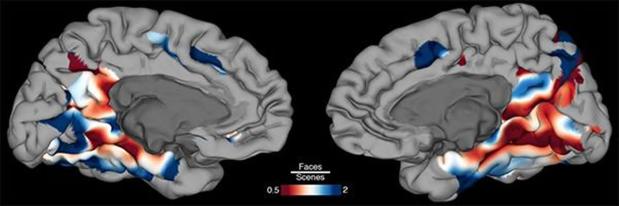
Image showing a map of the brain surface showing regions that preferentially activate during face (blue) and scene (red) identification. Image is credited to Oscar Woolnough, PhD, postdoctoral research fellow in the Department of Neurosurgery at McGovern Medical School at UTHealth in Houston.

A new study reveals areas of brain where recognition and identification occur.

Researchers have identified a hippocampal neural network that activates during stress. Activity in a hippocampal-hypothalamus network predicts greater feelings of stress, while connectivity between the hippocampus and dorsolateral prefrontal cortex predicts less stress.

Researchers have identified27 protein biomarkers that can predict whether a patient with COVID-19 is likely to develop severe coronavirus symptoms.

While the amount of antibodies generated varies widely in patients who have recovered from coronavirus, most people generate at least some antibodies which are intrinsically capable of neutralizing the SARS-CoV-2 virus according to a new study.

Twenty-nine genes have now been identified as being linked to problematic alcohol use. 

Toxic versions of the protein tau are believed to cause death of neurons of the brain in Alzheimer’s disease. A new study published in Nature Communications shows that the spread of toxic tau in the human brain in elderly individuals may occur via connected neurons. The researchers could see that beta-amyloid facilitates the spread of toxic tau.

Certain personality traits could increase the risk of developing mild cognitive impairment, a new study reports.

The anesthetic drug ketamine has been shown, in low doses, to have a rapid effect on difficult-to-treat depression. Researchers at Karolinska Institutet now report that they have identified a key target for the drug: specific serotonin receptors in the brain. Their findings, which are published in Translational Psychiatry, give hope of new, effective antidepressants.

Finally this week, a new study shows some infants can identify differences in musical tones at six months.


Weekly Neuroscience Update

drummers-642540_640

Drumming in a group stimulates behavioral and physiological synchronization, which contributes to the formation of social bonds and the ability to cooperate.

Caffeine and urate have been associated with a reduced risk of idiopathic Parkinson’s disease. Researchers noted a lower caffeine intake in idiopathic Parkinson’s patients. Increasing caffeine consumption was linked to decreased odds of being diagnosed with Parkinson’s. Lower levels of blood urate were also associated with an increased risk of Parkinson’s disease.

The endogenous compound anandamide—often referred to as the body’s own marijuana—plays a role in erasing memories of a traumatic event. 

A recent neuroimaging study reveals the neural basis for the motivation to reunite with the ones you love. The findings could lead to new therapies for disorders associated with social behaviors, and may also help explain why social distancing is so tough.

Researchers have identified a new, early biomarker for amyotrophic lateral sclerosis (ALS) on the teeth of children.

Following a one year program of aerobic exercise improves memory function and boosts blood flow to brain areas critical for cognition in older adults with risk factors for dementia.

A new blood test can help predict which patients with multiple sclerosis will see a decline in their condition over 12 months. 

In late-stage multiple sclerosis, inflammatory cells no longer enter the brain via the bloodstream, but instead the cells arise in memory from local memory cells inside the brain. The findings suggest during the late phases of multiple sclerosis, the disease is occurring entirely inside the brain.

Women who take oral birth control pills have higher levels of oxytocin than women who don’t use the pill.

Researchers have uncovered the process by which air pollution can damage brain cells, leading to an increased risk of Parkinson’s disease. Chemicals found in diesel fuel reduced autophagic flux, which is a major pathway implicated in neurodegeneration.

Finally this week, new evidence suggests the brain can update poorly formed memories with incorrect information, leading to the creation of false memories.

Weekly Neuroscience Update

walk-2635038_640 (1)

It’s never too late to lace up your sneakers for brain health, according to a study published in the May 13, 2020, online issue of Neurology. The study suggests older adults, even couch potatoes, may perform better on certain thinking and memory tests after just six months of aerobic exercise.

A new case study reveals a link between COVID-19 and clotting in blood vessels in the brain that results in an increased risk of ischemic stroke.

Rhythm begins in the womb and the heartbeat. And recent findings in neuroscience reveal that for the rest of our lives, rhythm will continue to have a fundamental impact on our ability to walk, talk — and even love.

Researchers studying the structure of the virus that causes COVID-19 have found a unique feature that could explain why it is so transmissible between people.

Recovered coronavirus patients show a wide range of immune responses following the infection, with about half from a current study showing sustained antibodies two weeks later. Results indicate which parts of the virus are most effective at triggering the immune responses.

Neuroscientists have identified memory cells that help us interpret new situations.

The strength of a person’s mental imagery is associated with excitability in the prefrontal cortex and visual cortex. Highly excitable neurons in the visual cortex may reduce a person’s ability to imagine mental images.

Finally this week, after studying global data from the COVID-19 pandemic, researchers have discovered a strong correlation between severe vitamin D deficiency and mortality rates.


Weekly Neuroscience Update

covid-4948866_640

In a new study, researchers identified the most common characteristics of 85 COVID-19 patients who died in Wuhan, China in the early stages of the coronavirus pandemic. The study reports on commonalities of the largest group of coronavirus patient deaths to be studied to date.

Abnormal blood clotting contributes to death in some patients with severe COVID-19 infections.

A newly developed blood test for Alzheimer’s disease measures a specific variant of the tau protein. Early results show the test has a good capacity to distinguish Alzheimer’s disease from other tauopathies.

New findings support the theory that impaired prefrontal control of the dopamine system is a key mechanism for the development of schizophrenia.

Researchers report that in depressed individuals there are increased amounts of an unmodified structural protein, called tubulin, in lipid rafts — fatty sections of a cell membrane — compared with non-depressed individuals.

A new genetics test for COVID-19 has been developed by an international team of researchers. 

Genetic variability in the human immune system may affect susceptibility to, and severity of infection by severe acute respiratory syndrome coronavirus 2 (SARS-CoV-2), the virus responsible for the coronavirus disease (COVID-19).

Researchers have developed a new approach to prevent amyloid plaque formation by engineering a nanodevice that captures the peptides before they can assemble.

A new study puts into question conventional belief that the eyes communicate with the brain exclusively via one signaling pathway. Researchers have identified a subset of retinal neurons that sends inhibitory signals to the brain. This subset of neurons is also involved in the synchronization of circadian rhythms to light/dark cycles and pupil constriction to bright light intensity.

Finally, this week, a new study sheds light on the role brain insulin plays in weight and visceral fat accumulation.

Weekly Neuroscience Update

cell-printing-neuroscienews.jpg
 
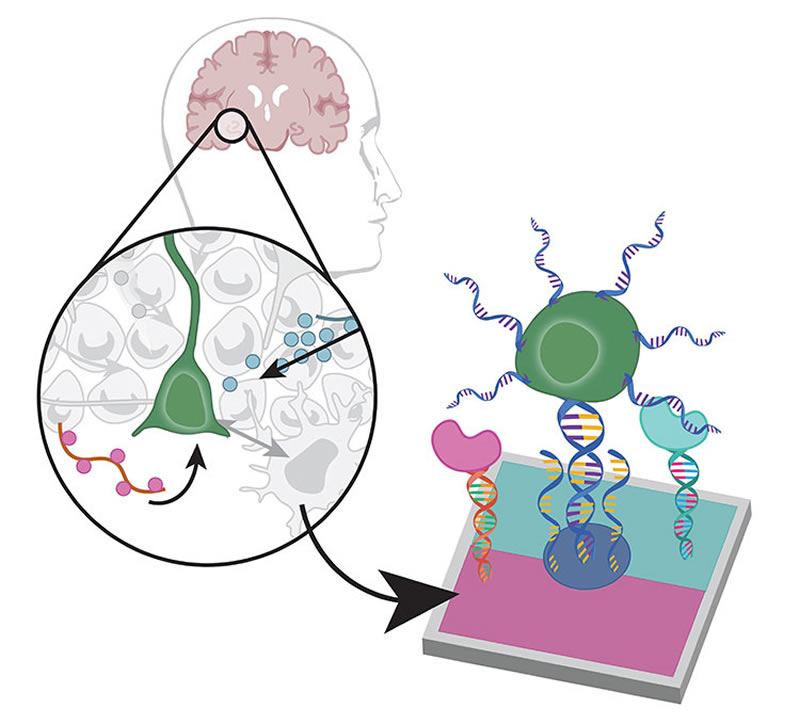
Researchers have created a new technique that can rapidly “print’ two-dimensional arrays of cells and proteins that mimic a variety of cellular environments in the body.
 

People who develop Parkinson’s disease before age 50 may have been born with disordered brain cells that went undetected for decades, according to new research. The research points to a drug that potentially might help correct these disease processes.

A new substance named Lu AF60097 may help reduce side effects from tricyclic antidepressants in those with severe depression.

Researchers have uncovered a key role of medial prefrontal cortex corticotropin-releasing factor interneurons for bidirectionally controlling motivated behavioral styles under stress. The findings could help in the development of new treatments for PTSD.

MIT researchers have identified a protein fragment that may inhibit COVID-19’s ability to enter human lung cells. 

Researchers have developed a new method to record brain activity at scale. The new technique could help in the development of new neuroprosthetic devices to help amputees and those with movement restricting neurological conditions.

New research suggests that eye movements may come before hand movements in actions that require a two-step decision-making process. 

A new method to accurately record brain activity at scale has been developed by researchers. The technique could lead to new medical devices to help amputees, people with paralysis or people with neurological conditions such as motor neuron disease.

Stress, loneliness, and sleep loss can weaken the immune system, leaving people more susceptible to COVID-19.

Finally this week. using robotics, researchers have uncovered mechanisms in the cerebellum and spinal cord that determine how the nervous system responds to induced changes in step length. The findings could have implications for physical rehabilitation programs for people with movement disorders.


Weekly Neuroscience Update

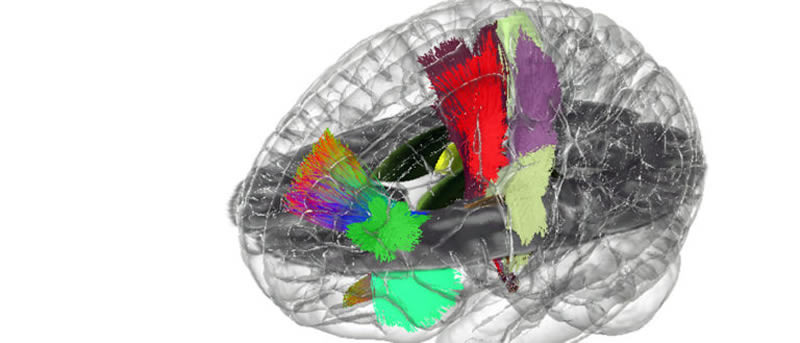
A holographic image of the human brain. The image is credited to Case Western Reserve.

Researchers have used the HoloLense software to create an interactive holographic mapping system for axonal pathways in the human brain.

Does Parkinson’s disease (PD) start in the brain or the gut? In a new contribution published in the Journal of Parkinson’s Disease, scientists hypothesize that PD can be divided into two subtypes: gut-first, originating in the peripheral nervous system (PNS) of the gut and spreading to the brain; and brain-first, originating in the brain, or entering the brain via the olfactory system, and spreading to the brainstem and peripheral nervous system.

In the largest study of its kind, researchers identified similarities in the brain activity of people with major depressive disorder, post-traumatic stress disorder, bipolar disorder, and anxiety disorders.

A new theory, inspired by thermodynamics, takes a high-level perspective of how neural networks in the brain transiently organize to give rise to memories, thought and consciousness.

For the first time, researchers have extracted and isolated amyloid beta (Aβ) fibrils from the brains of three people who had died of Alzheimer’s disease.

A new study has revelled that deep sleep restores the medial prefrontal cortex mechanisms that restore emotion. This lowers emotional and physiological reactivity, preventing the escalation of stress and anxiety.

The largest brain imaging study of its kind may have found the reason why people with anxiety and mood disorders so often feel unable to escape negative thoughts and emotions.

Finally this week, researchers have now developed a novel computational approach to accelerate finding optimal stimuli, by building deep artificial neural networks that can accurately predict the neural responses produced by a biological brain to arbitrary visual stimuli.

Weekly Neuroscience Update

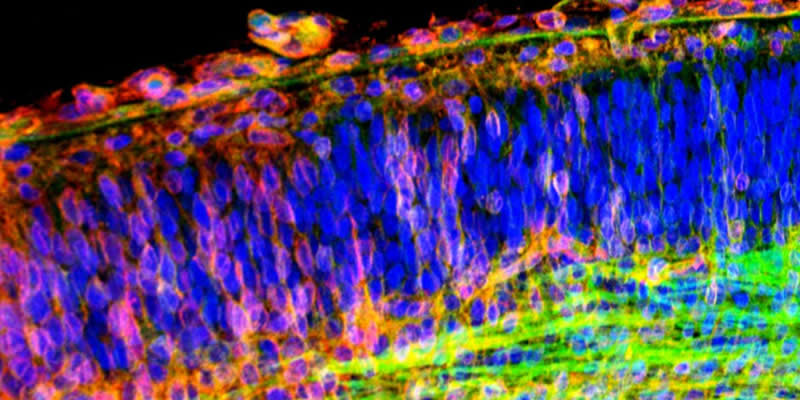
This image shows the developing brain visualized with fluorescence laser scanning microscopy. It illustrates the neurons (blue) and growing axons (red and green). Image INc-UAB.

Researchers have identified a new cell mechanism that connects Alzheimer’s disease and cancers.

The human brain can recognise a familiar song within 100 to 300 milliseconds, highlighting the deep hold favourite tunes have on our memory, a UCL study finds.

A new method allows researchers to detect serotonin at extremely low concentrations in serum.

New research shows for the first time that patients with mood and anxiety disorders share the same abnormalities in regions of the brain involved in emotional and cognitive control. The findings hold promise for the development of new treatments targeting these regions of the brain in patients with major depressive disorder, bipolar disorder, posttraumatic stress disorder, and anxiety disorders.

Artificial intelligence is helping shed light on how people’s brains, bodies, and emotions react to listening to music. 

Researchers have identified a set of neurons, located in a region of the hypothalamus, that may be the switch that turns the brain off, allowing for sleep. The neurons are also tied to body temperature regulation.

According to new research, musical intervention can help to improve mood and decrease agitation in those with dementia.

Performance on two quick tests ― a cognitive screen and an olfactory test ― may rule out future dementia, including Alzheimer disease (AD), for patients with mild memory problems, results of a large follow-up study show.

Features of the functional connectome are present in the fetal brain during the second and third trimesters of pregnancy.

Finally this week, a new study reveals how acetate, a byproduct of alcohol breakdown, travels to the brain’s learning system and alters proteins that regulate DNA function.

Weekly Neuroscience Update

artificial-membrane-brain-tisuse-neurosciencenews

A newly developed microfluidic device microfluidic device allowed researchers to keep tissue from the suprachiasmatic nucleus alive for over 25 days.

Neuroscientists have proved how different parts of the human brain work together to create and retrieve episodic memory.  Models suggested that, during formation of a memory, information is routed from cortex to hippocampus whilst retrieving a memory should see this information flow in reverse.

A collaborative study published today in the journal Cell Reports provides evidence for a new molecular cause for neurodegeneration in Alzheimer’s disease.

Researchers have identified brain circuitry differences that might be associated with suicidal behavior in individuals with mood disorders. The study, published in Psychological Medicine, provides a promising lead toward tools that can predict which individuals are at the highest risk for suicide.

A period of wakeful rest can help reduce memory intrusions associated with PTSD.

Does dementia spread gradually and evenly in all directions across the brain, or can it “jump” from one brain area to another? New research helps to settle the question by examining the progression of frontotemporal dementia.

Examining postmortem brains of autism spectrum disorder patients, researchers discover an accumulation of immune cells surrounding blood vessels in the brain.

Your personality type may influence addiction to certain drugs, a new study reveals. Those whose personalities rank higher for impulsivity are more likely to use ecstasy, while those who score higher for neurotic traits are more likely to use opioid like heroin, researchers report.

Finally this week, researchers have mapped out some of the mechanisms that may affect women’s fertility from the teenage years to menopause.


Weekly Neuroscience Update

protein-synapse-imaging-neurosciencenews

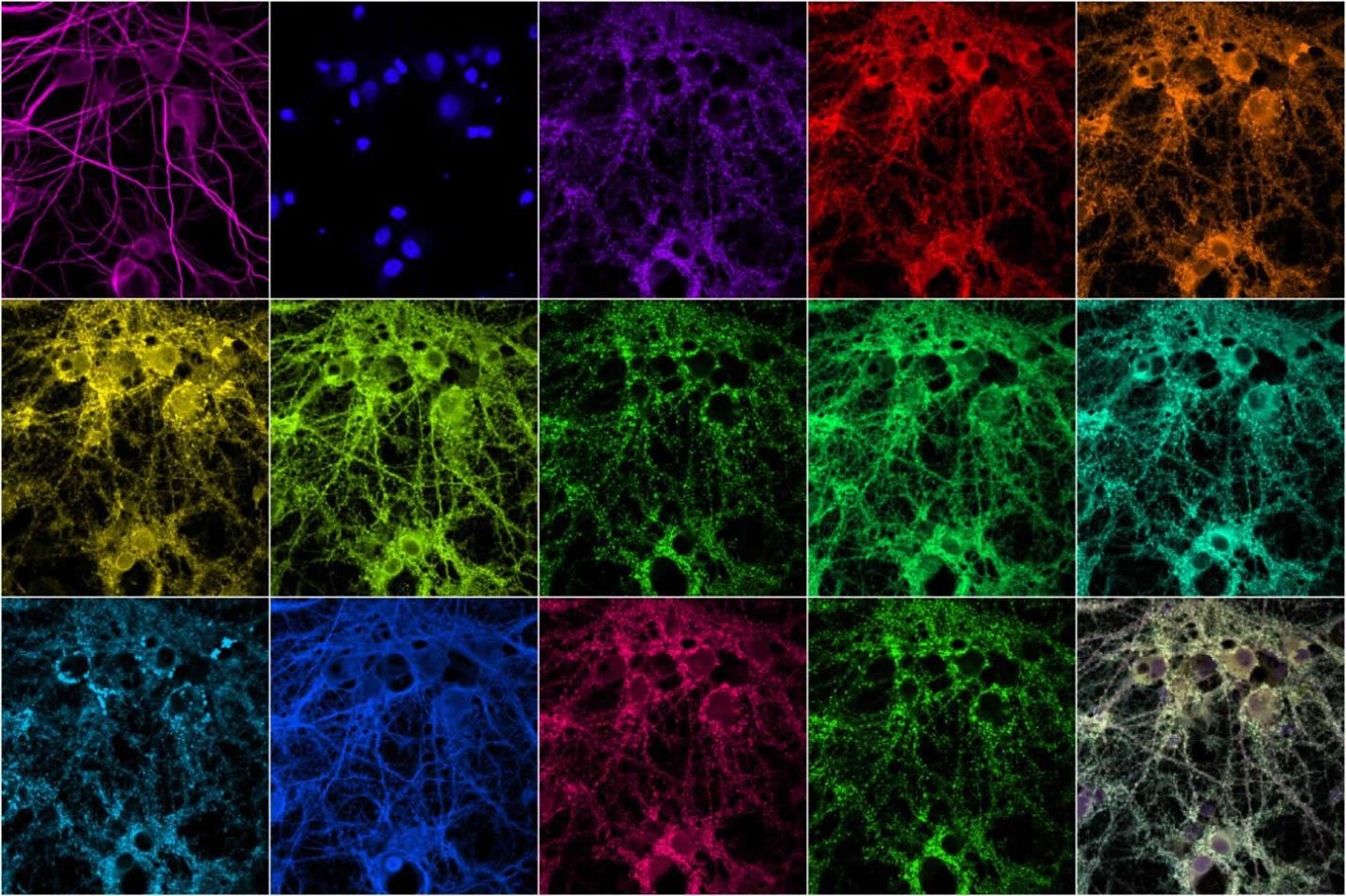
MIT engineers have developed a technique that allows them to rapidly image many different proteins within a synapse.

A new rapid imaging technique allows researchers to view synaptic proteins at high resolution.

There may be some good news for people with vestibular migraine, a type of migraine that causes vertigo and dizziness with or without headache pain. A small, preliminary study suggests that non-invasive nerve stimulation may show promise as a treatment for vestibular migraine attacks, a condition for which there are currently no approved treatments.

New research uses artificial intelligence to identify patterns of brain activity that make people less responsive to certain antidepressants.

A new study challenges the belief that epileptic seizures can be predicted by brain wave patterns. Researchers report they have found no evidence that specific brain wave patterns can be a predictive indicator of seizure onset.

New research shows prepartum and postpartum physical and mental health was associated with persistent severe sleep problems in their babies.

In a first-of-its-kind study, researchers have pieced together a road map of typical brain development in children during a critical window of maturation. The study shows how a “wave of brain maturation” directly underlies important social and behavioral changes children develop during the transition from childhood to adolescence.

Finally, this week, a new study highlights the role estrogen plays in the differences in the progression of Parkinson’s disease between men and women.

Weekly Neuroscience Update

csm_190527_brain-info_MBK_FK_web_0ff4414865

A team of neuroscientists from Göttingen and Tehran has shown. how our brain combines visual features to achieve a unified percept.

Research published in the journal Cerebral Cortex has shown that stronger functional connectivity—that is, communication among neurons in various networks of the brain—is linked to youthful memory in older adults. Those with superior memories—called superagers—have the strongest connectivity.

Scientists have found a link between brain’s emotion circuit and movement.

High-fat diets are not only bad for your waistline, they are also bad for your brain health. A new study reveals high-fat diets contribute to hypothalamic inflammation which occurs long before symptoms of obesity arise.

Patients with schizophrenia show increased brain activity in central areas of the brain, but lower activity in the temporal sulcus when hearing metaphors.

Researchers have developed a system that measures a patient’s pain level by analyzing brain activity from a portable neuroimaging device. The system could help doctors diagnose and treat pain in unconscious and noncommunicative patients, which could reduce the risk of chronic pain that can occur after surgery.

Finally this week, a new study reports maternal marijuana use may be detrimental to the brain development of children.