This is your brain on art

Andy Warhol for Neuroscientists. Image by Valerie van Mulukom

This morning I spent some time looking through the winners of the first annual Brain-Art Competition, a competition designed to “recognize the beauty and creativity of artistic renderings emerging from the neuroimaging community”. This competition aims to recognize the artistic creativity of our community that often goes unappreciated in the publication process.

There are some incredibly visually striking images and you can view an online gallery of these here.

Weekly Round Up


All in the mind: Repressing bad memories for long enough can lead to us forgetting them completely, researchers claim

Fear burns memories into our brain, according to new research by University of California, Berkeley and if those memories are causing you distress, a team of researchers from Lund University in Sweden may have the answer. People can train their minds to erase embarrassing moments from their mind, according to their research. Scientists used EEG scans to monitor the parts of the brain that became active when volunteers actively tried to forget something. They were also able to pinpoint the exact moment a memory is ‘forgotten’, and claim that long-term suppression of a memory is a sure-fire way of permanently erasing it. The researchers say that mastering the technique could be useful for people who suffer from depression or post traumatic stress disorder, where constantly dwelling on upsetting or traumatic memories has a devastating effect on mental health.

And on the subject of PTSD, researchers at the Max Planck Institute of Psychiatry in Munich, are looking into the link between post-traumatic stress disorder and shrinkage of the hippocampus structure in the brain. (The hippocampus, which is Greek for “seahorse,” is a paired structure tucked inside each temporal lobe and shaped like a pair of seahorses, thence its name).

When we find something funny, our brains as well as our faces “light up” and the funnier we find a joke, the more activity is seen in “reward centres” – specific neurons which create feelings of pleasure, recent research shows.

Another region of the brain which also ‘lights up’  is in the medial orbito-frontal cortex when we experience beauty in a piece of art or a musical excerpt, according to new research funded by the Wellcome Trust. The study, published July 6 in the open access journal PLoS One, suggests that the one characteristic that all works of art, whatever their nature, have in common is that they lead to activity in that same region of the brain, and goes some way to supporting the belief that beauty does indeed lie in the beholder.


Weekly Round Up

Pathways within the brain can be strengthened by reading and language exposure

 Recent research shows that reading  boosts brain pathways and can actually affect understanding in nearly all school subjects – a great reason to encourage the reading habit in your children.

Scientists at the University of Michigan Health System have demonstrated how memory circuits in the brain refine themselves in a living organism through two distinct types of competition between cells. Their results, published  in Neuron, mark a step forward in the search for the causes of neurological disorders associated with abnormal brain circuits, such as Alzheimer’s disease, autism and schizophrenia.

The left and right halves of the brain have separate stores for working memory, the information we actively keep in mind, suggests a study published online yesterday by the Proceedings of the National Academy of Sciences.

Over time, and with enough Internet usage, the structure of our brains can actually physically change, according to a new study.

Bringing the real world into the brain scanner, researchers at The University of Western Ontario from The Centre for Brain and Mind can now determine the action a person was planning, mere moments before that action is actually executed.

And finally good news at last for coffee addicts.For years we’ve been told that caffeinated coffee was bad for us. It’s unhealthy and addictive, doctors warned. But as vindication for all who stuck by their energizing elixir, a new study published early online in the Journal of Alzheimer’s Disease,  shows that guzzling caffeinated coffee may actually be good for our brains. In fact, it may help keep Alzheimer’s at bay.  So enjoy that cuppa joe!

Weekly Round Up

Are teenage brains wired to predict the next big music hit?

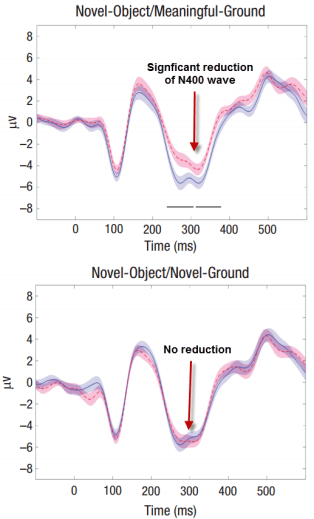
The brain is constantly changing as it perceives the outside world, processing and learning about everything it encounters. In a new study, which will be published in an upcoming issue of Psychological Science, scientists find a surprising connection between two types of perception: If you’re looking at a group of objects and getting a general sense of them, it’s difficult for your brain to learn relationships between the objects.

Recent research published in the Journal of Consumer Psychology.suggests that the activity in teen brains may have some Nostradamus-like qualities when it comes to predicting the hits or misses of popular music.

Fear burns memories into our brain, and new research by University of California, Berkeley neuroscientists explains how in findings that have implications for the treatment of PTSD.

Ands speaking of memory…have you forgotten where you put your keys recently? Your brain might be in a better state to recall where you put them at some times than at others, according to new research from UC Davis.

Where is your brain taking you?

Let me take you on a little trip..a trip to the future.

As we enter the 21st Century we need a compelling vision for the human race including our spiritual and mental evolution as understood by the evolution of our brains.  The following insights may strike you as free ranging, radical or even abstract but I believe that the question of human evolution connects perfectly with what many of us are beginning to ask of ourselves and how we might fit into a ‘bigger picture’.

Self-refection IS evolution 

Modern evolutionary theory needs to switch focus to the human mind – not just the physical brain. It is not enough to work out that we evolved from the apes – we now need to focus on how the human psyche is evolving and where it is taking us. Evidence from a branch of science called evolutionary biology shows that the size and shape of the human brain has not changed radically in thousands of years despite huge technological advances. Why is this so? Evidence is mounting that once humans learned to think in a different way by living in a state of reflectiveness our progress was inevitable. By discovering how to harness the full power of the brain – human beings did not just survive but started to enjoy an ‘ultra’ life.

The past is the key to the future

Until recently, the task of applying evolutionary science to the bigger question of human destiny has been avoided by scientists  too wary of speculation. However the emergence of the new discipline of neuroscience – the scientific study of the nervous system – is helping us to bridge this gap by providing new ways to answer old questions.  Neuroscientists have recently discovered that the same brain regions are involved in the processing of memory and in creative thought suggesting that the more we learn and remember the better we can predict the future. 

Science and true science

The great paradox of science is that while its strength is the deep analysis it uses to solve a problem – it can only really come of age when it goes beyond seeing man only in terms of the physical body. True science will see man in his wholeness and as part of a coherent picture of the world. The fact is that neither the sciences nor the humanities have yet to properly explain what it is to be human. True science will probably need to take into account all the challenges, achievements and events of human history as if they were all part of one continuum. This will require a new type of analysis – the origins of which may be seen in the new disciplines called informatics and systems analysis.

Ticket to where?

Humankind is a very young concept – only coined in the last 100 years. It is based on the recognition of unity within the human race – despite all the wars, division of wealth and racism. Contrary to what some people like to think – humankind is not the centre of the world but rather a very actively growing branch of the evolutionary tree. We are not destined to ‘lift ourselves above nature’- but rather to dramatically raise the intelligence and complexity of this thing we call ‘life’ through our intellectual and spiritual evolution. In fact, the more complex and intelligent we become the more we will free ourselves from our physical surroundings (the physical universe).

Personality equals evolution – neurolution

Just as our physical universe – space, the stars and galaxies – is expanding outwards, the same universe can – under the right conditions – also just as naturally ‘focus inwards’ from the simple to the increasingly complex and it is according to this ‘law’ that the human mind also develops.  Is there an end point to us becoming more human or the fulfilment of its potential? The evidence suggests that for us humans – personality equals evolution. 

The neuroscience of US

Every single human being on the planet is unique because they posses a uniquely complex brain. In fact, the brain is so complex that in all of human history no two brains were the same.  Furthermore this unique combination of about 100 trillion tiny connections grows and changes through life – a work in progress from conception to death. In this way we each evolve as we journey through life.

All hands on deck for human evolution

The evolution of the human race is not going to proceed by trying to transcend it – rather we will move forward as a race by making room for everyone to express their personalities to the full.  In this way the evolution of the human race has everything to do with our own personal development. Yet evolution does not happen at an even speed so don’t be alarmed when your subconscious asks you to take that leap; change job, pick a partner or just follow your dream. These great leaps of faith are part of your evolution in your journey through life and following a period of self refection just assure yourself it’s all happening for your own good (and the good of your species!) and go to the next level.

In a series of future blogs I will explore these ideas further including how mental and spiritual evolution is nourished by the network society.


Weekly Round Up

How does cigarette addiction affect the brain?

The effects of nicotine upon brain regions involved in addiction mirror those of cocaine, according to new neuroscience research.

Aspirin and other anti-inflammatory drugs taken for pain relief may reduce the effectiveness of anti-depressants such as Prozac, say US researchers.

Moments of absent mindedness such as losing your keys could be the result of tiny parts of the brain taking “naps” to recharge, a study finds.Researchers discovered that contrary to popular opinion the brain is not always entirely asleep or awake but parts of it can go “offline”.

Neuroscientists at the California Institute of Technology and their colleagues have tied the human aversion to losing money to a specific structure in the brain-the amygdala.

Music is not only able to affect your mood — listening to particularly happy or sad music can even change the way we perceive the world, according to researchers from the University of Groningen.

The positive effects of mindfulness meditation on pain and working memory may result from an improved ability to regulate a crucial brain wave called the alpha rhythm. This rhythm is thought to “turn down the volume” on distracting information, which suggests that a key value of meditation may be helping the brain deal with an often-overstimulating world. And in other  mindfulness research – fMRI shows how mindfulness meditation changes the decision making process


Weekly Round Up

Research shows that our brains understand music not only as emotional diversion, but also as a form of motion and activity.

Research shows that our brains understand music not only as emotional diversion, but also as a form of motion and activity. The same areas of the brain that activate when we swing a golf club or sign our name also engage when we hear expressive moments in music. Brain regions associated with empathy are activated, too, even for listeners who are not musicians.

And still on the theme of music and the brain, a recent study of seventy healthy adults ages sixty to eighty-three with various levels of music education starting around the age of ten showed impressive differences in brain functioning far later in life than any other research has previously shown.

A new study has suggested that sustained training in mindfulness meditation may impact distinct domains of human decision-making, enabling them to make decisions rationally.

Older bilingual adults compensate for age-related declines in brainpower by developing new strategies to process language, according to a recent study published in the journal Aging, Neuropsychology, and Cognition.

Emerging research suggest antidepressant medications may aid creation and survival of new brain cells after a brain injury.

New study examines brain processes behind facial recognition 

Finally, here is an interesting post from Chris Mooney on the science of why we don’t believe science.

Weekly Round Up

Meditation can "thicken" the brain and make people less sensitive to pain.

As humans face increasing distractions in their personal and professional lives, University of British Columbia researchers have discovered that people can gain greater control over their thoughts with real-time brain feedback.

In Fame, Marketing, and your Brain, Dr Susan Krauss Whitbourne takes a look at neuromarketing and celebrity endorsements.

Scientists have shed new light on how older people may lose their memory. The development could aid research into treatments for age-related memory disorders and scientists at the University of California, San Francisco (UCSF) have pinpointed a reason older adults have a harder time multitasking than younger adults. Read about their discovery here.

Meditation produces powerful pain-relieving effects in the brain, according to new research published in the April 6 edition of the Journal of Neuroscience.

And finally, five children in India have helped to answer a question posed in 1688 by Irish philosopher William Molyneux: can a blind person who then gains their vision recognise by sight an object they previously knew only by touch?

Weekly Round Up


Is the internet changing the way we think?

In this week’s round-up of the latest discoveries in the field of neuroscience – the evolutionary nature of the brain, how blind people see with their ears, the neuroscience of humour, and how the internet is changing the way we think.

Interesting post on the evolutionary nature of the brain here

Scientists say they have discovered a “maintenance” protein that helps keep nerve fibres that transmit messages in the brain operating smoothly. The University of Edinburgh team says the finding could improve understanding of disorders such as epilepsy, dementia, MS and stroke.

Neuropsychologist, Dr. Olivier Collignon has proved that some blind people can “see” with their ears.  He compared the brain activity of people who can see and people who were born blind, and discovered that the part of the brain that normally works with our eyes to process vision and space perception can actually rewire itself to process sound information instead.

A growing body of scientific evidence indicates that we have much more control over our minds, personalities and personal illnesses than was ever believed to exist before, and it is all occurring at the same time that a flood of other research is exposing the benefits of humor on brain functioning. Nichole Force has written  a post in Psych Central on Humor, Neuroplasticity and the Power To Change Your Mind.

And finally, is the internet changing the way we think? American writer Nicholas Carr believes so and his claims that the internet is not only shaping our lives but physically altering our brains has sparked a debate in the Guardian.

Treatment expectation will boost or reduce drug efficacy

If you read my post yesterday on the neuroscience of success, you will have read of the unbeatable combination of optimism tempered with reality. Having written that post, it was fascinating today to read a paper in the current edition of Science Translational Medicine, which shows that a patient’s belief that a drug will not work can indeed become a self-fulfilling prophecy.

Researchers from Oxford University identified the regions of the brain which are affected in an experiment where they applied heat to the legs of 22 patients, who were asked to report the level of pain on a scale of one to 100. The patients were also attached to an intravenous drip so drugs could be administered secretly.

The initial average pain rating was 66. Patients were then given a potent painkiller, remifentanil, without their knowledge and the pain score went down to 55.

They were then told they were being given a painkiller and the score went down to 39.

Then, without changing the dose, the patients were then told the painkiller had been withdrawn and to expect pain, and the score went up to 64.

So even though the patients were being given remifentanil, they were reporting the same level of pain as when they were getting no drugs at all.

Brain scans during the experiment also showed which regions of the brain were affected. The expectation of positive treatment was associated with activity in the cingulo-frontal and subcortical brain areas while the negative expectation led to increased activity in the hippocampus and the medial frontal cortex.

The limbic system comprises several cortical and subcortical brain areas that are interconnected. This system essentially controls emotions, and the autonomic and endocrine responses associated with emotions. The hippocampus also belongs to the limbic system and plays an important role in long-term memory. Activity in the medial frontal cortex predicts learning from errors.

This latest research could have important consequences for patient care and for testing new drugs. Negative expectations about a drug can reduce its efficacy quite significantly, as indeed positive expectation can boost its efficacy. So it seems, that once more, a positive attitude holds the key to another area of success!