Weekly Neuroscience Update

mood-brain-signals-neurosciencenews.jpg

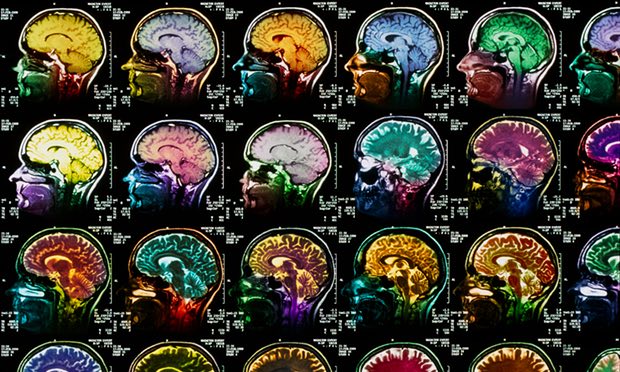
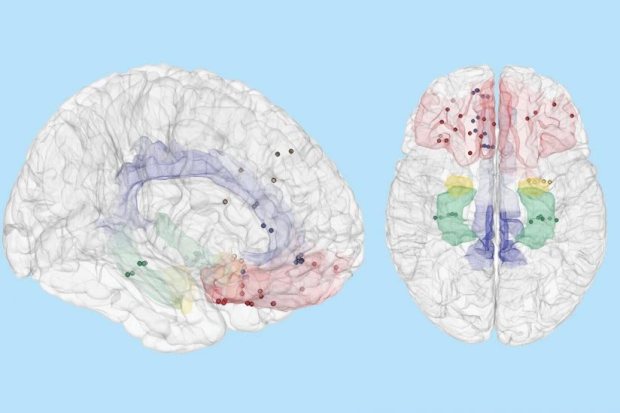
Mood is represented across multiple sites in the brain rather than localized regions, which makes decoding them a computational challenge, according to a USC expert. NeuroscienceNews.com image is credited to Sani et. al., Nature Biotechnology.

Researchers have built a decoder which is able to translate neural signals into mood variations.

How and why human-unique characteristics such as highly social behavior, languages and complex culture have evolved is a long-standing question. A research team led by Tohoku University in Japan has revealed the evolution of a gene related to such human-unique psychiatric traits.

A new study reports mast cells play a key role in determining sex differences in the developing brain.

An inhaled form of a high blood pressure medication has potential to treat certain types of anxiety as well as pain, according to a new study by the Centre for Addiction and Mental Health (CAMH).

Functional connectivity within a specific neural network helps dampen a newborn’s brain activity in response to pain, researchers report.

A new blood test can help identify your body’s precise internal time clock in relation to external time. Researchers say the test could help examine the impact of misaligned circadian clocks in a wide range of diseases.

Researchers report a neural network called the isthmic system helps us to select visual objects that catch our attention.

According to researchers, drumming for an hour a week helps improve learning at school for children on the autism spectrum. The study reports drumming not only improves dexterity, rhythm and timing for those with ASD, it also helps improve concentration and enhances communication with peers.

A new study reports those with ADHD are at an increased risk of developing Parkinson’s disease.

In one of the biggest breakthroughs in schizophrenia research in recent times, Professor Cynthia Shannon Weickert from Neuroscience Research Australia (NeuRA) and UNSW Sydney has identified immune cells in greater amounts in the brains of some people with schizophrenia.

Finally this week, esearchers are looking at what happens in the brain when we make snap decisions under stress.


Weekly Neuroscience Update

child-85321_960_720.jpgSleep researchers report for the first time evidence that naps and overnight sleep may work together to benefit memory in early childhood.

A group of researchers has found that our learning capabilities are limited during slow wave sleep. Using magnetoencephalography (MEG), they showed that while our brain is still able to perceive sounds during sleep, it is unable to group these sounds according to their organisation in a sequence.

Neuroscientists have debunked claims that getting better at a brain training game can translate to improved performance in other, untrained cognitive tasks.

Adults who hold back-and-forth conversations with young children rather than just talking to them may be helping to strengthen connections between the language regions of the children’s brains, new research shows.

Researchers say, to better understand working memory, it is important to resolve the debate over how we hold and judge multiple pieces of information in mind.

According to a new study dehydration can lead to more errors on task performance. Additionally, fMRI neuroimaging showed dehydration can alter brain structure temporarily.

It may be possible in the future to screen patients for Alzheimer’s disease using an eye exam.

Researchers used neuroimaging technology to identify brain differences between those who procrastinate and those who are doers. The study reveals people with poor action control have a larger amygdala, and the connection between the dorsal ACC and amygdala is less pronounced.

A new study reports lifestyle choices, such as smoking or drinking alcohol during early adulthood, can increase the risk of developing dementia or having a stroke later in life.

Scientists have discovered a network of brain cells that express our sense of time within experiences and memories.

In the first peer-reviewed published report of its kind, University of Toronto researchers have demonstrated that focused ultrasound can be used to safely open the blood-brain barrier (BBB) in patients with Alzheimer’s disease.

Finally, this week neuroscientists have discovered that ketamine works as an antidepressant at least in part by activating the brain’s opioid system.

Weekly Neuroscience Update

4961.jpg

Scientists have unpicked the regions of the brain involved in dreaming, in a study with significant implications for our understanding of the purpose of dreams and of consciousness itself. What’s more, changes in brain activity have been found to offer clues as to what the dream is about.

A machine learning algorithm shows that during sleep, the brain actively reprocesses information learned the previous day, strengthening the memory.

A new study of obese people suggests that changes in their brains’ reward regions make them more prone to overeating, and that women and men exhibit different brain activity related to overeating.

A plasma membrane protein affects the generation of new neurons in the adult hippocampus, a new study reports.

The brains of youth experiencing elevated depressive symptoms early in adolescence appear to develop differently from those experiencing depression in late adolescence, reports a study in the Journal of the American Academy of Child and Adolescent Psychiatry. Specifically, the MRI study found that cortical surface area was lower in youth with early depressive symptoms compared with those in the other groups.

While some researchers believe oxytocin is released to enhance a romantic relationship, this might not always be the case, a new study reveals.

Researchers have developed a new method to induce visual hallucinations in healthy people. The study could help to develop new treatments to control hallucinations in people with Parkinson’s and other disorders.

Exercise may bolster the brain function and thinking skills of people with dementia, according to a new report.

When prompted to use verbal thinking, people create visual images to accompany their speech, implying visual thinking could be hardwired into our brains, a new study reports.

Researchers report brain network organization changes can influence executive function in young adults.

What happens in the brain when we see other people experiencing a trauma or being subjected to pain? It seems the same regions that are involved when we feel pain ourselves are also activated when we observe other people who appear to be going through some painful experience. This is shown in a study from Karolinska Institutet in Sweden published in Nature Communications.

A new study reports EEG could accurately predict which newborn babies will have neurodevelopmental disorders.

Finally this week, new research, published in Frontiers in Human Neuroscience makes the case against fixed starting times, i.e. a fixed one-size-fits-all approach for students and employees.

Weekly Neuroscience Update

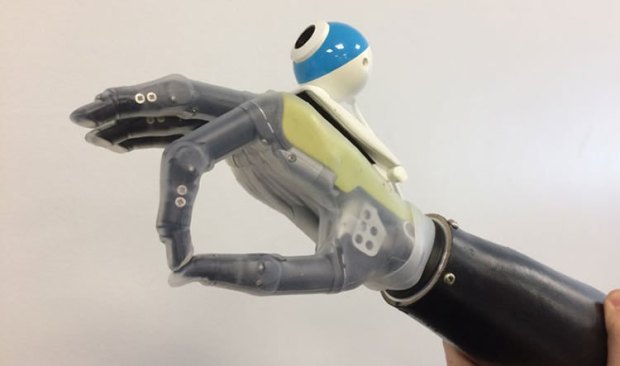
seeing-hand-prosthetic-neurosciencenews.jpg

A new generation of prosthetic limbs which will allow the wearer to reach for objects automatically, without thinking – just like a real hand – are to be trialled for the first time.

Researchers have discovered both the structure of specific brain areas and memory are linked to genetic activity that also play important roles in immune system function.

Understanding the structure of our brain is as important as understanding its size when it comes to evolution, a new report suggests.

Scientists have published ground-breaking scans of newborn babies’ brains which researchers from all over the world can download and use to study how the human brain develops.

A new study reports that contrary behaviour of blood vessels in the retrotrapezoid nucleus help keep us breathing.

Researchers have developed a non-invasive means to measure whether infants are in pain, which could prevent babies from undergoing excessive discomfort during medical treatments.

A landmark study has identified the first genetic locus for anorexia nervosa and has revealed that there may also be metabolic underpinnings to this potentially deadly illness.

Finally this week, researchers have identified how two distinct areas of the developing brain communicate and report REM sleep is key to this communication.


Weekly Neuroscience Update

internet-brain-neurosciencenews.jpg

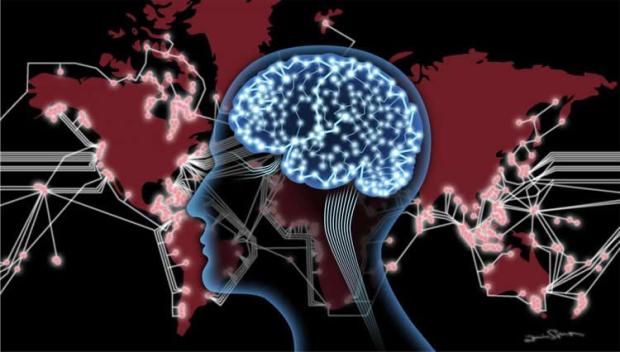
Salk scientist finds similar rule governing traffic flow in engineered and biological systems.

An algorithm used for the internet may help researchers learn about the human brain, researchers report.

A new blood test may be as accurate as a test requiring a painful spinal tap for differentiating Parkinson’s disease from similar disorders, according to a study published in Neurology, the medical journal of the American Academy of Neurology.

Researchers report neurons move the site of microRNA maturation away from the cytoplasm out to the dendrites.

Emotions are not innately programmed into our brains, but, in fact, are cognitive states resulting from the gathering of information, researchers conclude in the latest issue of the journal Proceedings of the National Academy of Sciences.

A new study reveals some brain systems in a dish, dubbed circuitoids, exhibit coordinated and spontaneous rhythmic activity that can drive repetitive movements.

By using magnetic resonance imaging (MRI) to study the brains of infants who have older siblings with autism, scientists were able to correctly identify 80 percent of the babies who would be subsequently diagnosed with autism at 2 years of age.

An international research team has found that when the brain “reads” or decodes a sentence in English or Portuguese, its neural activation patterns are the same.

New findings suggest that language-specialised brain areas work in constant interaction with other areas known to support other cognitive processes, such as perception and action.

Scientists have identified two distinct mechanisms in the brain that control the balance between accuracy and speed when making decisions.

When it comes to perceiving music, the human brain is much more tuned in to certain types of rhythms than others, according to a new study.

The effects a concussion has on driving a vehicle may continue to linger even after the symptoms disappear, according to University of Georgia researchers.

Scientists say neurodegenerative diseases like Alzheimer’s and Parkinson’s may be linked to defective brain cells disposing toxic proteins that make neighbouring cells sick.

New research from Lund University in Sweden has shown that intestinal bacteria can accelerate the development of Alzheimer’s disease.

New research uncovers the brain circuit involved in processing fear, which could eventually lead to new treatment options for people with mental health disorders.

Finally this week, infants as young as 20 months of age expect adults to display surprise when discovering a false belief, according to a new study.


Weekly Neuroscience Update

161206110138_1_540x360.jpg

Neuroscientists at the University of Bristol are a step closer to understanding how the connections in our brain which control our episodic memory work in sync to make some memories stronger than others. The findings, published in Nature Neuroscience, reveal a previously unsuspected division of memory function in the pathways between two areas of the brain, and suggest that certain subnetworks within the brain work separately, to enhance the distinctiveness of memories.

A new study pinpoints the brain area responsible for forming direct links between environmental stimuli and enhanced focus.

Every few seconds, our eyelids automatically shutter and our eyeballs roll back in their sockets. So why doesn’t blinking plunge us into intermittent darkness and light? New research led by the University of California, Berkeley, shows that the brain works extra hard to stabilize our vision despite our fluttering eyes.

Our personality traits are linked to differences in the thickness and volume of various parts of our brains, an international study has suggested.

Researchers have found significant differences in the brains of teens with bipolar disorder that attempt to take their lives over those with the disorder who have never attempted suicide.

Women with lower estrogen levels may be more susceptible to developing PTSD according to new research.

A new study raises the question of whether a genetic mutation associated with neurodegeneration in one environment could act in a positive way in a different setting.

Researchers report early indicators of depression and anxiety may be evident in the brain from birth.

A cutting edge, non-invasive brain stimulation technique could improve cognitive control for people with conditions such as schizophrenia and autism.

A new computerized ‘mirror game’ has been shown to give more accurate diagnosis of schizophrenia than clinical interviews.

A new study reports on how a single instance of extreme stress can lead to long term neurological changes and trauma.

Social difficulties in people with autism are exacerbated by how other people perceive them at first meeting, researchers say.

Finally this week, researchers have revealed regions of the brain implicated in delusional misidentification syndromes.

Weekly Neuroscience Update

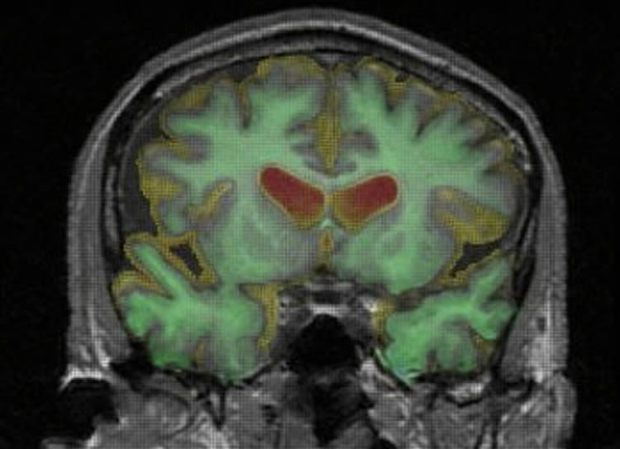
protein-alzheimers-study-neurosciencenews

New research, using a Bayesian inference model of audio and visual stimuli, has shown how our perception of time lies mid-way between reality and our expectations.

Researchers have developed a virtual brain that can mimic the brain of a person with epilepsy. The model can help provide a better understanding of the disease.

Resting state brain activity may predict how quickly people are able to pick up a second language, a new study reports.

Researchers report that an odour identification test may prove useful in predicting cognitive decline and detecting early-stage Alzheimer’s disease.

A new study uses cutting-edge technique to image the process of neuronal transmission.

By scanning the brains of subjects while they were hypnotized, researchers were able to see the neural changes associated with hypnosis.

Yale University researchers have developed a way to picture synapses in living brains.

Music can influence how much you like the taste of beer, according to a study published in Frontiers in Psychology.

According to researchers, sleep twitches in babies could be linked to sensorimotor development.

A new study reports anatomical patterning in the brain’s cortex is controlled by genetic factors.

Finally this week, researchers have uncovered what goes on in our brains when we are faced with the decision to take a risk or play it safe.


Weekly Neuroscience Update

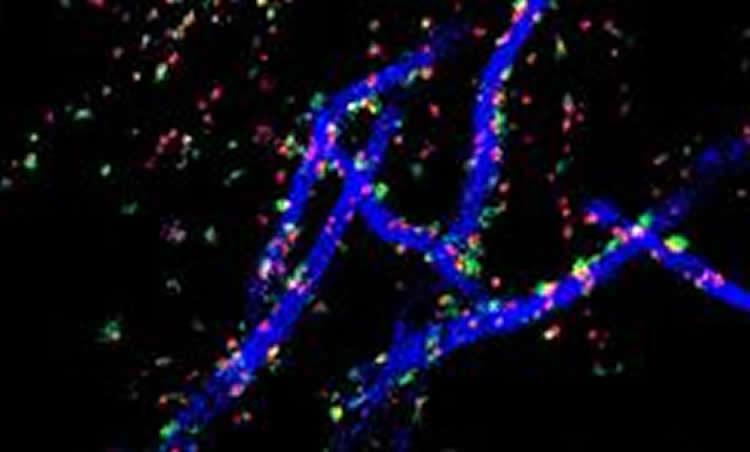
Axon initial segments (blue) and the synapses that form along them (red and green) are shown. Image credit: Winnie Wefelmeyer/MRC Centre for Developmental Neurobiology.

Axon initial segments (blue) and the synapses that form along them (red and green) are shown. Image credit: Winnie Wefelmeyer/MRC Centre for Developmental Neurobiology.

A new study characterises a novel way in which neurons remain electrically stable when confronted with chronic increases in neuronal activity.

Lithium chloride which is used as a mood stabiliser in the treatment of mental health problems, mainly bipolar disorder, could be used to treat arthritis according to a new study.

New research indicates that adults born very premature are more likely to be socially withdrawn and display signs of autism.

Scientists have found that existing anti-malaria drugs could be a potential treatment for Parkinson’s disease.

A number of studies presented at the Alzheimer’s Association International Conference, showed that regular supervised exercise sessions could help to improve symptoms in people with memory problems and dementia.

Brain scans of war veterans with posttraumatic stress disorder have led researchers to an area of the prefrontal cortex that appears to be a good predictor of response to treatment with SSRIs–the first-line drug treatment for PTSD.

New research findings show that body fat can send a signal that affects the way the brain deals with stress and metabolism.

Increasing the levels of a signaling molecule found in the brain can positively alter response to stress, revealing a potential new therapeutic target for treatment of depression.

Music training, begun as late as high school, may help improve the teenage brain’s responses to sound and sharpen hearing and language skills, suggests a new study.

Researchers have, for the first time, determined the rate at which the developing brain eliminates unneeded connections between neurons during early childhood.

Scientists have identified a critical function of what they believe to be schizophrenia’s “Rosetta Stone” gene that could hold the key to decoding the function of all genes involved in the disease.

Researchers have discovered a link between autism and genetic changes in some segments of DNA that are responsible for switching on genes in the brain.

Infants can use their expectations about the world to rapidly shape their developing brains, researchers have found.

Finally this week, there’s new evidence suggesting that women’s brains are especially vulnerable to Alzheimer’s disease and other problems with memory and thinking.

Weekly Neuroscience Update

A new study has found that while stereotypic shapes exist for this structure, individuals with a broader hippocampus tend to perform better on various tests that assess memory. The image is for illustrative purposes only. Image credit: Camillo Golgi.

A new study has found that while stereotypic shapes exist for this structure, individuals with a broader hippocampus tend to perform better on various tests that assess memory. The image is for illustrative purposes only. Image credit: Camillo Golgi.

New research challenges the long-held belief that a larger hippocampus is directly linked to improved memory function.

Premature birth can alter the connectivity between key areas of the brain, according to a new study led by King’s College London. The findings should help researchers to better understand why premature birth is linked to a greater risk of neurodevelopmental problems, including autistic spectrum disorders and attention deficit disorders.

Scientists have uncovered mathematical equations behind the way the brain forms – and even loses – memories.

New scanning methods which map the wiring of the brain could provide a valuable new tool to predict people at risk of schizophrenia, according to a new study.

People with depression may be more likely to develop Parkinson’s disease, according to a large study published in Neurology.

Medical researchers have known for several years that there is some sort of link between long-term depression and an increased risk of stroke. But now scientists are finding that even after such depression eases, the risk of stroke can remain high.

A new study from the University of Cambridge has identified one of the oldest fossil brains ever discovered – more than 500 million years old – and used it to help determine how heads first evolved in early animals.

Researchers have succeeded in reconstructing the neuronal networks that interconnect the elementary units of sensory cortex — cortical columns. The scientists say that this study marks a major step forward to advance the understanding of the organizational principles of the neocortex and sets the stage for future studies that will provide extraordinary insight into how sensory information is represented, processed and encoded within the cortical circuitry.

Smokers who are able to quit might actually be hard-wired for success, according to a study from Duke Medicine.

Scientists are attempting to mimic the memory and learning functions of neurons found in the human brain. To do so, they investigated the electronic equivalent of the synapse, the bridge, making it possible for neurons to communicate with each other.

Finally this week, in a study using functional magnetic resonance imaging, scientists found that our inherent risk-taking preferences affect how we view and act on information from other people.

Weekly Neuroscience Update

researchers have developed a method to map the circuitry of the brain with a “Neuronal Positioning System” (NPS) similar to how a Global Positioning System (GPS) triangulates our location on the planet. Image credit: Dr. Shlomo Tsuriel and Dr. Alex Binshtok, Hebrew University of Jerusalem.

researchers have developed a method to map the circuitry of the brain with a “Neuronal Positioning System” (NPS) similar to how a Global Positioning System (GPS) triangulates our location on the planet. Image credit: Dr. Shlomo Tsuriel and Dr. Alex Binshtok, Hebrew University of Jerusalem.

In new research scientists have announced a “Neuronal Positioning System” (NPS) that maps the circuitry of the brain, similar to how a Global Positioning System (GPS) receiver triangulates one’s location on the planet.

EPFL scientists have developed a new method that can accurately simulate the chemical modification of the protein behind Parkinson’s disease. The technique, has opened a new way of understanding Parkinson’s, and can be expanded to other proteins and diseases as well.

Neuroscientists have found a way to activate opioid receptors with light.

New research shows that chemotherapy can lead to excessive mind wandering and an inability to concentrate. Dubbed ‘chemo-brain,’ the negative cognitive effects of the cancer treatment have long been suspected, but the study is the first to explain why patients have difficulty paying attention.

A study provides new evidence that book sharing in early childhood may promote brain development supporting reading readiness.

An international team of scientists has discovered what amounts to a molecular reset button for our internal body clock. Their findings reveal a potential target to treat a range of disorders, from sleep disturbances to other behavioral, cognitive, and metabolic abnormalities, commonly associated with jet lag, shift work and exposure to light at night, as well as with neuropsychiatric conditions such as depression and autism.

New findings provide potential explanations for the very high percentage of post-traumatic disorders in combat.

Scientists have discovered that neurons are risk takers: They use minor “DNA surgeries” to toggle their activity levels all day, every day. Since these activity levels are important in learning, memory and brain disorders, the researchers think their finding will shed light on a range of important questions.

Women may have a more difficult time than men in recovering from concussion, according to a new study published online in the journal Radiology.

Finally this week, researchers report a previously unappreciated phenomenon in which the location of injury to a neuron’s communication wire in the spinal cord — the axon — determines whether the neuron simply stabilizes or attempts to regenerate. The study, published by Neuron, demonstrates how advances in live-imaging techniques are revealing new insights into the body’s ability to respond to spinal cord injuries.