Is your brain being altered due to our increasing reliance on search engines, social networking sites and other digital technologies? That is the question I posed at last year”s 3D Bar Camp in Limerick. It is a subject I am increasingly becoming involved in and so I was interested to see this video from Nicholas Carr, author of the best-selling book “The Big Switch: Rewiring the World, from Edison to Google,” and “”The Shallows: What the Internet Is Doing to Our Brains”, a book I referred to in my talk.
Category: Addiction
Weekly Neuroscience Update

Researchers have found that neurons in a specific region of the frontal cortex, called the anterior cingulate cortex, become active during decisions involving competitive effort.
In a major breakthrough, an international team of scientists has proven that addiction to morphine and heroin can be blocked, while at the same time increasing pain relief.
Researchers have shown that activity in a certain region of the brain changes as children learn to reason about what other people might be thinking.
The human brain contains billions of neurons that are arranged in complex circuits, which enable people to function with regard to controlling movements, perceiving the world and making decisions. In order to understand how the brain works and what malfunctions occur in neurological disorders it is crucial to decipher these brain circuits. A new study, which is featured in the August 9 edition of Nature reveals that MIT neuroscientists have now come closer towards this goal, by discovering that two major classes of brain cells repress neural activity in specific mathematical ways by which one type subtracting from overall activation, whilst the other type divides it.
That fact that heavy drinking impacts the brain of developing youths is a well-known fact. However, now researchers from the University of California, San Diego School of Medicine and VA San Diego Healthcare System have discovered that certain patterns of brain activity could also help to predict which youths are at risk of becoming problem drinkers. The study is featured online in the August edition of the Journal of Studies on Alcohol and Drugs. The study involved functional magnetic resonance imaging (fMRI) of 12 to 16 year old teenagers’ brains before they started drinking and who had an fMRI three years later. About half of the teenagers started drinking heavily over the 3-year period but the researchers noted that the fMRI scans taken before these group of teenagers started drinking, they already showed less fMRI response in areas of the brain that were associated earlier with heavy drinking.
Major depression or chronic stress can cause the loss of brain volume, a condition that contributes to both emotional and cognitive impairment. Now a team of researchers led by Yale scientists has discovered one reason why this occurs — a single genetic switch that triggers loss of brain connections in humans and depression in animal models.
Neuroscientists from The Scripps Institute have identified a specialized population of stem cells that have an impressive vocational calling: higher brain functioning. It’s an important finding that holds promise for the treatments of serious cognitive disorders — including those that impact on conscious function. And it also reveals how humans and other mammals are able to have such big brains.
Neuroscientists have discovered that the universal saying of “living in the moment” may be impossible. A study published in the journal Neuron reveals that neuroscientists have identified an area in the brain, which is responsible for using past decisions and outcomes to guide future behavior. The study is the first of its kind to analyze signals linked to metacognition, known as a person’s ability to monitor and control cognition, which researchers describe as “thinking about thinking.”
How does addiction change the brain?
How does addiction change the brain? According to Dr. Gabor Mate, it’s a difficult struggle for hard core drug addicts to kick their habit because their brains are impaired. In a new book, he looks at the common roots of addictive behaviours and what can be done about them. It’s called “In the Realm of Hungry Ghosts: Close Encounters with Addiction”.
Your Brain On Cannabis: Part Three
Welcome to the final part of this three part series on the effects of cannabis on the brain, and today we look at marijuana as medicine.
There are several well-documented beneficial effects of marijuana including the amelioration of nausea and vomiting, stimulation of hunger in chemotherapy and AIDS patients, lowered intraocular eye pressure (shown to be effective for treating glaucoma), as well as general analgesic effects (pain reliever).
The first treatment to emerge from understanding cannabinoids is the drug rimonabant, recently approved in Europe to treat obesity and related metabolic conditions. The drug works by binding to receptors in the brain and body organs to block cannabinoid action. Studies have shown that an overactivated cannabinoid system in brain areas like the hypothalamus -which is involved in appetite increases food intake and fat accumulation. Rimonabant and similar compounds reduce cannabinoid overstimulation to help normalize appetite, body weight and fat, and also cholesterol levels. Drugs that decrease cannabinoid action also may cause anxiety or depression-side effects scientists are working to combat.
Research is underway to determine if rimonabant also will help smokers and heavy drinkers quit. Scientists believe that rimonabant could work in these conditions by reducing levels of the chemical dopamine in the brain’s motivation centers, which nicotine and other addictive drugs trigger.
In 2011, an oromucosal spray for Multiple Sclerosis patients became licensed for use as a medicine in Canada and parts of Europe, allowing it to be routinely prescribed by doctors. This drug reduces the pain, tremor, and muscle spasms associated with this disease.
Synthesized cannabinoids are also sold as prescription drugs, including Marinol (dronabinol) in the United States and Germany and Cesamet (nabilone) in Canada, Mexico, the United States and the United Kingdom. Canada, Spain, The Netherlands, Austria and fourteen states in the US have legalized some form of cannabis for medicinal use.
I regularly visit schools to explain how addictive drugs including cannabis affect the brain.
Click to arrange a speaking engagement.
For those interested in the topic of marijuana abuse more information can be found at: http://drugabuse.gov/ResearchReports/Marijuana/marijuana3.html
Your Brain On Cannabis: Part Two
This a follow on post from last month’s Your Brain On Cannabis, which has become one of the most widely read posts on Inside the Brain.
The effects of marijuana on your brain
The drug acts in areas of the brain involved in memory and emotion by interacting with two receptors – the so-called CB1 and CB2 cannabinoid receptors – to cause a profound effect on recent memory. Long term memories are not affected. One brain region called the hippocampus has receptors for endogenous “marijuana” (anandamide). Hippocampal damage is associated with failure to make new memories and if the CB1 and CB2 receptors are stimulated activity decreases in this brain region. Interestingly, with repeated use, tolerance to loss of memory develops but this is often associated with a further increase in drug intake.
Learning and marijuana don’t mix
Marijuana also changes the way sensory information is processed in the brain and is associated with poor performance in school and increased delinquency. There is impairment in the ability to learn. Listening and repetition learning is also compromised. Heavy marijuana use is associated with deficits in mathematical skill and verbal expression. Taken together these effects can lead to catastrophic social and psychological consequences particularly for the young abuser – not to mention the lost employee productivity, public health care costs, accidents and crashes and loss of income – Americans spent $10.6 billion on marijuana purchases in 1999.
Marijuana is addictive
Marijuana addicts experience withdrawal and an animal model for dependence has been developed by scientists to understand how this happens. Withdrawal has been described after 21 days of heavy use and starts 10 hours after stopping and includes insomnia, nausea, anorexia, agitation, restlessness, irritability, depression and shaking (tremor). The symptoms peak within 48 hours and gradually wear off by the fifth day of abstinence.
The war on marijuana starts with spreading the word
During the 1970s in the US it was decided that a liberal approach be adopted to marijuana use and 11 states decriminalized marijuana, 30,000 head shops were allowed to spring up and “responsible-use” messages were promoted. The drinking age was lowered to 18 years and the sale of cigarettes and alcohol to teens was tolerated. By 1979 35% of adolescents, 65%of high school seniors and 70%of young adults had tried an illicit drug. These facts and the increase in drug-related crime prompted universal outrage and the laws were tightened up. As a result – from 1979 to 1992 marijuana use has dropped by 2/3 among adolescents, and young adults and daily marijuana use has dropped by 500%. However, it has taken over 20 years to undo the damage in the US.
In tackling the marijuana problem head-on – the following common myths need to be debunked (i) marijuana is harmless, (ii) marijuana is not addictive (iii) youth experimentation is inevitable and (iv) the criminalization of marijuana use is what leads to crime, not the drug itself.
In the final part of this series on the effects of cannabis on your brain, we will take a look at the possible medicinal uses of marijuana.
Weekly Update: Brain Research
Using a sling or cast after injuring an arm may cause your brain to shift quickly to adjust, according to a study published in the January 17, 2012, print issue of Neurology®. The study found increases in the size of brain areas that were compensating for the injured side, and decreases in areas that were not being used due to the cast or sling.
A new UC Davis study shows how the brain reconfigures its connections to minimize distractions and take best advantage of our knowledge of situations.
Neuroscientists at Kessler Foundation have documented increased cerebral activation in patients with multiple sclerosis (MS) following memory retraining using the modified Story Memory Technique (mSMT). This is the first study to demonstrate that behavioral interventions can have a positive effect on brain function in people with cognitive disability caused by MS, an important step in validating the clinical utility of cognitive rehabilitation.
A program designed to boost cognition in older adults also increased their openness to new experiences, researchers report, demonstrating for the first time that a non-drug intervention in older adults can change a personality trait once thought to be fixed throughout the lifespan.
Researchers from the Institute of Psychiatry (IoP) at King’s College London have, for the first time, identified the facial expression of anxiety. The facial expression for the emotion of anxiety comprises an environmental scanning look that appears to aid risk assessment. The research was published this week in the Journal of Personality and Social Psychology.
New research from Uppsala University, Sweden, shows that a specific brain region that contributes to a person’s appetite sensation is more activated in response to food images after one night of sleep loss than after one night of normal sleep. Poor sleep habits can therefore affect people’s risk of becoming overweight in the long run. The findings are published in the Journal of Clinical Endocrinology & Metabolism.
Teenagers are more susceptible to developing disorders like addiction and depression, according to a paper published by Pitt researchers Jan. 16 in the Proceedings of the National Academy of Sciences.
Harvard scientists have developed the fullest picture yet of how neurons in the brain interact to reinforce behaviors ranging from learning to drug use, a finding that might open the door to possible breakthroughs in the treatment of addiction.
Virtual reality-enhanced exercise, or “exergames,” combining physical exercise with computer-simulated environments and interactive videogame features, can yield a greater cognitive benefit for older adults than traditional exercise alone, according to a new study published in the February issue of the American Journal of Preventive Medicine.
Sleeping after a traumatic event might lock in bad memories and emotions, a new study has found.
A team of researchers at the MedUni Vienna’s Department of Neurophysiology (Centre for Brain Research) has discovered a previously unknown effect of opioids – that opioids not only temporarily relieve pain, but at the right dose can also erase memory traces of pain in the spinal cord and therefore eliminate a key cause of chronic pain.
Your brain on cannabis
A recent article in the Irish Times exploring how a new, highly potent strain of cannabis now being grown in Ireland is more harmful than the drug’s benign image would suggest, prompted me to write about the topic this week.
Marijuana can hurt you
The marijuana problem is much bigger than previously recognized. It is the most widely used illicit drug in the world. Of the 5.6 million people suffering in the US, 62% are using marijuana and young people – some now as young as 12 years of age – represent 23% of the suffering population. The average age of initiation is decreasing while marijuana’s potency is increasing. With increasing potency and earlier use, marijuana poses a significant threat. It is no surprise then that of all teens in drug treatment, 62% have primary marijuana diagnosis. That number represents more young people in treatment than for alcohol and almost equal to the numbers from criminal justice and other sources
Route of administration
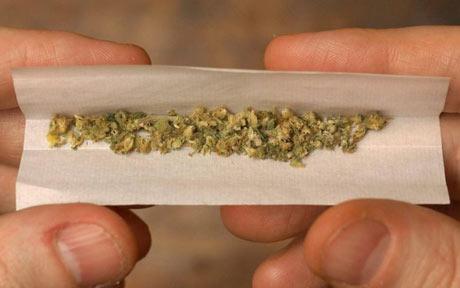
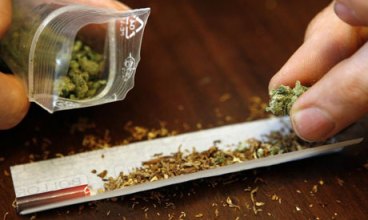
Marijuana (from the Mexican Spanish marihuana) also known as cannabis, is much more powerful today than it was 30 years ago. Marijuana is the herbal form of cannabis, and comprises the flowers, leaves and stalks of the mature female plant while hashish is the resinous, concentrated form of cannabis. Chemically, the major psychoactive compound in marijuana is Delta-9-tetrahydrocannabinol (Δ9-THC); it is one of 400 compounds in the plant The smoke also contains more than 150 other types of these cannabinoids such as cannabidiol (CBD), cannabinol (CBN), and tetrhydrocannabivarin (THCV), which can produce sensory effects unlike the psychoactive effects of THC. The pharmacology of marijuana is complex. The cannabinoids are vaporized (smoke) and then deeply inhaled. They are fatty compounds which rapidly cross from the lungs into the blood and tend to accumulate in specific regions of brain.
The psychological effects of marijuana – a Pandora’s Box
The immediate (acute) effects of marijuana include changes in time-sense, a loss of recent memory and impairment in attention. There is also a general difficulty expressing simple thoughts in words. Other effects include impaired motor skills, increase in hunger, nausea, dizziness, and – depending on the personality of the person and the context in which it is taken – altered moods such as euphoria, a state of relaxation, panic, anxiety, tension, anger, confusion and – especially when eaten – an unpleasant sensation called depersonalization.
The effects on your body are not good either
Marijuana smoke contains more than 150 compounds many of which are cancer–causing so the respiratory system including the lungs suffer the most. Common symptoms include air obstruction, chronic cough, bronchitis, decreased tolerance to exercise and cancer. An increase in heart rate can aggravate existing cardiac conditions or high blood pressure (hypertension) – so don’t take this drug if you have a weak heart.
Definitely not good for your MOJO
Marijuana decreases blood testosterone levels, sperm count and motility. It also decreases sex-drive (libido) and impairs fertility as well as disrupting the female reproductive system which can impact pregnancy in adverse ways. The effect of the drug on the immune system is still unclear but recent studies in animals demonstrate that it impairs T helper cells – key cells in the immune system – which may increase the risk of cancer (by disrupting the cancer surveillance system).
In Part Two of Your Brain On Cannabis, we will take a closer look at the effects of marijuana on your brain, how the drug affects how you learn, how to counter the argument that it is a harmless drug, and if there is any scientific basis for using marijuana as medicine.
Weekly Round Up
Our senses of sight and hearing work closely together, perhaps more than people realize, a new UCLA psychology study shows.
A team of neurobiologists has shown for the first time that cortex, the largest area of the brain that is typically associated with higher functions such as perception and cognition, is also a prominent site of emotional learning.
Tiny electric currents applied across regions of the brain can improve hand movements in recovering stroke patients for a short period, an Oxford University study has demonstrated.
For the first time, scientists have proven that cannabis harms the brain. But the same study challenges previously-held assumptions about use of the drug, showing that some brain irregularities predate drug use.
How might keeping patients awake during surgery lead to the more successful removal of brain tumours? James Keidel, in his shortlisted entry for the 2011 Wellcome Trust Science Writing Prize, explains.
Researchers from the University of Bristol have discovered that a chemical compound in the brain can weaken the synaptic connections between neurons in a region of the brain important for the formation of long-term memories. The findings, published in the Journal of Neuroscience, may also provide a potential explanation for the loss of memory associated with Alzheimer’s.
The Craving Brain
This is a terrific animated film which describes the pathology of addiction according to the theories presented in Dr. Ronald Ruden’s book The Craving Brain.
Ruden maintains that all addictions are “craving disorders” of the brain, caused by a “craving response” to life experiences and environment. A craving brain is a brain chemically out of balance, and the solution is to put it back into balance, or “biobalance.”
This video also outlines the role that chronic, inescapable stress contributes to addictive behavior.
Once we understand these responses, and understand the landscape of the craving brain, we can then learn to balance the brain (biobalance) by adopting healthy, serotonin-boosting habits.
What is dopamine?
Dopamine is a neurotransmitter that helps control the brain’s reward and pleasure centers. Dopamine also helps regulate movement and emotional responses, and it enables us not only to see rewards, but to take action to move toward them.
Dopamine deficiency results in Parkinson’s Disease, and people with low dopamine activity may be more prone to addiction. Most abused drugs cause the release of dopamine and this is thought to contribute to their addictive properties.
This video describes some of the cognitive functions of dopamine in your brain.