Weekly Neuroscience Update

The human brain using colors and shapes to show neurological differences between two people. Credit Arthur Toga, University of California, Los Angeles via NIGMS.

The human brain using colors and shapes to show neurological differences between two people. Credit Arthur Toga, University of California, Los Angeles via NIGMS.

While many different combinations of genetic traits can cause autism, brains affected by autism share a pattern of ramped-up immune responses, an analysis of data from autopsied human brains reveals. The study, published online in the journal Nature Communications, included data from 72 autism and control brains.

Teenagers who have suffered a traumatic brain injury are twice as likely to drink alcohol or use drugs when compared with whose who have never experienced a similar blow or trauma to the head.

Activating the brain’s amygdala, an almond-shaped mass that processes emotions, can create an addictive, intense desire for sugary foods, a new study found. Rewards such as sweet, tasty food or even addictive drugs like alcohol or cocaine can be extremely attractive when this brain structure is triggered. And another study, led by researchers at University of California, San Diego School of Medicine, revealed that the brains of obese children literally light up differently when tasting sugar.

Scientists have discovered a link between sleep loss and cell injury. Results of a new study find sleep deprivation causes the damage to cells, especially in the liver, lung, and small intestine. Recovery sleep following deprivation heals the damage.

Neural circuits that activate when we daydream run in the opposite direction to how we process reality, a new study finds.

Yale researchers using a new brain imaging analysis method have confirmed that smoking cigarettes activates a dopamine-driven pleasure and satisfaction response differently in men compared to women.

Whether we’re paying attention to something we see can be discerned by monitoring the firings of specific groups of brain cells. Now, new work from Johns Hopkins shows that the same holds true for the sense of touch.

Serious, long-term stress can have dire consequences for your brain. That’s because the immune system and the brain are intimately related, say researchers at the Ruhr University Bochum, Germany.

In the current issue of Psychotherapy and Psychosomatics a new study identifies biological characteristics who may predict who is going to respond to psychotherapy.

Some high school football players exhibit measurable brain changes after a single season of play even in the absence of concussion, according to a study presented at the annual meeting of the Radiological Society of North America. Meanwhile, as debate increases about whether female lacrosse players should wear headgear, a new study reports measurements of the accelerations that stick blows deliver to the head. The study also measured the dampening effect of various kinds of headgear.

Quitting smoking sets off a series of changes in the brain that researchers say may better identify smokers who will start smoking again.

Everyday events are easy to forget, but unpleasant ones can remain engraved in the brain. A new study published in the Proceedings of the National Academy of Sciences identifies a neural mechanism through which unpleasant experiences are translated into signals that trigger fear memories by changing neural connections in a part of the brain called the amygdala. The findings show that a long-standing theory on how the brain forms memories, called Hebbian plasticity, is partially correct, but not as simple as was originally proposed.

Weekly Neuroscience Update

Reviewing MRI data, researchers found the brain anatomy of people with autism above the age of six was mostly indistinguishable from that of typically developing individuals. This image is for illustrative purposes only. Credit McZusatz.

Reviewing MRI data, researchers found the brain anatomy of people with autism above the age of six was mostly indistinguishable from that of typically developing individuals. This image is for illustrative purposes only. Credit McZusatz.

Brain anatomy in MRI scans of people with autism above age six is mostly indistinguishable from that of typically developing individuals and, therefore, of little clinical or scientific value.

Some types of dementia are actually a result of many tiny, unnoticed strokes damaging the brain over time, researchers at the Krembil Neuroscience Centre in Toronto, Canada, have found. This suggests that this type of dementia could be treatable — probably through lifestyle changes.

Therapists could pick up signs of depression just be listening to how their patients talk, after a study found that unhappy people speak in a different tone.

Why do we remember some things and not others? In a unique imaging study researchers have discovered how neurons in the brain might allow some experiences to be remembered while others are forgotten. It turns out, if you want to remember something about your environment, you better involve your dendrites.

Looking at the brain as a highly interactive network of nodes, rather than a collection of individual areas of activity, could offer a new way to diagnose the memory disorders that tend to affect older people.

An international study has identified genetic markers that may help in identifying individuals who could benefit from the alcoholism treatment drug acamprosate. The findings, published in the journal Translational Psychiatry, show that patients carrying these genetic variants have longer periods of abstinence during the first three months of acamprosate treatment.

New research on how the brain leads us to believe we have sharp vision.

Disturbances in the early stages of brain growth, such as preterm birth – when many of the brain’s structures have not yet fully developed – appears to affect the brain’s neuro-circuitry, which may explain premature babies’ higher risk of neurodevelopmental disorders including ADHD and autism spectrum disorder.

Data from 50 laboratories around the world has found that rare mutations in dozens of genes may be responsible for 30% or more cases of autism.

Researchers have been tracking the traces of implicit and explicit memories of fear in human. The study was published in the journal Neurobiology of Learning and Memory; it describes how, in a context of fear, our brain differently encodes contextual memory of a negative event and the emotional response associated.

A major breakthrough in the development of stem cell-derived brain cells has put researchers on a firm path towards the first ever stem cell transplantations in people with Parkinson’s disease. A new study presents the next generation of transplantable dopamine neurons produced from stem cells. These cells carry the same properties as the dopamine neurons found in the human brain.

The brain’s plasticity and its adaptability to new situations do not function the way researchers previously thought, according to a new study published in the journal Cell.

Finally this week, researchers have shown how a single neuron can perform multiple functions in a model organism, illuminating for the first time this fundamental biological mechanism and shedding light on the human brain.


Drugs, Addiction and the Brain

alcohol-addiction-brain-scan

I will be giving a talk on drugs, addiction and the brain for alcohol and drug awareness week  which is scheduled to take place November 17th – 21st 2014.

This talk will explain how the brain basically works and how and where drugs such as heroin, cocaine, alcohol and cannabis work in the brain. The concept of “reward” which is the property that is characteristic of many addictive drugs will also be discussed. The talk will be useful for those interested in learning about the diverse effects of drugs of abuse on the brain.

Details: Wednesday 19th November 7-9 pm at the Absolute Hotel, Limerick– Abbey Suite 3. Free Admission.

Weekly Neuroscience Update


brain-white-matter-child-fitness (1)

The team used diffusion tensor imaging (DTI, also called diffusion MRI) to look at five white-matter tracts in the brains of the 24 participants. This method analyzes water diffusion into tissues. For white matter, less water diffusion means the tissue is more fibrous and compact, both desirable traits. This image shows an MRI of white matter in the human brain. The image is for illustrative purposes only, and is not connected to the research. Credit Kubicki et al.

A new study of 9 and 10-year-olds finds that those who are more aerobically fit have more fibrous and compact white-matter tracts in the brain than their peers who are less fit. “White matter” describes the bundles of axons that carry nerve signals from one brain region to another. More compact white matter is associated with faster and more efficient nerve activity. The team reports its findings in the open-access journal Frontiers in Human Neuroscience.

In a new study published in The Journal of Neuroscience, researchers report that the amygdala — a part of the brain associated with decision making, memory and emotion — plays a part in telling us who to trust almost instantly.

The latest research on sports concussions in teens has been the focus of recent study.

Depression is known to be a common symptom of Parkinson’s disease, but remains untreated for many patients, according to a new study.

Following another person’s gaze can reveal a wealth of information critical to social interactions and also to safety. Gaze following typically emerges in infancy, and new research looking at preterm infants suggests that its visual experience, not maturational age, that underlies this critical ability.

fMRI scans reveal brain differences in risk-taking teens

Children and adolescents with autism have a surplus of synapses in the brain, and this excess is due to a slowdown in a normal brain “pruning” process during development, according to a study by neuroscientists at Columbia University Medical Center (CUMC).

While much attention has focused on the link between violent video game playing and aggression among youths, a new study finds significantly increased signs of depression among preteens with high daily exposure to violent video games.

An imaging study of chronic users of codeine-containing cough syrups (CCS) has found deficits in specific regions of brain white matter and associates these changes with increased impulsivity in CCS users.

New treatments for multiple sclerosis (MS) using common anti-psychotic agents have been discovered by Victoria University of Wellington researchers.

People with schizophrenia struggle to turn goals into actions because brain structures governing desire and emotion are less active and fail to pass goal-directed messages to cortical regions affecting human decision-making, new research reveals.

Inside The Decision-Making Brain

anterior_ insula

The anterior insula was sensitive to escalating alcohol costs especially when the costs of drinking outweighed the benefits, indicating this could be the region of the brain at the intersection of how our rational and irrational systems work with one another.

Although choosing to do something because the perceived benefit outweighs the financial cost is something people do daily, little is known about what happens in the brain when a person makes these kinds of decisions. Studying how these cost-benefit decisions are made when choosing to consume alcohol, University of Georgia associate professor of psychology James MacKillop identified distinct profiles of brain activity that are present when making these decisions.*

The study combined functional magnetic resonance imaging and a bar laboratory alcohol procedure to see how the cost of alcohol affected people’s preferences. The study group included 24 men, age 21-31, who were heavy drinkers. Participants were given a $15 bar tab and then were asked to make decisions in the fMRI scanner about how many drinks they would choose at varying prices, from very low to very high. Their choices translated into real drinks, at most eight that they received in the bar immediately after the scan. Any money not spent on drinks was theirs to keep.

The study applied a neuroeconomic approach, which integrates concepts and methods from psychology, economics and cognitive neuroscience to understand how the brain makes decisions. In this study, participants’ cost-benefit decisions were categorized into those in which drinking was perceived to have all benefit and no cost, to have both benefits and costs, and to have all costs and no benefits. In doing so, MacKillop could dissect the neural mechanisms responsible for different types of cost-benefit decision-making.

When participants decided to drink in general, activation was seen in several areas of the cerebral cortex, such as the prefrontal and parietal cortices. However, when the decision to drink was affected by the cost of alcohol, activation involved frontostriatal regions, which are important for the interplay between deliberation and reward value, suggesting suppression resulting from greater cognitive load. This is the first study of its kind to examine cost-benefit decision-making for alcohol and was the first to apply a framework from economics, called demand curve analysis, to understanding cost-benefit decision making.

The brain activity was most differentially active during the suppressed consumption choices, suggesting that participants were experiencing the most conflict. We had speculated during the design of the study that the choices not to drink at all might require the most cognitive effort, but that didn’t seem to be the case. Once people decided that the cost of drinking was too high, they didn’t appear to experience a great deal of conflict in terms of the associated brain activity. McKillop

These conflicted decisions appeared to be represented by activity in the anterior insula, which has been linked in previous addiction studies to the motivational circuitry of the brain. Not only encoding how much people crave or value drugs, this portion of the brain is believed to be responsible for processing interceptive experiences, a person’s visceral physiological responses.

It was interesting that the insula was sensitive to escalating alcohol costs especially when the costs of drinking outweighed the benefits. That means this could be the region of the brain at the intersection of how our rational and irrational systems work with one another. In general, we saw the choices associated with differential brain activity were those choices in the middle, where people were making choices that reflect the ambivalence between cost and benefits. Where we saw that tension, we saw the most brain activity. McKillop

While MacKillop acknowledges the impact this research could have on neuromarketing–or understanding how the brain makes decisions about what to buy–he is more interested in how this research can help people with alcohol addictions.

“These findings reveal the distinct neural signatures associated with different kinds of consumption preferences. Now that we have established a way of studying these choices, we can apply this approach to better understanding substance use disorders and improving treatment,” he said, adding that comparing fMRI scans from alcoholics with those of people with normal drinking habits could potentially tease out brain patterns that show what is different between healthy and unhealthy drinkers. “In the past, we have found that behavioral indices of alcohol value predict poor treatment prognosis, but this would permit us to understand the neural basis for negative outcomes.”

*The research was published in the journal Neuropsychopharmacology March 3.

Weekly Neuroscience Update

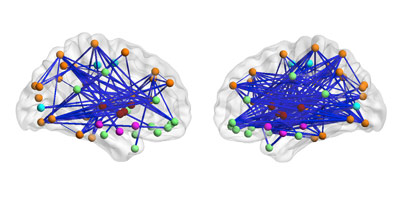
Overly connected: Many pairs of brain regions — including those involved in sensory processing, emotion and motivation — are more tightly synchronized in children with autism (right) than in controls (left).

Overly connected: Many pairs of brain regions — including those involved in sensory processing, emotion and motivation — are more tightly synchronized in children with autism (right) than in controls (left).

Three studies published over the past two months have found significant evidence that children and adolescents with autism have brains that are overly connected compared with the brains of controls. The findings complicate the theory that autism is fundamentally characterized by weakly connected brain regions. Meanwhile new findings suggest the oxytocin receptor, a gene known to influence mother-infant bonding and pair bonding in monogamous species, also plays a special role in the ability to remember faces. This research has important implications for disorders in which social information processing is disrupted, including autism spectrum disorder. In addition, the finding may lead to new strategies for improving social cognition in several psychiatric disorders.

Researchers are gaining a better understanding of the neurochemical basis of addiction with a new technology called optogenetics.

We know that getting even a measly extra hour of sleep a night can have major benefits for us–like more memories, less anxiety, and happier genes. But scientists have tested another hypothesis for why we need to spend so much time horizontal: Sleep cleans our brains.

Scientists have pinpointed a specific part of the brain where Alzheimer’s begins and traced how the disease spreads.

Scientists have zapped an electrical current to people’s brains to erase distressing memories, part of an ambitious quest to better treat ailments such as mental trauma, psychiatric disorders and drug addiction.

Finally this week, many people can recall reading at least one cherished story that they say changed their life. Now researchers at Emory University have detected what may be biological traces related to this feeling: Actual changes in the brain that linger, at least for a few days, after reading a novel.

Does Addiction Exist?

Addiction (1)American actor and addiction-awareness activist Matthew Perry and journalist Peter Hitchens traded blows in a televised interview last week,  with the latter questioning the reality of drug addiction. Hitchens questions how Perry has suffered in his ‘battle with addiction’ and for his motives in supporting special courts for people who buy and use illegal drugs.  Hitchens has gone further to question if in fact ‘addiction’ actually exists at all.  Not surprisingly this has resulted in one hell of a row.

Over the past two decades I have visited high schools and colleges to talk on how addictive drugs affect the brain and to explain the many theories about why certain people become addicted.

What is an addictive drug?

All addictive drugs release the neurotransmitter dopamine in the brain and this is thought to contribute to their addictive properties. Dopamine is carried in a nerve pathway called the reward pathway which controls the brain’s reward and pleasure centers. The reward pathway does this by regulating emotional responses that enable us not only to see rewards but also to take action to move toward them.  Addictive drugs hijack the reward pathway by causing it to release dopamine and this leads to the compulsive behavior including the loss of control in limiting intake found in addiction.

Are some drugs more addictive than others?

Yes. The type of drug taken is important as some drugs are more addictive than others.  This is because drugs differ in their ability to release dopamine in the reward pathway.  How a drug is taken is also very important. Nicotine is very addictive because it is smoked.  Smoking is the quickest way to get a substance into the brain and this makes it more addictive.

Don’t forget the buzz

The initial use of addictive drugs such as cocaine, heroin, alcohol and marijuana is often driven by the immediate euphoria – the buzz – that accompanies it and because their brains are so rich in dopamine this is of great importance to adolescents and young adults.  In this way drug addiction is predominantly a disease of the young.

Why do people take addictive drugs?

People dabble in addictive drugs for all sorts of reasons  – availability, affluence, to rebel, to seek attention, for a sense of adventure, naivety, the pressure to conform  or just plain boredom.

Who becomes an addict?

Addiction is complex and there are as many reasons why someone becomes addicted as there are addicts. This situation is not helped by the fact that we cannot yet predict who will become addicted, or how to cure it.

Addiction is a three-legged stool

The problem is that not everyone who takes addictive drugs becomes addicted. In fact, most drug users can with a little effort, drop their habit.  In order to explain who becomes addicted it is best to think of addiction as a three-legged stool and just as a stool needs all three legs in place- all three legs must also be in place for addiction to take hold. The three legs of addiction are

  • Biological.  For instance, children of alcoholics are four times more likely to become addicted to drink, even if they’re brought up away from their natural parents.
  • Psychological.  For instance, chronic, inescapable stress including the stress of boredom contributes to addictive behavior.
  • Social.  For instance, the availability of a drug is important – it’s harder to become an alcoholic in Saudi Arabia where the sale of alcohol is forbidden.

Hitchens is right – addiction doesn’t exist – that is, until you become an addict.

So, in one way Hitchens is right- addiction doesn’t exist – that is, until you become an addict. Then it controls your every waking and sleeping moment, it can destroy your life and those of your loved ones, shatter talent and ambition, wreck communities and economies.

Drug taking as a way of coping

The row between Perry and Hitchens over the nature of addiction might not be in vain if it opens up a debate on how we as a society deal with stress. We all know of, or have heard of someone suffering from chronic addiction and we are led to surmise that alcohol and drug taking is their way of coping.  In this we are not alone. As the world economy continues on its downward slide, and unemployment and financial worries beset us, are we going to turn more and more to these quick fixes to handle our dis-stress?

Probably the most important lesson to be taken from this row is the realization that the stresses of life and how we manage them IS the difference between life and death. I look forward to developing this theme in greater detail including drug-free tips on how to avoid worry and stress in future posts, but in the meantime, I salute both Perry and Hitchens for bringing addiction back into the spotlight.

Weekly Neuroscience Update

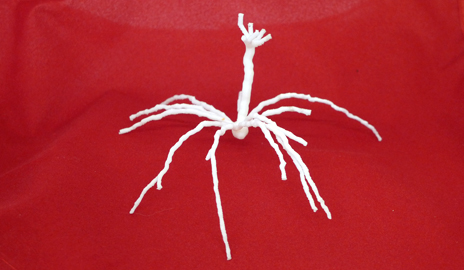
3D-printed model of a neuron (credit: Yale University)

3D-printed model of a neuron (credit: Yale University)

A Yale neuroscientist  has created the first 3D-printed neuron.

Studies released today suggest promising new treatments for nicotine and heroin addiction, and further our understanding of pathological gambling and heroin abuse in those suffering chronic pain. This new knowledge, released at Neuroscience 2013, the annual meeting of the Society for Neuroscience (SFN) and the world’s largest source of emerging news about brain science and health, may one day lead to non-pharmaceutical interventions and therapies to treat addiction. Also presented at SFN, new studies revealing links between social status and specific brain structures and activity, particularly in the context of social stress.

A new study has found that people experiencing a depressive episode process information about themselves differently than people who are not depressed.

To flexibly deal with our ever-changing world, we need to learn from both the negative and positive consequences of our behaviour. In other words, from punishment and reward. Hanneke den Ouden from the Donders Institute in Nijmegen demonstrated that serotonin and dopamine related genes influence how we base our choices on past punishments or rewards. This influence depends on which gene variant you inherited from your parents. These results were published in Neuron on November 20.

Brain scans reveal that people with fibromyalgia are not as able to prepare for pain as healthy people, and they are less likely to respond to the promise of pain relief.

Scientists have used RNA interference (RNAi) technology to reveal dozens of genes which may represent new therapeutic targets for treating Parkinson’s disease. The findings also may be relevant to several diseases caused by damage to mitochondria, the biological power plants found in cells throughout the body.

Playing a fast-paced strategy video games can help the brain to become more agile and improve strategic thinking, according to new research.

While young children sleep, connections between the left and the right hemispheres of their brain strengthen, which may help brain functions mature, according to a new study by the University of Colorado Boulder.  And in another sleep study, a team of sleep researchers  has confirmed the mechanism that enables the brain to consolidate memory and found that a commonly prescribed sleep aid enhances the process. Those discoveries could lead to new sleep therapies that will improve memory for aging adults and those with dementia, Alzheimer’s and schizophrenia.

Weekly Neuroscience Update

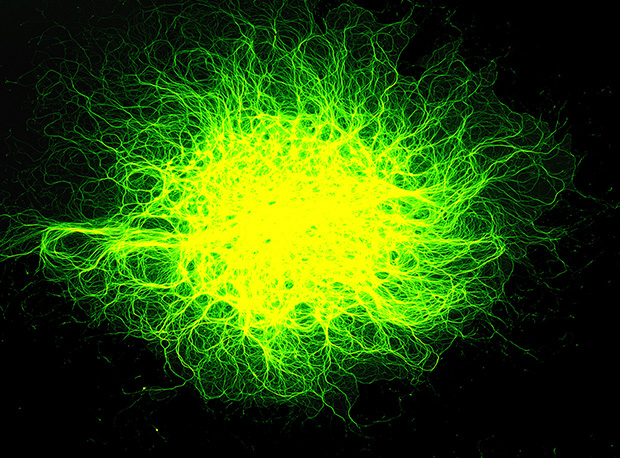
To study how nerve cells respond to injuries in their branches, Washington University researcher Valeria Cavalli grows them in “spots” like the one shown above. Cavalli recently identified a chain reaction that enables repair of these branches when they are cut. Credit Yongcheol Cho/Washington University at St. Louis.

To study how nerve cells respond to injuries in their branches, Washington University researcher Valeria Cavalli grows them in “spots” like the one shown above. Cavalli recently identified a chain reaction that enables repair of these branches when they are cut. Credit Yongcheol Cho/Washington University at St. Louis.

Researchers have identified a chain reaction that triggers the regrowth of some damaged nerve cell branches, a discovery that one day may help improve treatments for nerve injuries that can cause loss of sensation or paralysis.

Groundbreaking research nearly two decades ago linking a mother’s educational background to her children’s literacy and cognitive abilities stands out among decades of social science studies demonstrating the adverse effects of poverty. Now new research has taken that finding in a neuroscientific direction: linking poor processing of auditory information in the adolescent brain to a lower maternal educational background.

A review of new research says there is growing evidence to support the idea that the brain plays a key role in normal glucose regulation and the development of type 2 diabetes.

University of Queensland (UQ) scientists have made a fundamental breakthrough into how the brain decodes the visual world.

Cocaine addicts may become trapped in drug binges not because they are always seeking euphoric highs but rather to avoid emotional lows, says a study in Psychopharmacology.

Researchers have developed a therapeutic at-home gaming program for stroke patients who experience motor weakness affecting 80 percent of survivors.

Learning a musical instrument as a child gives the brain a boost that lasts long into adult life, say scientists.

The birth of new neurons depend upon activation of an important molecular pathway in stem cells, a new Yale School of Medicine study shows.

Researchers have taken a major step towards understanding the causes of Alzheimer’s disease with the largest study yet into the genetics of the disorder.

Light enhances brain activity during a cognitive task even in some people who are totally blind, according to a new study.

Scientists have discovered biological mechanisms that may link Parkinson’s disease to Alzheimer’s disease, according to a study published in the journal Acta Neuropathologica.