Weekly Neuroscience Update

Credit: Psychological Bulletin (2023)

A new study has provided the first clear picture of where language processes are located in the brain. The findings may be useful in clinical trials involving language recovery after brain injury.

Researchers have developed a model for studying one type of familial epilepsy, opening the door to understanding—and eventually targeting—the mechanisms that lead to the disorder and its associated fatalities.

A new study published in Nature Medicine sheds light on how biological sex influences brain function and its impact on the risk of various brain-related diseases.

A breakthrough technique developed by University of Oxford researchers could one day provide tailored repairs for those who suffer brain injuries. The researchers have demonstrated for the first time that neural cells can be 3D-printed to mimic the architecture of the cerebral cortex.

A research team has identified new potential treatments for children with rare genetic conditions of blood vessels, which cause severe, symptoms like seizures and impaired development.

Scientists have discovered new insights into how our brain stores episodic memories—a type of long-term, conscious memory of a previous experience—that could be critical to the development of new neuroprosthetic devices to help patients with memory problems, like Alzheimer’s disease and dementia.

A global blood test for concussion could be a step closer after a new study discovered specific proteins or biomarkers that can help diagnose concussions relatively quickly and accurately.

The brain circuitry that is disrupted in Alzheimer’s disease appears to influence memory through a type of brain wave known as theta oscillation, a team led by UT Southwestern Medical Center researchers report. The findings, published in Nature Communications, could help researchers design and evaluate new treatments for Alzheimer’s, a condition that affects millions of people around the globe and has no cure.

Finally this week, a new study reveals the role of vascular system cells—pericytes—in the formation of long-term memories of life events—memories that are lost in diseases such as Alzheimer’s disease. 

Weekly Neuroscience Update

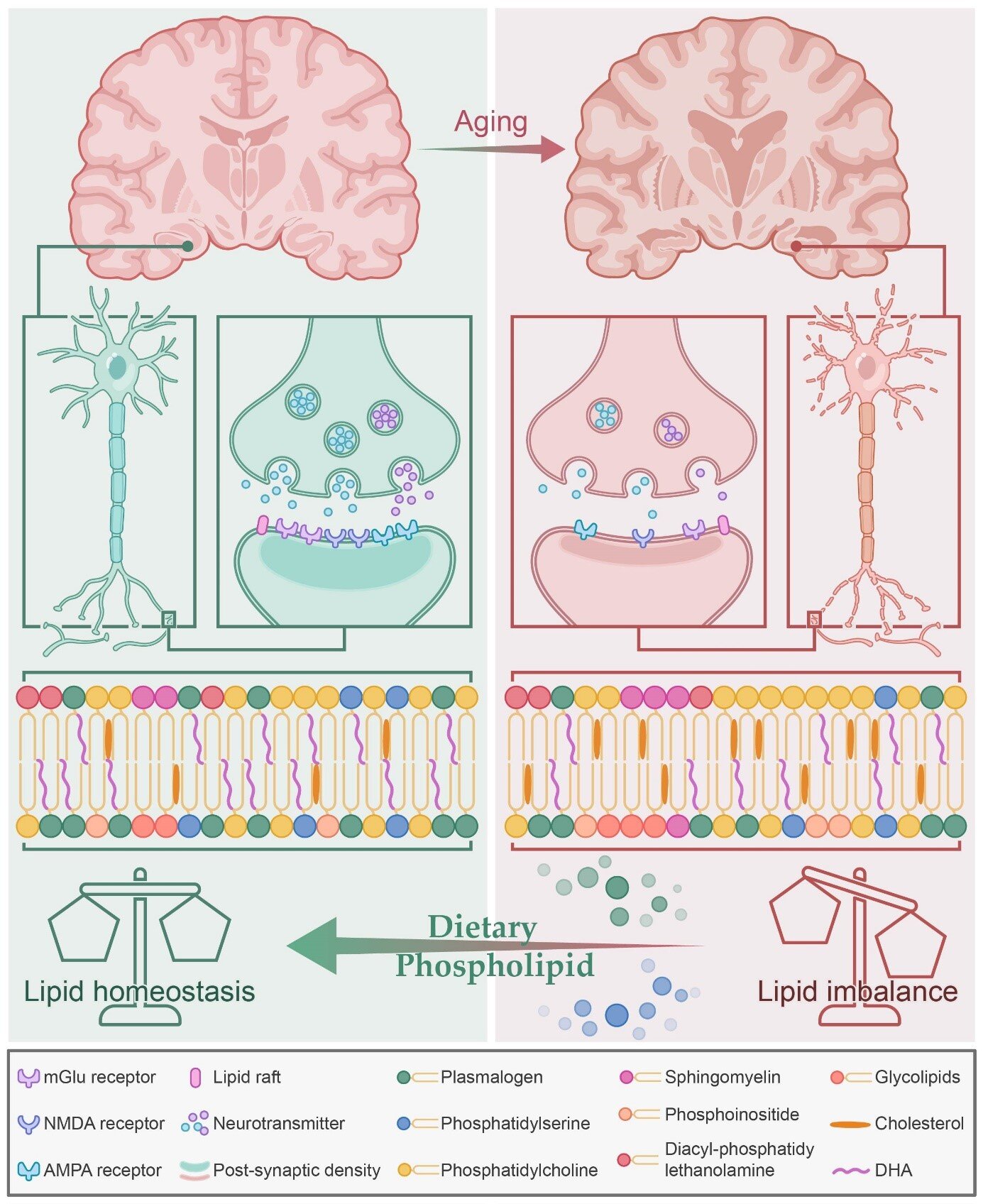
Dietary phospholipid intervention could prevent brain aging by maintaining lipid homeostasis and enhancing synaptic plasticity. Credit: Wei Xiong et al.

A new review highlights the significant role of dietary lipids in preventing brain aging and cognitive decline. As the global burden of aging-related brain diseases, particularly dementia, continues to rise, this research offers promising insights into potential nutritional interventions that could improve brain function during aging.

Cerebrospinal fluid (CSF) leaks may be one of the mechanisms that link traumatic brain injury (TBI) with dementia, according to a new hypothesis.

Short-term exposure to air pollution may be linked to an increased risk of stroke, according to a meta-analysis published in Neurology. Short-term exposure was defined as occurring within five days of the stroke.

People with a higher cumulative estrogen exposure throughout their life may have a lower risk of cerebral small vessel disease, according to a new study.

New research is painting a clearer picture of the early signs of multiple sclerosis (MS), showing that people are nearly twice as likely to experience mental illness in the years leading up to the onset of the disease.

Increased TV/DVD screen time at 1 and 2 years of age negatively affects developmental performance at 2 and 3 years of age, according to a study published in JAMA Pediatrics.

Whether you are an early bird or a night owl, your internal clock plays a critical role in maximizing your mental performance, according to a recent study. This effect is so strong that it can significantly impact academic performance for adolescent students and the results of brain health assessments for older adults.

Researchers are using ultra-high field 7 Tesla MRI to provide a better understanding of how sleep is regulated.

A new study suggests a common brain network exists among people with substance use disorder. By evaluating data from across more than 144 studies of addiction, the team found abnormalities across substance use disorders mapped to a common brain network across substances and lesion locations, suggesting a potential brain circuit to target with neurostimulation therapies.

Finally this week, people differ significantly in their memory performance and researchers have now discovered that certain brain signals are related to these differences.

Weekly Neuroscience Update

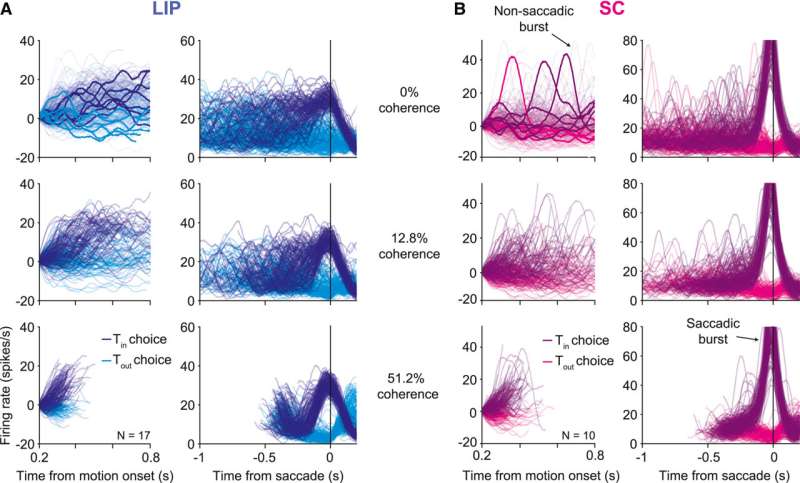
Single-trial dynamics in LIP and SC are different. (Neuron, 2023)

A new paper, published in Neuron, highlights the role of the superior colliculus (SC), a structure in the midbrain, in terminating decisions.

Degeneration of dopaminergic neurons is widely accepted as the first event that leads to Parkinson’s, but a new study suggests that a dysfunction in the neuron’s synapses—the tiny gap across which a neuron can send an impulse to another neuron—leads to deficits in dopamine and precedes the neurodegeneration.

Depression, a challenging condition to diagnose early, may now be detected more promptly using a simple 1-minute Electroencephalogram (EEG) test at home.

Scientists have confirmed that human brains are naturally wired to perform advanced calculations, much like a high-powered computer, to make sense of the world through a process known as Bayesian inference.

New research shows how repeated traumatic brain injury contributes to Alzheimer’s disease.

Racial disparities can be seen in dementia severity, functional impairment, and neuropsychiatric symptoms among patients with frontotemporal dementia (FTD), according to a study recently published in JAMA Neurology.

A new study identifies a potential new approach to PTSD treatment.

Any head injury—even a mild one—raises a person’s risk of later having an ischemic stroke. Having multiple injuries increases that risk, even more so than the severity of a single traumatic brain injury, researchers have found.

New research finds that cerebrospinal fluid net flow is markedly decreased in Huntington’s disease, with the decrease being greater in the later stages of the disease.

The targeted use of ultrasound technology can bring about significant changes in brain function that could pave the way towards treatment of conditions such as depression, addiction, or anxiety, a new study suggests.

Finally this week, new research finds that antidepressants may actually reduce negative memories in individuals suffering from depression while improving overall memory function.

Weekly Neuroscience Update

A study of brain function in cosmonauts reveals how the brain’s organization changes after an extended period in space, demonstrating the adaption required to live in a weightless environment.

Researchers are turning to artificial intelligence to find novel drugs that can block kappa opioid receptors with the hope to alleviate opioid addiction. The kappa opioid receptor is a protein in the brain that plays a role in pain management and addiction. When opioids bind to this receptor, it can produce a range of effects, including pain relief, as well as addiction and dependence.

Adults with high levels of attention-deficit hyperactivity disorder (ADHD) symptoms are more likely to experience anxiety and depression than adults with high levels of autistic traits, according to new research.

Scientists studying sleep difficulties have now published data in Frontiers in Neuroscience that shows that, even in an urban population experiencing disrupted sleep, humans experience longer REM sleep in winter than in summer and less deep sleep in autumn.

Regardless of the game type or length of time a child plays a video game, there is no correlation with a decline in cognitive ability, a new study reports.

Researchers have identified the in-vivo dynamics of synapses that underlie fear memory formation and extinction in the living brain. Fear memory formation and extinction are complex processes that involve changes in the connections between neurons, or synapses, in the brain. Understanding these processes at the level of individual synapses can provide important insights into the neural mechanisms of fear and anxiety disorders.

New research has found that children with conduct disorders exposed to maltreatment showed far more extensive changes in brain structure compared to children with conduct disorders who were not mistreated.

While kleptomania meets the criteria of addiction and is classified as a “Disruptive, Impulse-Control, and Conduct Disorder” by the American Psychiatry Society, few studies of the condition have been published to date. Now a team of researchers has recently found that patients with kleptomania exhibit distinct patterns of gazing and brain activity when shown images with environmental cues relevant to their symptoms. Such characteristics were not observed in healthy subjects.

Finally this week, researchers who examined the relationship between making music and mental health have found that musically active people have, on average, a slightly higher genetic risk for depression and bipolar disorder.

Weekly Neuroscience Update

A new study published in the journal Molecular Psychiatry offers evidence that a simple walk through nature can lower activity in stress-related brain regions. The experiment revealed that participants who walked for an hour in a forest showed decreased amygdala activity during a stress task, while those who walked for an hour in the city did not.

A team of scientists has developed the first computer model predicting the role of cortical glial cells in cognition.

A number of studies have suggested that eating a healthy diet may reduce a person’s risk of dementia, but a new study has found that two diets, including the Mediterranean diet, are not linked to a reduced risk of dementia.

A new theory proposes there is an underlying relationship between nap transition in young children, brain development, and memory formation.

The dose of nicotine from a single cigarette blocks estrogen production in the brain, causing behavioral changes. These findings may shed new light on why quitting smoking may be more difficult for women than men.

A new study suggests quantum processes are part of cognitive and conscious brain functions.

Proteins associated with motor neuron disease, or ALS are present in the gut many years before disease pathologies can be found in the brain. A stool sample or gut biopsy could help identify the presence of MND-associated proteins years before symptoms appear.

Crossword puzzles have an edge over computerized memory games in improving memory function in older adults with mild cognitive impairment.

A team of neuroscientists has recently uncovered how the brain works to make distinctions between “right” and “wrong” sounds—research that provides a deeper understanding of how we learn complex audio-motor tasks like speaking or playing music.

A new study looks deep inside the brain, where previous learning was reactivated during sleep, resulting in improved memory.

Finally this week, a study of nearly 2,000 children found that those who reported playing video games for three hours per day or more performed better on cognitive skills tests involving impulse control and working memory compared to children who had never played video games.

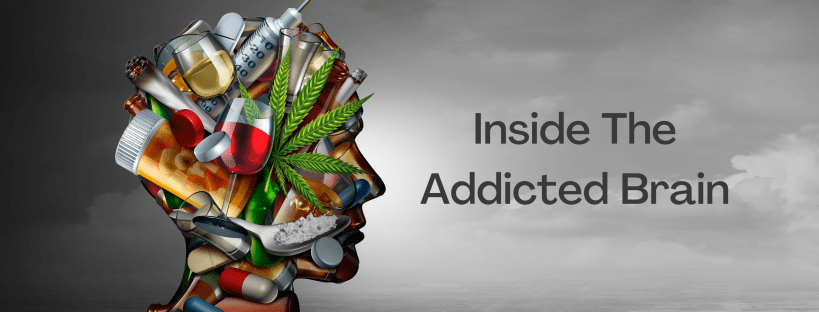
Inside The Addicted Brain

Addiction is now understood to be a brain disease. Whether it’s alcohol, prescription pain pills, nicotine, gambling, or something else, overcoming an addiction isn’t as simple as just stopping or exercising greater control over impulses.

That’s because addiction develops when the pleasure circuits in the brain get overwhelmed, in a way that can become chronic and sometimes even permanent. This is what’s at play when you hear about reward “systems” or “pathways” and the role of dopamine when it comes to addiction.

But what does any of that really mean?

This video explainer from Yale Medicine shows how addiction takes hold of the brain.

Weekly Neuroscience Update

While depression is a common problem for people who have had a stroke, some people may have symptoms of depression years before their stroke, according to a study published in Neurology.

New research shows visual scanpaths during memory retrieval tasks were associated with the quality of the memory. Researchers say the replay of a sequence of eye movements helps boost memory reconstruction.

A new neuroimaging study reveals every person has unique brain anatomy. The uniqueness is a result of a combination of genetic factors and life experiences, researchers report.

Adolescents are over three times more vulnerable to developing a cannabis addiction than adults, but may not be at increased risk of other mental health problems related to the drug, finds a new study led by UCL and King’s College London researchers.

Researchers have developed a chop stick-like device that uses a weak electrical current to stimulate the tongue and enhance the taste of salt. The device could help to reduce dietary sodium intake by up to 30%.

Socially anxious women exhibit heightened oxytocin reactivity to psychosocial stress, according to new research published in Psychoneuroendocrinology. The study provides evidence that the hormone plays a role in physiological reactions to socially stressful situations.

Delayed circadian rhythms and sleep disruptions may be a cause of teen depression, rather than a symptom that develops as a result of the mental health disorder.

Health researchers have contributed to an international study published in Nature Neuroscience that sheds light on the mechanism by which anti-anxiety drugs act on the brain which could lead to cognitive impairment in vulnerable individuals.

A new machine-learning algorithm is able to accurately detect cognitive impairment by analyzing voice recordings.

Protein buildups like those seen around neurons in Alzheimer’s, Parkinson’s and other brain diseases occur in all aging cells, a new study suggests. Learning their significance may reveal new strategies for treating age-related diseases.

Finally, this week, having positive social interactions is associated with older adults’ sense of purposefulness, which can fluctuate from day to day, according to recent research.

Weekly Neuroscience Update

mother-84628_960_720

A new study reports babies’ brains are sensitive to different emotional tones they hear in voices. Researchers suggest maternal interactions may help to shape the same brain region adults use for emotional processing.

Researchers report brain alterations associated with heightened feelings of negative emotion and alienation in people who have a dependence on cannabis.

Further evidence that the brain undergoes a continuous phase transition when we awaken from sleep has been discovered.

A new deep learning algorithm can predict those at risk of psychosis with 93% accuracy by examining the latent semantic content of an individual’s speech.

Scientists in Sweden have found that some viruses can increase the buildup of protein ‘plaques’ linked to Alzheimer’s disease, a discovery that could lead to new vaccines treating the condition.

Individual differences in the striatum of habitual cannabis users distinguish between who is at increased risk of addiction and cannabis use disorder.

A new study reports areas of the brain housing alertness and determination may be on the right side for left dominant people. The new theory suggests the location of a person’s neural system for emotion depends on their handedness.

Finally this week, new research shows that 2 hours a week is a key dose of nature for health and wellbeing.


Weekly Neuroscience Update

D56BDDNUwAAxsUD.jpg

Music and mindful music listening may help people who have suffered strokes recover their impaired cognitive abilities more effectively, new research suggests.

The loss of memory and cognitive function known to afflict survivors of septic shock is the result of a sugar that is released into the bloodstream and enters the brain during the life-threatening condition. This finding, published in the Proceedings of the National Academy of Sciences, explains the premature mental aging that follows septic shock and may shed light on memory loss in other diseases.

Researchers have identified a new autoimmune disease that causes muscle pain and weakness.

Scientists used brain signals recorded from epilepsy patients to program a computer to mimic natural speech–an advancement that could one day have a profound effect on the ability of certain patients to communicate.

Scientists have created a “neural decoder” that translates brain activity into speech.

Autism diagnosis becomes stable starting at 14 months of age, researchers report. The accurate diagnosis of ASD, four months earlier than previously believed, leads to more opportunities for early interventions.

A new two-tier diagnostic blood test which evaluates both amyloid beta and tau, can help detect Alzheimer’s disease in presymptomatic patients.

Researchers are officially defining a new brain disorder that mimics Alzheimer’s disease. The disorder will be known as LATE, which stands for limbic-predominant age-related TDP-43 encephalopathy.

Finally this week, a new deep learning algorithm can reliably determine what visual stimuli neurons in the visual cortex respond best to.


Weekly Neuroscience Update

elder-2762529__340

Image: Pixabay

How quickly do we experience the benefits of exercise? A new study of healthy older adults shows that just one session of exercise increased activation in the brain circuits associated with memory – including the hippocampus – which shrinks with age and is the brain region attacked first in Alzheimer’s disease.

Using a unique computational framework they developed, a team of scientist cyber-sleuths has identified 104 high-risk genes for schizophrenia.

Reduced connectivity between the amygdala and ventrolateral prefrontal cortex has been identified in children on the autism spectrum who exhibit disruptive behaviors, compared to those on the spectrum who do not. Findings suggest this distinct brain network could be independent of core autism symptoms.

A specially designed computer program can help diagnose post-traumatic stress disorder (PTSD) in veterans by analyzing their voices.

Using CRISPR-Cas9 gene editing, researchers identified actionable pathways responsible for the growth of glioblastoma stem cells. By reverse engineering brain cancer cells, multiple potential new targets for cancer treatments have been uncovered.

Obesity is associated with alterations in brain structure, including lower grey matter volume and smaller globus pallidus volume according to new research. 

Researchers have found certain clues in the brain waves that show the reason why angry dreams occur when a person sleeps. The results of the study titled, “EEG Frontal Alpha Asymmetry and Dream Affect: Alpha Oscillations Over the Right Frontal Cortex During REM Sleep and Pre-Sleep Wakefulness Predict Anger in REM Sleep Dreams,” were published in the Journal of Neuroscience.

People with the specific genotype of the Cannabinoid receptor 1 gene may be more prone to cannabis use disorder.

A rapid memory system transition from the hippocampus to the posterior parietal cortex is stabilized as we sleep. Sleep and repeated rehearsal of memory jointly contribute to long-term memory consolidation.

A new study confirms that a simple blood test can reveal whether there is accelerating nerve cell damage in the brain. 

Finally, this week, using a combination of movie clips and neuroimaging, researchers find people have positive biases to those they feel are more like them, even if they are unable to see the person’s face.