
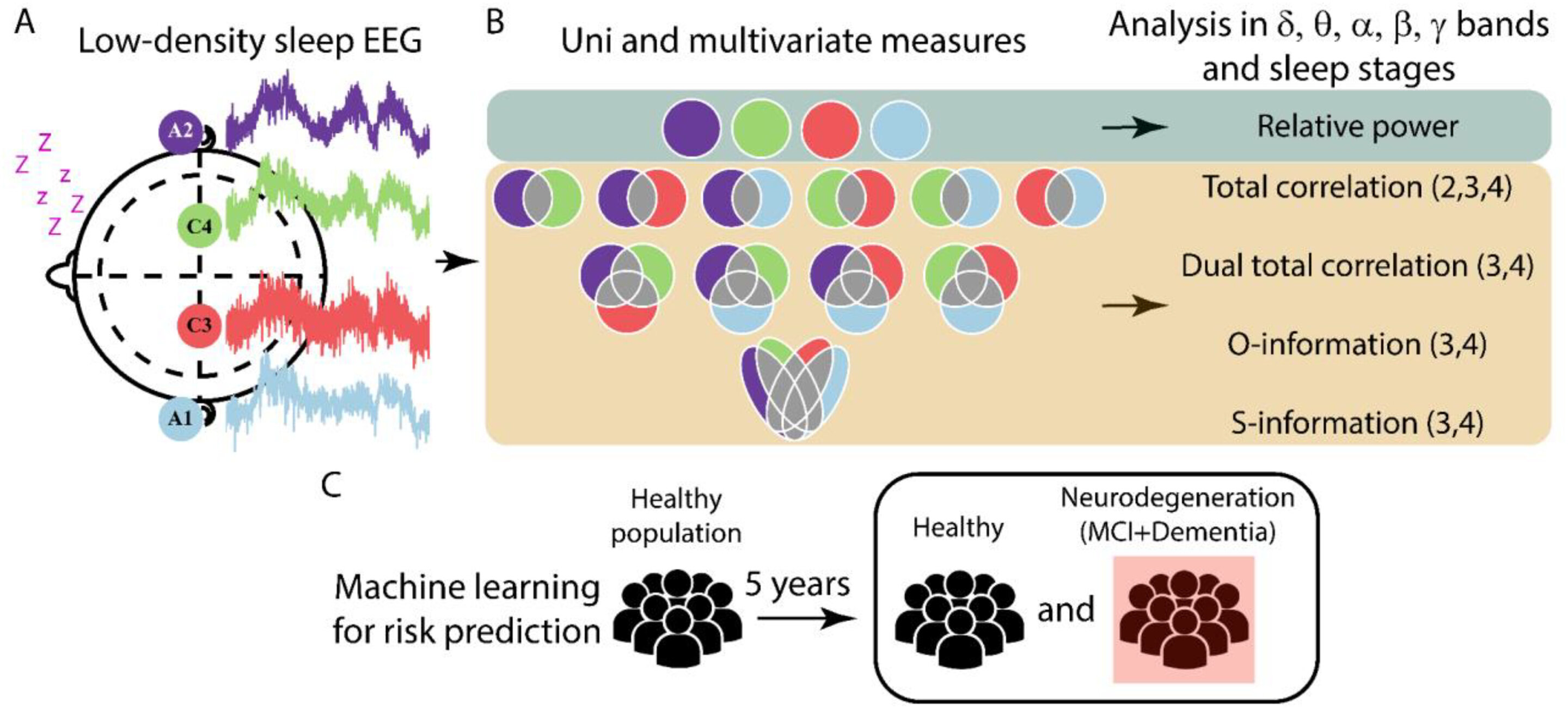
Researchers have developed an AI tool that analyzes brain wave activity recorded during sleep using electroencephalography (EEG), a non-invasive technique that measures electrical activity in the brain through sensors placed on the scalp.
An encoding study reveals how the brain uses past experiences to predict the unfolding of similar events over time.
A new brain-computer interface (BCI) has enabled a paralyzed man to control a robotic arm by simply imagining movements. Unlike previous BCIs, which lasted only a few days, this AI-enhanced device worked reliably for seven months. The AI model adapts to natural shifts in brain activity, maintaining accuracy over time.
Learning to think more about specific events in the future appears to reduce impulsivity, improve decision-making, and shows potential as a therapy for alcohol use disorder, a recent study has found.
Repeated sessions of electrical stimulation to brain networks associated with memory improved verbal learning in some Alzheimer’s disease patients for up to eight weeks in a preliminary trial led by UT Southwestern Medical Center researchers. The findings, published in The Journal of Prevention of Alzheimer’s Disease, indicate that while future trials are needed, neurostimulation shows early promise as a treatment for Alzheimer’s and other neurodegenerative disorders, such as Lewy body dementia.
Alcohol use leads to earlier brain aging and impaired behavioral flexibility, with those effects detectable even among adults in their 20s and 30s, according to an innovative study.
Researchers at Karolinska Institutet have identified a new mechanism that may improve the treatment of ischemic stroke. The study, published in the Journal of Clinical Investigation, shows that the growth factor PDGF-CC and its receptor PDGFRα play a crucial role in scar formation in the brain after an ischemic stroke.
An abnormal form of the tau protein found to accumulate in the brains of Alzheimer’s disease patients also accumulates in the eyes of patients with the condition, according to a recent study.
Scientists have observed for the first time how neurons in the human brain store memories independent of the context in which they are acquired. Published in Cell Reports, the study confirms that neurons can distinguish objects or people regardless of their context, enabling the formation of higher and more abstract relationships, which constitute the basis of human intelligence.
Higher fish consumption is associated with slower disability progression in multiple sclerosis (MS), according to research published in the Journal of Neurology, Neurosurgery & Psychiatry.
Using sophisticated neuroimaging techniques, researchers have mapped the brain’s activity during natural conversations, revealing how we seamlessly process speech and sound. These insights not only deepen our understanding of human connection but also pave the way for transformative advancements in speech technology and communication tools.
Finally this week, a recent study in Computers in Human Behavior, researchers observed that staying away from smartphones can even change one’s brain chemistry.
 inside-the-brain.com